Music journalist for Electronic Sound and occasional press release writer for VeryRecords. Father, husband, vegan. Co-founder of Mortality Tables - mortality-tables.com
a collaboration between visual poet Andrew Brenza and sound artist Alka
released today
“So many machines alive and singing in a single room…”
A new release from Mortality Tables, the collaborative project of Further.’s Mat Smith. Out now at mortalitytables.bandcamp.com
‘pod’ by Andrew Brenza (2023):
“Over a period of several months in the winter of 2022, a nameless entity, via manipulations of entangled particles across time, or pods, as they referred to them, transmitted an expressive model for the development of an eternally sustainable utopian consciousness into the plastic architecture of the author’s dreams. ‘pod’ is the visual-textual record of those transmissions.”
‘pod’ is published by ghosTTruth, an imprint of Montag Press (montagpress.com)
CREDITS
Words, narration and design by Andrew Brenza Sounds by Alka Mastered by James Edward Armstrong
A collection of 13 ambient moments, Bowing’s North Standing eschews the casually drifting pads and gauzy textures of most music in the genre. Often constructed with expressive cycles of pretty melodies in the foreground, pieces like ‘Sway Of The Rushes’ and ‘Tomorrow Will Bring’ are languid, enveloping and moving. A jazzy momentum and looseness infiltrates the latter, giving the piece a questing, enquiring mystique. Released 17 July 2023.
CLAIRE M SINGER – SAOR (Touch)
Influenced by trekking through the Cairngorm region of northern Scotland and an 1872 pipe organ installed in a church in Forgue, Aberdeenshire, Saor finds Claire M Singer reflecting on the topography of her homeland, as well as ruminating on existence itself. Many of Singer’s ancestors are buried at the church in Forgue, and the vast Cairngorms expanse would be largely unaltered from when they were alive. That gives these pieces the notion of things staying the same, but at the same time always changing. This is expressed in beautiful, thought-provoking pieces like ‘Cairn Toul’, through long, unmoving held notes on the organ over which more fluid moments are laid. The album’s 25-minute title track is nothing short of mesmerising, its organ drones rising gracefully like one of the mountains and plateauing with hopeful, joyous interventions. Singer is currently raising funds to help the restoration of the Henry Willis organ in the Union Chapel In Islington, which is featured on Saor – to donate, go here. Thanks to Mike and Zoe. Released November 3 2023.
ASTRÏD – ALWAYS DIGGING THE SAME HOLE (False Walls)
French quartet Astrïd is comprised of Vanina Andréani (violin, piano), Yvan Ros (drums, percussion, harmonium, metallophone), Cyril Secq (guitars, piano, synth, harmonium, percussion, metallophone) and Guillaume Wickel (clarinet, percussion). Their new album for the False Walls imprint is stunningly beautiful, a perfect accompaniment for frozen days. Opening piece ‘Talking People’ is plaintive and contemplative, opening with Wickel’s expressive yet subtle clarinet and a particularly introspective piano motif from Andréani. As the piece builds, with unobtrusive percussion, violin and tender guitar, ‘Talking People’ takes on a gently towering dimension, full of uncertain emotion. Subtly majestic, the five pieces on Always Digging The Same Hole act as an emotional salve, like wrapping yourself in the comfort of your favourite blanket. Mesmerising and beguiling. Released November 10 2023.
TAPE LOOP ORCHESTRA – ONDE SINUSOÏDALE ET BANDE MAGNÉTIQUE (Quiet Details)
Tape Loop Orchestra is an alias of Andrew Hargreaves (lately of The Mistys). For his contribution to the always beatific Quiet Details label, his sound palette was restrained to an oscillator, a tape machine and minimal effects. That set-up gives the three long pieces here a stillness and fragility. Central overlapping tones build and coalesce slowly, fringed by subtle additions and gentle interventions, creating an effect not dissimilar to Claire M Singer’s organ preparations on Saor (above). The entire Quiet Details series has a delicate sparseness, but Hargreaves’ Onde Sinusoïdale Et Bande Magnétique is probably the most ephemeral release yet. Released November 15 2023.
AMON RA COLLECTIVE – AT THE CENTRE OF EVERYTHING (Lamplight Social Records)
Amon Ra Collective are an ensemble comprising over 20 members, all of whom are jazz students at Leeds Conservatoire. Their debut album is ostensibly a astro-spiritual collection, but is not restrained by any particular genre boundary. The centre of the album is occupied by a wonderfully sprawl of experimentation, culminating in the aptly-named ‘Explorations’, where bleeping synths, treacly bass, atonal reverberating horns and intense percussion suggest a restless, inquisitive spirit. Concluding track ‘Astro Funk’ starts out in a joyous, danceable frame of mind before oscillating rapidly into territory somewhere between 1970s German rock and sound art. Released November 24 2023.
I met Phill Niblock in New York in 1988 and worked with him in the first half of the 90s.
I helped him with some of his long tone pieces. He paid me $15 an hour to sit with him and a computer. I basically showed him how to make his pieces with a MIDI setup.
You’d have a note that was playing for an hour or something, and every couple of minutes, we would increment these tiny little pitch bends with the MIDI pitch bend wheel. Phill would go, “Oh, well that’s two minutes, let’s bend it to 0.01.” So I’d make that adjustment.
The whole point of Phill’s music is is you stop listening to the pitch after a while and you’re just listening to the wavering, the beating. When two notes are really close, but not actually in tune, they go wow-wow-wow-wow-wow-wow. The further away from each other they get the faster that beating gets. And so if you’re sitting and watching one of Phill’s films of people picking rice in China, after a while it sounds like a percussion piece, because you’re just listening to that beating sound and focusing in on that.
Invariably, at some point, we’d pack in working on the long tones and drink scotch. He would rummage around is his his office to find old black and white glossy pictures. He used to be a photographer for hire. He’d put on a recording of Duke Ellington and he’d show me all these pictures of the members of the Duke Ellington Band showing up to the studio. He’d say stuff like, “There’s Billy Strayhorn, passing out the arrangements,” as he handed me the photo.
It just turned into this whole thing, every single day – the long tones, the tiny pitch bends, the beating, the old photographs and the scotch. I think he was hiring me to show him how to do it so that he could just keep on sitting there doing it day after day after day. It was a lot of fun working with Phill. I loved it at the time.
Reed Hays is a cellist and electronic musician, composer and producer. He is one half of Reed & Caroline, and most recently appeared on Vince Clarke’s Songs Of Silence.
Specifically, it is Rupert Lally’s third novel, following last year’s Backwater and 2017’s Solid State Memories. It is set in the past – 1987, to be precise – but also the future. Through its pages you feel Lally’s intense love of 1980s electronic music, his main protagonist (Rob) and friend playing covers of ‘Tainted Love’ and ‘Blue Monday’. In passages redolent of Patrick Bateman’s gushing eulogies for Genesis, Huey Lewis and Whitney Houston in American Psycho, Lally interjects his narrative with richly detailed and impassioned descriptions of keyboards, drum machines and vintage digital synths.
But Teenage Wildlife is not simply Lally’s paean to the 1980s. It also reveals his love of mystery, of terror, of psychological horror, of technology and of leading the reader casually and unknowingly toward sharp left-turns that leave you questioning what’s real and what’s not. Where this book starts and where this book ends can not be anticipated. Each time you think you have it pinned down, it makes a significant shift. It is an elusive, unplaceable, well-paced, full of uncluttered prose and a rewarding testament to Lally’s imagination.
Teenage Wildlife is an album.
Not exactly a soundtrack to the book, Teenage Wildlife nevertheless centres itself inside the 1987 music scene that Rob is so smitten with. These are pieces laden with hook-y guitar riffs, icicle sharp melodies and big, insistent drum machine rhythms. Quite unlike most of Lally’s more atmospheric work, a lot of the album leans into a smart pop sound, each track broadly corresponding with the chapters in the book.
In parallel to music and writing, Lally maintains a movie blog which reveals an expansive knowledge of film soundtracks. That knowledge gives Teenage Wildlife its distinctive emotional colour and timbre. And, like the book, it is an album that does not stay still. Where it starts in broadly electronic pop territory, by ‘Lying In Wait’ it has sharply pivoted toward darker, more brooding concerns, much more in keeping with Lally’s wider canon of releases. The noisy, atonal ‘Things In An Empty House’ is full of cloying, threatening atmospheric effects with a nagging rhythm approximating a quickening pulse full of nervous anticipation.
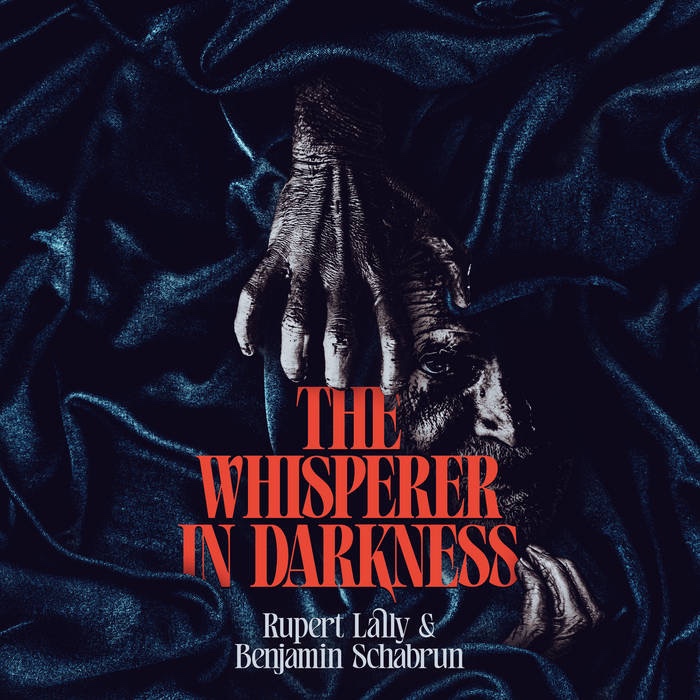
The Whisperer In Darkness is an album containing a hypothetical soundtrack to someone else’s book.
The work of Lally and his son Benjamin Schabrun, this is a suite of tracks inspired by a HP Lovecraft story. Resting comfortably in a sort of funeral darkness and shrouded, impenetrable mystery, these ten pieces have the capacity to engender a sense of grim unease. Key track ‘Disturbing News’ moves at what can only be described as a creeping pace, its cloying insistence building gently but ceaselessly across its six-minute duration. Full of drones, suppressed guitar melodies and squalls of Schabrun’s processed violin, ‘Disturbing News’ is Actually pretty terrifying, occupying the same psychological terror locale as Lally’s Teenage Wildlife, without ever once resorting to hackneyed, overblown horror soundtrack histrionics – but still 100% guaranteed to give you nightmares.
Teenage Wildlife (the book) by Rupert Lally was published October 17 2023 and can be found on Amazon here. Teenage Wildlife (the album) by Rupert Lally was released November 3 2023 by Third Kind.
The Whisperer In Darkness by Rupert Lally & Benjamin Schabrun was released October 31 2023 by Spun Out Of Control.
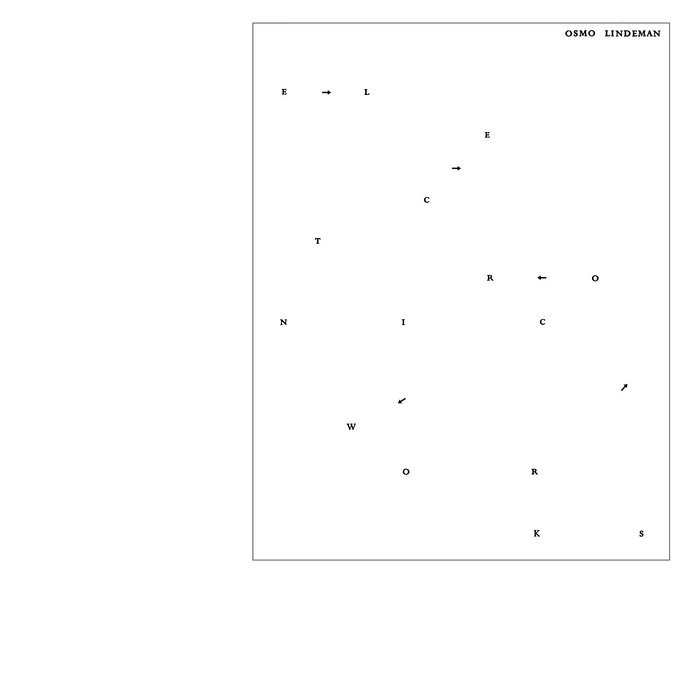
The late Finnish composer Osmo Lindeman (1929 – 1987) is rarely mentioned when surveying the history of electronic music. Largely unheard outside of his native Finland, Lindeman was nevertheless a pioneering proponent and theoretician whose contributions we can now fully appreciate thanks to Sähkö’s career-spanning compilation.
Lindeman was originally a jazz pianist who pivoted to avant garde composition, but who ultimately became frustrated with the challenges orchestras faced when attempting to interpret graphic scores like the one used for ‘Variabile’ (1967). He forcibly separated himself from orchestral composition in 1968 because of those unresolvable irritations, and took a trip to Poland to hang out with electronic composer Andrzej Dobrowolski at the Warsaw School Of Music. That experience led to Lindeman resolving only to work with nascent electronics thereafter, not least because it meant he no longer needed to rely on any other musician to respond to his musical vision than himself.
In 1969, Lindeman took delivery of a bespoke early digital electronic instrument designed for him by Erkki Kurenniemi. Dubbed the DICO, the instrument included a digitally-controlled sequencer-oscillator which was extremely rare for its time, and which meant that Lindeman’s embrace of electronic music could be achieved significantly more efficiently than those working with simple oscillators and tape that preceded him. That’s not to say that he didn’t make use of tape – a 1969 piece included here, ‘Mechanical Music For Stereophonic Tape’, shows that he also worked with the medium – but for the most part it was the DICO that became Lindeman’s tool of choice. Later, he would add the more commercially accessible Moog and EMS VCS-3 synthesisers, but the earliest pieces showcased on Electronic Works all relied on the instrument that Kurenniemi developed for him.
The two earliest pieces, ‘Kinetic Forms’ and ‘Is This The World Of Teddy’ both date from 1969, just after Lindeman had taken receipt of the DICO. Divided into movements, these pieces arrange rapidly-pulsing tones and arpeggios into various formations. Those clusters are alternately pretty and insistent, full of vibrant energy and motion, but focused and regimented. The designs of those earliest pieces are offset by 1970’s ‘Midas’, whose first half seems to be an exploration of white noise manipulations, while its second half approximates a wobbly, unpredictable Theremin-style howl. ‘Tropicana’, also from 1970, seems to swing with a jazz sensibility presumably deeply rooted in Lindeman’s musical DNA, even if the tools of expression are grids of gently swaying tones.
Some of the most interesting moments across Electronic Works come with Lindeman’s commercial work, specifically soundtracks for TV ads like Sunkist and Fin-Humus and his work for the Finnish National TV News. These pieces pop and fizzle with a sense of positive futurism, the music for the Sunkist ad in particular standing out for approximating bubbles bursting in a carbonated drink.
The collection also includes ‘Ritual’ (1972), one of the few Lindeman works ever released during his lifetime, originally appearing on the 1978 Suomalaista elektroakustista musiikkia LP, alongside pieces by Jukka Ruohomäki and Jarmo Sermilä (note to Sähkö: please make this a future reissue project!). It was a piece that should have raised Lindeman’s creative profile immeasurably, since it was awarded the Electronic And Computer Music prize at 1972’s International Musical Composition Contest. By the time of ‘Ritual’, Lindeman’s sonic palette had expanded to include standalone oscillators, a ring modulator, filter, noise generator, echo unit and tape machines, the latter most notably deployed on the eerie, manipulated, Monk-like voices that dominate the first part of the recording.
Although he continued making music – most notably with the commission of ‘Spectacle’ by Yleisradio Oy (the Finnish Broadcasting Company) in 1974 – Lindeman threw himself into academia, teaching electronic music at the Sibelius Academy in Helsinki and spending time at the University of Illinois and Columbia in New York. The latter placement offers the very strong likelihood of interactions with the Columbia-Princeton Electronic Music Center’s Vladimir Ussachevsky and Otto Luening, creating a bridge between electronic music’s accepted history and someone deserving of much more than a mere footnote mention.
Compiled from Lindeman’s private tapes, the beautifully-executed Electronic Works is an essential investigation into his largely unknown legacy in the development of electronic music theory and practice.
Electronic Works by Osmo Lindeman was released December 1 2023 by Sähkö. With thanks to Duncan.
I first came across Pagan Red at a Titrate label night at IKLECTIK in 2022, and the material played that night was signalled as being extracted from this album. My overriding impression of that set was one of physical bass intensity, overlaid with dense drones and other interventions of unknowable provenance that whirr and fizz unpredictably. On record, the 25-minute ‘A Waning Mind’s Eye’, and the shorter tracks ‘Purus Terrae’ and ‘Sands’ are much more subtle, coiling themselves around you with a combination of airy levity and brooding complexity. Materia exists in darkness, light, and everywhere in between. Released March 31 2023. With thanks to Henrique.
JAY WIRES – GHOST (Yes Trigger Music)
The latest single from New York electronic music producer Jay Wires continues the emotional themes of his earlier releases in 2022 and 2023. A haunting and epic synth pop journey, ‘Ghost’ details a sense of abandonment and disappointment. Beginning with sparse, fragile framing, by the end the track has soared to progressively new heights, even as Jay’s vocals become more intensely and savagely introspective. Jay calls this music “electro-pop therapy”, and his ongoing open, frank discourse with his listeners about his relationship struggles is universally relatable to us and, I hope, cathartic for him. Released October 20 2023.
VARIOUS ARTISTS – BEFORE BRILLO BOX OR BANANA: MUSIC WITHIN THE ALBUM COVER ART OF ANDY WARHOL (Él Records / Cherry Red Records)
Writes David Bourdon in his book Warhol, quoted in the copious liner notes of this four disc set: “Art directors showered Warhol with assignments because he worked fast, met deadlines, and displayed a properly submissive attitude when they demanded revisions.”
This compilation surveys the music that lies within sleeves designed by Andy Warhol after he moved to New York City in 1949. This was the era of Warhol’s commercial art, exemplified by drawings of shoes for Glamour magazine and advertisements for the I. Miller shoe store that appeared in the New York Times. His sleeve art for LPs of music by Gershwin, Tchaikovsky, Thelonius Monk, Count Basie and others, released by labels like Columbia and Blue Note, is less well known, but they highlight early ideas of reproduction and collective creation – via assistants and his mother’s calligraphy – that would go on to become staples of his later work. The four discs here compile a significant number of pieces of classical and jazz music featured on those LPs, while a fourth disc collates pieces by Cage, Feldman, Cecil Taylor, Albert and others in an effort to contextualise the musical currents that surrounded Warhol in 1950s Manhattan. Extensive sleeve notes, quotes and photos of Warhol’s sleeve designs round out an essential and original boxset from Él Records. Released November 24 2023. With thanks to Matt.
XQUI – MELTING ICE WITH ICE (Wormhole World)
The latest album from anonymous, Vince Clarke-tipped sound artist Xqui is easily one of his most atmospheric to date. The album’s centrepiece is the ten minute ‘Cherry Red Neon Blues’, where Xqui briefly emerges from behind his mask to deliver oblique verse over a set of long-form soundscapes. Here you find intriguing, impenetrable sentiments that feels, to me, like a vague outline of a strange night out, reminding me of Scorsese’s seminal After Hours. Elsewhere, ‘Zero Divided By Zero’ carries a sense of fragile tenderness, with deep, sedentary ambience offset by soaring, euphoric tones. The (almost) title track, ‘Melting Ice’ features squidgy synth tones that seem to echo and reverberate across a barren arctic landscape. Plaintive, and vaguely melancholic, Xqui‘s new collection feels like unanswered radio transmissions from an abandoned polar lab complex. Released December 1 2023.
KHODUMODUMO – WHAT THE FUCK ARE YOU DOING THIS SIDE?
An accompanying email with this album from South Africa’s Khodumodumo said, “We hope it unsettles you,” which is a great marketing tactic as far as I’m concerned. And unsettling this certainly is, if you’re generally freaked out by its cloying, discordant, wonky textures and brooding clouds of menacing ambience. ‘Trapped In Deluded And Helpless Loops’ stands out for its cycles of queasily unpredictable repeated samples, while the brief and atmospheric ‘Their Whistles Have Noticed You’ seems to carry a calm latency, presaging some extreme violence. This album is most unsettling with the title track, which uses samples of Appartheid-era news report to highlight South Africa’s racial tensions. Released December 8 2023.
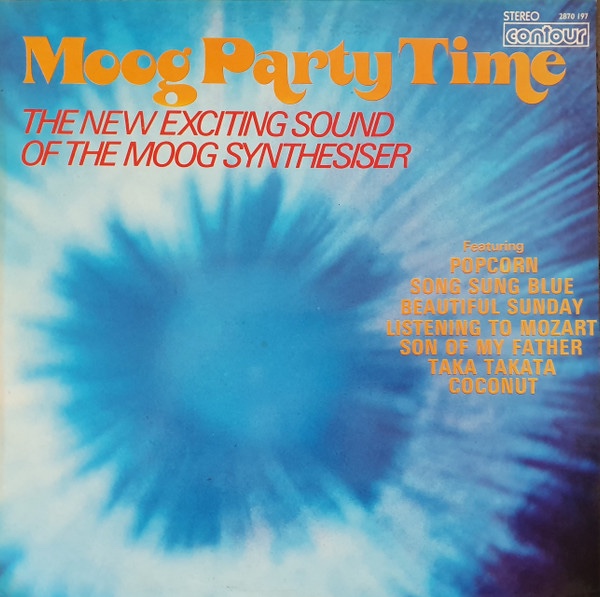
A festive mood descended on Jon’s and my last evening of vinyl and vino for 2023, beginning with the impossibly groovy Moog Party Time LP (1972) that Jon had secured at Woburn’s market the week before. A post-JaM Session text conversation with my friend Bryan led to the acquisition of The Moog Machine’s Christmas Goes Electric LP (1969) from Discogs, so next year’s final JaM Session looks set to be wild.
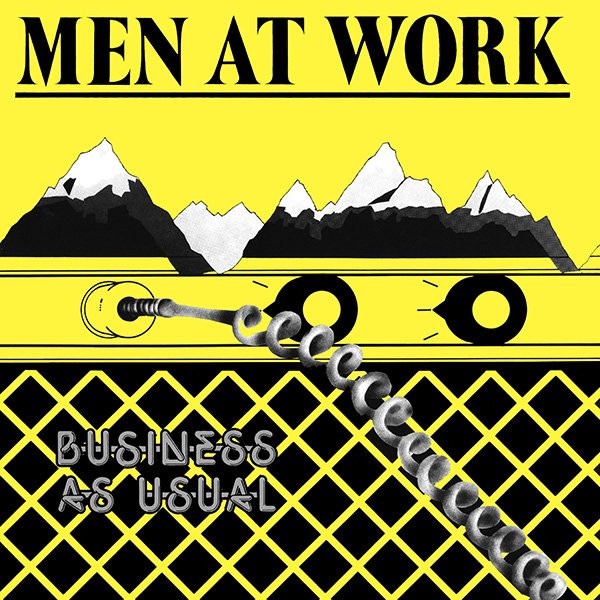
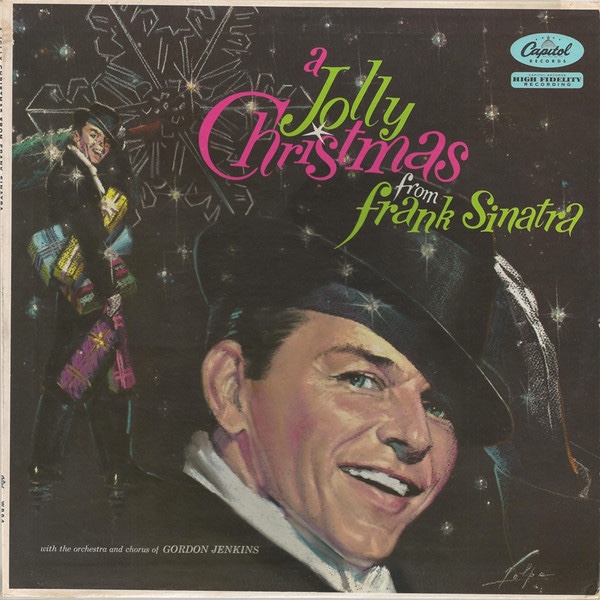
From Moogs to Men At Work and their 1982 album Business As Usual, then onwards like an out-of-control sleigh ride to Frank Sinatra’s A Jolly Christmas From Frank Sinatra (1957). Old Blue Eyes’s version of ‘Jingle Bells’ is, to this writer, nothing short of perfection.
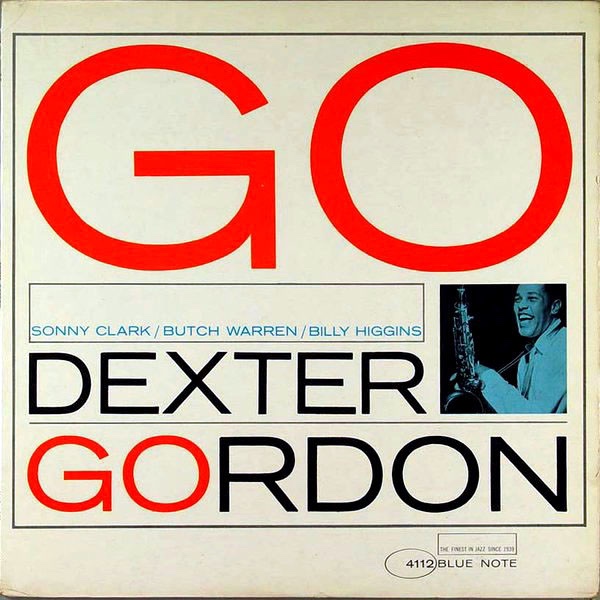
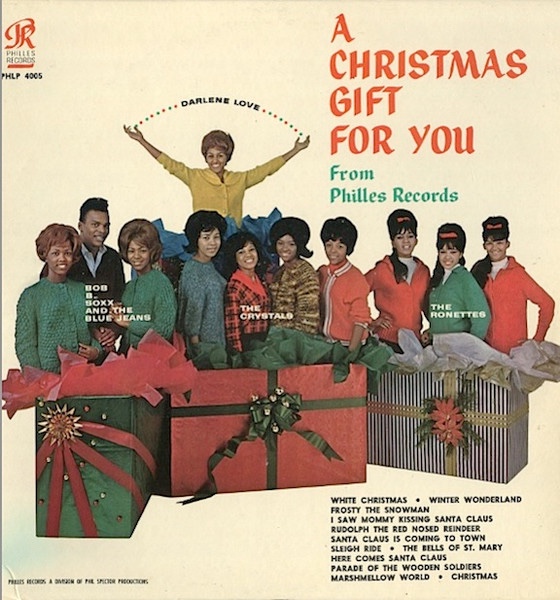
Dexter Gordon’s Go! (1962), with its seminal opening cut ‘Cheese Cake’, took things in a hard bop direction, and we concluded the night with Phil Spector’s A Christmas Gift For You (1963).
Conversation topics included sandwich thievery, Jon’s experiences of working at a Royal Mail sorting office as a student, and the disappointing fact that Milton Keynes is not named after economics titans Milton Friedman and John Maynard Keynes but rather the medieval village that was swallowed up by MK’s creation. Breadsticks, pitta, olives and a Christmas Eve hangover’s worth of red wine provided the snack and drink accompaniment.
The eagle-eyed will note that the write up of JaM Session VII is missing. This is because I forgot to write that one up and can no longer remember what we played – but it definitely included Supertramp’s Breakfast In America from 1979 and an album of New Age electronic music that I’ll be writing about here in 2024.
With ALIVE! In The Studio, trumpet and flugelhorn virtuoso Charlotte Keeffe helms a dexterous collection that showcases her ability to move effortlessly between the myriad dimensions of jazz. Unlike her solo material, wherein she embraces electronics to augment and complement her playing, as leader of a quartet, the emphasis is naturally on coordination among her fellow musicians – Ashley John Long (double bass), Ben Handysides (drums) and Moss Freed (guitar).
At the more extreme experimental end of the jazz spectrum, the ‘1200 Photographs’ triptych is largely focused on texture and noisy improvisation. Here, Keeffe leads the way with a series of fragments and gestures that writhe and fidget, accompanied by unpredictable percussion and scratchy guitar figures that occasionally settle into searching, blues-y statements.
At the other extreme, ‘A Horse Named Galaxy’ leans into a more melodic style of playing, with Keeffe’s central refrain having all the classic, memorable qualities of a Miles Davis riff circa ‘Freddie Freeloader’, the contrapuntal melodies of Long’s bass creating a easy, languid unity at the core of the piece. Even as the track collapses into a sprawling, distant cousin of itself, Keeffe resurrects her motif at various different tempi, the melody taking on an increasingly hyperactive tone as everything collapses in on itself. Speaking of Miles, ‘EastEnders’ is not a jazz rendition of the beloved UK soap opera’s theme tune but a deeply funky, expansive cut reminiscent of his wild, electric-period statements.
‘Sweet, Corn’ is one of the most captivating tracks on this collection. A white hot, almost urgent rhythmic backbone dominates this piece, the tension only breaking when Keeffe’s horn erupts into the foreground. For some reason, brief moments in the track remind me of ‘Jet Song’ from ‘West Side Story’, though every time I alight on what I think it is that evokes that memory, it writhes away from me elusively.
Adventurous, playful and reverential, with ‘ALIVE! In The Studio’, Keeffe offers different perspectives on the jazz form, while clearly having a huge amount of fun. The clue is in the title – to listen to this album, and to experience its many gestures, is to truly be joyously, gratefully and rapturously alive.
ALIVE! In The Studio by Charlotte Keeffe / Right Here, Right Now Quartet was released September 22 2023 by Discus Music.
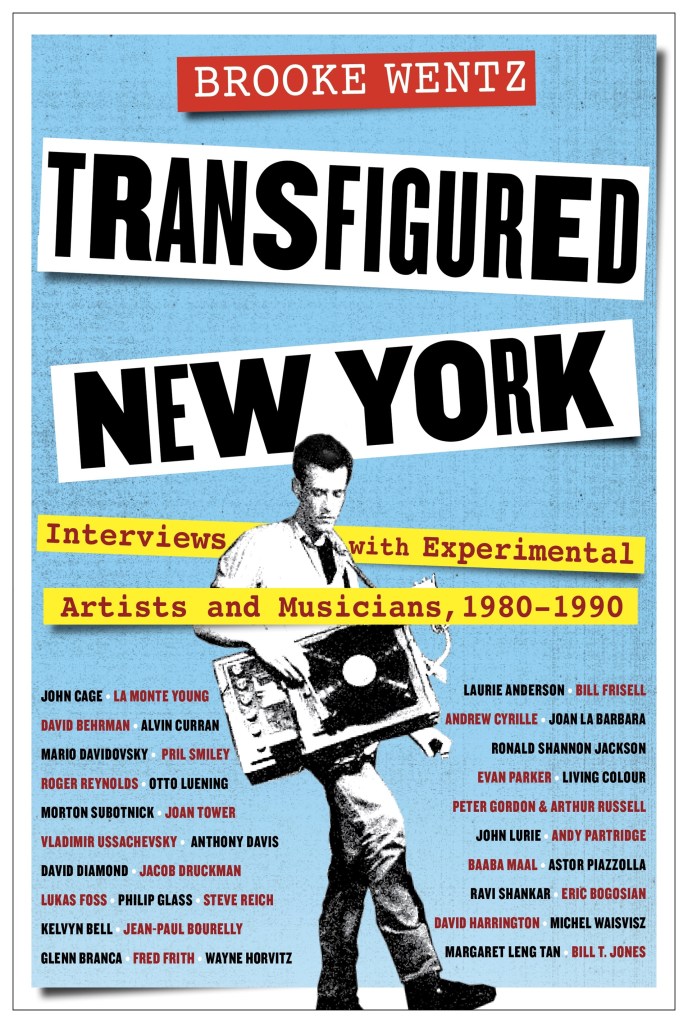
I can think of no better way of describing the eclectic, diverse, inscrutable musical melting pot that was New York in the late 1970s and early 1980s than a moment recounted by Brooke Wentz in her book Transfigured New York, a collection of radio interviews made between 1980 and 1990.
Wentz, who presented a long-running, adventurous radio show called Transfigured Night on New York’s WKCR-FM, was interviewing dexterous avant garde jazz bassist Andrew Cyrille in September 1986. Cyrille was midway talking about spontaneity and improvisation. However, the interview needed to be cut short because Wentz’s next guest had arrived. That next guest was the composer John Cage. On one level you could see this event as two different generations passing each other, metaphorically perhaps, in the corridors of culture; I like to think that it actually demonstrates how many musical forms could co-exist and thrive simultaneously in New York. The Brazilian percussionist Cyro Baptista nails it when he describes the city as “a caldron of misfits from all over the planet.”
Manhattan, geographically, is an island of just 23 square miles. Small and compact when contrasted with sprawling cities like London or Los Angeles, it’s hard to think of anywhere else that’s contributed so much to music, and, within that so much so-called ‘experimental’ music. Wentz’s radio show acted as a critical portal into that unfolding cultural significance, while her interviews with key figures – selected and collated in Transfigured New York – were illuminating insights into the motivations and works of figures that operated on music’s wild and essential fringes.
Wentz began her radio show in 1980. Starting then was important, as it allowed her to catch some of the architects of contemporary music before they passed away, or before resonant personalities like La Monte Young became reticent about being routinely interviewed. Her interviews with some of electronic music’s founding fathers – the Columbia-Princeton Electronic Music Center team of Vladimir Ussachevsky and Otto Luening in particular – are illuminating and full of details that were new to me. They each shine a light on their atypical paths to electronic music, and how the earliest electronic studios were themselves started. One especially interesting area was around how progressive pioneers like Ussachevsky were with early computers, long before their use as creative – rather than functional – tools had been identified.
Transfigured New York is divided into nine sections – ‘The Founding Theorists’, ‘The Materials Scientists’, ‘The Composers’, ‘The Iconoclasts’, ‘The Vocalists’, ‘The Dissenters’, ‘The Popular Avant-Garde’, ‘The Global Nomads’, ‘The Performance Artists’. These are convenient, but relatively arbitrary groupings given how fluid New York’s cultural diaspora was, and how welcoming a city it was for visiting performers such as Ravi Shankar. Each interview is also accompanied by smaller, Post-It Note-style excerpts. These footnotes – with everyone from Meredith Monk to Ikue Mori to Zeena Parkins – aren’t in any way indications of lesser importance, but they go a long way to reflecting how many individuals were hard at work setting up New York as the crucible of post-War creativity.
As Wentz’s show – and her musical research – evolved, she began embracing African music. The latter interviews of the book bring this personal interest to life. She excitedly recounts a trip to Africa and hanging out at Baba Maal’s Senegalese home while there. Happily, for Wentz, New York’s ever-evolving music frontier was also embracing broader cultural inputs more or less simultaneously, and her radio interview with Maal is undoubtedly among Wentz’s most impassioned conversations.
Comprehensive though Transfigured New York is, I was left feeling that there were other sides to this story that need to be told. Interviews with Sonic Youth’s Lee Ranaldo, Rhys Chatham and Glenn Branca each highlight how easily the so-called avant garde meshed with No Wave. Wentz hints at that when interviewing Peter Gordon about his Love Of Life Orchestra : “You’ve said that the group is an attempt to create a ‘democratic music’ that includes people from all sorts of backgrounds – classical music, rock, funk, poetry, rock, funk, poetry, visual art. That seems like a pretty good reflection of the city’s downtown scene.”
We get a tantalising glimpse, again, of how possible it was for different scenes to cohabit when artist Mikel Rouse talks about Philip Glass performing at Peppermint Lounge, and Glass himself talking about how his arpeggio-filled minimalist classical music was embraced by rock music fans. The apparent inconsistency between reading a wonderfully in-depth interview with John Cage where he talks about not enjoying noise, and another with Glenn Branca where he talks about Cage appreciating the volume he operated at quite honestly blowed my mind, but my mind was blown on almost every page of this engaging, near-exhaustive collection.
Ultimately, what Wentz’s book reaffirms is that New York, during the period she covers, was a small island with some of the biggest ideas and contributions. These first-hand accounts are among the most illuminating pieces I’ve ever read with players that often feel inaccessible. To have so many of them all surveyed in one book, just like the sheer number of important experimental musical figures who have been active in Manhattan, is a gift to us all.
Words: Mat Smith
Transfigured New York by Brooke Wentz was published November 16 2023. With sincere thanks to Meredith Howard at Columbia University Press, Gretchen Koss at Tandem Literary and Reed Hays.
The premise for Carl Knott’s latest boycalledcrow release is an imagined world where decommissioned transmitters and dusty radios awake from the slumbers of redundancy and begin functioning again. Imagine fractured sounds, faltering rhythms and glitchy sonic non sequiturs, transmitted abruptly into a era more used to the vapid sterility of streaming and internet radio.
I can’t think of a better place for Knott’s music to exist, even if it is fantastical. As boycalledcrow, his work has always occupied a sort of fragmentary landscape of its own: sounds form, burst into sharp sonic fractals and re-emerge in infinitely rearranged forms; melodies falter and collapse in on themselves; guitars, betraying his origins as a folk musician, offer recognisable shapes but are clipped, alien and discordantly unsettling.
Each of the fourteen pieces here is accompanied by a brief and evocative poem, and at times it feels like these collections of words have been subjected to the same skewed logic with which Knott’s music is developed. The verse to accompany the title track is a more adroit description of his work than any reviewer could muster:
And now He’s pulling all of the strings A cat’s cradle Of tangled tunes Weaving paths And making up names
I’ll get my coat. I would encourage you to ignore everything I’ve ever written about Knott’s music.
None of this is intended to suggest that //M E L O D Y_M A N is some sort of messy, randomised sprawl of an album, even if the complicated algorithm-like names of the tracks might indicate otherwise. To suggest this would be to undermine Knott’s skills as a sound artist. In fact, quite the contrary – the album contains some of Knott’s most beatific, resonant works to date. ‘God * Woman = C I R C L E ()’ and ‘dr dr dr || WOODS 777’ consist of tiny cycles of pretty melodies that evoke comparison with Steve Reich, offset by plaintive, organic gamelan textures and shimmering reverb that, when combined, produces an arresting, enveloping minimalist warmth.
Nevertheless, there is something endlessly intriguing about Knott’s more restless moments. The velocity at which ideas form and are replaced creates a sort of turbulence within pieces like ‘(S) illy Song #2’ that leaves you more than a little dizzy as it skips and hops along a path seemingly all of its own. Such pieces are an offset to more delicate tracks like ‘’, ‘~ f o r e s t … MOON ~’ and ‘SUN sun +’, leaving the listener stood perpetually on a precipice of expectation.
And that’s what’s ultimately so interesting here: as one track finishes and another starts, you find yourself trying to anticipate where Knott might pivot you to next. To predict this, however, is a fruitless endeavour, and it’s that sense of bold adventurism that makes //M E L O D Y_M A N such an extraordinary and enriching listening experience from start to finish.
//M E L O D Y_M A N by boycalledcrow is released October 27 2023 by Waxing Crescent.
boycalledcrow recently recorded a piece for my Mortality Tables collaborative series LIFEFILES. Listen to ‘LF13 / Westbury’ here.
You must be logged in to post a comment.