Evil Gal – Brown Acid / The Village Of Doom

A cassette outing for this 28-minute outburst from Canada’s Evil Gal, originally released digitally last November, here released through the uncompromising Industrial Coast imprint. Evil Gal is an offshoot of New Brunswick’s Women Of The Pore (M Gatling), here with additional sonic architecture from Montréal’s Matthew Donnelly (Fecal Mutiliation).

Both artists have a long pedigree in the world of noise, but ‘Brown Acid’ and ‘The Village Of Doom’ play with a different, slightly more restrained sense of violence, feeling more like a low-budget soundtrack to a particularly vivid video nasty only available through the dark web. ‘Brown Acid’ creeps, prowls and stalks with extreme menace, proceeding on a murky bass sequence over which all manner of sounds – percussion, sax, general unholy disquietude – are overlaid. It’s a thick, gloopy sonic goo that leaves indelible stains on your psyche. In a good way.

‘The Village Of Doom’ is more sparse, though just as freakishly uncomfortable, opening with oscillating sounds like warbling sirens, the hiss of escaping air, distortion, micro-loops of unknown origin and randomised non-rhythms and electronics that sound both chaotic and intricate. Nothing here stays around for long; passages are cut off just as they start to become repetitive, engendering a queasiness and rapid motion that means its fourteen minute duration nonchalantly zips by before ebbing away into surprisingly pleasant texture.

Brown Acid / The Village Of Doom by Evil Gal is released January 3 2020 by Industrial Coast.

Words: Mat Smith

Waclaw Zimpel – Massive Oscillations

waclawzempel_massiveoscllations.jpeg

For anyone interest in the rudiments of electronic music, titles don’t come much more thrilling than Massive Oscillations, the name of the second album by Polish multi-instrumentalist Waclaw Zimpel. It is both a perfectly accurate depiction of the structure of the title track’s enormous, ever-shifting undercurrent of snarling, wild, grinding synth lines, and the guiding principle that runs throughout the record.

The album finds Zimpel, an arsenal of vintage electronics from oscillators to tape machines, a piano, his clarinet and a guitar operating in a many-layered excursion into the underexplored territory between the slow evolutions of minimalism, avant-garde jazz and intense electronics. The four tracks were recorded at Willem Tweestudio in Den Bosch, Netherlands over a period of nine days and then mixed by James Holden, a musician who knows more than a thing or two about fusing together jazz and electronics (see his deployment of Ornette Coleman’s harmolodic theory with fellow auteur Marcus Hamblett for evidence).

Both ‘Massive Oscillations’ and ‘Sine Tapes’ deploy a tension between wandering electronics and Zimpel’s clarinet, resulting in something that can – on one level – appear meditative and soothing but at other times presages a dirty, turbulent discordancy. The expressive reed playing could easily be allowed to dominate, but instead it threads noisily through the wavering, oscillating tones that dominate the foreground, only rising to the top when developed into thick, heavy blocks of drones, squeals and resonant melodies.

‘Release’ is perhaps the biggest departure from the sonic architecture used on the preceding three tracks, given that the electronics take something of a backseat, reduced to textural white noise, gentle shimmers and air cylinder hissing. Here we find Zimpel exploring territory not dissimilar to Terry Riley’s In C, repeated motifs for prepared piano, clarinet and guitar quietly developing over the course of its eight beatific minutes. The introduction of heavenly vocals provides the piece with an unexpectedly transcendent, dream-like quality.

Massive Oscillations by Waclaw Zimpel is released January 31 2020 by Ongehood.

Words: Mat Smith

(c) 2020 Further.

Ocean Viva Silver – Îpe

ipe image.jpg

Ocean Viva Silver is the pseudonym of Valérie Vivancos, a Paris-based sound artist whose work centres around an interest in the physical properties of sound. Îpe, her new cassette for Industrial Coast, forms part of a series called Releasing The Spirit Of Object wherein a combination of electronics, found sound and musique concrète electroacoustics are used to explore a particular object. In the case or îpe, that object is a piece of wood, the intention being to identify its distinct voice within two twenty-minute compositions.

The end result is forty minutes of complex and thrilling noise, carefully curated so as not to become a sprawling, dissonant, ugly collection. On ‘Par Le Menu’, you hear blocks of reverberating sound juddering into view, forming a murky bass tone underpinning squeaks, taps, hissing, violent squalls of distorted electronics and an unpredictable universe of sonic colour. There are moments here of intense beauty, ambient pads emerging suddenly out of nowhere to give the piece a symphonic, beatific edge.

The B-side, ‘A Contrario’, dispenses with the languid pace of its counterpart and instead opts for a sense of turbulent volatility, all skittish sounds and a wild, restless, ever-changing harshness, interspersed with indecipherable vocal incantations.

Îpe by Ocean Viva Silver is released January 20 2020 by Industrial Coast.

Words: Mat Smith

(c) 2020 Further.

Robert Haigh – Black Sarabande

Everything I’ve ever written about any album, concert or piece of music is wrong.

I know this because of something that happened while I was quietly listening to ‘Arc Of Crows’ by pianist Robert Haigh, a track taken from his new album Black Sarabande, at the weekend while reorganising my loft. The experience was a poignant one in more ways than one, but not because of the crawling around on my knees sorting out boxes; that was just painful.

‘Arc Of Crows’ is an arresting, quiet, delicate piece of piano music nodding gently and reverently in the direction of Satie and it immediately stopped me in my tracks, a box of Christmas decorations in hand, and I found myself standing there for the entirety of its three minutes and forty-eight second duration, in that brief passage of time contemplating everything I have ever done, everything I have ever hoped for, the highs, the lows, the disappointments, the missed opportunities, the what-ifs, the future – the lot.

It very possibly had the profoundest effect on me that any piece of music has had or will ever have. Possibly this was owing to its sparseness, being simply Haigh’s piano accompanied by a soft, imperceptible sound in the background, somewhere between a brushed cymbal, muted traffic noise or a curtain of rain; or possibly because of its textures, its hidden depths and its delicate, resolute, outline.

Toward the end of my immersion in my thoughts, my teenage daughter arrived in the room in which the loft happens to be, and visibly and audibly recoiled at Haigh’s piece. She complained of it making her feel claustrophobic, panicked, uncomfortable and very possibly called it ‘weird’ (both of my daughters call all of the music I listen to ‘weird’, incidentally). She was still griping about it over lunch the next day. I’m at a loss to understand what it is that she heard that I didn’t, what quality it was that I found mesmerising but which she found anxiety-inducing.

Hence my conclusion that you can’t trust anything I write. Read on at your peril.

The reason Black Sarabande might have got me in a contemplative mood is possibly because it finds Haigh ruminating on his own life, specifically his childhood in the mining village of Worsbrough in South Yorkshire; his father was a miner and his early years were spent among the strange culture clash between the vestiges of the Victorian Industrial Age and the rural hills and dales through which progress had permanently left its mark.

That tension can be be found mournfully lurking in pieces like ‘Stranger On The Lake’ or ‘Ghosts Of Blacker Dyke’, not in an air of machine-driven harshness but just a sort of echo of one; little sounds drift in and out of view, sometimes melodically, sometimes as what could be a distant train clattering on its tracks, sometimes as unidentifiable noises with a brittle edge as if broken forcibly from something else, leaving only a vague impression of what was there before. Other pieces, like the genteel arpeggios of ‘Progressive Music’ are simply unadorned moments of intense wonder, like a hopeful sunrise on a frosty morning, full of promise and serenity and freighted with a welcome, disarming clarity.

Black Sarabande by Robert Haigh is released January 24 2020 by Unseen Worlds.

(c) 2020 Further.

VEiiLA – The Nation Of One

the-nation-of-one- FRONT.jpg

The thing that instantly grabs you about The Nation Of One, the debut album from Saint Petersburg duo VEiiLA, is the smoke-shrouded vocal of Vif Nüte. Possessing a voice capable of delicate musing to anguished frustration, hers is a vocal infused with equal doses of rich jazz phrasing and raw bluster, often within the same track. That vocal is best showcased on the pairing of ‘Dust’ and ‘Trust’ that open The Nation Of One, or the languid Balearic shimmer of ‘ReDive’. On these pieces, her voice is matched to delicate, if restless, electronics, a natural sparseness in these accompanying structures allowing the voice to powerfully occupy the foreground with a beautifully devastating depth.

These tracks are perhaps atypical for VEiiLA, however. Their principle focus is on tracks conforming to clubbier expectations, Nüte’s voice becoming a texture within a grid of beats, pulses and the obligatory rises and falls of any descendant of house music. Here you find a a compelling tension between Nüte’s innately soulful leaning and the clinical precision of her and Bes Eiredt‘s music, with tracks like the restrained and bitter ‘Exorcism’ carrying a stridency and emotional power as the song slowly rises to a necessary release.

Elsewhere, the evolving, transcendent ‘Farewell’ might be the duo’s most complete statement, with a crisp, crunchy beat, Rhodes-esque keys and jazz piano knitting seamlessly together with a mournful and tenderly enveloping vocal. Its concluding moments unexpectedly coalesce into a clamorous, edgy stew of melodic spirals, angular bass shapes and ghostly, evocative howling.

The Nation Of One by VEiiLA is released on January 15 2020 by Womhole World.

(c) 2020 Further.

John Chantler / Steve Noble / Seymour Wright – Atlantis

Atlantis is the second album from electronic musician John Chantler’s vibrant trio with drummer Steve Noble and alto saxophonist Seymour Wright. Their first, Front And Above, was recorded at Dalston’s Café Oto, the Ground Zero of London’s improvised music scene and the birthplace of many new and sonically challenging collaborations, including Wright’s ongoing work with Noble and his GUO unit with Daniel Blumberg. Their first album with Chantler was heavily edited to draw out a focus on its emptiest passages, whereas Atlantis’s feisty declaratory aura bespeaks a wildness that was more or less intentionally scrubbed out from Front And Above in the manner of Robert Rauschenberg’s 1953 Erased De Kooning sketch

Not that this is just some on-the-spot spontaneous date lacking any sort of overarching vision: though Atlantis was recorded and mixed in a single day (24 January 2018) at the very Stockholm studio space that ABBA once called home, it was preceded by a week of intense trio rehearsals at the Fylkingen arts space in the city and a smattering of gigs in Norway. Listening to the three pieces presented here, that time spent in each other’s company creates a sort of seamless, highly responsive intermeshing of the three musicians, threaded through which emerges a kind of restless, gripping energy and tension.

A key ingredient in pieces like the twenty-two minute ‘Class I – A Single Entrance Created From A Gap In The Bank’ is a sort of power drumming that’s often absent from improvised music, where the emphasis is more frequently on balance, texture and abstract percussive pointillism. Some of the impact here comes from the studio itself, where the space’s dynamics created a rich, natural reverb that loaned itself to a heavier form of playing. Many of the most thrilling moments arrive when Noble works himself into a cyclical frenzy, the response from Wright being a howling, guttural tone and through which Chantler weaves elastic drones and grimy extraterrestrial splinters.

Introspection also emerges elsewhere in that piece’s passage. A delicate tipping point arrives in the middle five minutes involving what sounds like tuned percussion interacting with a shimmering, enveloping blanket of lyrical synth tones and an engaging high-pitched whine like compressed air escaping gradually from Seymour Wright’s sax. When the piece inevitably builds back up toward its denouement, it is led by Chantler’s synths becoming restless and as angry as a swarm of irritated hornets, inspiring a heavyweight percussion response and angry saxophone growls.

Atlantis by John Chantler / Steve Noble / Seymour Weight is released January 16 2020 by 1703 Skivbolaget.

(c) 2020 Further.

2019: From The Side Of The Desk

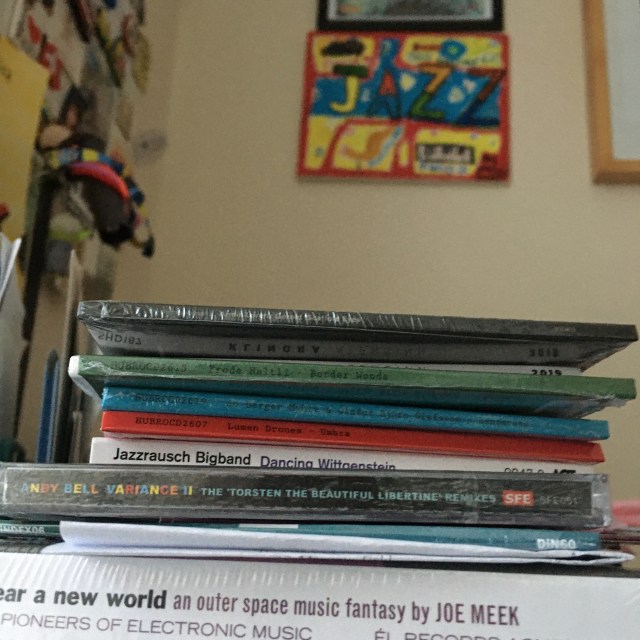
My desk at home is a mess, as Mrs S continually points out to me.

It is a place for incoming mail to accumulate, a home for broken bits of things that need to be repaired, seven-inch singles that were taken out of their alphabetised boxes and which never quite found their way back, research materials for projects I may or may not ever finish, an in-tray containing goodness-knows-what and somewhere, somewhere, somewhere, a miniature Zen garden; I imagine that if the bird statue could come to life it would be shaking its head in dismay at the very un-Zen chaos that surrounds it.

On the left hand side of the desk is a pile of CD promos graciously sent to me over the course of the year which never quite got reviewed. This troubles me endlessly. And so, in an effort to repay that generosity and goodwill, and so I can show Mrs S that I’ve cleared at least some of the detritus off my desk, here’s a clutch of short reviews of some of the albums I never quite got around to in 2019.

“A good many back payments are included,” said Ebenezer Scrooge as he whispered his donation to the same charity collectors he had dismissed several pages before in A Christmas Carol, and so this is for all the labels and PRs and artists who graciously shared their music with me this year but which I then seemed to uncharitably ignore.

I’ll keep the desk – both physical and digital – clearer in 2020; I promise.

Jazzrausch Bigband – Dancing Wittgenstein (ACT)
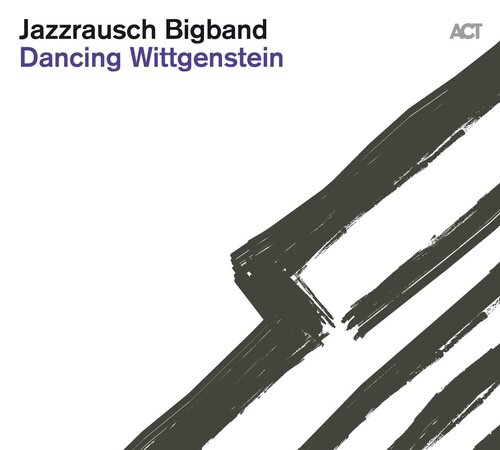
In which the Roman Sladek and Leonhard Kuhn-led forty-piece big band’s 2018 self-released album gets a shiny reissue by the ACT imprint. The album found the band showcasing their distinctive flavour of acoustic jazz augmented by techno beats and authentic synth flourishes, with lyrics derived directly from the work of Austrian philosopher Ludwig Wittgenstein. It’s bonkers, but it works – honest.

The album’s finest moments arrive on the eponymous opening ten-minute piece – replete with cycles of Terry Riley motifs – and the hypnotic house pianos of ‘Continuous Dirichlet’, the latter forcing headache-inducing Googling of incomprehensible statistical theory.

Lumen Drones – Umbra (Hubro)

Umbra is the second album from Norway’s Lumen Drones, a trio of esteemed fiddle maestro Nils Økland, guitarist Per Steinar Lie, and drummer Ørjan Haaland. Lie and Haaland’s day jobs in the post-rockers The Low Frequency In Stereo provides the weighty folk-blues bedrock of the standout ‘Droneslag’, whereupon Økland’s Hardanger fiddle provides a noisy, discordant tension.

In complete contrast, the trio’s seamless interplay on ‘Etnir’ produces the album’s most serene and dreamlike piece, full of beguiling wonder and ethereal, mystical texture. Umbra was released on the inestimable Hubro label, the first of three releases in this list that I failed to review this year.

Elephant9 – Psychedelic Backfire I & II (Rune Grammofon)
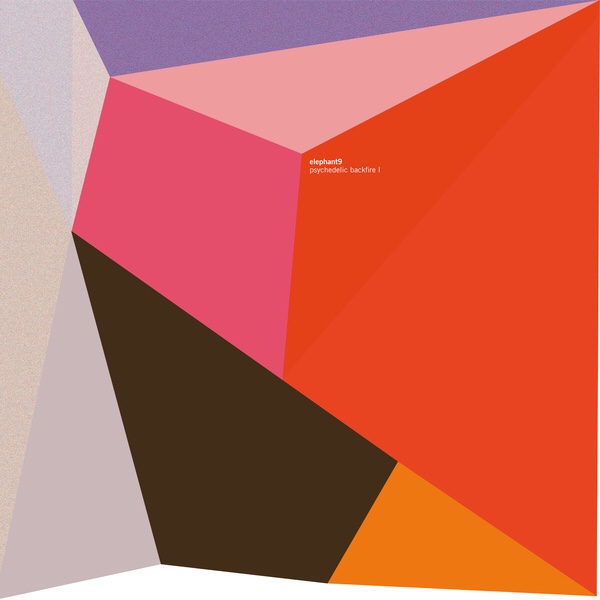
Norway jazz-rock supergroup Elephant9’s double live collection was recorded at Oslo’s Kampen Bistro in January 2019 and finds the trio of Ståle Storløkken (Hammond, Rhodes, Minimoog, Mellotron), Nicolai Hængsle (bass) and Torstein Lofthus (drums) ripping through white-hot takes of tracks from their five studio albums.

The first set features energetic re-treads of their debut album’s title track ‘Dodovoodoo’, which here seems to traverse the paper-thin frontier between Can at their most freeform Chick Corea’s Return To Forever at their most lysergic. Two versions of the evolving groove of ‘Habanera Rocket’ – one on the first set as a trio performance and one on the second augmented by Reine Fiske’s additional guitar – riff on the track’s central rhythmic shuffle, the latter featuring Fiske’s guitar prowling feistily around Storløkken’s dexterous keyboard work in a truly breathtaking duel.

Afenginn – Klingra (Tutl Records)
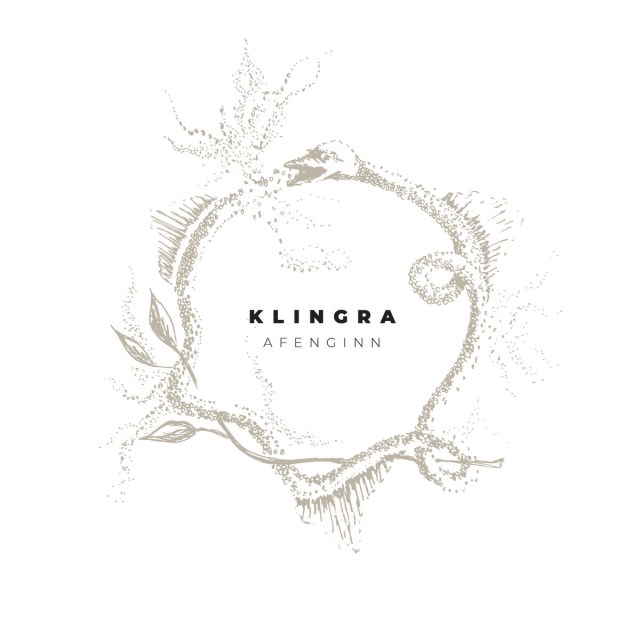
The work of Danish composer Kim Rafael Nyberg, Afenginn offers a distinctive take on modern classical composition that draws parallels with the work of Yann Tiersen. Tiersen’s vocal collaborator Ólavur Jákupsson can be heard across the eight pieces included here, as can The Danish String Quartet, percussionist Knut Finsrud, bassist Mikael Blak, drummer Ulrik Brohuus, the twin pianos of Teitur and Dánjal á Neystab and the mournful violin of Niels Skovmand.

To call this body of work haunting would be an understatement, with the gentle melodic washes, electronic textures and layered jazz percussion of ‘Ivin’ and the growling analogue synth-heavy coda on the towering ‘Skapanin’ having a particular resonance.

Jo Berger Myhre / Ólafur Björn Ólafsson – Lanzarote (Hubro)
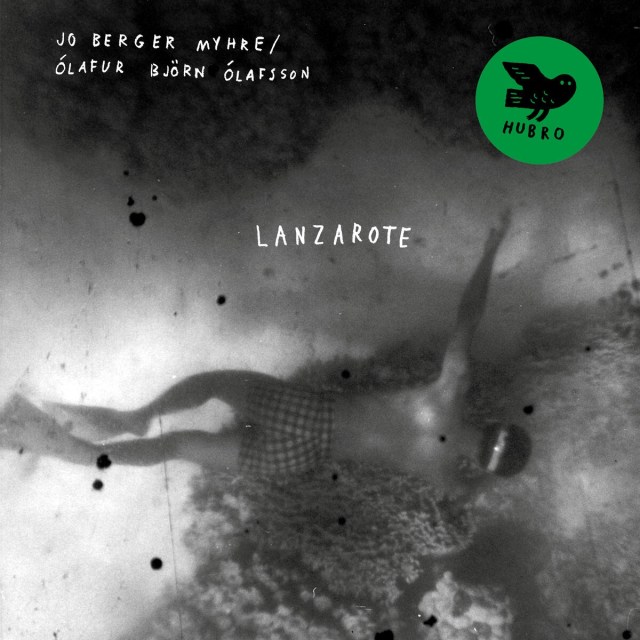
Lanzarote is the second outing on Hubro for Norwegian bassist Jo Merger Myhre and keyboard / percussion guru and Jóhann Jóhannsson collaborator Ólafur Björn Ólafsson, and follows 2017’s The Third Script.

Their new album finds their simpatico approach to texture and sound augmented by resonant brass contributions from Ingi Garðar Garðarsson and Eiríkur Orri Ólafsson. The slow-build and ultimately noisy layered crescendo of ‘Atomised – All We’ve Got’, features buzzing electronics, urgent drumming and anguished horns, the whole thing sounding a lot like the end of days before collapsing into a passage of muted reflection. The tuned drums of the quiet ‘Current’ evokes comparisons with Manu Delago, its percussive core offset by Myhre’s searing double bass melodies and gentle spirals of delicate, inchoate Moog.

Armin Lorenz Gerold – Scaffold Eyes (The Wormhole)

Armin Lorenz Gerold is a an Austrian multimedia artist who also performs under the name wirefoxterrier. Currently based in Berlin, Gerold’s primary focus of late has been on altering perceptions of the radio play, with Scaffold Eyes taking the form of a live performance for Gerold’s voice augmented by pre-recorded sounds delivered through a binaural speaker installation.

Originally performed at Berlin’s KW Institute in November 2017, the CD release on The Wormhole presents Gerold’s rich narrative as a noir soundworld, featuring occasional forays into café jazz, harpsichord classicism and delicate sections of pianissimo texture. Gerold’s soft diaristic delivery is accompanied by additional segments performed by Doireann O’Malley and Miriam Stoney, each word imbued with a strange, haunting resonance, even when describing quotidian events and observations. The effect is not dissimilar to the strange, unresolved ambience of Patrick Modiano’s Missing Person, and it’s hard not to imagine Gerold’s work resplendent in murky monochrome, lit by the diffuseness of ineffective street lighting.

Frode Haltli – Border Woods (Hubro)
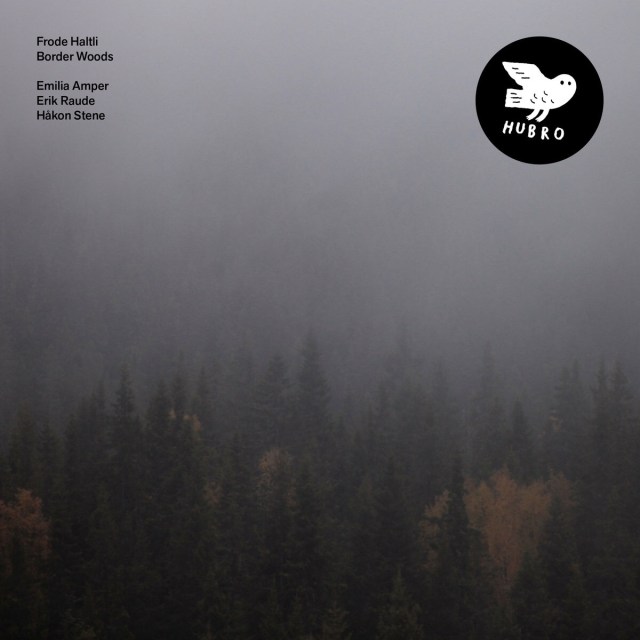
Frode Haltli is an accordionist and no stranger to the Hubro imprint. For Border Woods, he is joined by the esoteric percussion of Håkon Stene and Eirik Raude, and his distinctive accordion playing is interwoven with Emilia Amper’s nyckelharpa (a Swedish keyed fiddle).

On tracks like the concluding ‘Quietly The Language Dies’, the quartet’s unified sound centres on a seamless interplay between the accordion and nyckelharp, veering from stirring (if mournful) melodic alignment to powerfully discordant drones. Beneath them, Stene and Raude’s percussion is ephemeral and textural, a gentle foundation of tuned drums providing an unexpected counterweight. At the other extreme, the fifteen minute ‘Mostamägg Polska’ channels a particularly vivid flavour of traditional Nordic folk music, interspersed with moments of beatific ambience.

With thanks (and apologies) to Ian, Jim and Philip.

Words: Mat Smith

(c) 2019 Further.

BUNKR – The Initiation Well Remixed

The counterpart to BUNKR’s debut album The Initiation Well from earlier this year, this collection sees a diverse collection of electronic artists tackling Brighton-based James Dean’s exquisitely-executed pieces. The Initiation Well was a brilliant, if relatively understated gem of an album; an album that didn’t come with glossy promotion or a massive PR budget and yet which exuded a confidence, panache and depth very often absent from a lot of solo electronic efforts that cross this writer’s (virtual) desk. The happy news is that each of the mixes here simply shine a light on how good the original material was in the first place, even if they take Dean’s vision off down interesting, and sometimes unexpected pathways.

Fujiya & Miyagi return the favour offered through BUNKR’s mix of their ‘Personal Space’ with a fresh take on ‘Solitary Drift’, here recast as a mournful vocal pop track thanks to the addition of uncharacteristically muted vocals from F&M’s David Best. The result is a towering synth pop epic moving along on a waltz rhythm and dystopian path. ‘The Initiation Well’ is given a reverential acid techno retread by Jonathan Krisp that immediately transports you back to a mid-90s Richie Hawtin night, beautifully augmented by ambient washes and blurry vocal snippets.

Elsewhere, Echaskech’s mix of ‘Left For Dust’ flips the original into deep minimal techno shapes, its fluttering, filtered melody and unswerving rhythm given a firmness and urgency as the mix progresses, while Luxtron’s remix of ‘East Of Eden’ sounds like an updated version of Aphex Twin’s ‘Xtal’ from Selected Ambient Works 85-92, all woozy texture and shimmering, obfuscated melodies over a restrained progressive house beat.

Perhaps the most surprising moment in this set comes with Infinite Scale’s mix of ‘Docking Procedure’, which pushes the track squarely into deep dub territory, replete with springy percussion, haunting echo and stuttering rhythms offset by squelchy and vibrant 303 flourishes.

The Initiation Well Remixed by BUNKR was released November 29 2019 by VLSI Records.

Words: Mat Smith

(c) 2019 Further.
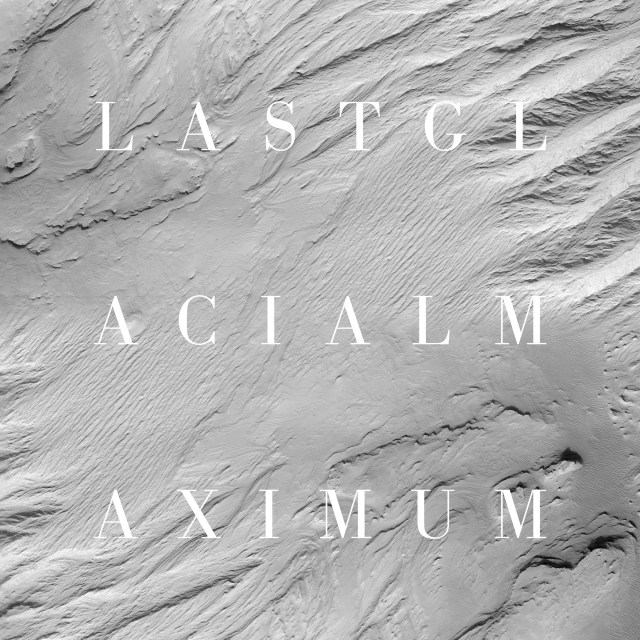
Laura Agnusdei – Laurisilva

Laura Agnusdei is an Italian saxophonist, electronic musician and all-round deep thinker, whose musical endeavours range from studying electronic music in The Hague to playing sax in psych groups to producing complex melodic music fusing together all of her seemingly incompatible disparate interests. Laurisilva, her debut full-length album takes its name from ancient subtropical forests, the first part of its name providing a link to the Latin etymological root word that begat her first name.

Recorded in The Hague where she completed her Masters in electronic music and her Bologna bedroom, Laurisilva is an absorbing suite of six pieces that seek to evoke the natural environments of the forests that inspired its creation. Here, on tracks like the mesmerising title track or ‘Epiphyte Blues’, you find Agnusdei’s sax playing providing effortlessly evocative motifs, augmented by gurgling analogue electronics, intricate sound design flourishes and delicate processing, occasionally seeing a range of collaborators dropping in jazzy reeds, flutes and trumpet. The result is a sort of wonky electroacoustic big band music somewhere on the continuum between jazz, exotica, Warp electronica and modern classical (whatever that is).

The departure from woodland concerns arrives in the form of ‘Shaky Situation’, a skittish, randomised composition that finds Agnusdei layering in insistent spoken word instructions from what sounds like a particularly curmudgeonly jazz band leader about the need to practice playing daily. Here the sound palette moves from hooky electronic passages that nod to both Aphex Twin’s Selected Ambient Works and Terry Riley’s In C, blurry sax lines and dissonant clashes of instrumentation, the result being something unpredictable, intentionally messy and gleefully disjointed.

The standout moment ‘Jungle Shuffle’ is the closest Agnusdei gets to a form of traditional jazz, her playing running the gamut from early 1920s swing to wild free jazz, underpinned by a fractured rhythm belonging on a long out-of-print Disney album of Polynesian sounds subjected to a precision-sharp digital scalpel. By the track’s conclusion, all traces of reverential jazz reference points have become buried, mere distant aural memories beneath a forest floor carpeted with broken beats and splintered percussion.

Note to listener: to unintentionally evoke the legacy of Mr John Peel, this album also sounds superb at 45rpm.

Laurisilva by Laura Agnusdei was released November 29 2019 by The Wormhole. With thanks to Don Wyrm for coffee, comversation and cassettes.

Words: Mat Smith

(c) 2019 Further.

Marcus Hamblett – Detritus

The second album from Brighton-based multi-instrumentalist Marcus Hamblett is a significant departure from his debut LP, 2015’s Concrete. Featuring six tracks of diverse styles ranging from jazzy balladry through to scratchy electronica, Detritus hangs together through Hamblett’s dexterous ability to assimilate himself into often incompatible genre reference points, ably switching between guitar, synth, cornet and vibes across the course of the album.

Hamblett is joined by a cast of similarly-minded sonic adventurers, including LNZNDRF’S Ben Lanz, synth maverick James Holden and saxophonist Etienne Jaumet, a fellow member with Hamblett in Holden’s Animal Spirits and one half of French electronic duo Zombie Zombie. These extra musicians add counterpoints to Hamblett’s own, many-layered vision for Detritus, the result being far from the trashy leftovers implied by the album’s title.

The central piece of the album is ‘Ghost Socks’, which features Hamblett sparring seamlessly with Colin Stetson’s clarinet and saxophone. Running at over eleven minutes, ‘Ghost Socks’ has a journeying, restless quality, effortlessly flicking between passages of languid jazz guitar, rigid electronic sections, noise rock and a concluding moment built out from stacked circular loops of Stetson’s playing that owes a debt to the effervescent cycles of Terry Riley’s In C. To cram this many ideas into one track is, on paper, a recipe for a dizzying, capricious sprawl, yet it feels entirely logical in Hamblett’s hands.

After a segue into Latin guitar on the reflective two-part ‘The Warren’, the second half of which features some beautiful, if mournful, strings, we find ourselves in the fizzing electronics of ‘Gardner’s Basement’. Aside from some horn sections from Mathieu Charbonneau and Ben Lanz, ‘Gardner’s Basement’ is mostly Hamblett at the synthesizer, offering a towering, cinematic piece loaded with rich detail and evolving melodic passages edged with a noir sensibility, twinned with rhythms and beats which seem randomised to the point of chaos.

The album concludes with ‘Vibraphone Piece’, for all intents and purposes an Animal Spirits track given the involvement of Holden and Jaumet, alongside flutes and strings. On this piece we are transported to a distant exoticism thanks to Hamblett’s contemplative vibraphone playing and its elegant string accompaniment, only for the mood to become suddenly unpredictable: echoing sprinkles of electronics appear out of nowhere, rasping horns that are both reflective yet curiously abrasive drift gently to the surface, and a sense of discordancy emerges as a metallic rhythm begins to underpin the whole assembly. At some point along this track’s path you realise you are no longer in a romanticised eulogy to mai tais, sunsets and palm trees but a dangerous, edgy, noisy, brilliant, harrowing vision of what it feels like to be alive right now.

Detritus by Marcus Hamblett was released on November 15 2019 by Willkommen Records.

(c) 2019 Further.