Jan Bang – Reading The Air

Reading The Air is Norway’s Jan Bang’s first vocal album since 1998. In recent years, Bang has focused on recording with Dark Star Safari, his quartet with Erik Honoré, Eivind Aarset and Samuel Rohrer. Aarset makes an appearance here, and the album was co-produced with Honoré, who also adds subtle synthesiser flourishes to the majority of tracks.

This is an album that rests in a deeply contemplative space. Many of the musicians spent the majority of their time as critical members of Oslo’s vibrant modern jazz scene, but these pieces are characterised by extreme restraint and reductivism. That approach gives Reading The Air a fragile sparseness, where the spaces say just as much as Bang’s lyrics.

The title track is perhaps the more overtly jazz-infected piece here, with liquid bass from Audun Erlien and shuffling kitwork from Anders Engen set against fluttering electronics from Bang, Eivind and Honoré. Inspired by Japanese philosophy, this is a song about optimism and moving on, positively; about putting the past behind you and finding somewhere to heal. A chord shift seems to act as a metaphor for what happens if you don’t move forward positively – “remain here, decay here”.

‘Burgundy’ and ‘Food For The Journey’ are two standout songs. On the former, Bang sings about someone experiencing mental anguish and who has been tortured by abuse, but who has triumphed over adversity. The framing here is key, with gentle electronics from the three Dark Star Safari members and muted percussion from Adam Rudolph. Twin vocals from Bang and Erik Honoré give this a plaintive, softly soaring sound against a backdrop of intense subtlety.

‘Food For The Journey’ consists of Bang’s piano and vocals, accompanied by delicate strings. Some unknown, vast tragedy seems to occupy the protagonist, drawn away across waters, trying to escape sadness. Bang’s central piano middle eight is laden with mournfulness, while additional vocals from a siren-like Simin Tander voice swirls around, leading our saddened sailor further away from his misery.

Elsewhere, ‘Cycle’is presented as clipped, off-centre synth pop where its electronic structures are offset by Anneli Drecker’s sweet, folksy vocal harmonies with Bang. Lots of sonic turbulence and tension bubble just below the surface of ‘Cycle’, creating what feels like a dubby, psychedelic lounge music. The tragic ‘Winter Sings’ contains amournful, fragile backdrop of sounds that feel like they’re blown in from a frozen landscape. Haunted, dejected vocals suggest disappointment at a sort of impotence, an inability to help someone. A duduk melody from Canberk Ulas concludes the track, over a trace outline of a beat and submerged, almost electronic dub-like pulse.

The album’s clear highlight is its only cover, a complete deconstruction and rearrangement ‘Delia’, originally performed by Harry Belafonte in 1954. This version is characterised by a subtle calypso swaying, like a soft breeze across a palm tree-fringed beach. Bang and Benedikte Kløw Askedalen’s voices are perfectly matched, framed by very little accompaniment bar quietly strident bells, woozy tropicalia guitar from Aarset and percussion from Engen. Everything here is wrapped in a gauzy heat-haze ephemerality. Hopeful and warmly optimistic, Bang’s stunning version of ‘Delia’ is wonderfully wistful.

A beatific, affecting collection of songs, Reading The Air is one of the most moving, attention-grabbing albums I’ve heard in a good while. Warm and enveloping, these songs have a profound, haunting quality that stays with you long after the final song has finished. Understated yet powerful, and frequently breathtaking.

Reading The Air by Jan Bang was released January 19 2024 by Punkt Editions. Thanks to Jim.

Words: Mat Smith

(c) 2024 Further.

Shots: Bowing / Claire M Singer / Astrïd / Tape Loop Orchestra / Amon Ra Collective

BOWING – NORTH STANDING (Downstream Records)

A collection of 13 ambient moments, Bowing’s North Standing eschews the casually drifting pads and gauzy textures of most music in the genre. Often constructed with expressive cycles of pretty melodies in the foreground, pieces like ‘Sway Of The Rushes’ and ‘Tomorrow Will Bring’ are languid, enveloping and moving. A jazzy momentum and looseness infiltrates the latter, giving the piece a questing, enquiring mystique. Released 17 July 2023.

CLAIRE M SINGER – SAOR (Touch)

Influenced by trekking through the Cairngorm region of northern Scotland and an 1872 pipe organ installed in a church in Forgue, Aberdeenshire, Saor finds Claire M Singer reflecting on the topography of her homeland, as well as ruminating on existence itself. Many of Singer’s ancestors are buried at the church in Forgue, and the vast Cairngorms expanse would be largely unaltered from when they were alive. That gives these pieces the notion of things staying the same, but at the same time always changing. This is expressed in beautiful, thought-provoking pieces like ‘Cairn Toul’, through long, unmoving held notes on the organ over which more fluid moments are laid. The album’s 25-minute title track is nothing short of mesmerising, its organ drones rising gracefully like one of the mountains and plateauing with hopeful, joyous interventions. Singer is currently raising funds to help the restoration of the Henry Willis organ in the Union Chapel In Islington, which is featured on Saor – to donate, go here. Thanks to Mike and Zoe. Released November 3 2023.

ASTRÏD – ALWAYS DIGGING THE SAME HOLE (False Walls)

French quartet Astrïd is comprised of Vanina Andréani (violin, piano), Yvan Ros (drums, percussion, harmonium, metallophone), Cyril Secq (guitars, piano, synth, harmonium, percussion, metallophone) and Guillaume Wickel (clarinet, percussion). Their new album for the False Walls imprint is stunningly beautiful, a perfect accompaniment for frozen days. Opening piece ‘Talking People’ is plaintive and contemplative, opening with Wickel’s expressive yet subtle clarinet and a particularly introspective piano motif from Andréani. As the piece builds, with unobtrusive percussion, violin and tender guitar, ‘Talking People’ takes on a gently towering dimension, full of uncertain emotion. Subtly majestic, the five pieces on Always Digging The Same Hole act as an emotional salve, like wrapping yourself in the comfort of your favourite blanket. Mesmerising and beguiling. Released November 10 2023.

TAPE LOOP ORCHESTRA – ONDE SINUSOÏDALE ET BANDE MAGNÉTIQUE (Quiet Details)

Tape Loop Orchestra is an alias of Andrew Hargreaves (lately of The Mistys). For his contribution to the always beatific Quiet Details label, his sound palette was restrained to an oscillator, a tape machine and minimal effects. That set-up gives the three long pieces here a stillness and fragility. Central overlapping tones build and coalesce slowly, fringed by subtle additions and gentle interventions, creating an effect not dissimilar to Claire M Singer’s organ preparations on Saor (above). The entire Quiet Details series has a delicate sparseness, but Hargreaves’ Onde Sinusoïdale Et Bande Magnétique is probably the most ephemeral release yet. Released November 15 2023.

AMON RA COLLECTIVE – AT THE CENTRE OF EVERYTHING (Lamplight Social Records)

Amon Ra Collective are an ensemble comprising over 20 members, all of whom are jazz students at Leeds Conservatoire. Their debut album is ostensibly a astro-spiritual collection, but is not restrained by any particular genre boundary. The centre of the album is occupied by a wonderfully sprawl of experimentation, culminating in the aptly-named ‘Explorations’, where bleeping synths, treacly bass, atonal reverberating horns and intense percussion suggest a restless, inquisitive spirit. Concluding track ‘Astro Funk’ starts out in a joyous, danceable frame of mind before oscillating rapidly into territory somewhere between 1970s German rock and sound art. Released November 24 2023.

Words: Mat Smith

(c) 2024 Further.

Rupert Lally – Teenage Wildlife / Rupert Lally & Benjamin Schabrun – The Whisperer In Darkness

Teenage Wildlife is a book.

Specifically, it is Rupert Lally’s third novel, following last year’s Backwater and 2017’s Solid State Memories. It is set in the past – 1987, to be precise – but also the future. Through its pages you feel Lally’s intense love of 1980s electronic music, his main protagonist (Rob) and friend playing covers of ‘Tainted Love’ and ‘Blue Monday’. In passages redolent of Patrick Bateman’s gushing eulogies for Genesis, Huey Lewis and Whitney Houston in American Psycho, Lally interjects his narrative with richly detailed and impassioned descriptions of keyboards, drum machines and vintage digital synths.

But Teenage Wildlife is not simply Lally’s paean to the 1980s. It also reveals his love of mystery, of terror, of psychological horror, of technology and of leading the reader casually and unknowingly toward sharp left-turns that leave you questioning what’s real and what’s not. Where this book starts and where this book ends can not be anticipated. Each time you think you have it pinned down, it makes a significant shift. It is an elusive, unplaceable, well-paced, full of uncluttered prose and a rewarding testament to Lally’s imagination.

Teenage Wildlife is an album.

Not exactly a soundtrack to the book, Teenage Wildlife nevertheless centres itself inside the 1987 music scene that Rob is so smitten with. These are pieces laden with hook-y guitar riffs, icicle sharp melodies and big, insistent drum machine rhythms. Quite unlike most of Lally’s more atmospheric work, a lot of the album leans into a smart pop sound, each track broadly corresponding with the chapters in the book.

In parallel to music and writing, Lally maintains a movie blog which reveals an expansive knowledge of film soundtracks. That knowledge gives Teenage Wildlife its distinctive emotional colour and timbre. And, like the book, it is an album that does not stay still. Where it starts in broadly electronic pop territory, by ‘Lying In Wait’ it has sharply pivoted toward darker, more brooding concerns, much more in keeping with Lally’s wider canon of releases. The noisy, atonal ‘Things In An Empty House’ is full of cloying, threatening atmospheric effects with a nagging rhythm approximating a quickening pulse full of nervous anticipation.

The Whisperer In Darkness is an album containing a hypothetical soundtrack to someone else’s book.

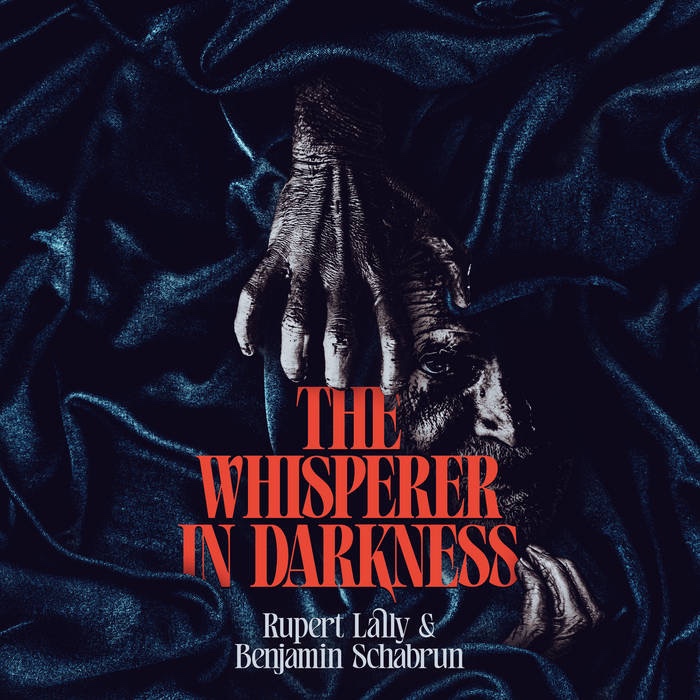
The work of Lally and his son Benjamin Schabrun, this is a suite of tracks inspired by a HP Lovecraft story. Resting comfortably in a sort of funeral darkness and shrouded, impenetrable mystery, these ten pieces have the capacity to engender a sense of grim unease. Key track ‘Disturbing News’ moves at what can only be described as a creeping pace, its cloying insistence building gently but ceaselessly across its six-minute duration. Full of drones, suppressed guitar melodies and squalls of Schabrun’s processed violin, ‘Disturbing News’ is Actually pretty terrifying, occupying the same psychological terror locale as Lally’s Teenage Wildlife, without ever once resorting to hackneyed, overblown horror soundtrack histrionics – but still 100% guaranteed to give you nightmares.

Teenage Wildlife (the book) by Rupert Lally was published October 17 2023 and can be found on Amazon here. Teenage Wildlife (the album) by Rupert Lally was released November 3 2023 by Third Kind.

The Whisperer In Darkness by Rupert Lally & Benjamin Schabrun was released October 31 2023 by Spun Out Of Control.

Thanks to Nick and Gavin.

Words Mat Smith

(c) 2024 Further.


Osmo Lindeman – Electronic Works

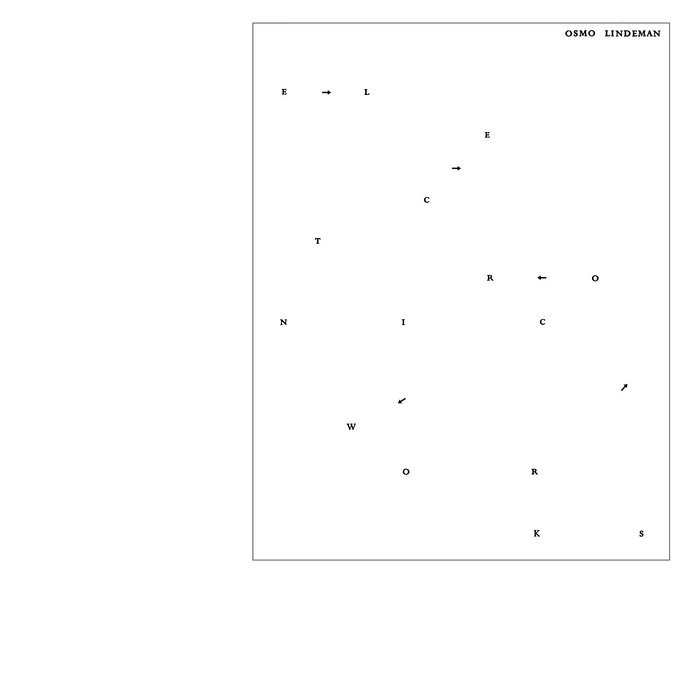
The late Finnish composer Osmo Lindeman (1929 – 1987) is rarely mentioned when surveying the history of electronic music. Largely unheard outside of his native Finland, Lindeman was nevertheless a pioneering proponent and theoretician whose contributions we can now fully appreciate thanks to Sähkö’s career-spanning compilation.

Lindeman was originally a jazz pianist who pivoted to avant garde composition, but who ultimately became frustrated with the challenges orchestras faced when attempting to interpret graphic scores like the one used for ‘Variabile’ (1967). He forcibly separated himself from orchestral composition in 1968 because of those unresolvable irritations, and took a trip to Poland to hang out with electronic composer Andrzej Dobrowolski at the Warsaw School Of Music. That experience led to Lindeman resolving only to work with nascent electronics thereafter, not least because it meant he no longer needed to rely on any other musician to respond to his musical vision than himself.

In 1969, Lindeman took delivery of a bespoke early digital electronic instrument designed for him by Erkki Kurenniemi. Dubbed the DICO, the instrument included a digitally-controlled sequencer-oscillator which was extremely rare for its time, and which meant that Lindeman’s embrace of electronic music could be achieved significantly more efficiently than those working with simple oscillators and tape that preceded him. That’s not to say that he didn’t make use of tape – a 1969 piece included here, ‘Mechanical Music For Stereophonic Tape’, shows that he also worked with the medium – but for the most part it was the DICO that became Lindeman’s tool of choice. Later, he would add the more commercially accessible Moog and EMS VCS-3 synthesisers, but the earliest pieces showcased on Electronic Works all relied on the instrument that Kurenniemi developed for him.

The two earliest pieces, ‘Kinetic Forms’ and ‘Is This The World Of Teddy’ both date from 1969, just after Lindeman had taken receipt of the DICO. Divided into movements, these pieces arrange rapidly-pulsing tones and arpeggios into various formations. Those clusters are alternately pretty and insistent, full of vibrant energy and motion, but focused and regimented. The designs of those earliest pieces are offset by 1970’s ‘Midas’, whose first half seems to be an exploration of white noise manipulations, while its second half approximates a wobbly, unpredictable Theremin-style howl. ‘Tropicana’, also from 1970, seems to swing with a jazz sensibility presumably deeply rooted in Lindeman’s musical DNA, even if the tools of expression are grids of gently swaying tones.

Some of the most interesting moments across Electronic Works come with Lindeman’s commercial work, specifically soundtracks for TV ads like Sunkist and Fin-Humus and his work for the Finnish National TV News. These pieces pop and fizzle with a sense of positive futurism, the music for the Sunkist ad in particular standing out for approximating bubbles bursting in a carbonated drink.

The collection also includes ‘Ritual’ (1972), one of the few Lindeman works ever released during his lifetime, originally appearing on the 1978 Suomalaista elektroakustista musiikkia LP, alongside pieces by Jukka Ruohomäki and Jarmo Sermilä (note to Sähkö: please make this a future reissue project!). It was a piece that should have raised Lindeman’s creative profile immeasurably, since it was awarded the Electronic And Computer Music prize at 1972’s International Musical Composition Contest. By the time of ‘Ritual’, Lindeman’s sonic palette had expanded to include standalone oscillators, a ring modulator, filter, noise generator, echo unit and tape machines, the latter most notably deployed on the eerie, manipulated, Monk-like voices that dominate the first part of the recording.

Although he continued making music – most notably with the commission of ‘Spectacle’ by Yleisradio Oy (the Finnish Broadcasting Company) in 1974 – Lindeman threw himself into academia, teaching electronic music at the Sibelius Academy in Helsinki and spending time at the University of Illinois and Columbia in New York. The latter placement offers the very strong likelihood of interactions with the Columbia-Princeton Electronic Music Center’s Vladimir Ussachevsky and Otto Luening, creating a bridge between electronic music’s accepted history and someone deserving of much more than a mere footnote mention.

Compiled from Lindeman’s private tapes, the beautifully-executed Electronic Works is an essential investigation into his largely unknown legacy in the development of electronic music theory and practice.

Electronic Works by Osmo Lindeman was released December 1 2023 by Sähkö. With thanks to Duncan.

Words: Mat Smith

(c) 2024 Further.

Shots: Pagan Red / Jay Wires / Andy Warhol / Xqui / Khodumodumo

PAGAN RED – MATERIA (Titrate)

I first came across Pagan Red at a Titrate label night at IKLECTIK in 2022, and the material played that night was signalled as being extracted from this album. My overriding impression of that set was one of physical bass intensity, overlaid with dense drones and other interventions of unknowable provenance that whirr and fizz unpredictably. On record, the 25-minute ‘A Waning Mind’s Eye’, and the shorter tracks ‘Purus Terrae’ and ‘Sands’ are much more subtle, coiling themselves around you with a combination of airy levity and brooding complexity. Materia exists in darkness, light, and everywhere in between. Released March 31 2023. With thanks to Henrique.

JAY WIRES – GHOST (Yes Trigger Music)

The latest single from New York electronic music producer Jay Wires continues the emotional themes of his earlier releases in 2022 and 2023. A haunting and epic synth pop journey, ‘Ghost’ details a sense of abandonment and disappointment. Beginning with sparse, fragile framing, by the end the track has soared to progressively new heights, even as Jay’s vocals become more intensely and savagely introspective. Jay calls this music “electro-pop therapy”, and his ongoing open, frank discourse with his listeners about his relationship struggles is universally relatable to us and, I hope, cathartic for him. Released October 20 2023.

VARIOUS ARTISTS – BEFORE BRILLO BOX OR BANANA: MUSIC WITHIN THE ALBUM COVER ART OF ANDY WARHOL (Él Records / Cherry Red Records)

Writes David Bourdon in his book Warhol, quoted in the copious liner notes of this four disc set: “Art directors showered Warhol with assignments because he worked fast, met deadlines, and displayed a properly submissive attitude when they demanded revisions.”

This compilation surveys the music that lies within sleeves designed by Andy Warhol after he moved to New York City in 1949. This was the era of Warhol’s commercial art, exemplified by drawings of shoes for Glamour magazine and advertisements for the I. Miller shoe store that appeared in the New York Times. His sleeve art for LPs of music by Gershwin, Tchaikovsky, Thelonius Monk, Count Basie and others, released by labels like Columbia and Blue Note, is less well known, but they highlight early ideas of reproduction and collective creation – via assistants and his mother’s calligraphy – that would go on to become staples of his later work. The four discs here compile a significant number of pieces of classical and jazz music featured on those LPs, while a fourth disc collates pieces by Cage, Feldman, Cecil Taylor, Albert and others in an effort to contextualise the musical currents that surrounded Warhol in 1950s Manhattan. Extensive sleeve notes, quotes and photos of Warhol’s sleeve designs round out an essential and original boxset from Él Records. Released November 24 2023. With thanks to Matt.

XQUI – MELTING ICE WITH ICE (Wormhole World)

The latest album from anonymous, Vince Clarke-tipped sound artist Xqui is easily one of his most atmospheric to date. The album’s centrepiece is the ten minute ‘Cherry Red Neon Blues’, where Xqui briefly emerges from behind his mask to deliver oblique verse over a set of long-form soundscapes. Here you find intriguing, impenetrable sentiments that feels, to me, like a vague outline of a strange night out, reminding me of Scorsese’s seminal After Hours. Elsewhere, ‘Zero Divided By Zero’ carries a sense of fragile tenderness, with deep, sedentary ambience offset by soaring, euphoric tones. The (almost) title track, ‘Melting Ice’ features squidgy synth tones that seem to echo and reverberate across a barren arctic landscape. Plaintive, and vaguely melancholic, Xqui‘s new collection feels like unanswered radio transmissions from an abandoned polar lab complex. Released December 1 2023.

KHODUMODUMO – WHAT THE FUCK ARE YOU DOING THIS SIDE?

An accompanying email with this album from South Africa’s Khodumodumo said, “We hope it unsettles you,” which is a great marketing tactic as far as I’m concerned. And unsettling this certainly is, if you’re generally freaked out by its cloying, discordant, wonky textures and brooding clouds of menacing ambience. ‘Trapped In Deluded And Helpless Loops’ stands out for its cycles of queasily unpredictable repeated samples, while the brief and atmospheric ‘Their Whistles Have Noticed You’ seems to carry a calm latency, presaging some extreme violence. This album is most unsettling with the title track, which uses samples of Appartheid-era news report to highlight South Africa’s racial tensions. Released December 8 2023.

Words: Mat Smith

(c) 2023 Further.

Charlotte Keeffe’s Right Here, Right Now Quartet – ALIVE! In The Studio

With ALIVE! In The Studio, trumpet and flugelhorn virtuoso Charlotte Keeffe helms a dexterous collection that showcases her ability to move effortlessly between the myriad dimensions of jazz. Unlike her solo material, wherein she embraces electronics to augment and complement her playing, as leader of a quartet, the emphasis is naturally on coordination among her fellow musicians – Ashley John Long (double bass), Ben Handysides (drums) and Moss Freed (guitar).

At the more extreme experimental end of the jazz spectrum, the ‘1200 Photographs’ triptych is largely focused on texture and noisy improvisation. Here, Keeffe leads the way with a series of fragments and gestures that writhe and fidget, accompanied by unpredictable percussion and scratchy guitar figures that occasionally settle into searching, blues-y statements.

At the other extreme, ‘A Horse Named Galaxy’ leans into a more melodic style of playing, with Keeffe’s central refrain having all the classic, memorable qualities of a Miles Davis riff circa ‘Freddie Freeloader’, the contrapuntal melodies of Long’s bass creating a easy, languid unity at the core of the piece. Even as the track collapses into a sprawling, distant cousin of itself, Keeffe resurrects her motif at various different tempi, the melody taking on an increasingly hyperactive tone as everything collapses in on itself. Speaking of Miles, ‘EastEnders’ is not a jazz rendition of the beloved UK soap opera’s theme tune but a deeply funky, expansive cut reminiscent of his wild, electric-period statements.

‘Sweet, Corn’ is one of the most captivating tracks on this collection. A white hot, almost urgent rhythmic backbone dominates this piece, the tension only breaking when Keeffe’s horn erupts into the foreground. For some reason, brief moments in the track remind me of ‘Jet Song’ from ‘West Side Story’, though every time I alight on what I think it is that evokes that memory, it writhes away from me elusively.

Adventurous, playful and reverential, with ‘ALIVE! In The Studio’, Keeffe offers different perspectives on the jazz form, while clearly having a huge amount of fun. The clue is in the title – to listen to this album, and to experience its many gestures, is to truly be joyously, gratefully and rapturously alive.

ALIVE! In The Studio by Charlotte Keeffe / Right Here, Right Now Quartet was released September 22 2023 by Discus Music.

Words: Mat Smith

(c) 2023 Further.

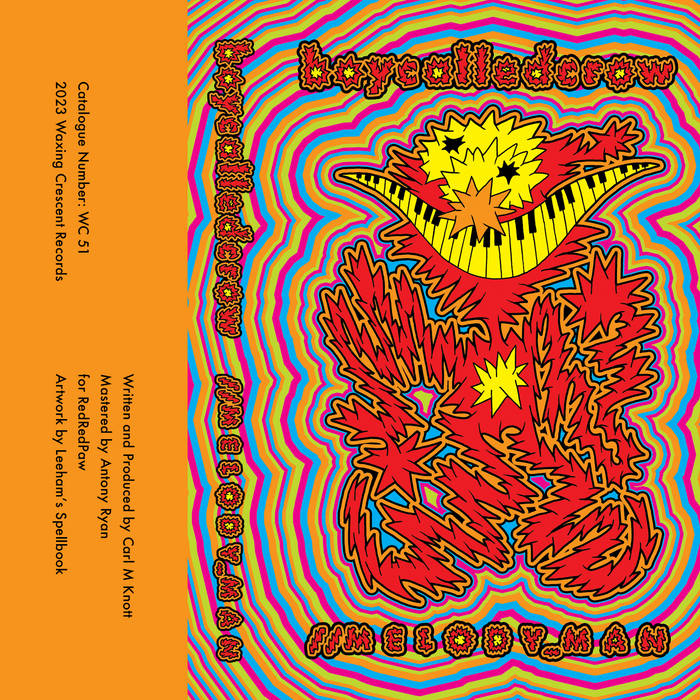
boycalledcrow – //M E L O D Y_M A N

The premise for Carl Knott’s latest boycalledcrow release is an imagined world where decommissioned transmitters and dusty radios awake from the slumbers of redundancy and begin functioning again. Imagine fractured sounds, faltering rhythms and glitchy sonic non sequiturs, transmitted abruptly into a era more used to the vapid sterility of streaming and internet radio.

I can’t think of a better place for Knott’s music to exist, even if it is fantastical. As boycalledcrow, his work has always occupied a sort of fragmentary landscape of its own: sounds form, burst into sharp sonic fractals and re-emerge in infinitely rearranged forms; melodies falter and collapse in on themselves; guitars, betraying his origins as a folk musician, offer recognisable shapes but are clipped, alien and discordantly unsettling.

Each of the fourteen pieces here is accompanied by a brief and evocative poem, and at times it feels like these collections of words have been subjected to the same skewed logic with which Knott’s music is developed. The verse to accompany the title track is a more adroit description of his work than any reviewer could muster:

And now
He’s pulling all of the strings
A cat’s cradle
Of tangled tunes
Weaving paths
And making up names

I’ll get my coat. I would encourage you to ignore everything I’ve ever written about Knott’s music.

None of this is intended to suggest that //M E L O D Y_M A N is some sort of messy, randomised sprawl of an album, even if the complicated algorithm-like names of the tracks might indicate otherwise. To suggest this would be to undermine Knott’s skills as a sound artist. In fact, quite the contrary – the album contains some of Knott’s most beatific, resonant works to date. ‘God * Woman = C I R C L E ()’ and ‘dr dr dr || WOODS 777’ consist of tiny cycles of pretty melodies that evoke comparison with Steve Reich, offset by plaintive, organic gamelan textures and shimmering reverb that, when combined, produces an arresting, enveloping minimalist warmth.

Nevertheless, there is something endlessly intriguing about Knott’s more restless moments. The velocity at which ideas form and are replaced creates a sort of turbulence within pieces like ‘(S) illy Song #2’ that leaves you more than a little dizzy as it skips and hops along a path seemingly all of its own. Such pieces are an offset to more delicate tracks like ‘’, ‘~ f o r e s t … MOON ~’ and ‘SUN sun +’, leaving the listener stood perpetually on a precipice of expectation.

And that’s what’s ultimately so interesting here: as one track finishes and another starts, you find yourself trying to anticipate where Knott might pivot you to next. To predict this, however, is a fruitless endeavour, and it’s that sense of bold adventurism that makes //M E L O D Y_M A N such an extraordinary and enriching listening experience from start to finish.

//M E L O D Y_M A N by boycalledcrow is released October 27 2023 by Waxing Crescent.

boycalledcrow recently recorded a piece for my Mortality Tables collaborative series LIFEFILES. Listen to ‘LF13 / Westbury’ here.

Words: Mat Smith

(c) 2023 Further.

drøne & Julia Mariko / Philip Marshall – Vox Interruptus

Vox Interruptus took place at London’s Iklectic on 19 September. Its central focus was the not wholly unprecedented confluence of opera music with electronic sound, prompted by a collaboration between English Touring Opera and drøne (Mark Van Hoen and Mike Harding). A set by drøne, accompanied by the ethereal, haunting voice of soprano Julia Mariko, formed the centrepiece of the evening, and used sounds scraped from two English Touring Opera productions currently wending their way around the UK – Cinderella and The Coronation Of Poppea.

Mariko appears in the second half of this twenty-minute recording from that night. In the ten or so minutes that preceded her casually walking from a seat among the audience, Van Hoen and Harding delivered a suite of intricate, impenetrable and generally unplaceable sounds and loops, each one tinged with a metallic, purring static. These textures evoke the idea of opera, though it’s hard to define precisely why that is the case. Voices appeared occasionally, creating the impression of the two sound artists standing in the wings of a theatre, voyeuristically recording the sounds of the singers, but for me the sounds that Van Hoen and Harding developed felt like the mimetic approximation of breathing exercises before a performance.

I was there, and it was an utterly mesmerising, experience. Missing from this recording was an abrupt squall of heavy sound that arrived as Mariko finished singing. It was so sudden, loud and unexpected that I jumped out of my seat. It also seemed to surprise Mariko, who smiled briefly, breaking the otherwise earnest demeanour that had characterised her performance.

Noise, however, shouldn’t have been unexpected. As we entered the venue, we were confronted with extreme sonic turbulence, courtesy of The Tapeworm’s Philip Marshall manipulating a batch of found opera cassettes. His set-up was battery-operated and minimalist – a Walkman, a Korg handheld synth, a Bastl Bestie mixer – but the sound he produced was anything but. His set, twenty minutes of which are presented here as ‘Operattack’ was almost the inverse of the drøne set. Where theirs was relatively quiet and ruminative, their source voices suppressed into unrecognisable shapes, voices were omnipresent in Marshall’s performance: loud, bold, and brash; soaring moments of vocal power distorted into nauseating, terrifying shapes. Wilfully unpredictable, Marshall’s set showed vivid imagination and endless possibility.

Elsewhere on the bill at Vox Interruptus were sets from Dale Cornish, The Howling (extracts from whose latest album Incredible Night Creatures Of The Midway were used at a Paris Fashion Week show last month, no less) and JTM (Jonathan Thomas Miller).

Of these, I only caught the JTM performance. The foundation of his set was constructed from one recording of a single vocal sound made by Miller. This was manhandled ahead of time into myriad shapes and structures, over which he then built up live accompaniments with a SOMA Pipe synth. This was all about breath, but the sounds that he forced out of the Pipe reminded me of everything from whale song to the shimmering, ephemeral clouds of sound that Robert Fripp used to create in his solo performances.

This release, then, is only a partial document of that night at Iklectik. What is here, in the recordings of drøne and Marshall, acts as a vivid depiction of a clash of musical worlds, the elemental deconstruction of an established form, and a powerful sonic challenge to centuries of traditionalism.

Bravo.

Vox Interruptus was released September 28 and is available here.

Words: Mat Smith

(c) 2023 Further.

Audio Obscura – The Xenakis Station

The latest release from Audio Obscura (Norfolk’s Neil Stringfellow) couldn’t be more different from last month’s LF11 / The Naming Of Storms, which was issued through my own Mortality Tables collaborative project. Whereas The Naming Of Storms was elusive and ephemeral in its presentation, The Xenakis Station is immediately distinctive, more resolute in its sonic template.

A suite of eight pieces using shortwave radio transmissions as their jumping-off point, The Xenakis Station finds Stringfellow creating a false narrative of a ‘fantasy research station’ on Redpoint Sound that doesn’t officially exist. That story leans into the fable of shortwave and the idea of these strange, possibly redundant broadcasts that may or may not contain strategic military information.

A standout piece like ‘Sjælland Sound’ is draped liberally with that conspiratorial concept. Containing a crisp but minimal beat, ‘Sjælland Sound’ emerges out of clouds of pure texture that part and give way to bursts of controlled static, hissing tones and a general air of mystery. Dreamy, almost jazzy melodic hooks and swirls of dissonance, when placed alongside the more ambient sounds, give this a widescreen perspective. It’s as if we are far out at sea, our gaze suddenly locked onto the building that is purportedly the shortwave station on the distant horizon.

My personal favourite track here is ‘East From Somewhere’, which begins with a muffled radio station ident and seemingly random speech. In the background, a haunting motif and subtle squeaking gives the piece a nauseating, unravelling quality; it is immediately disorienting, like waking out of a savage nightmare into the horrors of real life. The title track is another favourite, with what could be wonky wind chimes reframed into a sort of paranoid exotica, scuttling sounds and uplifting choral tones lending this an unplaceable, uncertain quality somewhere between terror and euphoria.

As Stringfellow’s catalogue continues to expand, his ability to steer his sound into myriad new directions shows an adaptable artist wilfully following his own path. That these pieces bear no resemblance to his previous releases is a triumph of originality, and another fine addition to the Audio Obscura catalogue.

The Xenakis Station by Audio Obscura is released October 6 2023 via Woodford Halse.

Words: Mat Smith

(c) 2023 Further.

Shots: Script Kid / Witch On Horseback / Andrew Weathers / Xingu Hill

SCRIPT KID – SKSI

SKSI is a five-track EP from anonymous Philadelphia producer Script Kid, which follows his dizzyingly accomplished debut album, Music For A Deprecated Dataset (2021). Intended as a metaphorical sonic bridge between his debut and a future new album, SKSI is a hot mess of crunchy beats, wispy synths and fragmented samples. ‘Nunya’ flinches and twitches with a nervous euphoria, a swirl of soft ambient textures fluttering around a suppressed rhythm. ‘The Groove’ hitches similarly ephemeral synth samples to a resolute breakbeat, giving me warm and fuzzy Mo’ Wax memories, while the curt ‘$Beatz’ highlights Script Kid’s minimalist flair with 90 seconds of scratched-up chat about ‘money-beats’ that had me tapping my toes on the train home in the rush hour.

SKSI by Script Kid was released July 28 2023 by Music Is The Devil.

WITCH ON HORSEBACK – Jumand

This is purportedly an unearthed suite of four recordings from The Witch On Horseback Institute For Cognitive Salubrity, founded by the narrator of these pieces, Dr. Noving Jumand, in New York State in the 1970s. The story goes that the new age performance space and education centre was founded by some ex-Moog employees, which would explain the deep drones, pulses and half-melodies that frame Jumand’s delivery. It’s all completely made up, of course. There was no Institute, there was no Jumand, and these pieces of strange and abstracted fiction – each delivered by the Jumand character in a flat voice reminiscent of guided meditations – are each one part-Welcome To Night Vale and one part David Lynch. The thirty-minute ‘Unusual Restaurant’ is wry and harrowing, putting you in a dreamlike story that concludes with you tucking into a dish of wafer-thin objects made from the body of a creepy childhood neighbour. You may think twice before listening to that next supposedly relaxing podcast on the Calm app after hearing this.

Jumand by Witch On Horseback was released August 25 2023 by Difficult Art And Music.

ANDREW WEATHERS – A Cardinal With A Sign Of Blood

A Cardinal With A Sign Of Blood is Texan sound artist and multi-instrumentalist Andrew Weathers’ eulogy to his late father and aunt. Their passing prompted this collection of discovered quarter-inch tapes that his father had made, field recordings, guitars, horns and electronics. Ghostly and haunting, the opening piece ‘28 Feb 1975’ features Weathers delivering a sparse, hesitant guitar melody loaded with plaintive contemplation over a murky bed of impenetrable voices and delicate keyboard tones. The 10-minute centrepiece, ‘The Cardinal, The Bike, The Stars’ features taped reportage about and from childhood and thoughts of aliens, Weathers manipulating an unintended cough in one of the recordings into a vague and unpredictable rhythm that ushers in an increasingly complex series of minimalistic layers. Reverential and absorbing, Weathers’ grief has produced a sonic adventure of great and mesmerising power.

A Cardinal With A Sign Of Blood by Andrew Weathers was released September 1 2023 by Full Spectrum Records.

XINGU HILL – Grigri Pavilion

The latest album from John SellekaersXingu Hill project contains eight tracks of enquiring electronics, and key moments like ‘Hi-Fi Simulant’ and ‘Moving Mirrors’ fizz with a palpable energy. Fragile, hooky synth melodies rest on top of complex beats that nod to minimal techno, electro and splintered drum ‘n’ bass. And yet, despite the components all feeling like they might have a place in a 1990s warehouse rave somewhere outside Amsterdam, something about Sellekaers’ presentation of these pieces feels vaguely… detached. The euphoria that should exist here is suppressed, in its place a sort of ephemeral, almost New Age-y introspection. That sleight of hand – used liberally on each of these pieces – creates beautiful shades of texture and nuance. An enriching auditory experience from start to finish.

Grigri Pavilion by Xingu Hill was released September 15 2023 by Subexotic Records.

Words: Mat Smith

(c) 2023 Further.