The Dark Jazz Project – 3 / Dead King (A Play In Three Acts)

“Don’t overdose on this stuff,” The Dark Jazz Project’s Andrew Spackman told me when he sent me his new album, 3. “It’s pretty potent!”

I reckon I can handle it. I’ve been consuming Spackman’s music for years, first when he was know as SAD MAN and more recently as The Dark Jazz Project. Wonky jazz bangers were always Spackman’s medicine of choice, but with his most recent reinvention, it’s like he’s taken his music into a whole new dimension. I don’t mean into some sort of spiralling, ‘groovy, baby’ timewarp. I mean darker. Jazzier. Projectier.

3 is intense, though, even by Spackman’s standards. The risk advisory is to be noted. Twenty tracks. Two hours. An accompanying play called Dead King (A Play In Three Acts). This sort of stuff would take most artists years to come up with, but Spackman is able to deliver this kind of wonderful sprawl with a spontaneity and fluidity – at high speed – that’s resolutely fresh and refreshingly imaginative.

Never one to repeat himself, 3 flips and flops like around like manic three-legged frog, delving deep into dance music’s murkiest corners to drag out skewed rhythms, off-kilter half-melodies, headcleaning glitchy noise and a seemingly limitless collection of cool jazz samples. And that’s just the first track, the decisively-named ‘Jazz’. The effect here is like watching an especially dexterous DJ seeking out the most floor-clearing tracks in his collection and yet managing to get the stoic crowd to wiggle along with manic glee.

Picking out standout tracks from 3’s vast number of cuts is a tough, nay impossible task. They’re all belters. If highlights you must have, check out ‘The Great Ones’, a track which lurches from graceful, contemplative piano to a segment that sounds like Moby’s ‘Thousand’ remixed by a Dutch hardcore artist while juggling cans of ball bearings. Meanwhile, ‘Carloza’ twitches forth on a breakbeat reimagined by Gene Krupa, over which Spackman sprinkles tinkly synths and buzzing, vital hooks.

‘Babonza’ sounds like a shoot-out between Star Wars laser pistols and a drinking straw noisily chasing the final drops in a plastic beaker containing Ken Kesey’s Kool-Aid. ‘The Stranger Again’ is a tight, 4/4 monster that rapidly switches direction into a noisy mess, just as you’ve started showing off your best moves. It rather reminds me of when I was dancing to the Paul Oakenfold remix of U2’s ‘Even Better Than The Real Thing’ at Stratford-upon-Avon’s Wildmoor nightclub and the DJ switched tracks just as I had started playing air guitar along with The Edge.

3 is effectively the informal soundtrack to Dead King, involving a medieval monarch, a timewarp (okay, so I was wrong about the timewarp: groovy, baby) and a magical, energy-providing creature. The play is beautifully presented, with fantastic photography and a totally bonkers narrative. Spoiler alert: it doesn’t end well for the King, though the title may have already yielded that clue.

Mr. Spackman, you have outdone yourself this time.

Footnote: this review was completed while flying over Canada. As ever, I had eschewed the onboard entertainment in favour of the moving map. Two places were beneath us as I concluded the final sentence – Flin Flon and Pukatawagan – while Medicine Hat was off in distance. I fear that my mind had reached such befuddlement by Spackman’s latest collection that place names and track titles had become indistinguishable. Sheesh, he wasn’t wrong about the potency.

Shameless plug: Spackman contributed to my Mortality Tables LIFEFILES series with a track that was literally made with nothing but clothes hangers. Check it out here. All proceeds to the Deaf Children’s Society and Birmingham Children’s Hospital.

3 and Dead King were released / published by Irregular Patterns on July 7 2023.

(c) 2023 Further.
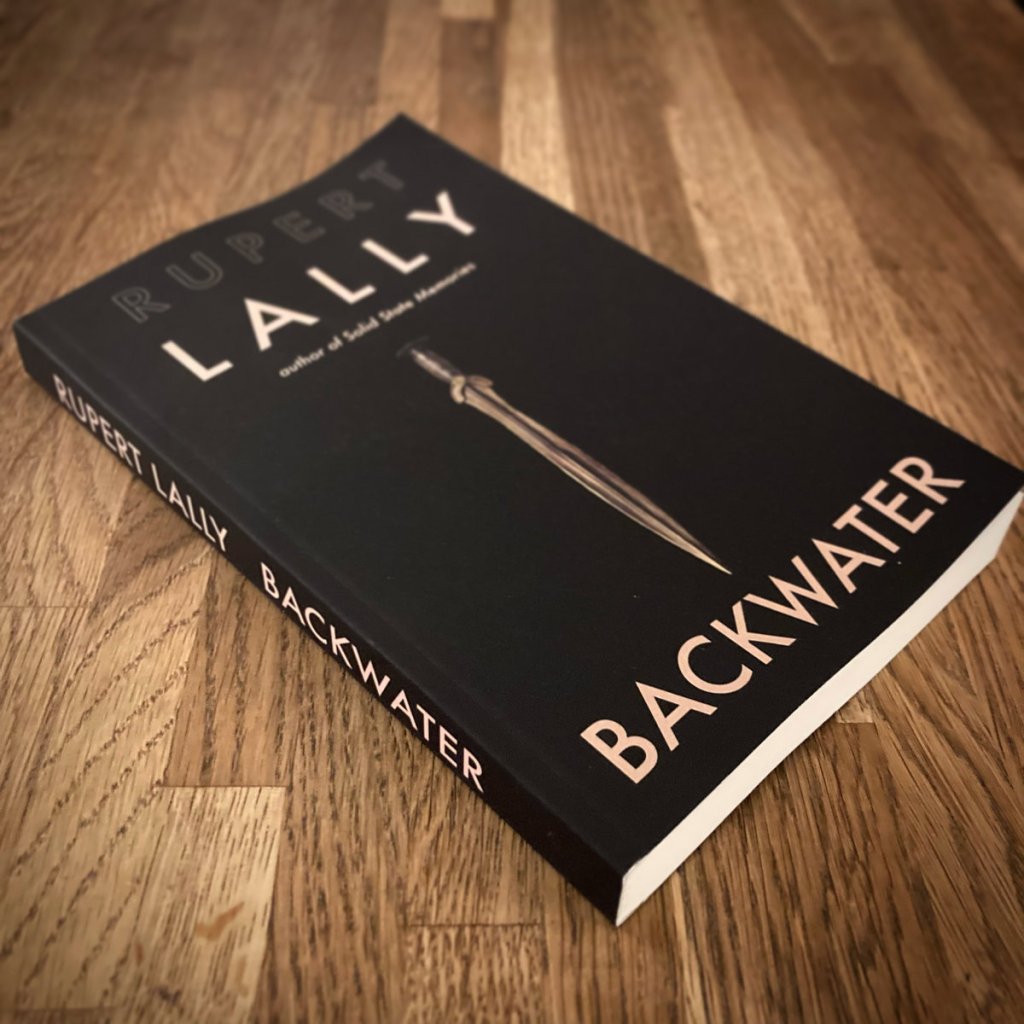
Rupert Lally – Backwater / Hacker

Backwater is the second novel from Switzerland-based electronic musician Rupert Lally. Like his debut, Solid State Memories, Backwater is a suspenseful thriller. However, instead of pitching its wares in a dystopian and terrifying near-future like his first book, Backwater occupies the past, present and future. The story temporally criss-crosses all three to follow its lead characters as they try to prevent environmental disaster using the rare natural resources of the Bronze Age past, mysterious archways allowing instantaneous movement between eras.

This is principally a high-speed race against, and through, time, but also an exploration of other, deeper, themes: the bond between father and child, gender inequality, power struggles, corporate villainy, technology and climate change. It is hyper-aware of big issues facing society today but also authentically well-researched about Bronze Age history and culture. A trace of Solid State Memories arrives with a brief trip to the future, where we find Earth ravaged by global warming and profligate resource exploitation, a dirty husk of its former self filled with criminality and hunger.

Backwater is complicated, as most time-travelling tales can be. It both demands and requires complete focus, especially when Lally’s prose moves at an urgent pace through different time zones, left-turns and unexpected events. Like his previous novel, Backwater confirms Lally as an original story-teller drawn to mystery and drama-filled narratives. Dizzying and rewarding.

A sense of mystery also pervades Lally’s latest album, Hacker, released by Spun Out Of Control. Hacker operates in a interstitial time zone somewhere between 1980s movie soundtrack and 1990s Warp label electronica, using brief samples of WarGames, Hackers and other films to supply a plot line of dial-up era computer vigilantism.

Lally’s recent albums have been among the best, and perhaps most accomplished, in his career. Hacker sits comfortably in his latest streak of excellent releases, even if it is the complete antithesis of Wanderweg, the pastoral and bucolic exploration of natural landscape and pathways of his adopted Swiss home that preceded it. Here, the focus is squarely on icicle-sharp melodic tendrils threading their way down phone cables, encouraged and framed by rhythms as focused as an algorithm figuring out the password for a locked military server. Where standout tracks like ‘Hot Swap’ and ‘2600Hz’ are freighted with a vital, relentless energy, ‘Access Denied’ is thwarted but tender, and easily one of the most poignant pieces Lally has ever composed.

Backwater by Rupert Lally is available now at Amazon. Hacker by Rupert Lally was released December 23 2022 by Spun Out Of Control

Words: Mat Smith

(c) 2022 Further.

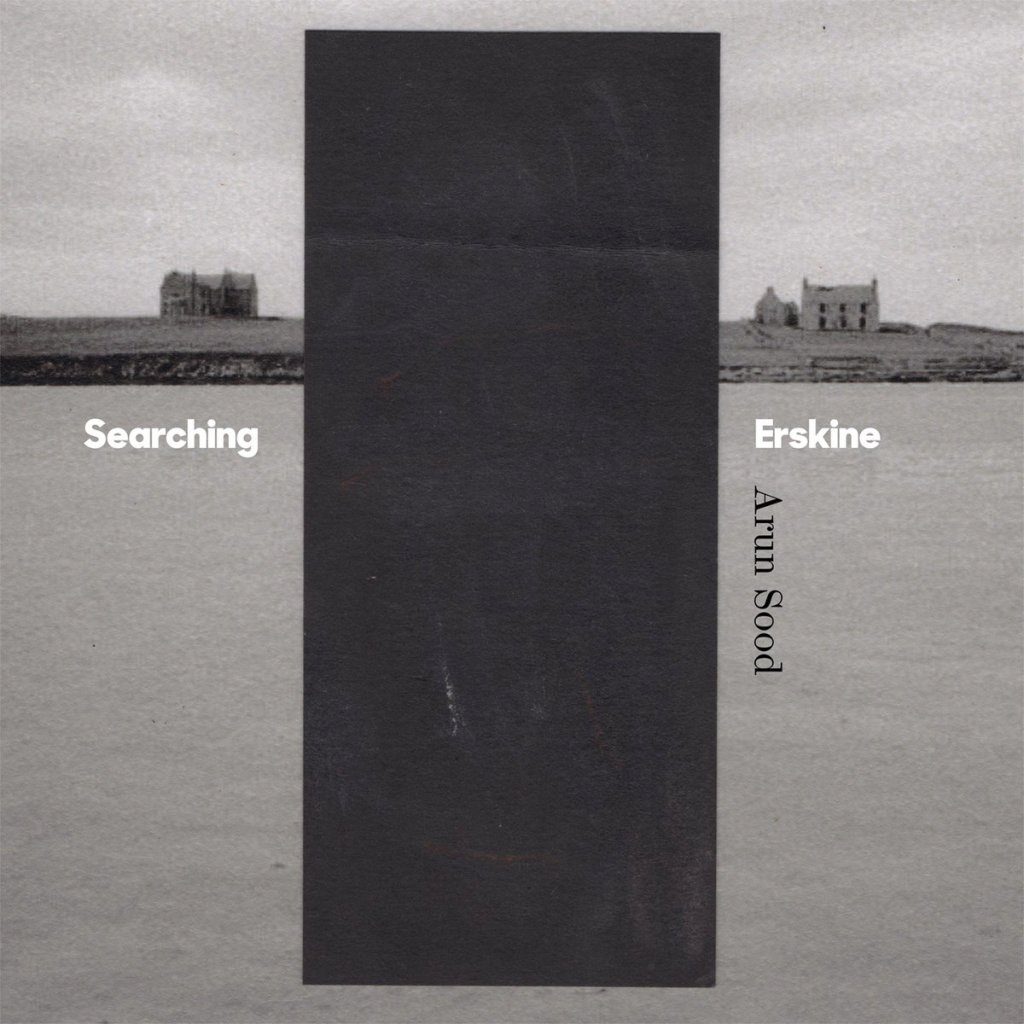
Arun Sood – Searching Erskine

In the last few years, the music that’s resonated with me the most has tended to have a connection to Scotland: Andrew Wasylyk’s Eastern Scotland trilogy, Erland Cooper’s Orkney triptych, Letters From Mouse’s Tarbolton Bachelors Club, Emeka Ogboh’s Song Of The Union and Simon Kirby / Tommy Perman / Rob St. John’s Concrete Antenna.

Scotland is in my blood and an important facet of my everyday life. My mother was both in Stirling’s Royal Infirmary and lived in Scotland until she was twenty-five years old. Every year of my childhood we’d travel up to see relatives near Falkirk. I was aware, appreciative and proud of my family tree and my connection to Scotland. Great aunts, cousins, friends of the family that were positioned as relatives yet weren’t – all of these figures, and their myriad accents and pasts appeared prominently in my childhood and left me with an unbreakable fondness for a country that, though I have never lived there, feels like where I am from. We took our two teenage daughters to Scotland for the first time in 2020, during a period of heightened awareness of mortality and the value of family bonds, and I attribute the way I have gravitated to these Scottish-related releases above others, in part, to that.

Unquestionably, to this can be added Arun Sood’s stirring Searching Erskine.

Sood is a Scottish-Indian academic and artist operating in the disciplines of sound art, music and writing. While Sood is currently based in Devon, the focus of Searching Erskine is some 700 miles away, namely the uninhabited small island of Vallay, just over a strand from North Uist in the Outer Hebrides. For Sood, this is not a romantic far-flung location upon which to base a project; this is where the Scottish side of his family’s history lies, and it has proven to be a source of creative inspiration for him since 2011.

Sood’s grandmother, Katie Maclellan, worked as a housekeeper on the island until she left in 1944. Her employer was one Erskine Beveridge, a wealthy linen manufacturer and archaeological historian who had erected a grand house, Taigh Mòr, on the island in 1905. Sood made field recordings while camping on Vallay in 2019, some of which were recorded in the ruins of Beveridge’s crumbling house. In his introductory essay to a book accompanying the twelve musical pieces, Sood recounts the moment he became very aware of the sounds of the island. “The geese, the gull shrieks, the grassy whispers,” he muses. “I began to wonder if my grandmother might have heard similar sonic tapestries to the ones I was hearing, only in a different time.” This question prompted Sood to explore the idea of sounds “triggering memories and re-imaginings of the past.”

Vallay’s remote location puts it on a direct collision course with climate change. It is already changed from when Sood’s grandmother walked across the strand at low tide to North Uist for the last time, and in truth it had already changed through successive ice ages, evidence of which was uncovered by Erskine Beveridge’s archaeological excavations. The fading island topography and the ruin of Beveridge’s house is an allegory for Sood’s personal history, and all of our personal histories. Disney’s Coco reminds us that departed people only live in so long as our memory preserves them. In this way, Searching Erskine can be viewed and heard as a poignant document of his own family lineage, made immortal so long as digital and physical media endure.

Searching Erskine begins with ‘Katie’, setting a verse delivered by Sood to a backdrop of delicate synths, sprinkles of piano and cello from Alice Allen, suffused with field recordings of his 2019 camping trip. His words are, in part, recollections from his grandmother, but also questions about whether the sounds surrounding him in 2019 might in fact be the long-range echoes of what his grandmother herself had heard. On ‘Land Seeps’, Sood recorded inside the remains of her cottage, setting his words to a bed of intense accordion drones, while Alice Allen’s cello gives the many-layered ‘Taigh Mòr’, prompted by recordings inside the sad ruin of the Beveridge house, a mournful, wistful tone.

This is not just Sood’s rumination on his own family connection to Vallay. His own ancestry is inextricably linked to the Beveridges, and their own histories appear vividly in some of the pieces here. ‘He Was Drowned’ and ‘The Cairn’ are responses to the story of George Beveridge, Erskine’s son, who drowned crossing the strand to North Uist, while ‘Vasa’ features spoken extracts from Erskine’s book North Uist: Its Archaeology And Topography read by his grand-nephew.

Crucial to the emotional impact that these pieces possess are Sood’s wonderful and evocative arrangements. In addition to his many field recordings and captured conversations with his family, these pieces are filled with strings, chanter, organs, guitars and delicate synths from his friend and collaborator Alastair Smith. Identifying individual instruments – with the possible exception of Allen’s austere cello – is virtually impossible thanks to looping and processing, all of which deliver the gauzy, sepia-tinged sonic personality that gives this body of work its personal and emotional impact.

Though it is possible to listen to Searching Erskine and get a measure of the narrative, the accompanying book is essential for unlocking its secrets. Alongside Sood’s wonderful, evocative introductory essay are visual responses to Vallay by photographer Emile Kees, artist and academic Rosalind Blake and Outer Hebrides-based visual artist Meg Rodger. Each of these artists draws something unique from the idea of Vallay. For Kees, his approach was to digitally process old photographs, including one of Sood’s great-grandfather, leaving visual ghosts and intentional obfuscation. Blake centred her attention on the the various impressions of the island’s tidal geography through vibrant colour schemes and repeated lines. For Rodger, the idea was to use abstract skyscapes to evoke the gulf between art (imagination) and archaeology (facts).

Most crucial are Sood’s own notes for the musical pieces, revealing the inspiration, intention and story behind each. It is always intriguing to peek inside an artist’s motivations, and Sood leaves no detail hidden. Through these descriptions we alight upon the intense personal connection he has to his family history, and to Vallay, including in the naming of his daughter, Vallya. “Our children are ancestors too,” he explains of ‘Crossing’. “They bind our future with what came before us.” Vallya’s heartbeat, recorded while still in the womb, is just audible in this piece, beneath a stirring translated version of the Gaelic song ‘Cailin Mo Ruinsa’, something that Sood’s uncle Colin – possibly the last to be born on Vallay – was to be heard singing after a wee drop of firewater every night.

Searching Erskine might be deeply, intentionally personal in nature, but its ultimate conceit is to make such a personal story relatable to anyone aware and appreciative of their own history. Our lineage may not be as interesting or storied as Sood’s, but his sensitive recognition of the importance of how we got here – and the legacy we bequeath to those who come after us – is what makes this release resonate so strongly, and Sood’s understated technique so powerful.

Searching Erskine by Arun Sood was released March 4 2000 by Blackford Hill.

Words: Mat Smith

(c) 2022 Further.

Rupert Lally – Solid State Memories (novella)

Brighton-born, Switzerland-based electronic musician Rupert Lally originally issued his debut novella, Solid State Memories, in 2018. The story was initially packaged up as a PDF with the download of the soundtrack he’d created to accompany the text, but Lally always felt that it needed its own oxygen away from the music; to coincide with a planned vinyl reissue of the album, Solid State Memories now exists as a stand-alone paperback, giving it the focus that it perhaps always deserved.

The creative impulse for Solid State Memories was the cover illustration, gifted by Italian graphic designer Hannes Pasqualini to Lally on his fortieth birthday. The image shows a woman standing on a rooftop overlooking a futuristic landscape, surrounded by broken technology, her identity card being cast to the floor. The most striking quality is not the mournful, pensive way the character is looking out toward the city and the monorail slicing its way through the landscape, but the way her hair appears to be a figurative device for the ephemerality of memories, here uncoiling out of her brain to join the dust and rubble of her rooftop perch, along with her discarded identity.

With that image as his inspiration along with a documentary about memory, Lally’s story emerges as science fiction grounded in worrying plausibility; namely, being able to implant chips inside the brain to suppress, change and create new memories and behaviours. The novella’s protagonist and pioneer of the new technology, Dr. Alex Wells, awakes into the fog of displaced recollections: initially focussed solely on trying to explain the absence of her lover, who we learned died in a car crash several years before, the story unfolds to reveal that Wells herself has one of her own chips implanted in her brain and that the whole project was bankrolled by shadier quarters of the government for use by the military.

Overtones of J.G. Ballard abound here: Dr. Wells’ girlfriend was called Rachel Ballard, the orchestrated means of her fatal collision recalls Crash, and a lengthy section where Wells is pursued by government agents through a forest but blurred with inexplicable phenomena echoes his short story The Crystal World. The story is laced with as much scientific detail as it is emotional revelations from Wells’ personal life, the same enmeshed narrative between the two facets being allegorical for what’s symbiotically happening inside her brain with the chip.

Ultimately, Solid State Memories reveals itself as a thriller, where, true to the form, the odds seem perpetually stacked against Wells. It is only through encounters with benevolent characters that the gaps in her memory and her awareness begin to close themselves, in so doing revealing her motives and plans. Lally’s sleight of hand here is to pace his ambitious novella to reflect those memories returning, while also maintaining a level of acute tension through the endless chase, leading to a conclusion that is both harrowing and worryingly prescient.

Solid State Memories by Rupert Lally is available through Amazon.

Words: Mat Smith

(c) 2021 Further.