Jan Bang – Reading The Air

Reading The Air is Norway’s Jan Bang’s first vocal album since 1998. In recent years, Bang has focused on recording with Dark Star Safari, his quartet with Erik Honoré, Eivind Aarset and Samuel Rohrer. Aarset makes an appearance here, and the album was co-produced with Honoré, who also adds subtle synthesiser flourishes to the majority of tracks.

This is an album that rests in a deeply contemplative space. Many of the musicians spent the majority of their time as critical members of Oslo’s vibrant modern jazz scene, but these pieces are characterised by extreme restraint and reductivism. That approach gives Reading The Air a fragile sparseness, where the spaces say just as much as Bang’s lyrics.

The title track is perhaps the more overtly jazz-infected piece here, with liquid bass from Audun Erlien and shuffling kitwork from Anders Engen set against fluttering electronics from Bang, Eivind and Honoré. Inspired by Japanese philosophy, this is a song about optimism and moving on, positively; about putting the past behind you and finding somewhere to heal. A chord shift seems to act as a metaphor for what happens if you don’t move forward positively – “remain here, decay here”.

‘Burgundy’ and ‘Food For The Journey’ are two standout songs. On the former, Bang sings about someone experiencing mental anguish and who has been tortured by abuse, but who has triumphed over adversity. The framing here is key, with gentle electronics from the three Dark Star Safari members and muted percussion from Adam Rudolph. Twin vocals from Bang and Erik Honoré give this a plaintive, softly soaring sound against a backdrop of intense subtlety.

‘Food For The Journey’ consists of Bang’s piano and vocals, accompanied by delicate strings. Some unknown, vast tragedy seems to occupy the protagonist, drawn away across waters, trying to escape sadness. Bang’s central piano middle eight is laden with mournfulness, while additional vocals from a siren-like Simin Tander voice swirls around, leading our saddened sailor further away from his misery.

Elsewhere, ‘Cycle’is presented as clipped, off-centre synth pop where its electronic structures are offset by Anneli Drecker’s sweet, folksy vocal harmonies with Bang. Lots of sonic turbulence and tension bubble just below the surface of ‘Cycle’, creating what feels like a dubby, psychedelic lounge music. The tragic ‘Winter Sings’ contains amournful, fragile backdrop of sounds that feel like they’re blown in from a frozen landscape. Haunted, dejected vocals suggest disappointment at a sort of impotence, an inability to help someone. A duduk melody from Canberk Ulas concludes the track, over a trace outline of a beat and submerged, almost electronic dub-like pulse.

The album’s clear highlight is its only cover, a complete deconstruction and rearrangement ‘Delia’, originally performed by Harry Belafonte in 1954. This version is characterised by a subtle calypso swaying, like a soft breeze across a palm tree-fringed beach. Bang and Benedikte Kløw Askedalen’s voices are perfectly matched, framed by very little accompaniment bar quietly strident bells, woozy tropicalia guitar from Aarset and percussion from Engen. Everything here is wrapped in a gauzy heat-haze ephemerality. Hopeful and warmly optimistic, Bang’s stunning version of ‘Delia’ is wonderfully wistful.

A beatific, affecting collection of songs, Reading The Air is one of the most moving, attention-grabbing albums I’ve heard in a good while. Warm and enveloping, these songs have a profound, haunting quality that stays with you long after the final song has finished. Understated yet powerful, and frequently breathtaking.

Reading The Air by Jan Bang was released January 19 2024 by Punkt Editions. Thanks to Jim.

Words: Mat Smith

(c) 2024 Further.

Tortusa – Bre

Tortusa is the project of electronic musician John Derek Bishop, who hails from Stavanger in Norway. On his second album, Bishop has assembled perhaps one of the strongest Norwegian jazz groups ever committed to record – drummer Erland Dahlen, guitarists Eivind Aarset and Svein Rikard Mathisen, trumpeters Arve Henriksen and Simen Kiil Halvorsen, and saxophonist Inge Weatherhead Breistein, Bishop’s collaborator on 2017’s ghostly Mind Vessel

Except, a group – at least in the traditional sense – it most definitely is not: Bishop’s sleight of hand is to take samples of live performances by each of the musicians before adding analogue synthesisers, field recordings and computer processing to create imaginative, powerfully ruminative soundscapes. By his own acknowledgment, many of the musicians feeding into the twelve pieces on Bre are some of his heroes; yet his approach on a piece like ‘Bristen Ingen Kjente’, featuring Erland Dahlen, is to suppress the drummer’s rhythms into mere whispers, so vague that finding his playing is a little like trying to locate an imperceptible pulse in a hibernating woodland creature. Rather than using Dahlen’s dextrous playing to create the foundation of his track, Bishop instead uses a field recording of endlessly running water, through which appear tiny moments of treated percussion. 

Sometimes the contributions are more pronounced. Breistein’s sax melody on the album’s title track carries a delicate, questioning quality that’s presented more or less as the musician would have played it; on ‘Lyset Likevel’, Aarset’s guitar ripples and shimmers over a dubby pulse. You can undoubtedly tell that Bishop has a weakness for Henriksen’s trumpet playing. His contributions to ‘Ubevegelige’ and ‘Preget Uten Minne’ might be treated with echo and surrounded by all manner of unpredictable sonic interventions, but Bishop leaves the trumpeter’s melody more or less intact, creating a haunting, stirring, inquisitive Souk-like atmosphere in the process. 

The closest that Bre gets to the Norwegian supergroup suggested by gathering these luminaries together is on ‘Ikke Tale’, featuring Dahlen, Aarset and Breistein. On ‘Ikke Tale’ you can hear Dahlen’s gently polyrhythmic drumming, even if it’s placed far off in the distance; Breistein peels off some contemplative after-hours melodies; Aarset offers some pretty, blues-y guitar licks. On one level, this is a traditional jazz trio, but it’s one that’s strangely detached, deconstructed and reassembled, presented with a sparseness and reverb-drenched ambient aesthetic that is entirely Bishop’s own. 

Bre by Tortusa was released March 5 2021 by Jazzland. Thanks to Jim. 

(c) 2021 Further. 

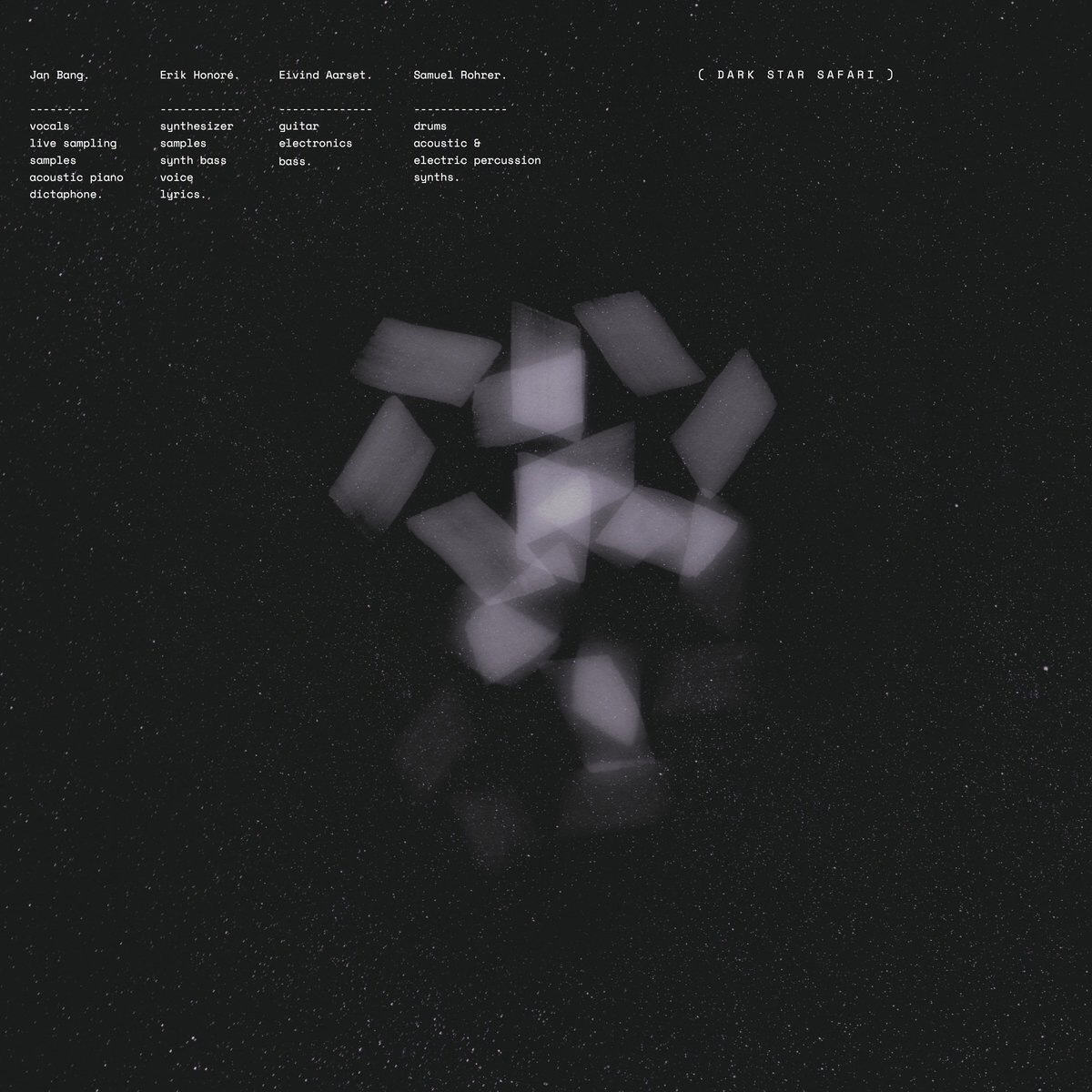
Dark Star Safari – Dark Star Safari

Dark Star Safari is a quartet of Jan Bang (vocals, samples, piano), Erik Honoré (synths, samples, lyrics), Eivind Aarset (guitar, bass, electronics) and Samuel Rohrer (drums / percussion, synths).

The sessions were instigated by Rohrer at Berlin’s Candy Bomber studios with the assistance of Conny Plank accomplice Ingo Krauss, and were originally intended to be relatively freeform instrumental improvisations; instead, as the reductivist recordings progressed, Bang found himself compelled to add vocals to the tracks, giving the ten tracks on this eponymous album a searching quality that lifts these pieces from interesting sketches to powerful, song-based compositions.

The fragile musings of ‘Resilient Star’, ‘White Rose’ and ‘Faultline’ emerge as highlights, finding Bang delivering his vocals in an almost-whisper that prompts comparisons with David Bowie at his most introspective, while the four-piece lay down a rich, turbulent bed of quiet, but ever-evolving accompaniment.

Bang’s delivery of Honorés cryptic lyrics is given a natural prominence across the album, but divert your attention toward the atmospheric music embedded within pieces like the languid ‘Child Of Folly’ or the faltering synth theatricality of ‘Your Father’s Names’ and what you hear is an understated, restrained complexity that whirs with relentless inventiveness just below the surface.

Dark Star Safari by Dark Star Safari is released by Arjunamusic Records on May 10 2019.

Words: Mat Smith

(c) 2019 Further.