Shots: Stichflamme Barnick / Nick Storring / Love Stereo / Alex Zethson & Johan Jutterström / Sean Armstrong / Xqui

STICHFLAMME BARNICK – STICHFLAMME BARNICK (Superpolar Taïps)

Bring on the distortion: the pairing of Stichflamme Dormagen and Robin Barnick was recorded between 2022 and 2024 and finds the pair producing intensive blocks of sound that are subjected to punishing processing. ‘Dolce al Cucchiao’ is among the heaviest tracks here, sounding not unlike an outtake from Pat Metheny’s Zero Tolerance For Silence. Elsewhere, the comparative levity of the pan pipe melody that dominates ‘Montabaur 8’ is subsumed by a ceaseless bass oscillator sweep that, halfway through, threatens to swallow up the poor piper and his innocent, gleeful playing. Released November 15 2024.

https://superpolar.bandcamp.com/album/stichflamme-barnick

NICK STORRING – MIRANTE (We Are Busy Bodies)

For his ninth album, multi-instrumentalist Nick Storring looked to Brazil for inspiration. That impulse gives the seven tracks here a greater rhythmic quotient than his previous works, with layers of vibrant percussion offsetting the orchestral-leaning textures that have become the hallmark of his musical work. At times, these pieces are quiet and contemplative; at others they are noisy, impactful and direct. ‘Roxa’, a three-part suite-within-a-suite, is a case in point. ‘Roxa I’ starts with ephemeral textures and interjections of percussion before opening out to include a stalking blues guitar riff and clusters of tones arranged into a delicate, tentative melody. “Roxa II’ unfolds as a sonic journey, building slowly toward a crescendo of angular, discordant clashes between layers of tuned percussion. The symphonic ‘Roxa III’, which closes the album, begins with rich swells of languid strings before evolving into a series of fast-paced, joyous rhythms for percussion and assembled clapping hands. Released March 21 2025.

https://nickstorring.bandcamp.com/album/mirante

LOVE STEREO – TU MUNDO

I saw Love Stereo perform at the Whisky A Go-Go in LA last year. Their set followed the release of their first single, ‘Fool’, which I wrote about here. A trio of Jonathan Burkes (vocals, bass, synths), Diane Hernandez (drums) and Steve Abagon (guitars / synths), Love Stereo make music that fuses sensitive electronics with a sharp and incisive rock sound. ‘Tu Mundo’, their second single, opens with a heavy, techno-inflected bass line and kick drum pattern before evolving into a softer, more introspective number as Burkes’ fragile vocal drifts into view. As the track progresses, crashing waves of guitar collide with increasingly emphatic vocals, haunting synth tones and pounded drums, a far cry from the minimalist pulse that opened the song. Released 1 April 2025.

https://lovestereo.bandcamp.com/track/tu-mundo


ALEX ZETHSON / JOHAN JUTTERSTRÖM – IT COULD / IF I (Astral Spirits / Thanatosis Produktion)

It Could / If I pairs Alex Zethson (piano) and Johan Jutterström (saxophone). Comprising new arrangements of standards, their own pieces and interpretations of pieces by Pet Shop Boys and Leonard Cohen, the album provides a beatific insight into two players who have a symbiotic relationship going back to their teenage years. On their version of ‘If I Had You’ – recorded by everyone from Frank Sinatra to Art Blakey – Jutterström offers a delicate, light accompaniment to Zethson’s minimal keyboard playing, while the version of Cohen’s ‘If I Didn’t Have You’, from You Want It Darker – his final album released during his lifetime – finds both of the players fluidly alternating their way through the song’s core melody, providing a poignant, heart-wrenchingly emotional close to an absorbing jazz suite. Released April 11 2025.

https://alexzethson.bandcamp.com/album/it-could-if-i


SEAN ARMSTRONG – VELVET EVER AFTER (Rehberge Records)

Dear Sean,

Many thanks for sending me your album, Velvet Ever After, on March 27 2025. It’s always nice to receive new music, and I’m always very grateful for this.

I also know how inordinately stressful it can be sending out something you’ve created into the aether and hoping for someone to give it a listen. I’ve been there. It takes a lot of self-confidence and resilience. I also know how it feels when someone you’ve sent it to doesn’t respond. I’ve also been there.

And so, with that in mind, I wanted to apologise. I saw your email come in, and I didn’t reply. That sucks. It’s common courtesy to at least acknowledge receipt of an email, from a DIY label like yours. Had I replied at the time, I would have said how much I liked the fact that Rehberge is named after your favourite park in Berlin (who does that?), and how much I loved the fact that it’s something you run with your partner, Rocky Lorelei. But I didn’t reply, and so I didn’t say any of that to you. I could come up with a plethora of excuses and reasons – too many emails, too many problems, too little time etc – but it still sucks that I never replied.

I didn’t just want to apologise for that. I also wanted to say how much I loved the album. I listened to Velvet Ever After after it had already been released, on what had been a really, really stressful day with my day job. It soothed me in a way that I really needed after the day I’d had. Your guitar playing has such a delicate, graceful quality, and I also love the songs like ‘The Whirlpool’ where Rocky adds pretty synth melodies alongside you. Your voice is also superb, and I found myself actually breathing – like actually breathing, with proper, deep breaths – while listening to songs like ‘My God’ and ‘The Library’, for the first time since I got to the office just after 0700.

I’m getting dreamy, sun-drenched West Coast tasting notes and a nice reminder of Real Estate, a band I realised I haven’t played for years, but now really want to listen to again. The instrumental pieces are also absolutely beautiful. ‘Valley Of Racing Shadows’ is stunning, as is ‘Concertina Sundae’.

So, like I said at the top: I’m so sorry for ignoring your email. However, I’m overjoyed that you sent it my way. Please add me to your mailing list with the email I’ve sent you separately, and I look forward to staying in touch.

All the best,

Mat

Released April 25 2025.

https://rehbergerecords.bandcamp.com/album/velvet-ever-after


XQUI – ALBION

I have discovered that I gravitate to anonymous characters. Perhaps it’s because I have such a ubiquitous, boring, pedestrian name that it feels like I am in good company with people who keep their identities hidden (while I hide in plain sight). This explains why I get on pretty well with Homer Flynn, the spokesperson for the ultimate anonymous act, The Residents. I’ve spoken with Xqui. We had a Zoom call. Like The Residents, he wore a mask, and it was fucking terrifying.

‘Terrifying’ isn’t a word you could levy at Xqui’s latest missive, the three-track Albion EP. The release continues a series of muses that began back in 2018 with the Britannia EP, and which continued the following year with the Revisited EP. Xqui began, er, revisiting his series of pieces all entitled ‘Britannia’ on 2023’s Nights That Went On Too Long, a release that I contributed spoken word to. His ‘Britannia’ variations lean into a fuzzy, hazy, ephemeral manipulation of what might well be a classic display of pomp and circumstance, snatched from a rowdy Proms performance at the Royal Albert Hall. Your ear latches on to familiar sounds – a swooning orchestral passage, a choir, a distinctive melody – before reverb and heavy processing obliterates that which you believe you recognise.

Is this a social comment on Britishness and our declining global relevance, or just another glorious example of Xqui’s idiosyncratic approach to sound art? Well, it’s actually derived from recordings made at a Lancashire ‘Coconutters’ event, a tradition that dates back some 150 years, and one which originated from the diaspora created through Cornish miners taking their skills – and their traditions – to far-flung places. You can read about that here.

The bit about Xqui’s unique sound art approach remains completely true, however.

Released April 26 2025.

https://xqui.bandcamp.com/album/albion-ep

Words: Mat Smith

(c) 2025 Further.


Jan Bang – Reading The Air

Reading The Air is Norway’s Jan Bang’s first vocal album since 1998. In recent years, Bang has focused on recording with Dark Star Safari, his quartet with Erik Honoré, Eivind Aarset and Samuel Rohrer. Aarset makes an appearance here, and the album was co-produced with Honoré, who also adds subtle synthesiser flourishes to the majority of tracks.

This is an album that rests in a deeply contemplative space. Many of the musicians spent the majority of their time as critical members of Oslo’s vibrant modern jazz scene, but these pieces are characterised by extreme restraint and reductivism. That approach gives Reading The Air a fragile sparseness, where the spaces say just as much as Bang’s lyrics.

The title track is perhaps the more overtly jazz-infected piece here, with liquid bass from Audun Erlien and shuffling kitwork from Anders Engen set against fluttering electronics from Bang, Eivind and Honoré. Inspired by Japanese philosophy, this is a song about optimism and moving on, positively; about putting the past behind you and finding somewhere to heal. A chord shift seems to act as a metaphor for what happens if you don’t move forward positively – “remain here, decay here”.

‘Burgundy’ and ‘Food For The Journey’ are two standout songs. On the former, Bang sings about someone experiencing mental anguish and who has been tortured by abuse, but who has triumphed over adversity. The framing here is key, with gentle electronics from the three Dark Star Safari members and muted percussion from Adam Rudolph. Twin vocals from Bang and Erik Honoré give this a plaintive, softly soaring sound against a backdrop of intense subtlety.

‘Food For The Journey’ consists of Bang’s piano and vocals, accompanied by delicate strings. Some unknown, vast tragedy seems to occupy the protagonist, drawn away across waters, trying to escape sadness. Bang’s central piano middle eight is laden with mournfulness, while additional vocals from a siren-like Simin Tander voice swirls around, leading our saddened sailor further away from his misery.

Elsewhere, ‘Cycle’is presented as clipped, off-centre synth pop where its electronic structures are offset by Anneli Drecker’s sweet, folksy vocal harmonies with Bang. Lots of sonic turbulence and tension bubble just below the surface of ‘Cycle’, creating what feels like a dubby, psychedelic lounge music. The tragic ‘Winter Sings’ contains amournful, fragile backdrop of sounds that feel like they’re blown in from a frozen landscape. Haunted, dejected vocals suggest disappointment at a sort of impotence, an inability to help someone. A duduk melody from Canberk Ulas concludes the track, over a trace outline of a beat and submerged, almost electronic dub-like pulse.

The album’s clear highlight is its only cover, a complete deconstruction and rearrangement ‘Delia’, originally performed by Harry Belafonte in 1954. This version is characterised by a subtle calypso swaying, like a soft breeze across a palm tree-fringed beach. Bang and Benedikte Kløw Askedalen’s voices are perfectly matched, framed by very little accompaniment bar quietly strident bells, woozy tropicalia guitar from Aarset and percussion from Engen. Everything here is wrapped in a gauzy heat-haze ephemerality. Hopeful and warmly optimistic, Bang’s stunning version of ‘Delia’ is wonderfully wistful.

A beatific, affecting collection of songs, Reading The Air is one of the most moving, attention-grabbing albums I’ve heard in a good while. Warm and enveloping, these songs have a profound, haunting quality that stays with you long after the final song has finished. Understated yet powerful, and frequently breathtaking.

Reading The Air by Jan Bang was released January 19 2024 by Punkt Editions. Thanks to Jim.

Words: Mat Smith

(c) 2024 Further.

Shots: Bowing / Claire M Singer / Astrïd / Tape Loop Orchestra / Amon Ra Collective

BOWING – NORTH STANDING (Downstream Records)

A collection of 13 ambient moments, Bowing’s North Standing eschews the casually drifting pads and gauzy textures of most music in the genre. Often constructed with expressive cycles of pretty melodies in the foreground, pieces like ‘Sway Of The Rushes’ and ‘Tomorrow Will Bring’ are languid, enveloping and moving. A jazzy momentum and looseness infiltrates the latter, giving the piece a questing, enquiring mystique. Released 17 July 2023.

CLAIRE M SINGER – SAOR (Touch)

Influenced by trekking through the Cairngorm region of northern Scotland and an 1872 pipe organ installed in a church in Forgue, Aberdeenshire, Saor finds Claire M Singer reflecting on the topography of her homeland, as well as ruminating on existence itself. Many of Singer’s ancestors are buried at the church in Forgue, and the vast Cairngorms expanse would be largely unaltered from when they were alive. That gives these pieces the notion of things staying the same, but at the same time always changing. This is expressed in beautiful, thought-provoking pieces like ‘Cairn Toul’, through long, unmoving held notes on the organ over which more fluid moments are laid. The album’s 25-minute title track is nothing short of mesmerising, its organ drones rising gracefully like one of the mountains and plateauing with hopeful, joyous interventions. Singer is currently raising funds to help the restoration of the Henry Willis organ in the Union Chapel In Islington, which is featured on Saor – to donate, go here. Thanks to Mike and Zoe. Released November 3 2023.

ASTRÏD – ALWAYS DIGGING THE SAME HOLE (False Walls)

French quartet Astrïd is comprised of Vanina Andréani (violin, piano), Yvan Ros (drums, percussion, harmonium, metallophone), Cyril Secq (guitars, piano, synth, harmonium, percussion, metallophone) and Guillaume Wickel (clarinet, percussion). Their new album for the False Walls imprint is stunningly beautiful, a perfect accompaniment for frozen days. Opening piece ‘Talking People’ is plaintive and contemplative, opening with Wickel’s expressive yet subtle clarinet and a particularly introspective piano motif from Andréani. As the piece builds, with unobtrusive percussion, violin and tender guitar, ‘Talking People’ takes on a gently towering dimension, full of uncertain emotion. Subtly majestic, the five pieces on Always Digging The Same Hole act as an emotional salve, like wrapping yourself in the comfort of your favourite blanket. Mesmerising and beguiling. Released November 10 2023.

TAPE LOOP ORCHESTRA – ONDE SINUSOÏDALE ET BANDE MAGNÉTIQUE (Quiet Details)

Tape Loop Orchestra is an alias of Andrew Hargreaves (lately of The Mistys). For his contribution to the always beatific Quiet Details label, his sound palette was restrained to an oscillator, a tape machine and minimal effects. That set-up gives the three long pieces here a stillness and fragility. Central overlapping tones build and coalesce slowly, fringed by subtle additions and gentle interventions, creating an effect not dissimilar to Claire M Singer’s organ preparations on Saor (above). The entire Quiet Details series has a delicate sparseness, but Hargreaves’ Onde Sinusoïdale Et Bande Magnétique is probably the most ephemeral release yet. Released November 15 2023.

AMON RA COLLECTIVE – AT THE CENTRE OF EVERYTHING (Lamplight Social Records)

Amon Ra Collective are an ensemble comprising over 20 members, all of whom are jazz students at Leeds Conservatoire. Their debut album is ostensibly a astro-spiritual collection, but is not restrained by any particular genre boundary. The centre of the album is occupied by a wonderfully sprawl of experimentation, culminating in the aptly-named ‘Explorations’, where bleeping synths, treacly bass, atonal reverberating horns and intense percussion suggest a restless, inquisitive spirit. Concluding track ‘Astro Funk’ starts out in a joyous, danceable frame of mind before oscillating rapidly into territory somewhere between 1970s German rock and sound art. Released November 24 2023.

Words: Mat Smith

(c) 2024 Further.

Charlotte Keeffe’s Right Here, Right Now Quartet – ALIVE! In The Studio

With ALIVE! In The Studio, trumpet and flugelhorn virtuoso Charlotte Keeffe helms a dexterous collection that showcases her ability to move effortlessly between the myriad dimensions of jazz. Unlike her solo material, wherein she embraces electronics to augment and complement her playing, as leader of a quartet, the emphasis is naturally on coordination among her fellow musicians – Ashley John Long (double bass), Ben Handysides (drums) and Moss Freed (guitar).

At the more extreme experimental end of the jazz spectrum, the ‘1200 Photographs’ triptych is largely focused on texture and noisy improvisation. Here, Keeffe leads the way with a series of fragments and gestures that writhe and fidget, accompanied by unpredictable percussion and scratchy guitar figures that occasionally settle into searching, blues-y statements.

At the other extreme, ‘A Horse Named Galaxy’ leans into a more melodic style of playing, with Keeffe’s central refrain having all the classic, memorable qualities of a Miles Davis riff circa ‘Freddie Freeloader’, the contrapuntal melodies of Long’s bass creating a easy, languid unity at the core of the piece. Even as the track collapses into a sprawling, distant cousin of itself, Keeffe resurrects her motif at various different tempi, the melody taking on an increasingly hyperactive tone as everything collapses in on itself. Speaking of Miles, ‘EastEnders’ is not a jazz rendition of the beloved UK soap opera’s theme tune but a deeply funky, expansive cut reminiscent of his wild, electric-period statements.

‘Sweet, Corn’ is one of the most captivating tracks on this collection. A white hot, almost urgent rhythmic backbone dominates this piece, the tension only breaking when Keeffe’s horn erupts into the foreground. For some reason, brief moments in the track remind me of ‘Jet Song’ from ‘West Side Story’, though every time I alight on what I think it is that evokes that memory, it writhes away from me elusively.

Adventurous, playful and reverential, with ‘ALIVE! In The Studio’, Keeffe offers different perspectives on the jazz form, while clearly having a huge amount of fun. The clue is in the title – to listen to this album, and to experience its many gestures, is to truly be joyously, gratefully and rapturously alive.

ALIVE! In The Studio by Charlotte Keeffe / Right Here, Right Now Quartet was released September 22 2023 by Discus Music.

Words: Mat Smith

(c) 2023 Further.

John Derek Bishop / Inge Weatherhead Breistein – Ro

Ro pairs electronic experimenter John Derek Bishop (Tortusa) with tenor saxophonist Inge Weatherhead Breistein. The album captures the duo performing in five churches along the western coast of their Norwegian homeland, with Bishop manipulating Breistein’s sax in real time using live sampling techniques.

The first thing that grabs you on the opening track, ‘Spurv’, is the rich tendrils of reverb that surround Breistein’s horn. This give his playing a stately and atmospheric quality, even when he launches into a run of more forceful notes instead of the more delicate passages elsewhere. Those sections are at once soothing but also inquisitive, as if he was seeking answers from the furthest corners of the room, his circular breathing technique seeming to gently lift you up out of your most contemplative thoughts.

Bishop’s processing similarly alternates between extremes. At its most subtle, his looping technique creates a chorus of Breisteins, a many-layered orchestra of saxophones, giving a sense of depth and perspective to his playing. Sometimes his contributions exist solely in the background as a microcosm of tiny sounds freighted with almost percussive textures, or as fleeting constructs of dissonant drones; elsewhere, as on the seven-minute title track, his involvement becomes increasingly prominent, especially in the second half, where he contrives to convert Breistein’s playing into a swooning, cinematic piece full of drama and tension. For the most part, at least in the first few pieces, Bishop occupies a terrain of considerable restraint and a generally respectful approach to his manipulations.

Perhaps the most surprising moments come with ‘Lag’ and ‘Stim’, where Bishop feels emboldened to add in a consistent rhythm alongside his partner’s sax. After a number of quiet, softly undulating pieces, those pieces have a crushing, disruptive edge, their rattling textures seeming to shake the pews and foundations out of their holy slumber. ‘Trekk’ begins with a passage of what could be echoing birdsong and clattering percussion, but might well be re-pitched and reassembled sections of Breistein building his horn and warming up. Whatever the source, as the piece progresses it evokes the feel of a slow riverboat cruise through some exotic jungle rather than trawling the cooler waters of Norway’s coastline, acting as a perfect example of this duo at their most inspiring.

Ro by John Derek Bishop and Inge Weatherhead Breistein was released by Punkt Editions / Jazzland on October 21 2022. Thanks to Jim.

Words: Mat Smith

(c) 2022 Further.

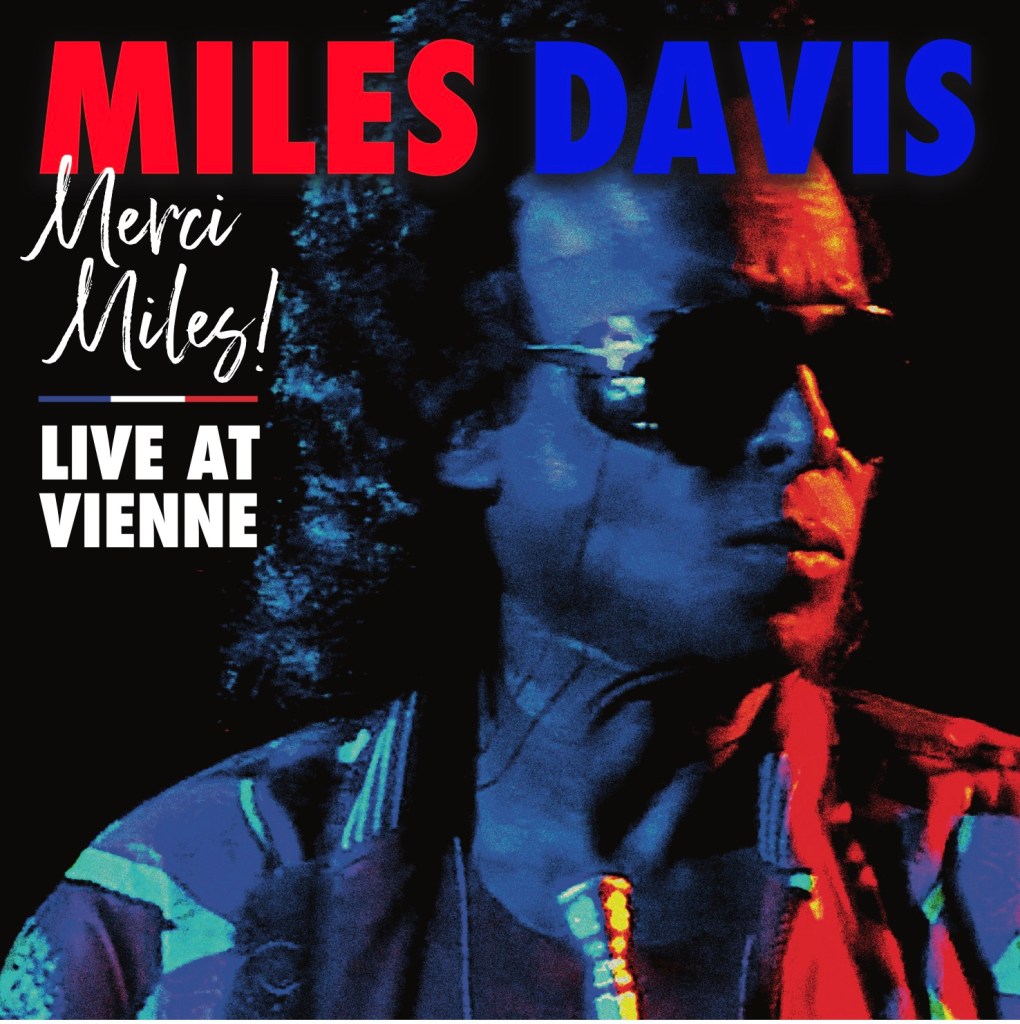
Miles Davis – Merci Miles! Live At Vienne

“I’m an instinctive kind of person who sees things in people that other people don’t see. I hear things that other people don’t hear and don’t think are important until many years later, when they finally hear them or see them themselves. By then I’m someplace else.” – Miles Davis, Miles – The Autobiography

It’s tempting to view the modern jazz scene of the late-1980s and early 1990s as a barren, inhospitable place. The combination of ubiquitous digital keyboards, omnipresent clean bass lines and sharp production in place of the raw energy of earlier versions of the jazz form gave the genre a sort of dryness that became a shorthand for elevator music.

Miles Davis, adaptable though he always was to what jazz could be, took a while to adapt to what the 1980s represented. He started the decade emerging from retirement, meaning that when he returned, it took a while for his breath to reach its full potential again, while recurring bouts of pneumonia threatened to – and and ultimately did – take his signature style away forever. Nevertheless, Davis looked around and found himself a place, whether in the way that he took Michael Jackson’s ‘Human Nature’ or Cyndi Lauper’s ‘Time After Time’ and made them his own on You’re Under Arrest (1985), or his seminal late-career work with Tommy LiPuma and Marcus Miller, his creative friendship with Prince or the recently-exhumed Rubberband sessions from 1985. Davis, to paraphrase the master of punchy epithets himself, remained as relevant as a motherfucker.

Merci Miles!, cringey title to one side, captures all of these bold aspects of Davis in his literal twilight moments. Recorded at the Vienne Jazz Festival in southern France on July 1 1991, Davis would be dead less than three months after he performed this concert with his group. There’s no weakness in his playing, no less energy, no less enthusiasm for the material or his art; no trace at all of these being among Davis’s last breaths.

The setlist drew from what was Davis’s most recent album at that point, 1989’s Marcus Miller- produced Amandla, and You’re Under Arrest. The material from the former is delivered with a gentle, lyrical crispness, while his duetting with the group’s alto saxophonist – Kenny Garrett, who easily gets as much solo time as Davis across this set, if not more – evokes the spirit of some of his vital sparring with sax players in the bebop era. Both ‘Amandla’ and ‘Hannibal’ here have a certain mystique, evoking the African spiritualism that connected the album to 1986’s Tutu.

Also included in the set are two pieces written by Prince, ‘Penetration’ and ‘Jailbait’. Both carry a slick, funky outlook that’s immediately recognisable as Prince compositions, and that Davis initially seems able to engage with, but after a while it feels as if he’s lost interest, leaving the rest of the group – and Garrett in particular – to lead.

The lengthy versions of ‘Human Nature’ and ‘Time After Time’ find Davis at his most profound on this date. His playing on these two tracks has a searching, questing quality, finding endless new angles within the distinctive melodies to explore and develop, taking two instantly familiar pieces down intriguing new pathways. Considering Davis was forever prickly about playing signature moments from his own catalogue, he doesn’t seem to have any such issue with playing these two pieces, raising them to the status of contemporary standards.

Key to the sound of pieces like ‘Wrinkle’, later to emerge on the Rubberband album, is the rhythm section of bassist Foley, second bassist Richard Patterson and drummer Ricky Wellman. On ‘Wrinkle’ you hear the trio pivot sharply from elastic funk to frantic, white-hot runs. Foley’s playing deserves special mention on this date – his approach was to play an octave higher than expected, allowing him to riff like he’s playing an electric guitar. Despite its integral positioning in this set, Foley himself had been self-critical of his playing literally up to these last few concerts with Davis. Like so many stories you read of Davis giving nurturing advice to his young players, he had suggested to Foley that he try to play less; the result was space and room to hear the expressiveness of his playing. The group was rounded out by young keyboard player Deron Johnson, who manages to give the normally stale-sounding digital equipment of the period as much a sense of resolute firmness as textural colour.

Ashley Kahn’s inclusive liner notes for the album capture what it was like to be around Miles at the end of his days. We learn about his love of foie gras and pig’s feet, his enthusiasm for France and live music, his gratitude humility, and a certain shyness about talking on stage or in public. More poignantly, we hear first-hand accounts from Johnson about his bandleader’s failing health. “The whole inside of my body feels like it’s falling apart,” complains Davis to his new protégé. Despite playing as well as any other point in his career, physically he looks drained, sluggish and worn out on stage at points during the 80-minute Vienne set.

“For me, the urgency to play and create music today is worse than when I started,” wrote Davis at the very end of his 1989 autobiography, smack in the middle of his final career nadir. “It’s more intense. It’s like a curse. Man, the music I forget now drives me nuts trying to remember it. I’m driven to it – go to bed thinking about it and wake up thinking about it. It’s always there. And I love that it hasn’t abandoned me; I feel really blessed.”

Merci Miles! Live At Vienne is released June 25 2021 by Rhino. Thanks to Jess and Joe.

Words: Mat Smith

(c) 2021 Further.

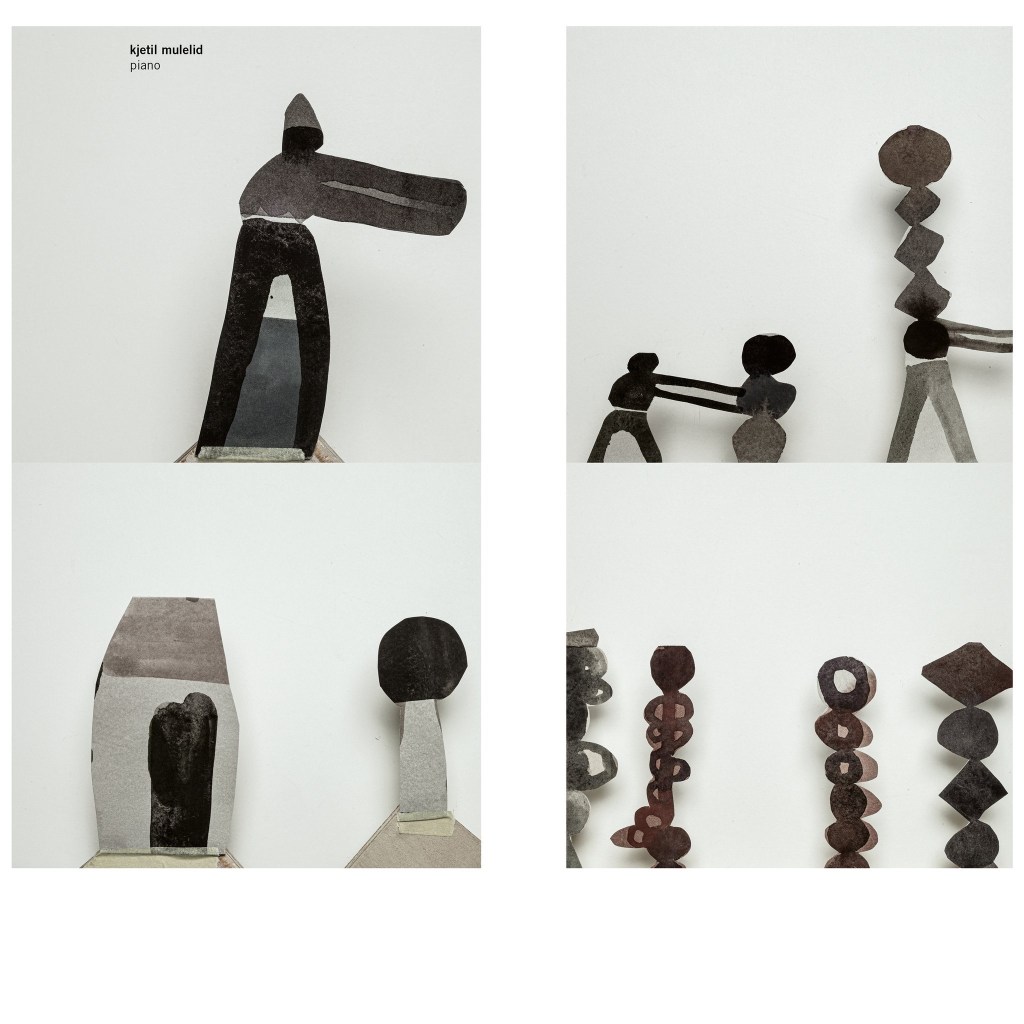
Kjetil Mulelid – Piano

Piano is Norwegian jazz musician Kjetil André Mulelid’s first solo album. Ordinarily to be found leading a trio with drummer Andreas Skår Winther and bassist Bjørn Marius Hegge, the pianist had been encouraged to make a solo piano album nearly two years before recording the two locked-down sessions in June and September of last year that yielded Piano.

The eleven pieces here were each performed on the 1919 Bösendorfer grand piano located at Halden’s Athletic Sound studio. Mulelid talks about the instrument’s imperfect sound being a direct contributor to the tone of the album, but unless you are a pianist of his calibre, it’s hard to detect. Instead, what you hear are pieces like the fragile, introspective ‘Le Petit’ or the pretty ‘Skjong’ that straddle the gulf between classical music and jazz.

The majority of the album was recorded during a heatwave. Strange, then, that in these pieces I can hear rain. Specifically, I find myself imagining being sat in an empty café – probably in Paris; when my heart aches I usually find myself transported to the Paris of my mind – staring out onto puddles forming in the road. Perhaps it’s because I hear a sort of muted, haunting lightness of touch in Mulelid’s playing, or maybe it’s just the frame of mind I’ve found myself in every time I’ve put this album on. There is undoubtedly euphoria and beauty here in the languid note formations of a piece like the tender ‘For You I’ll Do Anything’ or closing track ‘The Sun’, but I also hear a sadness, a contemplative dimension that feels oddly anguished.

Lockdown may have limited Mulelid’s options to get his band together, but in Piano he has produced a striking, transcendent album that I expect to return to endlessly.

https://open.spotify.com/album/7yRzVFzD4b5aTWlXsFIm6k?si=ac_tzZeJQjWZs_h3K0h3bQ

Piano by Kjetil Mulelid was released March 19 2021 by Rune Grammofon. Thanks to Jim.

(c) 2021 Further.

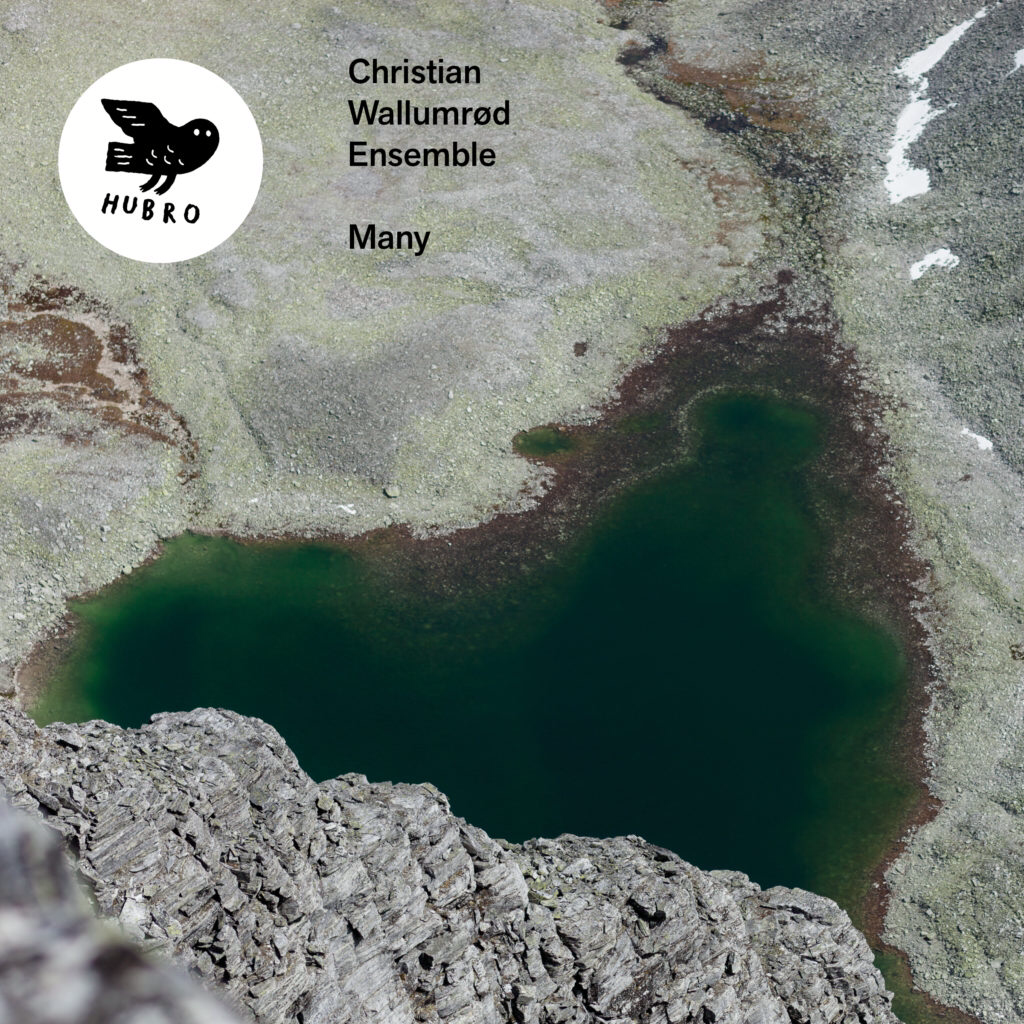
Christian Wallumrød Ensemble – Many

As innovative as it is, modern classical music has settled into something of a comfortable pattern, with a relatively predictable interplay between acoustic instruments and electronics. What once felt like progressive, modernistic flourishes now feel familiar; there’s nothing wrong with this, per se, but with a few notable exceptions, it’s often easy to form an impression of what a modern classical album will sound like before you’ve even put it on.

One of those exceptions is Norwegian composer and ensemble leader Christian Wallumrød. After a series of celebrated albums for the venerable ECM label, alternative musical paths in his sibling electronic duo Brutter, and parallel time spent in the Dans Le Arbre quartet, Wallumrød released the brilliant Kurzsam And Fulger through Hubro in 2016. His is a modern classical that nudges into jazz territory without ever fully giving in to that movement’s improvisatory pedigree, creating music with an inherent fluidity that nods to traditions in its foundations, but which aggressively looks to more experimental territory for its final appearance.

Wallumrød’s new ensemble recording, Many, finds inspiration in the musique concrète innovations made by Pierre Schaeffer at the Groupe de Recherche Musicales in 1950s Paris or the early deployment of tape technology by John Cage and Karlheinz Stockhausen. What you won’t find here, however, are moments of forcibly-processed sound or intrusive technological gestures. This is an album which – at times – is heavily electronic without using heavy electronics, its reverential concession to musique concrète being some of its confounding, nonconformist rhythmic basis. A piece like ‘Danszaal’ with its chiming trumpet and saxophone passages from Eivind Lønning and Espen Reinertsen respectively progresses with a dizzying, stop-start judderiness that nevertheless carries subtle, microtonally shifting beauty. A similar effect is achieved on ‘Staccotta’, led by Wallumrød’s unswerving piano stabs and plucked cello, blasts of brass and a breakdown into pure electronics giving this a playful, elusive, ever-changing quality.

Elsewhere, that use of electronics is more prominent, and each of Wallumrød’s ensemble – himself, Lønning, Reinertsen, cellist Tove Törngren Brun and drummer / percussionist Per Oddvar Johansen – is credited with the use of electronics alongside their usual instrument. Opening track ‘Oh Gorge’ weaves sprinkles of bleeping, synths around Brun’s mesmeric cello cycles, the whole thing pushed through a heavy echo that gives any of the additional elements – Johansen’s vibraphone, Wallumrød’s upper register piano playing – a sense of spinning out from a turbulent vortex. ‘Abysm’ is perhaps the moment where the electronics take over, the whole piece dominated in the foreground by droning synth textures, effects, loops and a general feeling of wild experimentation, its discordant tendencies operating at odds with a prevailing sense of calm.

The key piece here, perhaps, is the fourteen-minute ‘El Johnton’, a series of three movements that begins with a strident piano, saxophone and brushed snare passage that sounds like the coda to a Billy Joel song, before evolving into something firmer and yet more free. The following section develops as a thrilling minimalist, electroacoustic sound field of electronic pulses, bursts of synthetic tones and arrays of metallic non-rhythms, offset with unpredictable acoustic interventions, almost as the extremest counterpoint to the opening passage; brief passages of that starting point’s piano section drift in and out like melodic memories, suggesting and forcing a connection between the two with the most unlikely sonic construction. By the time the original section is reprised, it feels altered somehow, less straight, its traditional structure sounding suddenly alien after being mauled, manipulated and brutally erased in the ten intervening minutes.

Many by the Christian Wallumrød Ensemble was released February 28 2020 by Hubro.

Words: Mat Smith

(c) 2020 Further.

Jazzrausch Bigband – Beethoven’s Breakdown

The follow-up to last year’s Christmas album Still! Still! Still! and the reissue of 2018’s Dancing Wittgenstein, Beethoven’s Breakdown exemplifies what composer / arranger Leonhard Kuhn and bandleader Roman Sladek’s Jazzrausch Bigband do best: namely, creating large-scale sonic landscapes occupying the nexus of jazz, classical music and house music.

If that still seems unlikely, one cursory listen to the group’s arrangement of Beethoven’s ‘Moonlight’ sonata should help dispel any sort of notion that this is some sort of novelty hybrid. Here, the piece’s familiar melodic motif is interwoven with a thudding dance beat and freeform brass solos that swing gently on the framework of the composition, never detracting, but highlight this Munich-based sixteen-piece band’s dexterity within the jazz oeuvre. The major surprise are the small, subtly evolving circular sections running throughout the piece, creating a familiar sensation for anyone used to hearing the tweaked modulations of a minimal techno track, but here providing the connective tissue between that strain of dance music, Terry Riley and Ornette Coleman’s harmolodics. It perhaps shouldn’t work, but it does.

Beethoven’s Breakdown sees Kuhn and Sladek distinctively re-interpreting three Beethoven pieces – the aforementioned ‘Moonlight’ sonata, his Symphony No. 7 and the two-part String Quartet No. 14. Each one is delivered with the flair and sensitivity that Jazzrausch Bigband have become known for, in other words being respectful of the source material, the jazz tradition and the expected formalism of house while still allowing enough room for gentle improvisation. Leonhard Kuhn’s synths are deployed carefully, never detracting from the traditional jazz instrumentation but also providing interesting detail and colour throughout.

The album also includes a four-part sonata composed by Kuhn and featuring the trombone of Nils Landgren. This piece nods firmly in the direction of Beethoven but have more of an open, less densely-packed dimension that allows greater room for soloing – Landgren’s expressive trombone, the combined pianos of Severin Krieger and Kevin André Welch and Kuhn’s blipping electronics.

The element that is perhaps least appreciated, yet omnipresent, here is Silvan Strauß’s drum technique, wherein the entire album hinges on his ability to play unwavering robotic drum machine patterns and more complex polyrhythms, often alongside Kuhn’s programmed rhythms.

Beethoven’s Breakdown by Jazzrausch Bigband is released March 27 2020 by ACT Records.

Words: Mat Smith

(c) 2020 Further.

2019: From The Side Of The Desk

My desk at home is a mess, as Mrs S continually points out to me.

It is a place for incoming mail to accumulate, a home for broken bits of things that need to be repaired, seven-inch singles that were taken out of their alphabetised boxes and which never quite found their way back, research materials for projects I may or may not ever finish, an in-tray containing goodness-knows-what and somewhere, somewhere, somewhere, a miniature Zen garden; I imagine that if the bird statue could come to life it would be shaking its head in dismay at the very un-Zen chaos that surrounds it.

On the left hand side of the desk is a pile of CD promos graciously sent to me over the course of the year which never quite got reviewed. This troubles me endlessly. And so, in an effort to repay that generosity and goodwill, and so I can show Mrs S that I’ve cleared at least some of the detritus off my desk, here’s a clutch of short reviews of some of the albums I never quite got around to in 2019.

“A good many back payments are included,” said Ebenezer Scrooge as he whispered his donation to the same charity collectors he had dismissed several pages before in A Christmas Carol, and so this is for all the labels and PRs and artists who graciously shared their music with me this year but which I then seemed to uncharitably ignore.

I’ll keep the desk – both physical and digital – clearer in 2020; I promise.

Jazzrausch Bigband – Dancing Wittgenstein (ACT)

In which the Roman Sladek and Leonhard Kuhn-led forty-piece big band’s 2018 self-released album gets a shiny reissue by the ACT imprint. The album found the band showcasing their distinctive flavour of acoustic jazz augmented by techno beats and authentic synth flourishes, with lyrics derived directly from the work of Austrian philosopher Ludwig Wittgenstein. It’s bonkers, but it works – honest.

The album’s finest moments arrive on the eponymous opening ten-minute piece – replete with cycles of Terry Riley motifs – and the hypnotic house pianos of ‘Continuous Dirichlet’, the latter forcing headache-inducing Googling of incomprehensible statistical theory.

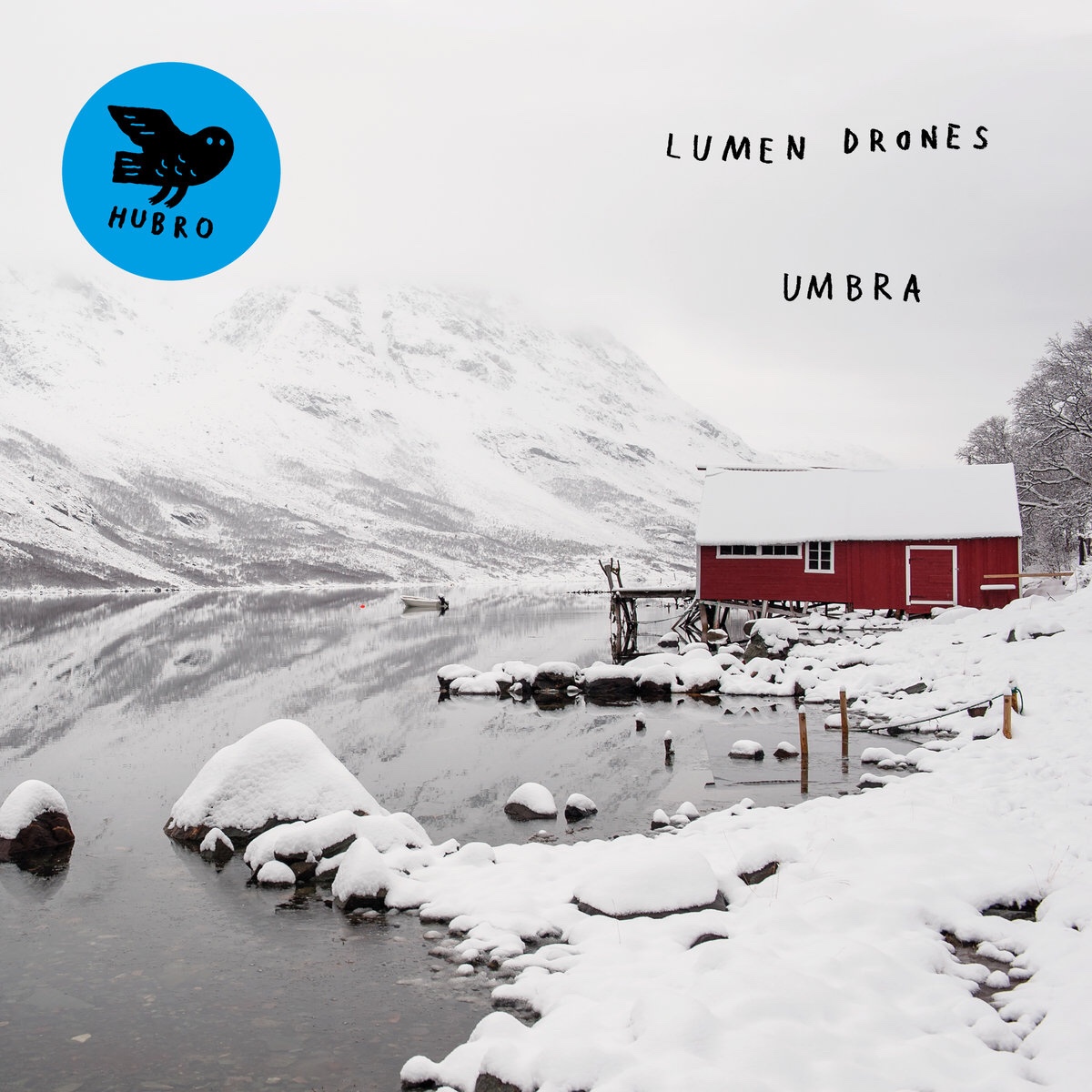
Lumen Drones – Umbra (Hubro)

Umbra is the second album from Norway’s Lumen Drones, a trio of esteemed fiddle maestro Nils Økland, guitarist Per Steinar Lie, and drummer Ørjan Haaland. Lie and Haaland’s day jobs in the post-rockers The Low Frequency In Stereo provides the weighty folk-blues bedrock of the standout ‘Droneslag’, whereupon Økland’s Hardanger fiddle provides a noisy, discordant tension.

In complete contrast, the trio’s seamless interplay on ‘Etnir’ produces the album’s most serene and dreamlike piece, full of beguiling wonder and ethereal, mystical texture. Umbra was released on the inestimable Hubro label, the first of three releases in this list that I failed to review this year.

Elephant9 – Psychedelic Backfire I & II (Rune Grammofon)

Norway jazz-rock supergroup Elephant9’s double live collection was recorded at Oslo’s Kampen Bistro in January 2019 and finds the trio of Ståle Storløkken (Hammond, Rhodes, Minimoog, Mellotron), Nicolai Hængsle (bass) and Torstein Lofthus (drums) ripping through white-hot takes of tracks from their five studio albums.

The first set features energetic re-treads of their debut album’s title track ‘Dodovoodoo’, which here seems to traverse the paper-thin frontier between Can at their most freeform Chick Corea’s Return To Forever at their most lysergic. Two versions of the evolving groove of ‘Habanera Rocket’ – one on the first set as a trio performance and one on the second augmented by Reine Fiske’s additional guitar – riff on the track’s central rhythmic shuffle, the latter featuring Fiske’s guitar prowling feistily around Storløkken’s dexterous keyboard work in a truly breathtaking duel.

Afenginn – Klingra (Tutl Records)

The work of Danish composer Kim Rafael Nyberg, Afenginn offers a distinctive take on modern classical composition that draws parallels with the work of Yann Tiersen. Tiersen’s vocal collaborator Ólavur Jákupsson can be heard across the eight pieces included here, as can The Danish String Quartet, percussionist Knut Finsrud, bassist Mikael Blak, drummer Ulrik Brohuus, the twin pianos of Teitur and Dánjal á Neystab and the mournful violin of Niels Skovmand.

To call this body of work haunting would be an understatement, with the gentle melodic washes, electronic textures and layered jazz percussion of ‘Ivin’ and the growling analogue synth-heavy coda on the towering ‘Skapanin’ having a particular resonance.

Jo Berger Myhre / Ólafur Björn Ólafsson – Lanzarote (Hubro)

Lanzarote is the second outing on Hubro for Norwegian bassist Jo Merger Myhre and keyboard / percussion guru and Jóhann Jóhannsson collaborator Ólafur Björn Ólafsson, and follows 2017’s The Third Script.

Their new album finds their simpatico approach to texture and sound augmented by resonant brass contributions from Ingi Garðar Garðarsson and Eiríkur Orri Ólafsson. The slow-build and ultimately noisy layered crescendo of ‘Atomised – All We’ve Got’, features buzzing electronics, urgent drumming and anguished horns, the whole thing sounding a lot like the end of days before collapsing into a passage of muted reflection. The tuned drums of the quiet ‘Current’ evokes comparisons with Manu Delago, its percussive core offset by Myhre’s searing double bass melodies and gentle spirals of delicate, inchoate Moog.

Armin Lorenz Gerold – Scaffold Eyes (The Wormhole)

Armin Lorenz Gerold is a an Austrian multimedia artist who also performs under the name wirefoxterrier. Currently based in Berlin, Gerold’s primary focus of late has been on altering perceptions of the radio play, with Scaffold Eyes taking the form of a live performance for Gerold’s voice augmented by pre-recorded sounds delivered through a binaural speaker installation.

Originally performed at Berlin’s KW Institute in November 2017, the CD release on The Wormhole presents Gerold’s rich narrative as a noir soundworld, featuring occasional forays into café jazz, harpsichord classicism and delicate sections of pianissimo texture. Gerold’s soft diaristic delivery is accompanied by additional segments performed by Doireann O’Malley and Miriam Stoney, each word imbued with a strange, haunting resonance, even when describing quotidian events and observations. The effect is not dissimilar to the strange, unresolved ambience of Patrick Modiano’s Missing Person, and it’s hard not to imagine Gerold’s work resplendent in murky monochrome, lit by the diffuseness of ineffective street lighting.

Frode Haltli – Border Woods (Hubro)

Frode Haltli is an accordionist and no stranger to the Hubro imprint. For Border Woods, he is joined by the esoteric percussion of Håkon Stene and Eirik Raude, and his distinctive accordion playing is interwoven with Emilia Amper’s nyckelharpa (a Swedish keyed fiddle).

On tracks like the concluding ‘Quietly The Language Dies’, the quartet’s unified sound centres on a seamless interplay between the accordion and nyckelharp, veering from stirring (if mournful) melodic alignment to powerfully discordant drones. Beneath them, Stene and Raude’s percussion is ephemeral and textural, a gentle foundation of tuned drums providing an unexpected counterweight. At the other extreme, the fifteen minute ‘Mostamägg Polska’ channels a particularly vivid flavour of traditional Nordic folk music, interspersed with moments of beatific ambience.

With thanks (and apologies) to Ian, Jim and Philip.

Words: Mat Smith

(c) 2019 Further.