Remember that TV show It’ll Be Alright On The Night? It was hosted by a guy called Denis Norden, who would introduce gaffes and outtakes while holding a clipboard, looking less like a veteran TV presenter and more like a safety inspector in a factory. Well, this album by Switzerland-based sound artist Rupert Lally is a tribute to him.
Only kidding. It isn’t, though it would be kinda fun if it was. But it is a tribute – of sorts – to the Nord Modular G1 synth, which Lally used to create this album. It consists of five long tracks which find Lally in full-on, long-form experimental electronic territory. I’ve followed Lally’s work for at least a decade now, and it’s really interesting to hear him venture down this path.
There’s a sense of restraint, but also freedom, in these pieces. It’s like he’s symbiotically interfaced himself with the machine, building patches that rely on repetitions, subtle shifts in tone and slowly-evolving layered development. Outwardly minimalistic, each of these five pieces is actually a rich stew of interlacing ideas where a lot happens if you only listen closely enough.
Each piece here occupies its own unique sound world, but ‘Nord D’ is my personal favourite, specifically for the nostalgia its core bass refrain gives me for Aphex Twin’s Selected Ambient Works 85-92, which runs for the first four minutes until a hesitant, oscillating melody ushers in the track’s discrete and mesmerising changes. And then there’s ‘Nord E’, a 27-minute epic that feels like a 1970s synth music experiment that has existed for fifty years in a undiscovered time capsule buried in Don Buchla’s back yard, all white noise percussion, pointillistic tonal sprinkles and dubby echoes.
Norden is an album with many such moments to explore, occupying a creative zone that I’d really like to hear Lally leaning into more – with or without a clipboard.
Earlier this year, my Mortality Tables collaborative project released Lunar Forms by Switzerland-based sound artist Rupert Lally*. That album found Lally at what I would argue was his most inventive, using a specific and quirky Eurorack module to trigger randomised rhythms on a daily basis, which he then used as the foundation for the pieces on the album.
The album also found Lally in deeply ambient territory. It’s an area of his work that I’ve always enjoyed, and for Tiny Universes, his latest album, we (pleasingly) find him going even further in that direction.
His choice of title is instructive, if somewhat consciously oxymoronic. These 11 pieces are like studying pinhead-sized universes through a microscope, revealing an incomprehensible vastness that would not be implied by their ostensibly small stature. Musically, there’s a whiff of jazzy Kosmische, a smattering of Vangelis-esque Bladerunner-y widescreen vastness and a determined melodic momentum that’s often missing from a lot of ambient music. Lally is not afraid of introducing unsettling, discordant textures, instilling a feeling of discomfort and uncertainty as much as they seem to evoke the idea of wide-eyed, slack-jawed wonder, surprise and incomprehension.
Lally has always been a masterful electronic composer and sound designer, capable of using an adaptable array of tools and techniques within his work. The sleight-of-hand he deploys here is the art of the slow build. His melodies begin as quiet, ruminative gestures, which coalesce and harden as they progress, often without you noticing. These magnificent, delicate, unexpected, low-key crescendos are critical ingredients of pieces like ‘Cosmic Countdown’, where that aforementioned sense of motion is most acutely felt. Elsewhere, Lally’s approach is to allow pieces to form stately, stirring gaseous structures out of oscillating, restless layers of white noise, lending a creator’s guiding hand while also allowing the tracks to evolve and develop by themselves.
Unlike Lunar Forms, there are no rhythms on Tiny Universes. None. Not even the slightest trace, inference or suggestion. Perhaps they haven’t formed yet in these universes that have caught Lally’s attention. It leaves his melodic and atmospheric prowess utterly naked and untethered; a brave move, for sure, but one that he is effortlessly capable of owning. The result is an album representing yet another high watermark in his expansive back catalogue. And yes, I know I’m biased.
Passages shines a light on Switzerland-based Rupert Lally’s enduring, but mostly unreleased, work as a sound designer and composer for theatre.
Specifically, the three long pieces here – ‘Cenote’, ‘Time Projection Chamber’ and ‘I Lost My Body To The Waves’ – were conceived for a dance group performance audition. They find Lally in deeply contemplative mode, the tones and shapes bearing most resemblance to some of the quieter moments in his series of hypothetical soundtracks to novels. I am loathe to call these pieces ambient; they are, but they are also highly melodic, giving each piece a simultaneous sense of both stillness and motion.
Motion is delivered on ‘Cenote’ by a percussive sequence that drives the piece relentlessly forward, while never totally dominating the piece and overwhelming its textural fabric. With ‘I Lost My Body To The Waves’, motion is achieved by continual, rapid evolutions and the constant addition of new layers, giving the piece a sense of euphoric ascendancy. And yet, heard another way, the piece is languid and reassuring. For some reason, even though ‘I Lost My Body To The Waves’ has no obvious beat, I’m reminded of Martin Hannett’s instruction to Joy Division drummer Stephen Morris: “Play faster but slower.”
///
I was listening to ‘Time Projection Chamber’ while travelling on the Tube from Liverpool Street to Euston Square, and then along the road to Euston Station. I’m not proud of this, but I stopped in at the W.H.Smith and bought a packet of salt ‘n’ vinegar McCoys that I didn’t really need. I hate wearing earphones while I eat crisps. It’s way too loud. So I boarded my train home, removed my earphones, paused ‘Time Protection Chamber’ and crunched my way through the crisps.
Why am I bothering to tell you this? Well, because the focal point of ‘Time Protection Chamber’ is a slowly-descending, exceptionally poignant and haunting synth melody that has the cyclical qualities of chiming, sonorous bells. Though there are many, many interventions and other sounds that arrive along the way, that melody is unswervingly, reassuring present. So much so that when I paused the music and devoured the crisps I didn’t really need, that melody lingered in my ears the entire time. It is a high watermark of beauty, and one of Lally’s most powerfully understated, resonant sequences in a catalogue overflowing with such moments.
As I said at the top, to date we’ve not really heard much of the music Lally has been steadfastly composing for these types of performances, for years. One can only hope that Passages is just that – a pathway to him releasing many more of these pieces.
Passages by Rupert Lally is released March 28 2025
wræżlivøść is a Polish pianist and sound artist. His debut three-track release was recorded in Poland, Denmark and the US, and fuses classical piano with extreme sound processing. The result is an EP that is in constant flux, with moments of noise intersected by meditative piano – some of it recorded from his graduation concert at Det Jyske Musikkonservatorium in Aarhus in April of this year – and long, ambient drones pulled out of the myriad sound sources. It is at once chaotic and beautiful, its different textures and sequences being sliced together with rough and sudden cuts that make each track wonderfully unpredictable. The ten-minute ‘wræżlivøść II’ is a marvel, ranging from ear-splintering bursts of noise to dexterous notes, finally collapsing into quiet and soothing textures generated from rippling piano reverberations. Released 27 September 2024. Thanks to Phil Dodds for the recommendation.
Snowdrops are a duo of Christine Ott (ondes Martenot, xylophone, piano) and Mathieu Gabri (piano, keyboards, electric hurdy-gurdy, vibraphone) who make music that leans into the expansive realm of modern classical music. Their sound is, however, hard to pin down, offering a compelling symbiosis of electronics and classical reference points with an evenness that few operating in this genre are prepared to offer, instead favouring a light spraying of synths over relatively traditional playing. The centrepieces of this collection are ‘Crossing’ and ‘Arctic Passage’. Both are long and evolving pieces that the duo have performed for a few years. ‘Crossing’ begins and ends with delicate circular motifs, but at its height is a rousing, stentorian piece where electronic threads and resonant piano collide. ‘Arctic Passage’ is darker, containing drone-y electronic textures that sound like grim frozen winds across the tundra, and sprinkles of brittle melodies and ondes Martenot fluctuations. Elsewhere, the beguiling ‘Ligne de Mica’ is a deep listening exercise for ondes Martenot, analogue synth and Bartosz Szwarc’s accordion, its gentle interwoven undulations taking on a mysterious, unknowable quality where individual elements are barely distinguishable from the next. Another beautiful and engaging release from this remarkable duo. Released 25 October 2024.
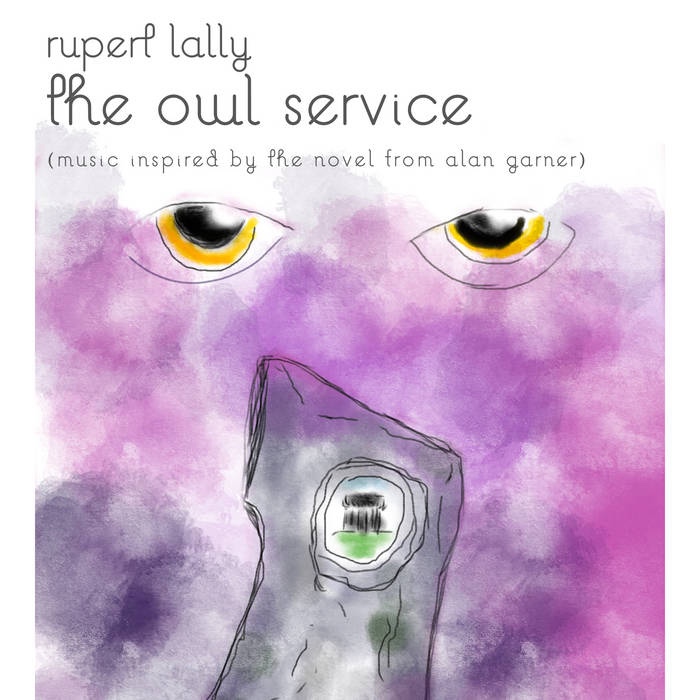
The Owl Service is Rupert Lally’s seventh soundtrack to accompany a book. His first was for J.G. Ballard’s High Rise, and the intermittent series has taken in William Golding’s Lord Of The Flies and Frank Herbert’s Dune. This time he attaches his compositional nous to Alan Garner’s 1967 award-winning children’s book. At the risk of repeating myself, only with different words and different context (last time it was about film), Lally is an avid reader – and accomplished author – and he has a honed skill for creating music that plots narrative and its key events. Key to the 18 cues that comprise his score for The Owl Service are strings, arranged in such a way as to create a sort of maudlin, mysterious tension throughout the unfolding events. Key pieces like ‘A Night In The Woods’ eschew the strings for wispy synth textures and slowly-unfurling electronic melodies, but its moments such as ‘Ghost Images’ and ‘The Argument’, where strings and synths effortlessly intertwine themselves that stand out the most. A remarkable and carefully-considered score, and several worlds away from his subsequent album, Interzones, released through my Mortality Tables venture. Released 31 October 2024. Interzones by Rupert Lally & Friends was released 29 November through Mortality Tables.
DOGS VERSUS SHADOWS & NICHOLAS LANGLEY – SALT COAST (Strategic Tape Reserve)
I’ve had the pleasure of working with both Lee Thompson (Dogs Versus Shadows) and Nicholas Langley in different capacities this year. Even after getting to appreciate their methods and processes well because of that, Salt Coast is a surprise. Both know a thing about how to transform sounds almost to the point of being unrecognisable, but Salt Coast finds the pair creating a sort of impenetrable fogginess around noises, melodies and borrowed segments. ‘Marching Through The Radiation’ and ‘Crabtree’ are cases in point – what could be fairground melodies are subjected to such a blanket of echoes that any twee gentility they once possessed are returned as a murky, queasy cues for distressing scenes in a horror film. Probably involving clowns. I’m reluctant to suggest that the technique is analogous to degradation, which has become shorthand for the gauziness of memory; what Thompson and Langley do here is smother their inputs, not decay them. It’s both terrifying and beautiful in its own special way. Released 1 November 2024. Nicholas Langley collaborated with Mortality Tables on LF25 / Matthew’s Hand, part of the LIFEFILES series.
Stephen Reese is a singer-songwriter from Toronto. A purveyor of smart rhythmic electronic pop, Reese is also a deft lyricist, able to dive deep into emotional themes but also unafraid of levity, metaphor and humour. He first invited me to listen to an early mix of his debut album back in 2022 as we bonded over our love of Erasure and the synth mastery of Vince Clarke, and its strange and beautiful cocktail of sounds and styles really grabbed me. ‘Bog Mound’ is one of many highlights, sounding as fragile, sparse and mysterious as tracks from Depeche Mode’s A Broken Frame, Reese offering a plaintive lyric that seems to be concerned with falling face-first into a muddy puddle. ‘Shatter Pattern’ is dark and edgy, Reese’s vocal containing a sort of dream-like ethereality while a sparse melody encircles a shuffling rhythm. ‘Bathysphere’, which opens the collection, features a submerged beat and clusters of sonar-like pulses, framing a lyric where he gives a small submarine a lonely, isolated personality. Intensely maudlin, stirring yet infused with wryness, it reminds me of Sparks and Reed & Caroline, sung with a quality that suggests Reese has a penchant for folk tunes. A brilliant debut. Released 23 November 2024.
Overtones is a remarkable study of the resonant frequencies contained within a single 200-year-old handbell. The bell was struck, shaken and played with a bow to generate a series of tones and textures, all of which were then processed with techniques that owe a debt to the pioneers of musique concrète. Everyday Dust is something of a modern-day tapeloop aficionado, and his experience with these processes shows through here in the form of an evolving series of considered sequences or movements; the effect is one of slow evolution, rather than the restless jumping around that colours a lot of tape pieces. Heard as a single 30-minute piece, Overtones is simultaneously euphoric and elegiac, yet dark and ominous, qualities that make this immediately recognisable as the work of Everyday Dust. Released 29 November 2024.
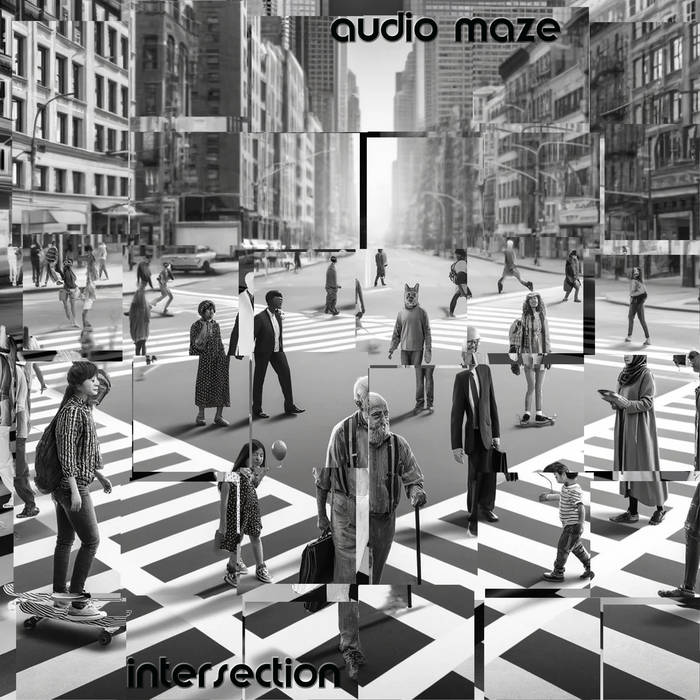
Damon Vallero describes his new Audio Maze album as “a meeting place and a platform for departure”. Its dub-inflected soundscapes carry a sense of fluid motion, of coming and going. Even at its most languid – as on the widescreen ‘Grand Land’ – there is a feeling of restlessness, even though its constituent parts (a slow-motion rhythm, a metronomic bass pulse, a softly ebbing and flowing melody) suggest a resolute stillness. It transpires that it’s an unplaceable, half-heard sound off in the distance that conjures this feeling of nothing being settled, of everything moving. One of the album’s many highlights is ‘Circle Of Sand’, containing myriad distinct intersections – a submerged bassline that is felt more than heard; a voice whose words cannot be deciphered; a rhythm that feels like the juddering sound of a train passing through a station; a jazzy piano riff that seems to splinter and fall apart gracefully as the rest of the track follows a very different path. This is an album filled with complex detail just beneath its surface textures. Absorbing and richly nuanced. Released 30 May 2024.
Xuma is a duo of Harriett and Chris Robins Kennish. Based near Brighton, they make music built from the foundational structures of dance music, with slowly-evolving minimal sequences and crisp, danceable beats offset by Harriett’s often blissed-out vocals. ‘I Know Her’ drifts gently into a dreamy garage-y framework of driving beats and jazzy sounds, over which Harriett deploys layers of euphoric, arms-in-the-air vocals. ‘Joyful’ is one of the album’s many highlights, with vocals converted into loops of shimmering, beatific texture over sounds and rhythms that sound like they are soundtracking a Goan (or maybe Hove?) sunrise. ‘Invisible’ strikes a minimalist techno pose, its feathery electronics fluttering ceaselessly over a stalking pitch-bent bassline, while closing track ‘Relent’ adopts a laidback, half-speed Café Del Mar vibe. Jasmine is a hidden gem of an album, and one that resolutely follows its own stylistic path. I had the pleasure of hanging out with Harriett and Chris on Brighton beach recently, and two nicer people making brilliantly diverse electronic music you will not meet. Released 20 June 2024.
Antenne is Brighton-based James Dean’s homage to a mysterious pirate radio station, which broadcast continuously from a point in the 1990s before coming to a sudden halt in 1996. This is his evocation of the energy of the station, deploying his trademark sinewy synth melodies, club-oriented beats and a sense of latency. On ‘I Feel Eye See’, he uses a muted hardcore break but instead of hitching it to 1992-vintage head-cleaning hoover noises, he layers the beats with pretty, overlapping spirals and a fuzzy blanket of warm, emotive textures. ‘Oriam Speedway’ ventures into a suggestion of kosmische electronic rock, fused again to suppressed rave beats. My personal favourite track is ‘Controller 29’, whose structures steadily coalesce out of a delicate web of interwoven synth lines that ripple with intense motion. Those patterns quickly fade out of view, only to firm up around a motorik beat and a fluttering melody that nods to Kraftwerk’s ‘Neonlicht’. Another fine release in the Bunkr catalogue. Released 28 June 2024.
Another exceptional release from the Quiet Details label, easily one of the most interesting imprints issuing music today. To catch people up on the concept, the idea is that each handpicked artist is asked to produce a body of music that responds to the name of the label. Every release in the series has been a joy to listen to, and the latest – from Tresor stalwart Emile Facey – is no exception. Like some of the other releases surveyed in this post, Facey’s ‘The Unfading Spark’ relies principally on the suggestion of movement and energy. In standout pieces like opener ‘Broken Through’ or ‘Signal Beckons’ or ‘Wisps Of Vapour’, there is this feeling of high-octane techno structures itching to punch their way through the gauzy, enveloping textures that dominate the tracks. These potentially competing forces create a compelling tension – soothing on the one hand, fidgety and restless on the other – that somehow knits together seamlessly, making for an enriching and engaging listen. Released 10 July 2024.
There is not a lot that Rupert Lally can’t turn his hand successfully to. While he might be best known as a prolific (and stylistically dexterous) composer of electronic music, Lally is also an accomplished author and, via his blog, an avid documenter of underrated films and their soundtracks. Profiler, like 2022’s Hacker, brings together these interests into a neat and tidy package. Not just a hypothetical soundtrack, Profiler comes with a detailed plotline and is presented as a lost 1980s crime flick, with Lally’s music leaning authoritatively into the synth sounds of that decade. That means rich, infectious melodies, big beats and a sense of bold, shiny vibrancy.
In spite of Lally’s intuition for period authenticity, there’s plenty of room here for his distinctive noir-ish sensibilities. ‘The Unsub’ is a brooding, unsettling and mysterious short cue, its key focal point being a series of uncoiling tendrils of synth sequences that lead to a cloying, claustrophobic atmosphere full of tension and danger. ‘Possible Suspect’ is the track that feels most like it was unearthed from a bankrupt studio’s archives, with a dense drum machine beat filled with a kitchen sink’s worth of percussion presets and fills and a sharp, sinewy synth melody resting atop a sequence that feels like it was created from a short vocal sound imported into a sampling keyboard. Avid readers of Further. will know how much of a fan of Lally’s music I am, and this imaginative collection is undoubtedly up there with his best. Released 19 August 2024.
Geographically, Sculptures, the latest album from Switzerland-based electronic musician Rupert Lally, can be grouped together with his 2022 album Wanderweg. Both albums are sonic evocations of the area around where Lally lives, between Bremgarten and Wohlen. Through walks and rambles with his dog, the area has proven to be a major source of inspiration for Lally, something that gave Wanderweg a gentle, naturalistic sound that leaned into a pastoral, folk music dimension.
Stylistically, Sculptures exists in a very different space to Wanderweg. Inspired by sculptures in the area around his home, these tracks have a darker, more mysterious, more turbulent edge that links the album to his recent works of fiction (particularly last year’s Teenage Wildlife). A number of these tracks feature Lally playing electric guitar in a style which is filled with a jazzy inquisitiveness and occasionally Latin-inflected sense of freedom. That interplay between guitar and electronics is not remotely unfamiliar territory for Lally, but rarely has he used the combination in the way that he has with Sculptures.
There is a narrative quality to these pieces, which again connects to Lally’s novels. Except that here the story isn’t self-evident, but shrouded and secretive. It’s almost as if Lally composed these pieces while staring at the sculptures, feeling inspired by their construction, and constructing his own sonic response at the same time. Beyond interpreting the titles for ourselves, we can only imagine what that story is, and what was going through his mind as he composed these pieces.
‘Dwarf In The Mirror’ is one of the most engaging tracks in this collection. Beginning with slowly-forming spirals of ethereal sound, ‘Dwarf In The Mirror’ moves at a languid, dreamy pace, its brittle synth shards offsetting emotive guitar melodies. It fully occupies that zone of magical mystery that infiltrates many of the best moments here. ‘Big Shoes To Fill’ firmly places a spotlight on Lally’s guitar, subjected to an echo effect that gives the piece a gentle, questing vibe. The introduction of a quiet synth passage seems to encircle his guitar, flickering its way elusively between light and dark.
Lally has, for many years, worked as a sound designer for theatre. You hear that awareness of time, space and dramaturgy on ‘Hexenmusik’. It is a moment of pure texture, with layers of buzzing synths and unfurling, criss-crossing tones that together create brooding, turbulent atmospherics. Final track ‘The Burning Man’ begins with a similarly-structured sense of consciously oblique menace, before rapidly evolving into a stew of brittle, skeletal beats, off-kilter bass pulses and a dense web of restless electronics.
I’ve championed Lally’s creative works for many years, but his most recent sequence of albums have cemented Lally’s position as a master craftsman, one who is endlessly imaginative and continually searching for new things to be inspired by. Sculptures is thus both a departure from his many previous releases and also entirely in keeping with the spirit of adventure that has made his entire body of work so consistently engaging.
Sculptures by Rupert Lally is released February 9 2024 by Modern Aviation. Thanks to Will.
Specifically, it is Rupert Lally’s third novel, following last year’s Backwater and 2017’s Solid State Memories. It is set in the past – 1987, to be precise – but also the future. Through its pages you feel Lally’s intense love of 1980s electronic music, his main protagonist (Rob) and friend playing covers of ‘Tainted Love’ and ‘Blue Monday’. In passages redolent of Patrick Bateman’s gushing eulogies for Genesis, Huey Lewis and Whitney Houston in American Psycho, Lally interjects his narrative with richly detailed and impassioned descriptions of keyboards, drum machines and vintage digital synths.
But Teenage Wildlife is not simply Lally’s paean to the 1980s. It also reveals his love of mystery, of terror, of psychological horror, of technology and of leading the reader casually and unknowingly toward sharp left-turns that leave you questioning what’s real and what’s not. Where this book starts and where this book ends can not be anticipated. Each time you think you have it pinned down, it makes a significant shift. It is an elusive, unplaceable, well-paced, full of uncluttered prose and a rewarding testament to Lally’s imagination.
Teenage Wildlife is an album.
Not exactly a soundtrack to the book, Teenage Wildlife nevertheless centres itself inside the 1987 music scene that Rob is so smitten with. These are pieces laden with hook-y guitar riffs, icicle sharp melodies and big, insistent drum machine rhythms. Quite unlike most of Lally’s more atmospheric work, a lot of the album leans into a smart pop sound, each track broadly corresponding with the chapters in the book.
In parallel to music and writing, Lally maintains a movie blog which reveals an expansive knowledge of film soundtracks. That knowledge gives Teenage Wildlife its distinctive emotional colour and timbre. And, like the book, it is an album that does not stay still. Where it starts in broadly electronic pop territory, by ‘Lying In Wait’ it has sharply pivoted toward darker, more brooding concerns, much more in keeping with Lally’s wider canon of releases. The noisy, atonal ‘Things In An Empty House’ is full of cloying, threatening atmospheric effects with a nagging rhythm approximating a quickening pulse full of nervous anticipation.
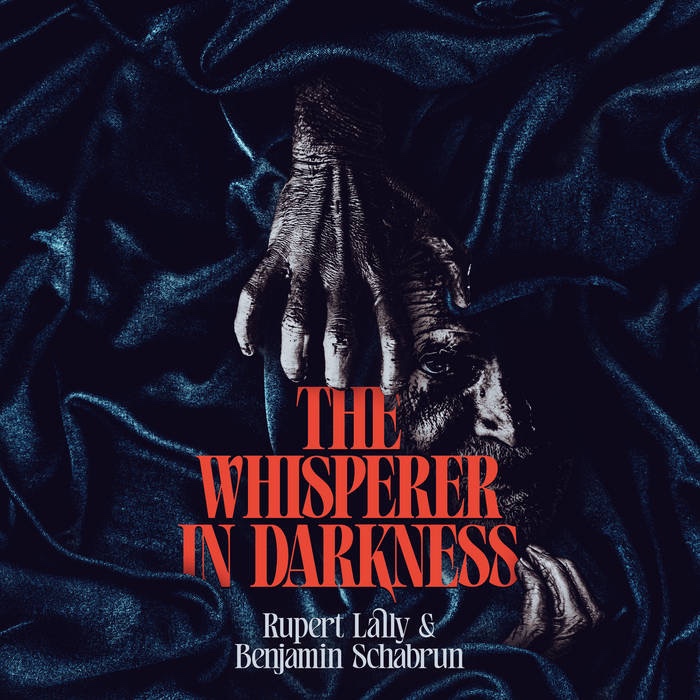
The Whisperer In Darkness is an album containing a hypothetical soundtrack to someone else’s book.
The work of Lally and his son Benjamin Schabrun, this is a suite of tracks inspired by a HP Lovecraft story. Resting comfortably in a sort of funeral darkness and shrouded, impenetrable mystery, these ten pieces have the capacity to engender a sense of grim unease. Key track ‘Disturbing News’ moves at what can only be described as a creeping pace, its cloying insistence building gently but ceaselessly across its six-minute duration. Full of drones, suppressed guitar melodies and squalls of Schabrun’s processed violin, ‘Disturbing News’ is Actually pretty terrifying, occupying the same psychological terror locale as Lally’s Teenage Wildlife, without ever once resorting to hackneyed, overblown horror soundtrack histrionics – but still 100% guaranteed to give you nightmares.
Teenage Wildlife (the book) by Rupert Lally was published October 17 2023 and can be found on Amazon here. Teenage Wildlife (the album) by Rupert Lally was released November 3 2023 by Third Kind.
The Whisperer In Darkness by Rupert Lally & Benjamin Schabrun was released October 31 2023 by Spun Out Of Control.
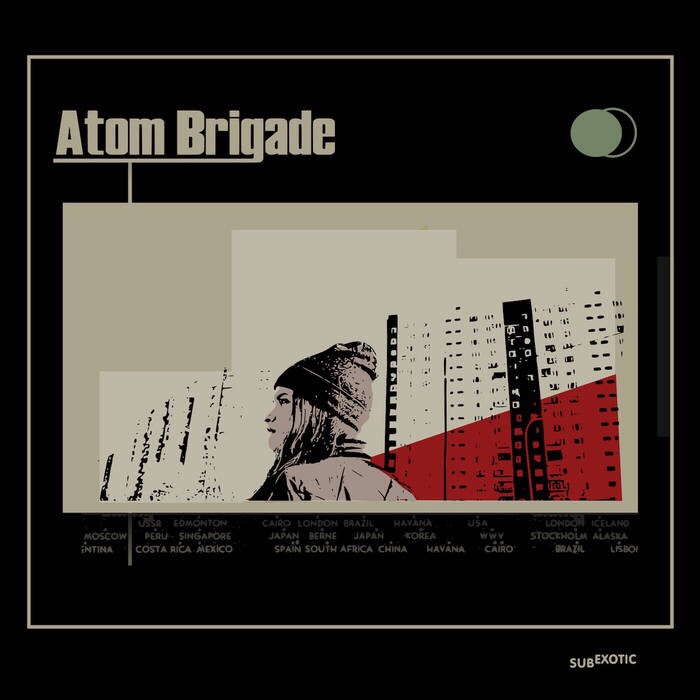
Atom Brigade started out as a collaboration between Martin Jensen and Rupert Lally, initially taking the form of an instrumental distance collaboration, its stylistic template being squarely focused on the 1980s. The pieces they created fell neatly a mix of low-slung, guitar-inflected melodic post-punk and chunky, almost Madchester-style funk grooves.
At some point in proceedings, the pair felt that the tracks they were honing would be well-suited to vocalists. They enlisted Star Madman (Amanda Jay) and Oliver Cherer and the Atom Brigade collective was born. Instrumental tracks like ‘Safe Travels’ and ‘Breathe Breakdown’ are the moments where Jensen and Lally get to show off their sound design and production chops, where their expansive knowledge of the rudiments of electronic composition truly comes to the fore.
However, as the pair themselves acknowledged, these pieces really benefit from the addition of vocals. This is an album that effortlessly flicker between dark and light, with Star Madman’s heartfelt, warm singing gracing the searching, thwarted ‘(We Never) Made It To Forever’ and the gently uplifting yet emotionally devastating closing track ‘New Illusion’.
The tracks with Oliver Cherer take the Atom Brigade sound in a manifestly different direction. ‘Little Town’ has a vaguely Thomas Newman dimension to its shimmering elusive sound, one that is caught between the poles of wonder and numb, emotional detachment. His vocal here is earnest, determined but quiet, interfacing with the fragile, fluttering soundworld created by Jensen and Lally to leave you feeling tentative, unresolved and uncertain. In contrast, ‘Oh Bader Meinhof’ is infectious and irrepressible, with Lally’s cool, chiming guitar licks and Jensen’s breakbeat locking together wondrously.
There is an understated dimension to Atom Brigade. None of these songs grab forcefully for your attention yet they deliver a resolute and memorable self-assuredness. That strange and unplaceable synergy is what makes this such an inspired collaboration. More – much more – please.
Atom Brigade by Atom Brigade was released August 11 2023 by Subexotic.
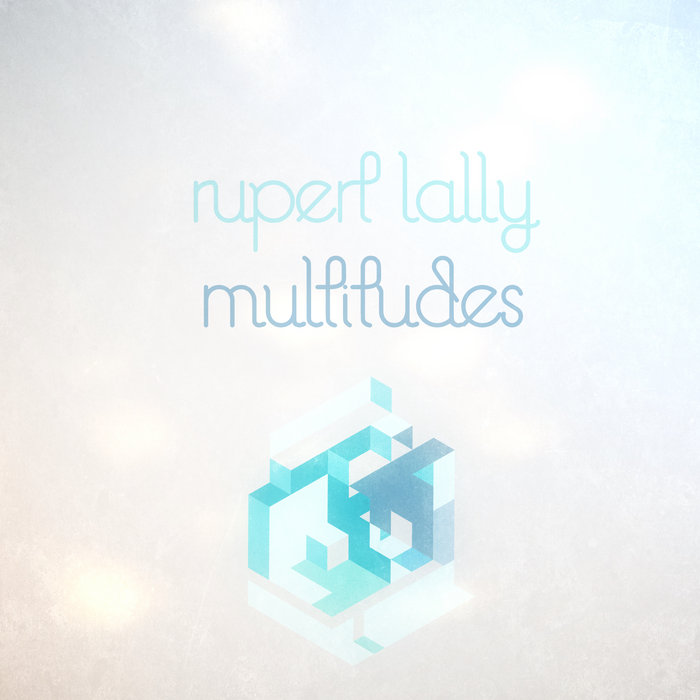
In a message to me accompanying a link to his new album, Switzerland-based electronic musician Rupert Lally cautioned that the collection was “VERY ambient.”
That sort of risk warning isn’t a problem for me. I’ve been listening to ambient music intently since the mid-1990s. I’ve always found it one of the most underrated, engaging genres of electronic music, and have always resisted the notion of it simply being sonic wallpaper. Neither is this unfamiliar territory for Lally, whose back catalogue is full of releases that offer the sort of weightless ephemerality that Multitudes floats upon.
The tools of Lally’s trade might be modular synths, but, for the most part, the tracks on Multitudes are informed by naturalistic sensibilities, with pieces named after wildernesses, rivers, beaches, woodlands and naturally-occurring phenomenon. Unlike the actual places that inspired Lally’s recent pastoral excursions through his local area (Wanderweg), these locations and events are entirely metaphorical, but they nonetheless highlight an artist completely at one with the natural world.
Lally is masterful composer of evocative melodies, and that’s evident here in spite of the tracks being constructed primarily from textural materials. One of the stand-out pieces, ‘Fjords’, might be presented under a drapery of intense reverb, but its core signifier is a sweeping, long-form melody that suggests an almost classical grandeur. The title track has a searching central refrain with a clean Fender Rhodes jazziness, held in place by the faintest trace of a rhythm. Elsewhere, the brief ‘Wasteland’ carries a sense of mournfulness and regret as it alights its attention upon an environment ravaged by the opposite of Lally’s respect for the natural world.
VERY ambient it maybe, but VERY good it also is. A beautiful, engaging, subtle and moving addition to Lally’s expansive catalogue.
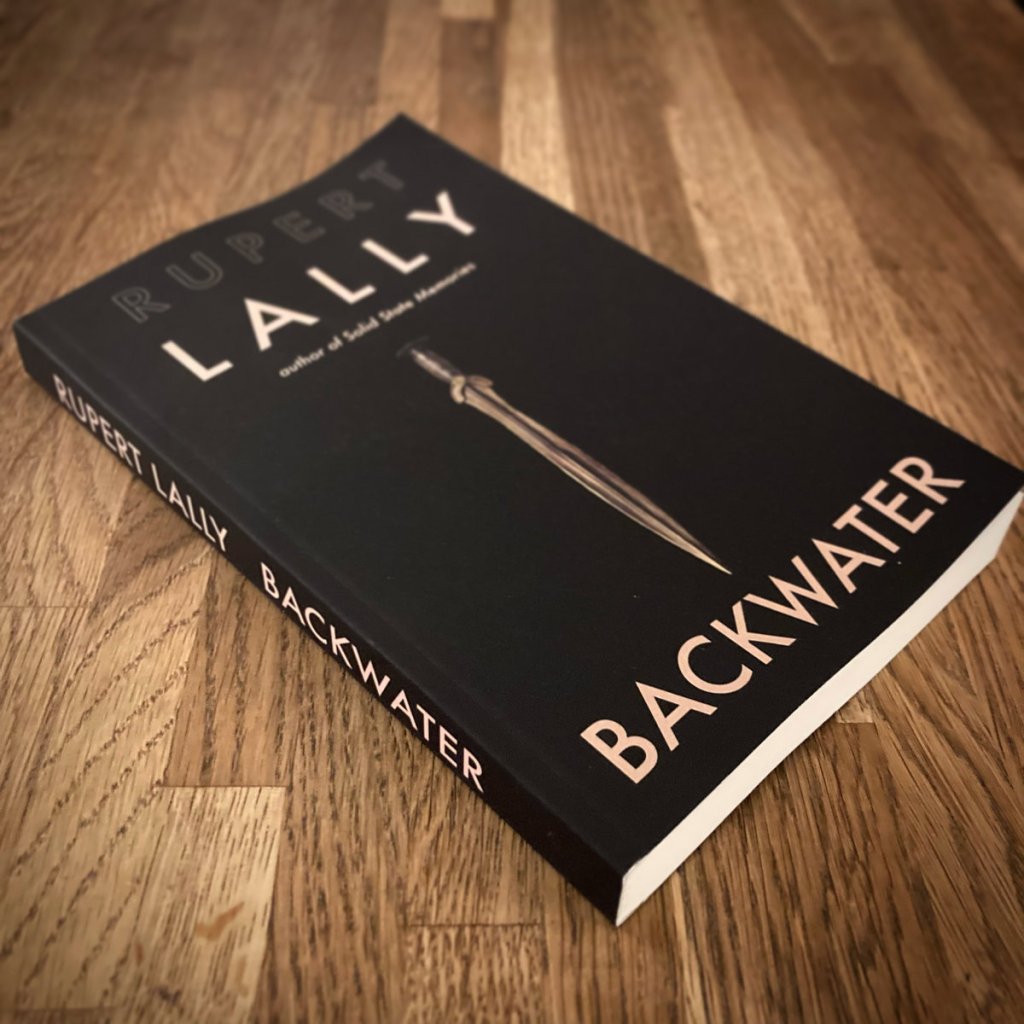
Backwater is the second novel from Switzerland-based electronic musician Rupert Lally. Like his debut, Solid State Memories, Backwater is a suspenseful thriller. However, instead of pitching its wares in a dystopian and terrifying near-future like his first book, Backwater occupies the past, present and future. The story temporally criss-crosses all three to follow its lead characters as they try to prevent environmental disaster using the rare natural resources of the Bronze Age past, mysterious archways allowing instantaneous movement between eras.
This is principally a high-speed race against, and through, time, but also an exploration of other, deeper, themes: the bond between father and child, gender inequality, power struggles, corporate villainy, technology and climate change. It is hyper-aware of big issues facing society today but also authentically well-researched about Bronze Age history and culture. A trace of Solid State Memories arrives with a brief trip to the future, where we find Earth ravaged by global warming and profligate resource exploitation, a dirty husk of its former self filled with criminality and hunger.
Backwater is complicated, as most time-travelling tales can be. It both demands and requires complete focus, especially when Lally’s prose moves at an urgent pace through different time zones, left-turns and unexpected events. Like his previous novel, Backwater confirms Lally as an original story-teller drawn to mystery and drama-filled narratives. Dizzying and rewarding.
A sense of mystery also pervades Lally’s latest album, Hacker, released by Spun Out Of Control. Hacker operates in a interstitial time zone somewhere between 1980s movie soundtrack and 1990s Warp label electronica, using brief samples of WarGames, Hackers and other films to supply a plot line of dial-up era computer vigilantism.
Lally’s recent albums have been among the best, and perhaps most accomplished, in his career. Hacker sits comfortably in his latest streak of excellent releases, even if it is the complete antithesis of Wanderweg, the pastoral and bucolic exploration of natural landscape and pathways of his adopted Swiss home that preceded it. Here, the focus is squarely on icicle-sharp melodic tendrils threading their way down phone cables, encouraged and framed by rhythms as focused as an algorithm figuring out the password for a locked military server. Where standout tracks like ‘Hot Swap’ and ‘2600Hz’ are freighted with a vital, relentless energy, ‘Access Denied’ is thwarted but tender, and easily one of the most poignant pieces Lally has ever composed.
Backwater by Rupert Lally is available now at Amazon. Hacker by Rupert Lally was released December 23 2022 by Spun Out Of Control










 Further.
You must be logged in to post a comment.