Josephine Wiggs – We Fall

If you’ve followed the path of Breeders bassist Josephine Wiggs, you’ll have become accustomed to expecting surprises, and nothing about her latest album – recorded with longtime collaborator and Spacemen3 / Spiritualized mainstay Jon Mattock – has very much at all to do with anything else in her peripatetic back catalogue. If you don’t especially have the patience to read on, then these words will suffice: it is a collection of ten beautiful pieces, each one loaded with sparseness and understated drama.

Each piece here is led by either meditative piano or cello, augmented by a panoply of ever-so-subtle but incredibly expressive additions – scratchy little electronic impulses for which the lazy electronic music journalists’s favourite descriptor ‘glitchy’ is absurdly excessive; quiet bass motifs; guitar passages and non-rhythms that seem to have been cut and spliced in from something far larger.

Pieces like ‘The Weeping Of The Rain’, ’37 Words’ or ‘In A Yellow Wood’ could have been presented as fragile, almost folk-leaning acoustic ballads; instead, an acute capacity for adding fragmentary detail and gentle sound design makes these tracks far more engaging and open, washing them in ambient texture and providing a perfect soundtrack for nature’s omnipotence – and our individual, ephemeral legacies.

We Fall by Josephine Wiggs is out now on Sounds Of Sinners.

Words: Mat Smith

(c) 2019 Further.
Erland Cooper – Sule Skerry

Sule Skerry is the second album in a three part sequence by composer and multi-instrumentalist Erland Cooper, intended to evoke the air, land – and, for this LP, the sea – of his native Orkney. As with last year’s Solan Goose, this collection of nine pieces shines a spotlight on Cooper’s fastidious approach to recording, and his borderless, free-thinking arrangements.

Comprising field recordings made on Orkney, strings, tape loops, electronics, vocals, poetry and a diverse set of collaborators, Sule Skerry is a concept album with naturalistic poise. The ebb, flow, power and violence of the North Sea is apparent throughout these pieces, most prominently on the evocative looped recordings of wind gently buffeting the masts of fishing boats and the enveloping see-sawing strings of ‘Flattie’, also featuring readings by Kris Drever and Kathryn Joseph.

Perhaps the most surprising of all these delicate and evocative pieces is ‘First Of The Tide’, which opens with a gently pulsing Moog sequence from Benge. Over the course of this short, journeying statement, Cooper nudges this piece imperceptibly from a plaintive synthscape to a piano and string evocation of the same motif, brilliantly augmented by haunting operatic vocals and a denouement of waves gently lapping the shore.

Sule Skerry by Erland Cooper is out now on Phases.

Words: Mat Smith

Big Bend – Radish

Radish is the second album by Brooklynite Nathan Phillips’s Big Bend. Here you find layers of guitar and piano combining with electronics, processing, backward effects and a mournful sheen, designed to evoke the inexorable passing of time and the development – then eventual collapse – of memories.

While it’s not necessarily an album in which you can identity much joy, the inclusion of vocals from Phillips’s mother on tracks like ‘Swinging Low’ creates a wistful, almost folksy contrast with some of the other pieces, her voice having a clarion quality that glides effortlessly over her son’s inventive musical tapestry.

‘1000 Ways’ and ‘Long Time’ are complex, tightly-woven pieces full of heartbreaking emotion, supported by an accompanying architecture of noisy, unpredictable sounds, while reversed guitar, meditative piano and a restless vari-speed synth loop allows ‘12’ – 15’’ to convey just as much as Phillips’s haunting vocal tracks.

The album’s central piece is ‘Can’t Get Around’, wherein whining guitar is blended with a vocal processed into pure texture; the track has a post-rocky, dubbiness where Phillips’s vocal seems to bespeak of everything from lethargy to demotivation to emotional helplessness. Even when the track approaches a sort of resigned euphoria, it is still fully laden with tension.

Radish by Big Bend was released by Ohie Records on May 10 2019.

Words: Mat Smith

(c) 2019 Further.

Craig Leon – The Canon: Anthology Of Interplanetary Folk Music Vol. 2

Craig Leon cemented his reputation in the late 1970s by becoming the go-to producer for New York’s nascent punk scene, lending his control room nous to early releases by The Ramones, Blondie, Richard Hell and, in 1977, Suicide’s eponymous debut. Four years prior to that, Leon had discovered a book that outlined the theory that alien visitors had colonised Earth, inspiring him to create the cult album pairing of Nommos (1981) and Visiting (1982). The best part of forty years later, Leon decided it was high time for a sequel.

Crucially, though much has changed in the intervening years, for The Canon Leon decided to deploy more or less the same synthesizer kit that he’d used for Nommos and Visiting, as well as the voice of his partner Cassell Webb. That gives key pieces like ‘The Twenty Second Step As Well As The Tenth’ a retro-futuristic period continuity to its droning, layered tones and percussive high end, as well as a rich, mystical underpinning. The slow, haunting evolutions of the expansive ‘The Gates Made Plain’, and the Marty Rev-style unswerving sharp-edged synths of ‘The Respondent In Dispute’ stand out as pivotal moments in Leon’s overdue conclusion of his conceptual odyssey.

Anthology of Interplanetary Folk Music Vol. 2: The Canon by Craig Leon is released by Rvng Intl on May 10 2019.

Words: Mat Smith

(c) 2019 Further.

Andrew Poppy – Hoarse Songs

Hoarse Songs is composer Andrew Poppy’s first release since 2012’s Shiny Floor Shiny Ceiling and finds him presiding over an eclectic sequence of ten pieces, each one as vastly different in its presentation as the next.

On the captivating opening piece, ‘Song Tide (Interruptible ted)’, you find Poppy blending together the strictures of modern classical musical with a nod to Erik Satie and a perhaps unexpected sojourn to the most introspective moments of ‘Rhapsody In Blue’. Just as you think you’ve worked out the direction of the album, the next piece is almost entirely electronic, delivered in a jerky, non-linear fashion that sounds like the confluence of a series of differently-timed layers of loops – brass sounds, off-kilter percussion, electro pulses, bubbling electronics, poetic vocals – occasionally intersecting like an AI-derived score.

And so it progresses, each successive piece throwing you ever so slightly off-balance. ‘Wave Machine (Endless Parting)’ deploys exciting synth patterns with white noise percussion and hypnotic harp flourishes beneath Poppy’s canticle-esque vocal; ‘Downside Up’ plays with wonky fusion jazz; ‘What Alice Said’ and ‘What Is This Place’ are evocative, beatific moments of operatic theatricality; ‘Riderless’ takes cyclical horns from Mike Soper, Laura Jurd and Nathaniel Cross and attaches them to metallic music-box electronics; the delicate ‘Cyber Spark’ is enveloped in a sparse, fragile, icy brilliance.

The album’s surrealist twelve-minute centrepiece, ‘X Y Song’, is like a modernistic tone poem with relationship fluidity as its ever-mutable central reference point, while ‘Hoarse’, the album’s final statement, is a genteel, gently uplifting piano composition that would bring this collection to a serene full stop were it not for the interjection of its composer’s strangely unsettling intonation of the title.

Perceived wisdom says that composers and musicians must shy away from these dexterous displays of magpie-like eclecticism, that they just stay shackled to something forever and never liberate themselves from it, however uncomfortable and restrictive that might prove to be. Andrew Poppy has ever been the contrarian composer, and Hoarse Songs is yet another timely and deftly-delivered two fingers to the new classical tradition.

Hoarse Songs by Andrew Poppy is now available for pre-order from andrewpoppy.co.uk

With thanks to Philip.

Words: Mat Smith

(c) 2019 Further.

Dark Star Safari – Dark Star Safari

Dark Star Safari is a quartet of Jan Bang (vocals, samples, piano), Erik Honoré (synths, samples, lyrics), Eivind Aarset (guitar, bass, electronics) and Samuel Rohrer (drums / percussion, synths).

The sessions were instigated by Rohrer at Berlin’s Candy Bomber studios with the assistance of Conny Plank accomplice Ingo Krauss, and were originally intended to be relatively freeform instrumental improvisations; instead, as the reductivist recordings progressed, Bang found himself compelled to add vocals to the tracks, giving the ten tracks on this eponymous album a searching quality that lifts these pieces from interesting sketches to powerful, song-based compositions.

The fragile musings of ‘Resilient Star’, ‘White Rose’ and ‘Faultline’ emerge as highlights, finding Bang delivering his vocals in an almost-whisper that prompts comparisons with David Bowie at his most introspective, while the four-piece lay down a rich, turbulent bed of quiet, but ever-evolving accompaniment.

Bang’s delivery of Honorés cryptic lyrics is given a natural prominence across the album, but divert your attention toward the atmospheric music embedded within pieces like the languid ‘Child Of Folly’ or the faltering synth theatricality of ‘Your Father’s Names’ and what you hear is an understated, restrained complexity that whirs with relentless inventiveness just below the surface.

Dark Star Safari by Dark Star Safari is released by Arjunamusic Records on May 10 2019.

Words: Mat Smith

(c) 2019 Further.

Neil Scrivin – Stars And Rumours Of Stars

Neil Scrivin is an electronic musician operating under the Phono Ghosts and Meatbingo pseudonyms. Stars And Rumours Of Stars collects together tracks recorded in 2004, and the merest glance at the sleeve gives you a clue as to what the mood of the eight unreleased tracks included on Scrivin’s latest cassette might sound like.

Opening track ‘Skywatch’ is a edgy affair, full of overlapping synth tones and a central structure full of mournful texture. There is a resigned, thwarted atmosphere to Scrivin’s opening gesture, only for tracks like the hyperactive squelch and buzz of ‘Omni Voyager’ and ‘Granular Occlusion’ to move the dynamic squarely into territory that nods to sci-fi-inflected electro, while simultaneously sitting in a sort of underexplored no man’s land between industrial drama and ambient sensitivity.

The album pivots on the shrouded of ‘The Power Of The Spiral’, wherein a simple, haunting melody gives the piece a mesmerising quality caught perpetually in tension with slowed-down beats and a nagging bass motif. Dissonance and atonality are employed liberally here, on the title track and elsewhere; Scrivin’s conceit is to limit the effect so as not to induce nausea, but add just enough to create a sort of compelling uncertainty.

Stars And Rumours Of Stars by Neil Scrivin was released by Fonolith on April 12 2019.

Words: Mat Smith

(c) 2019 Further.
Rupert Lally – The Day Of The Triffids

Stuart McLean’s Bibliotapes cassette label is focussed on curating imaginary soundtracks for books. For its second release, Swiss electronic musician and soundtrack aficionado Rupert Lally has chosen to create a soundtrack to accompany John Wyndham’s 1951 sci-fi novel The Day Of The Triffids. Lally himself is no stranger to this concept, having previously delivered imagined soundtracks to J.G. Ballard’s High-Rise, a score that gave Clint Mansell’s music for the 2015 film a good run for its money.

Given the harrowing, apocalyptic subject matter of the book, it goes without saying that the tone here is resolutely gloomy. Using an array of synths, Optigan and Mellotron loops and instruments like flute, Lally’s cues are dark and occasionally oppressive, full of lurking dread and inescapable destruction. The use of a jaunty Optigan loop on ‘The Coming Of The Triffids’ provides a brief moment of levity before its wonky music hall leanings are quickly rearranged once more into nightmarish drones and murky tones. Moments like ‘Shadows Before’, ‘Shirning’ or ‘…And Further On’ range from near orchestral atmospherics to ephemeral, dread-inspiring low-frequency tension. It is this unpredictable, haunting variety of sounds that marks this out as arguably Lally’s most definitive statement to date.

The Day Of The Triffids by Rupert Lally was released by Bibliotapes on April 17 2019. All fifty of the cassettes are now sold out but the tracks will be available at Lally’s Bandcamp page from April 23 – rupertlally.bandcamp.com

Words: Mat Smith

(c) 2019 Further.
Øyvind Torvund – The Exotica Album

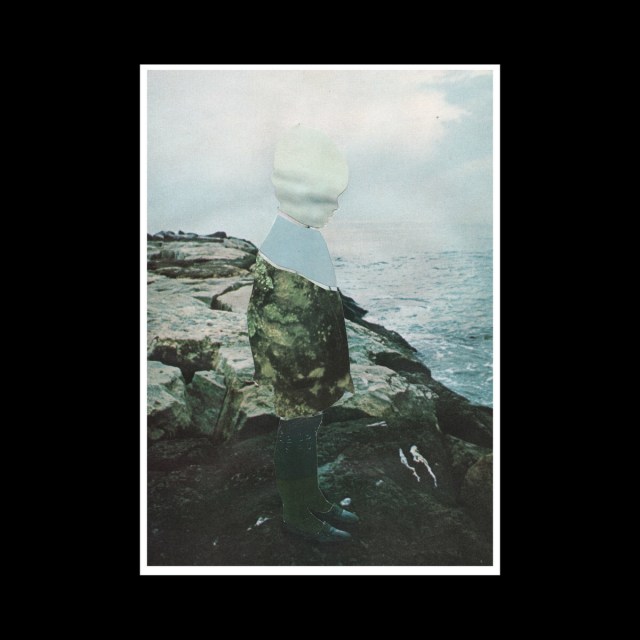
To paraphrase David Byrne, upon diving into Norwegian composer Øyvind Torvund’s remarkably broadminded The Exotica Album you may well ask yourself: how did I get here?

‘Here’ is a place where early electronic experimentation collides with Hollywood’s heavily romanticised vision of the South Pacific. The album was composed by Torvund at the behest of the Bit20 ensemble, conducted by Trond Madsen, and features wildly inventive synth contributions from Jørgen Træen alongside Kjetil Møster’s expressive sax.

‘Here’ is a place where you can hear the musique concréte of ‘Ritual 2’ sipping mai tais next to to the beautiful, retro-luscious swoon of ‘Starry Night’ with R2-D2 tending the Tiki bar; where the rapid flip-flop between noise and melodic intricacy of ‘Waking Up Again’ makes for an especially vivid tone poem; where the water-like synth sprinkles, pizzicato strings and xylophone of the enthralling ‘Rainforest Morning’ pitches your hammock at the centre of a tranquil sonic oasis.

By the time you reach the end of the springy ersatz synth bird calls, bongos and strings of ‘Out Of The Jungle’, you’re ejected back into a normality that comes as massive disappointment after spending the best part of an hour inside Torvund’s vivid vision of exoticism.

The Exotica Album by Øyvind Torvund is out now on Hubro.

Words: Mat Smith

Justin Wright – Music For Staying Warm

The first thing that popped into my head during Justin Wright’s Music for Staying Warm was an interview with, believe it or not, Vangelis. In Sounds magazine in 1976, James Wynn gaped at the tone palette Vangelis conjured – not from a limitless synthesizer – but from the comparatively monochromatic Fender Rhodes piano, which produced “lyrical vibes, vibrant bass, an amazingly accurate music-box sound and all sorts of other things.” Listening to Wright’s work for (supposedly) string quintet, I scrambled to see who overdubbed oboe, bass clarinet, and… voices? Was there a harmoniser pedal?

Wright tastefully extracts a wide range of colors from his cello and the rest of the ensemble. Natural harmonics, bridge mutes, bow positioning, and other traditional trickery cause the listener to wonder which stringed (or non-stringed) instruments are in the band.

A major contributor to the colors of ‘Warmth’ is the recording studio. In ‘Modular Winter’ the low-register viola melody would be lost were it not for microphone placement. The solo cello in ‘Improvisation’ is offset by a much more reverberant violin. Panning and echo effects cradle ‘In Sunlight’ in wispy harmonics that waft around the ensemble like dandelion seeds.

The interplay between harmonic effects and melody also gives ‘In Sunlight’ the only real dissonance on the album. Everything else basks in diatonic comfort and first-inversion optimism. Any ‘motion’, i.e. phrase repetition, exists to reinforce the grounded, frozen-in-time atmosphere.

Speaking of time-freezing, five words that repel my synthesizer colleagues are “Check out my drone piece.” Fortunately, the tracks here labelled ‘Drone’ are not endless tones that force the listener to wager when a musician will fall asleep and drop their instrument. They contain phrases. They move. ‘Drone III – Saudade’ tells an almost Schubertian tonal story. It is warm.

The final movement’s ‘Taps’-like melody gently lays us in a bed of reassuring Coplandic harmonies and enough plagal cadences to keep one eye on the heavens. The listener is indeed ‘Staying Warm’ “…and all sorts of other things.”

Music For Staying Warm by Justin Wright is released by First Terrace Records on April 5 2019.

Words: Reed Hays

(c) 2019 Reed Hays for Further.