Music journalist for Electronic Sound and occasional press release writer for VeryRecords. Father, husband, vegan. Co-founder of Mortality Tables - mortality-tables.com
The latest release from the Dustopian Frequencies imprint is themed around the idea of space. Specifically, the ten artists invited to contribute were asked to identify with a space – whether real or imaginary – and bring it to life with a sound response. The result is a compilation that covers considerable ground, each track as different to the next and each one representing the artist’s complete freedom to express the characteristics of their spatial inspiration.
Max Schreiber’s ‘Fox do Douro’ is a key piece. A sparse, developing track, ‘Fox do Douro’ is built from crashing waves of metallic sound, harsh breathing noises and what initially feels like minimal percussion that eventually becomes a recurring half-melody. I don’t know whether it’s the snatches of overheard conversation twisting around a thick bassline or an impenetrable nest of drones, but something in Schreiber’s piece manages to sound both empty and full simultaneously. It ultimately reveals an almost ghostly dimension, as if evoking a haunted space.
Another highlight is Spongeboy’s ‘Dark Vapours (Fogwalking 2)’, wherein a creeping, expanding bass note and an overwhelmingly unsettling atmospheric quality creates a vaguely ‘Stranger Things’ vibe. Sweeping tones and a quickening pace heightens the tension as the track becomes louder and more forthright, while discordancy – delivered through competing drones and sibilant whispers – arrives around the halfway mark, leading this key track further into dark, sinister corners. A crisp, mechanical rhythm briefly appears toward the end, suggesting this could have developed into a far longer piece, with plenty more to explore.
Soxsa Lab’s ‘Sublimity’ contains chiming tones that could be a stringed instrument subjected to deep distortion, creating a series of textures that are both calming and contemplative but also decisively unpredictable and fractured. There is an inner rhythm here that exist solely in the form of the clipped, echoing edges of a central loop, assuredly never faltering even as other sounds blur into a fog of dissonance.
Elsewhere, Darinau offers rippling Morricone-esque guitar fragments set to white-noise-fringed textural loops and minimalist xylophone motifs on ‘Huset I Skogen’. Although undoubtedly subjected to electronic processing, stylistically augmenting this with other pieces on the album, this squarely leans into a more openly modern classical atmosphere. Another tangentially electronic piece comes in the form of Emanuele Ippopotami’s ‘One Step And I Fall’. The key focus here is a plucked guitar melody, set to a loped drone and odd non-percussion percussive interjections. This piece is characterised by vast open spaces, where every space is completely occupied. Distorted, heavy almost, death metal riffs expose themselves toward the end of the track, completely disrupting time (and space).
We are never really told what the inspirational spaces actually are for each of these tracks, and I can well imagine that was deliberate. It leaves us speculating, forming our own images from the sounds we hear. There is one exception, in the form of Laura Mars’ ‘Dreaming In Cryo Chambers’. While that title instils the idea of some sort of futuristic lab, the sounds here feel like the were recorded outside a train station. The blurry presentation and processing employed by Mars approximates what it feels like to arrive at Euston to catch a train home after a particularly heavy night out, where the whole world seems to be spinning uncontrollably. By the end, any discernible sounds have been stretched out into long strands of fluctuating drones, offset by swirls of crisp white noise, representing a bold and visceral spatial exploration.
Spaces was released May 25 2024 by Dustopian Frequencies.
RAE-YEN SONG & TOMMY PERMAN – ○ SQUIGODA SONG CYCLE ● WATER~LAND~AIR ○
It may appear, at least in terms of its credits, that this is a duo recording between conceptual artist Rae-Yen Song and composer / sound designer Tommy Perman. There are, in fact, two other ‘players’ that contributed to this series of three soundscapes, created to accompany an exhibition (‘life-bestowing cadaverous soooooooooooooooooooot’) at Glasgow’s Centre For Contemporary Arts. The first is the sound of fermenting tea fungus – kombucha, to give it its more acceptable and hipster-marketable name – and the second is the environment itself, required to encourage the transformation process.
The sounds of fermentation, recorded with contact mics, are readily audible as the trickling, bubbling, oozing noises that underpin ‘water’. Elsewhere, the ever-inventive Perman uses his sound design chops to deploy slowed-down, macroscopic clouds of ambient texture that approximate the sound of bubbles bursting on the surface of the liquid. Elsewhere, Song employs rudimentary instruments, including a drum made from a bacterial cellulose layer of skin recovered from the top of the tea fungus. That resonant tapping is what underpins the second piece here, ‘land’, creating a contemplative, barren wilderness of rhythmic pulses that remind me of sections from Midori Takada’s Through The Looking Glass. At times beatific, at others grotesque, these three pieces display an incredible unexpectedness that exists in an unparalleled, undocumented domain of close-up sonic investigation.
Two wildly unpredictable, twenty-plus minute tracks, allegedly constructed by the completely untraceable D.J. VLK using only samples from a turn-of-the-millennium paranormal NBC TV show, ‘Passion’, of which there were – remarkably – 2051 episodes. That’s over five years of uninterrupted daily TV consumption, which our valiant DJ consumed while simultaneously consuming egg and cheese sandwiches from a local deli. That’s a lot of protein, and a lot of paranormal TV.
Whether you believe the backstory or not (Strategic Tape Reserve have, after all, cornered the market in sonic obfuscation and music of dubious, yet deliciously enjoyable, provenance), there’s no denying the inventiveness on display here. A collage of disparate rhythms, speech samples and outwardly incompatible musical movements, the two long tracks comprising ‘Passion’ fizz and crackle with intense, dizzying energy and endless, endless juxtapositions: hip-hop one moment, lo-fi drum ‘n’ bass the next, backwards folk music á la boycalledcrow after that, all swiftly subsumed by a tapestry of sound art moments punctured by disparate snippets of out-of-place dialogue in the minutes that follow. Later, we hear a truly inspired sequence of vocodered voices over vaguely mediaeval sounds and psychedelic folk motifs. Truly bonkers, and all the proof that vegans need that too much egg and cheese will only bring about utter chaos in the world*.
Released 26 April 2024. Please note, the writer is himself vegan, and is not in any way opposed to the consumption of egg and cheese. In fact, this release rather suggests to him that a return to vegetarianism at some point in the future wouldn’t be totally out of the question. Bandcamp: here.
PHIL DODDS – MANY MOONS AGO (Waxing Crescent)
The occasion of turning 40 earlier this year prompted Waxing Crescent label founder Phil Dodds to blow the cobwebs off some old USB drives and release some of his own music, all made back in 2009 and 2010. I honestly don’t know why he waited so long. The pieces here are infused with a sort of Sweatson Klank-style electronic hip-hop nous, all chunky machine rhythms, fat bass sounds, spiralling synths that occasionally veer toward the psychedelic and a continual sense of lurking, latent energy.
‘Marsh Of Decay’ stands out, its restless, lo-fi dubby framework continually dancing on a precipice of firming up into something harder but staying resolutely fractured and in a state of flux right until it reaches a hard stop. ‘Seven Up’, a collaboration with Propa, is another highlight. This feels like two artists in ceaseless conflict with each other, where the way that the sounds are presented suggest that they’re being rapidly erased almost as soon as they first appear. Another collaboration, ‘Lifted’ (with Qman1) is a high-grade, low-key masterpiece, featuring a detuned breakbeat and amorphous clouds of swirling, ephemeral textures. ‘Many Moons’ is an unexpected, illuminating collection that feels a million miles from the material Dodds normally curates and presents through Waxing Crescent.
For his fifth Neu Gestalt album, and his first since 2019, Edinburgh’s Les Scott used a series of vintage Akai samplers to process his own bass and electric guitar playing, both played with a variety of techniques including the use of an EBow. That approach gives these ambient pieces a lyrical fluidity and distinctive texture but also a recognisably electronic edge, while the addition of crisp but unobtrusive beats and occasional vocal samples provide delicate framing for Scott’s guitar.
Opening track ‘On Darker Days’ is one of the most arresting pieces here, featuring splintering sounds and a melodic, maudlin guitar hook that wouldn’t sound out of place on a Depeche Mode song. ‘Restless Universe’ is another highlight, wherein squalls of fuzzy clouds of guitar texture and pin-prick melodies yield a tense, hypnotic piece. ‘Difference Engines’ begins with a truly beautiful, if sorrowful, sequence of guitar notes that’s when layered, are nothing short of heart-wrenching. This writer’s personal favourite piece is the sparse ‘Flickering Diodes’, whose elliptical, reverb-soaked melody recalls Coil at their most inquisitive and mysterious. A masterful return for the imaginative Scott.
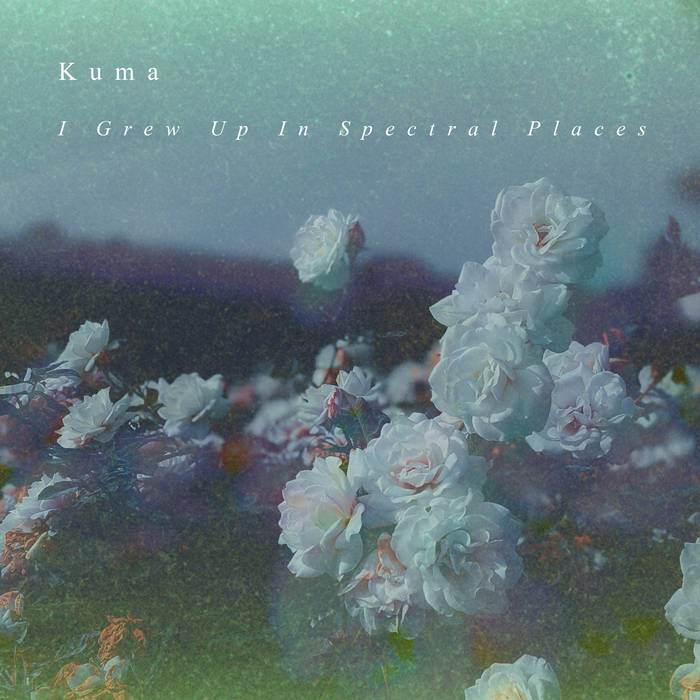
For this third album for Thomas Ragsdale’s Frosti imprint, Kuma is credited with ‘tapes, voice, synth, ghosts, coffee, low end theory’. Let’s stop there for a moment and look at that. ‘Ghosts’ and ‘coffee’. The inclusion of those two sources immediately tell you that this collection of nine pieces points in a resolutely different direction. The fact that Kuma says it was ‘invoked’, not ‘recorded’ is another clue to what these pieces sound like.
On one level, pieces like ‘Peacocks Have Very Mean Little Eyes’ and ‘Eden But With The Snakes Let In’ (top marks for digging into titles that sound like quotes from Welcome To Night Vale) have a textural levity that ties Kuma’s work to the broader reaches of ambient music but listen closely and the dependency on looped voices adds a chilling, unpredictable, from-the-beyond-the-grave spookiness. On that title track, the sort of grey, smothering quality that exists elsewhere is replaced by layers and spinning cycles of voices that appear to howl loudly into your ear canal, suggesting that perhaps Kuma invoked a particularly pissed-off, angry restless spirit during the sessions that begat the album’s central moment.
Luce Mawdsley is a Liverpool-based composer and multi-instrumentalist. Their latest album was recorded in the city’s Scandinavian Church and found Mawdsley playing guitar, organ and percussion alongside Nicholas Branton (clarinets) and Rachel Nicholas (viola). Describing their music as part of a journey, the title of the album focuses in on the starting point of Mawdsley’s own journey in Formby, a town in the North-West of England; the nebulousness refers to where they find themselves arriving today, as a non-binary, neurodivergent artist.
There is a sense of grace and harmony here, infused with expansive atmospheres inspired by Western cinema soundtracks. Pieces like the title track bounce and sway with a melodic levity, the three musicians weaving in and out of another like converging tributaries of water. Elsewhere, ‘The Growing Rooms’ has a devastating, heart-wrenching quality, its reverberating slide guitar reminding this writer of a motif running through Francis Lai’s ‘Love Story’ or sections of Mark Knopfler’s music from ‘Local Hero’. On many of these pieces, including the plaintive opening piece ‘Latex Feather’, Mawdsley is content for Nicholas’ viola to act as the music’s focal point, offering questing, searching, swooning, lyrical reflections of Mawdsley’s ceaseless curiosity.
Prompted by a harrowing trip to A&E amid a breakdown, Githerments And The MRI represents an astonishing release in the catalogue of prolific and consistently inventive sound artist Xqui, wherein the recorded sounds of an MRI scanner become central characters in his idiosyncratic sound world.
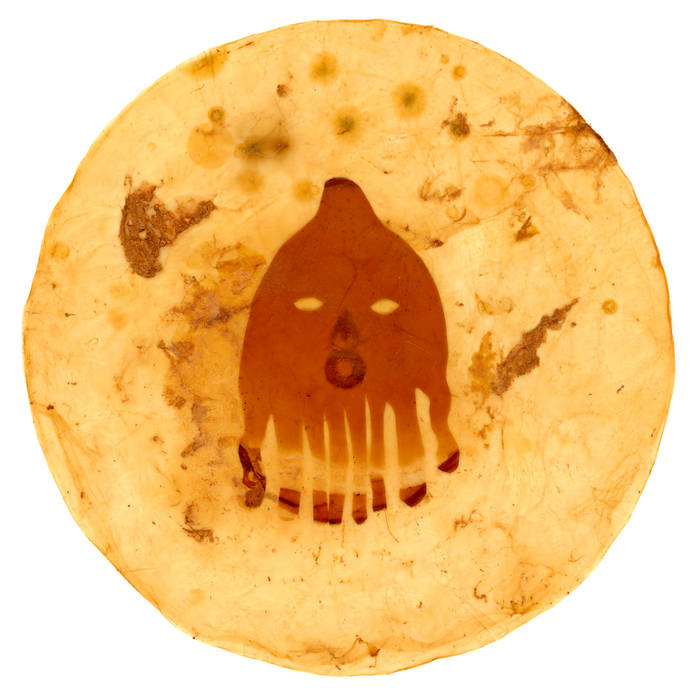
Noisy, complex and nuanced, this is Xqui at his most terrifying – and this comes from the perspective of a writer who has interviewed him, where the mask that he wears when he decides to come out of the shadows left me with endless nightmares. This is often so terrifying that if you’re about to go for an MRI scan, listening to this slab of caustic sound art may prompt you to cancel. There are, however, plenty of moments here that poke their way through the industrial atmospherics dominating these two twenty-minute pieces. Dub rhythms occasional emerge from the threatening whir of the scanner; a ticking clock fashions itself into a springy King Tubby mixing desk cast-off; a brief sample of Erik Satie offers a much-needed sense of respite; effusive backwards melodies offer a mournful moment of reflection. While these pieces might sit as complete polar opposites to more ethereal Xqui works like Hymns For Terry Francis, they add new and fascinating insights into the mind of this prolific creator.
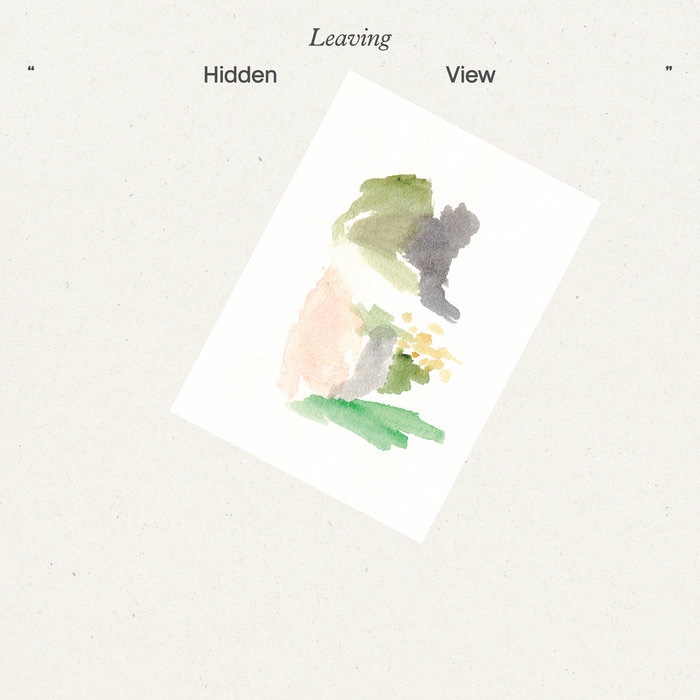
Leaving is the alias of Perth’s Rupert Thomas, who first came to my attention as one half of the duo Erasers, whose ConstantConnection album was a personal highlight from 2022. For Hidden View, Thomas’s second solo album, he explores fragile, sparse arrangements that evoke a sense of emotional trepidation and the wild naturalistic environments surrounding his home.
Usually consisting of off-kilter rhythms, minimal effects and haunted, enquiring synth melodies, pieces like the standout ‘Mirrored Feeling’ offer a sense of restlessness and unease; at first glance, they are bathed in beatific, enveloping ambient texture and persuasive layers of undulating melodies, but listen closely and those emotive gestures are gently punctured by a pinprick of doubt and darkness. Elsewhere, on the subtle widescreen atmospherics of key track ‘Hidden Dreams’ he assiduously evokes those brief moments spent in the weird interzone between wakefulness and sleep. Thomas has a seemingly innate ability to produce synth passages that imprint themselves devastatingly into your consciousness, making for an instrumental album with a low-key expressive depth.
“Eventually found a guesthouse. Not very nice: a park-bench bed with two blankets for a mattress, stone walls and a shared squat toilet, but it had an ashram ambience and great acoustics for the guitar. I could really feel those bass notes.
Spent the evening understanding the layout of the city, eating and playing the guitar. I met the devil in New Delhi railway station and sold my soul for his guitar tunings. Robert Johnson is taking over my fingers.”
– Carl M Knott, January 26 2006
Kullu is the new album from electronic musician and former folk artist boycalledcrow, the alias of Chester’s Carl M Knott.
The album is an audio travelogue of Knott’s travels through India in 2005 and 2006, just after he’d graduated. That journey was part of Knott’s concerted efforts to overcome the intense feelings of stress and anxiety that had gnawed away at him throughout his adolescence. Along the way, he documented his travels in a blog and accumulated countless memory cards of photos and videos. He stayed in basic accommodation and made numerous fast friends from around the world, one of whom, an artist called James, provides the album’s sleeve image.
Knott made copious field recordings during his travels, and this diary-like library of sounds forms the basis of the ten tracks on Kullu. We hear busy, vibrant towns from the back of an auto rickshaw, rapturous tabla rhythms, blurred chanting and tanpura drones, as well as Knott’s own playing, made using a guitar bought in Dehradun for £27.
Knott took these foundational sounds, then augmented and processed them in the style that he has developed on albums such as // M E L O D Y_M A N (Waxing Crescent, 2023) and Mystic Scally (Wormhole World, 2020). These pieces roam freely between the engaging and unpredictable; joyous yet reflective; uplifting yet inquisitive. They are pieces filled with constant motion; taken as a whole, these pieces allow the listener to follow Knott’s journey through the remote Kullu Valley and along the Beas river that bisects the Himalayas.
This is an album of intense discovery, of new sounds and new atmospheres, and a sense of healing and catharsis. Knott wrote in his blog about trying to avoid being drawn into the well-worm paths of mediation and yoga, unlike most of the travellers he met between New Delhi railway station and his time in the Kullu Valley.
Instead, the pieces on Kullu find someone acutely listening to the turning of the world around him. It represented an awakening of Knott’s approach to documenting the sounds he is drawn to, fused with a distinctive, emotive and original compositional style.
1. Charas 2. Pretty In The Sun 3. Joy 4. Vipassana 5. Tuktuk 6. Milk And Honey 7. Golden City 8. Kanashi 9. Sadhu 10. Kali
Music and production by Carl M Knott. Mastered by Antony Ryan at RedRedPaw. All field recordings and photographs by Carl M Knott, India, 2006. Design by Neil Coe. Video editing by Neu Gestalt.
Digital edition and limited cassette edition of 25 copies released May 3 2024 through mortalitytables.bandcamp.com
All proceeds from sales of Kullu will go to CHUMS. CHUMS provides mental health and emotional wellbeing support for children, young people and their families.
boycalledcrow is the alias of Chester-based sound artist Carl M Knott (Wonderful Beasts, Spacelab). Knott, a former folk musician, uses his myriad acoustic influences to create unique, strange and beautiful compositions.
The latest release from Brighton sound artist Simon James was recorded at Cathedral Quarry in the Lake District. Its first four pieces are essentially unadorned field recordings made in a cave, full of chilly atmospherics and incessantly dripping water, evoking a sense of vast space but also a macroscopic focus on miniature events. The final piece, ‘Exquisite Friction (Binaural)’, was made with a double mid-side microphone and transforms the cave ambience to trace outlines and alien textures, blending metallic tones and watery subterranean depth. Released 20 March 2024.
Simon James recently worked with local residents to create Neolithic Cannibals, a multidisciplinary arts initiative taking place at Brighton’s Lighthouse Project Space between 4 and 19 May – visit www.lighthouse.org.uk for more details.
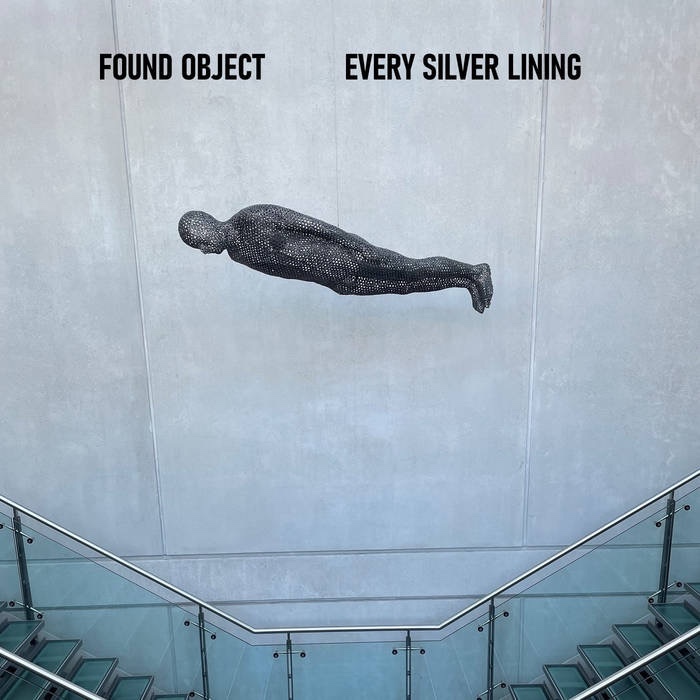
FOUND OBJECT – EVERY SILVER LINING
Found Object is the alias of Pete Allen, a former drummer who makes rhythmic instrumental electronic music that nods squarely in the direction of a certain legendary Düsseldorf quartet while also isolating the emotive melodic qualities of early 1980s synth pop. Not for Allen banks of vintage gear – all of the tracks here made using the iPhone Beatwave app. Tracks like the astute and moving ‘Silver Lining’ carry a rhythmic firmness and emotional turbulence of Depeche Mode’s ‘Nothing To Fear’, while ‘Mephisto’ (this writer’s personal favourite) stacks cyclical layers of icicle-sharp hooks on top of an unswerving beat that offers a sense of perpetual movement through the murky, neon-lit quarters of a thriving metropolis in the early hours.
Allen is also a frequent collaborator with powerful Kidderminster vocalist and electronic musician Jess Brett. Their ode to Berlin’s stately Unter den Linden thoroughfare is a triumphant pop moment for both artists.
Every Silver Lining was released 6 March 2024. Unter den Linden with Jess Brett was released 25 March 2024.
GVANTSA NARIM – CRUEL NATURE (Cruel Nature)
The latest album from Georgian sound artist Gvantsa Narimanidze derives its name from the label releasing it. Split into two long tracks, each lasting around twenty-five minutes, the album finds Narimanidze in deeply reflective mode. ‘Cruel’ offers a sort of sonic dualism, with drifting, ethereal, ascending tones occupying the upper registers and an unsettling, undulating drone and outline of a bass-heavy pulse operating as a foundation layer. ‘Nature’ adopts a similar pose, only its high end shapes are less uniformly soothing and its underpinning dronescape is more intensely restless. Released 29 March 2024.
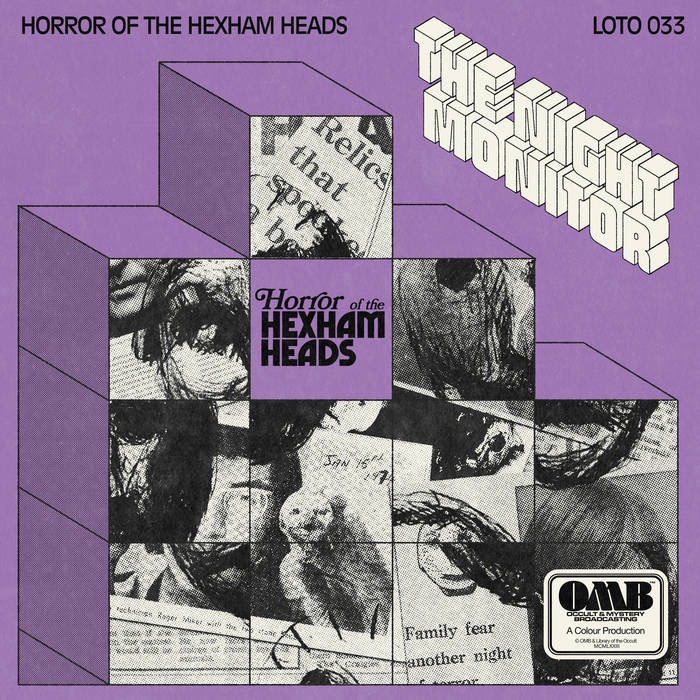
THE NIGHT MONITOR – HORROR OF THE HEXHAM HEADS (Fonolith / Library Of The Occult)
Neil Scrivin has truly cornered the market in freaky electronic music inspired by unexplained phenomena and paranormal activity. His first collaboration with Library Of The Occult is inspired by two carved stone faces that appeared, inexplicably, in a Northumberland family garden in 1971, foreshadowing a bunch of strange activities that I’m far too disturbed by to search for on the internet. Scrivin has assuredly outdone himself this time, stripping his compositions back to almost skeletal forms. ‘The Witch’, one of my favourite pieces, pairs rich and resonant synth sweeps with scratchy, nails-on-glass screeching that had me glancing at the window to make sure nothing was trying to break in (and, for context, I was in a plane flying at 35,000 feet in the air at the time). The shortest interlude here, ‘How Does Your Garden Glow’, is one of the collection’s finest moments. It might last barely a minute but its edgy, metronomic pacing and unwinding, slowly-writhing melody is – no pun intended – wonderfully haunting. Released 5 April 2024.
SERMONS BY THE DEVIL – BAPTISM OF DESIRE
The latest album from New Jersey’s Sermons By The Devil arrives with a manifesto of sorts: “If free will is the last battleground of youth, then dancing is the most rebellious thing that can be done as humans.” These pieces are indeed danceable, though I found myself moving almost involuntarily to each one, leaving me wondering what free will I had in the face of these persuasive moments. Each of these tracks rely on subtle shifts and intense repetition. You will find tasting notes of Micro-phonies-era Cabaret Voltaire soundtracking a pagan muzak rave. The two opening tracks are among the best. ‘Black Magik’ carries itself on a low-slung, nagging bass-heavy rhythm with a sort of heavy, ritualistic intent. Swirling spirals of brooding synths act as an offset but this is a grubby, minimalistic and insistent track. Meanwhile, ‘Fetishes And Sacrifice’ mines a chunky electro beat overlaid with ground-out bass synths and intensely-worked, restless sweeps. At almost nine minutes it is an intense and often disorienting highlight, relentless and urgent In spite of its slow tempo. A wonderfully dark collection from the self-styled ‘official house band of the apocalypse.’ Released 11 April 2024.
On face value, ‘Central Park: A Picture-In-Sounds’ is just an eight-and-a-half minute field recording from Central Park in New York, beautifully mastered by Alex from the quiet details label. There’s more to it than meets the ear, and its development has occupied me almost ceaselessly since 2021.
The location of the recording isn’t random. It is derived from your age and your life expectancy in 1874. I made a special map of Central Park divided up into areas corresponding to those life expectancies, and the ‘performer’ makes the recording in that area.
Why 1874? That was the year that the American radical composer Charles Ives was born. One of his compositions was ‘Central Park In The Dark’ (1906), with which Ives intended to evoke the sounds of the park that he heard while sat on a bench not far from his apartment on Central Park West. Incidentally, Ives is the guy with the beard in the illustration by Savage Pencil that gave Mortality Tables its entire visual identity.
Savage Pencil – Mortality Tables illustration (detail)
Why life expectancies? That’s because being a composer wasn’t Ives’s main occupation. For the majority of his working life, Ives worked in life insurance, way Downtown on Nassau Street, near Wall Street.
Why eight-and-a-half minutes? Because that’s how long the first recorded version of ‘Central Park In The Dark’ (made in 1951) lasted.
Mortality Tables – Central Park: A Picture-In-Sounds (Performance #1)
The intention is to publish the instructions for making a performance / recording of ‘Central Park: A Picture-In-Sounds’, along with more details about Ives and his work in both music and insurance, in October of this year.
A couple of other explanations, maybe. A list of life expectancies is called a mortality table. You may now see where the name Mortality Tables comes from. And my main occupation involves working with insurance companies. That’s why Ives is important to me, as an inspiration, and as a role model.
You arrive at a nondescript doorway on Church St, near the triangular intersection with 6th Avenue.
Photo: Mat Smith
Behind a glass pane lined with black diagonal veins is tacked a piece of paper advertising Dream House. A scrappy note taped next to a buzzer on the left of the door gives you instructions to press button 3 for access, and advises that you might have to wait. It also expressly asks you not to press button 2 as it is a private residence. That private residence belongs to La Monte Young and Marian Zazeela, who have lived here since 1963, and who installed Dream House, in the third floor loft above their apartment, following its installation in other locations since it was first developed in 1969.
You ring the buzzer and wait. Nothing happens. You ring again. Still nothing happens. You phone a number on the poster and a laconic female voice eventually answers in a quiet, measured tone, there’s an abrupt mechanical buzz accompanied by a click and the door is unlocked.
As you enter the narrow stairwell, you become aware of an intense, oppressive, tantalising, seductive bass-heavy sound. It feels like you’ve entered a nightclub. There is a feeling of energy. Of promise. Of excitement. Of things about to happen. The sound seems to draw you in. You can’t make out the details fully, almost as if the sounds have been intentionally shrouded or obfuscated.
You ascend the stairs to floor 3 and make small talk with the monitor whose gently musical voice was your key to being permitted entry. She notices your English accent and informs you that there’s a version of Dream House in Germany. You take off your shoes, put $10 in a receptacle that the monitor points at wordlessly, and enter a white-painted door near the top of the stairs.
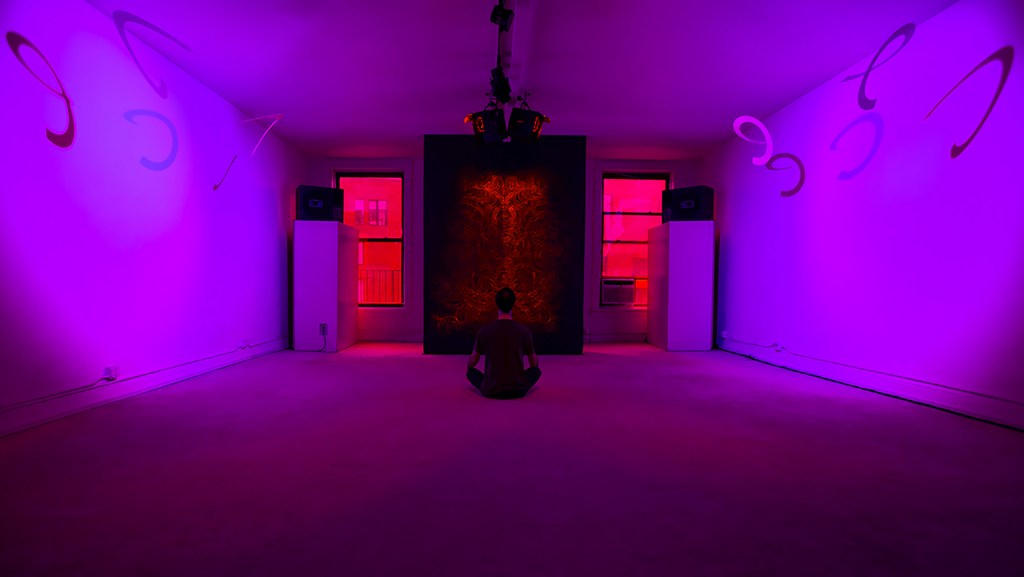
As you open the door, you first notice the intensity of the volume. It is so immediately overpowering that your body feels both repelled and attracted by its force. As the door closes softly behind you, you feel completely enveloped. You turn left, toward a square room at the end of the passageway. A multicoloured neon sign on the ceiling bears the words ‘Dream House’. This is Zazeela’s Dream House Variation I light sculpture.
A fellow guest, seated on a cushion in the main gallery, turns her head as you approach, even though your shoeless movements are barely detectable. You softly pad along the carpeted corridor to the square room and seat yourself against the wall immediately to the left of the entry way.
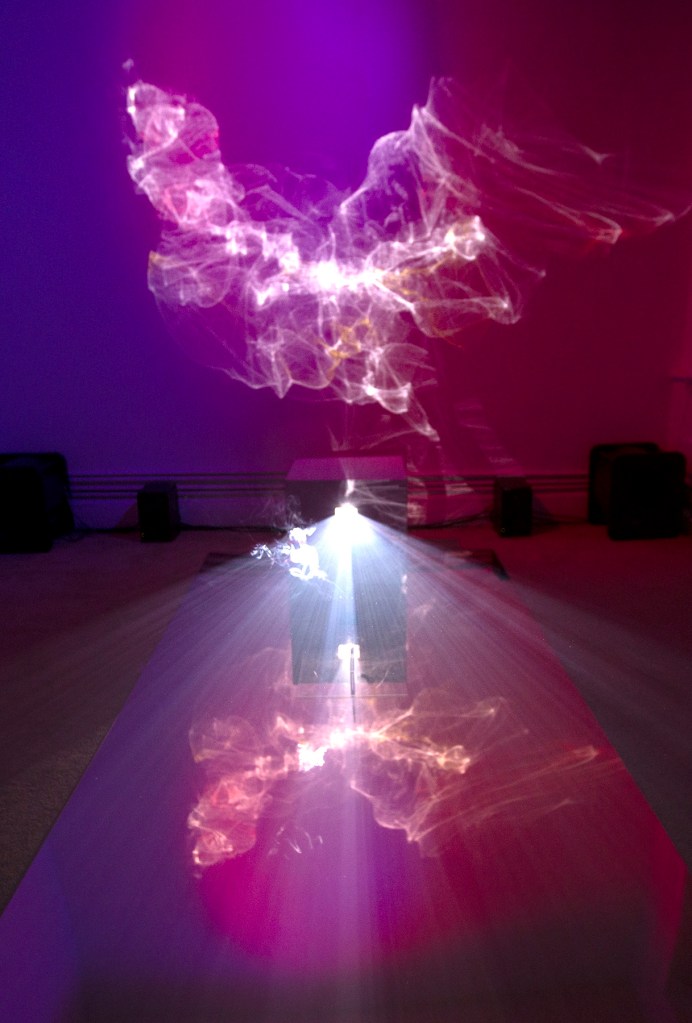
The whole room is bathed in a pink light and infused with the smell of incense. Spiralling crescent shapes are suspended from the ceiling, swaying gently and imperceptibly and bathed in lights from a series of spotlights. Together, the mobiles and lights form Zazeela’s Imagic Light, while the atmospheric pink lighting is itself another Zazeela artwork, Magenta Day / Magenta Night.
Between the two covered windows is a freestanding rectangular object containing a pattern that seems to move elusively as you try to decode it, comprising tiny details picked out with either LEDs or which reflect the coloured lights on the ceiling. Sometimes the pattern looks like a bear. Other times it is formless, spiralling, elusive shapes that writhe and twist like the crescent mobiles above. This is Jung Hee Choi’s Light Point Drawings Nos. 27, 28, 29 and 30 with still lights. A framed photograph of Pandit Pran Nath, Young’s and Zazeela’s guru, hangs on the opposite side of the room, next to the entrance. A bowl beneath it on a table may or may not contain the incense you can smell. Elsewhere, there is a photograph of Ustad Abdul Wahid Khan, a singer and teacher, whose students included Nath.
There are four tall white rectangular columns, each one occupying a corner of the room, with a large speaker placed on its top. The speakers are trained diagonally toward the centre of the carpet. It is from these that the intense sound is projected. The sound piece is Young’s The Base 9:7:4 Symmetry In Prime Time. Or, to give it it’s full title, The Base 9:7:4 Symmetry in Prime Time When Centered above and below The Lowest Term Primes in The Range 288 to 224 with The Addition of 279 and 261 in Which The Half of The Symmetric Division Mapped above and Including 288 Consists of The Powers of 2 Multiplied by The Primes within The Ranges of 144 to 128, 72 to 64 and 36 to 32 Which Are Symmetrical to Those Primes in Lowest Terms in The Half of The Symmetric Division Mapped below and Including 224 within The Ranges 126 to 112, 63 to 56 and 31.5 to 28 with The Addition of 119.
It is many things all at once. There is an obvious droning quality to the sound, but it is impossible to detect any distinct, discrete layers. You try to hear the intersections and anticipate the microtonal collisions, but it is impossible. You settle into the sound. You breathe deeply and listen both intently but also lightly.
After a while, it seems that distinct motifs appear within the sound. A sort of metallic, industrial ringing emerges out of the otherwise impenetrable bass envelopes, which you begin to recognise as a rapidly oscillating pulse rather than a block of held tones. You move your head slightly and the whole sonic image shifts and changes. Now a repeated, drum-like rhythm reveals itself. You move your head again, shift your position against the wall and it vanishes, leading you to conclude it possibly wasn’t ever there. You turn your head again and a new rhythmic device seems to appear. New frequencies which you’re sure weren’t there before seem to scream loudly.
Outwardly, nothing about this is serene. The sound rings uncomfortably in your ears. The relentless bass sits on your chest like a heavy weight. As I lean against the wall I can feel the vibrations in my spine. One of the other temporary residents of Dream House stands up, gathers her belongings and walks past you toward either the door or the smaller room at the other end of the corridor, which contains another light installation, Color (CNN/Twitch): live realization v.2, and a sound piece, The Tone-field: perceptible arithmetical relations in a cycle of eight Indian raga scale permutations, 23 IX 23 – 24 VI 20, New York, both by Choi.
As she moves past you, the departing temporary resident seems to abruptly cause the sound to change, as if she has disrupted the entire balance of the air hosting the sound waves as they cluster tightly in the centre of the room. Someone else decides to leave. The same thing happens again. You now know why your arrival prompted someone to turn their head: you have unintentionally created an interruption and, whether illusory or not, the sound seems to have adjusted itself to another surface to be both absorbed and deflected by.
And yet, while its intensity might be, at all times, cloying and extreme, you find yourself strangely comforted by it. I stayed there for around an hour. I was becalmed and also changed, in ways that I have only ever felt through meditation, experiencing a particularly visceral piece of art, or when I’ve performed John Cage’s 4’33”. My senses seemed suddenly sharper. Details that I hadn’t noticed before became more pronounced. Everything seemed at once more vivid, more colourful, more real. In short, I felt completely and utterly alive.
You leave the loft, pausing in at Choi’s works in the smaller East Gallery. The discordant collision – or maybe symbiosis – between Choi’s The Tone-field and Young’s The Base 9:7:4 Symmetry In Prime Time is discomfiting and unsettling, but also energising.
You descend the narrow stairs with the post-nightclub throb ebbing away behind you, and push the door open onto Church Street. You half expect to be suddenly drowned out by the harsh sonic savagery of Downtown Manhattan as Friday evening gets underway. You are reminded of a quote about New York from Giovanni’s Dream by James Baldwin: “There’s such power there – everything is in such movement.”
Except that it wasn’t like that at all. New York seemed strangely muted, its volume dulled, its lurid lightshow dimmed manifestly. It was as if Dream House had out-intensified New York’s intensity, either through force, volume, or more than likely just the way it had given you an enlarged and heightened sense of perspective.
As you walk down Church toward Canal, you stop, turn and glance back at the nondescript doorway and the building that it sits within. There is nothing remarkable there. It is an elegant loft building among many elegant loft buildings, barely distinguishable and possibly illusory. You look for the covered windows on the third floor but can’t make out anything obvious at all. The hum of traffic, sirens and conversations hide any trace of the sound uncoiling ceaselessly and so intensely behind that doorway. People walk past, fully oblivious, unaware, unbothered.
As you head back uptown, dealing with the serial interruptions of mistimed traffic intersections and Baldwin’s depiction of power and movement, you start to doubt that you were ever actually there. But then you notice echoes of Dream House sounds everywhere, wherever you turn, as if it was simply an amplified version of everything you experience every day in New York.
You smile, breathe, and walk on.
With thanks to Jung Hee Choi. This visit to Dream House took place on 9 February 2024.
Geographically, Sculptures, the latest album from Switzerland-based electronic musician Rupert Lally, can be grouped together with his 2022 album Wanderweg. Both albums are sonic evocations of the area around where Lally lives, between Bremgarten and Wohlen. Through walks and rambles with his dog, the area has proven to be a major source of inspiration for Lally, something that gave Wanderweg a gentle, naturalistic sound that leaned into a pastoral, folk music dimension.
Stylistically, Sculptures exists in a very different space to Wanderweg. Inspired by sculptures in the area around his home, these tracks have a darker, more mysterious, more turbulent edge that links the album to his recent works of fiction (particularly last year’s Teenage Wildlife). A number of these tracks feature Lally playing electric guitar in a style which is filled with a jazzy inquisitiveness and occasionally Latin-inflected sense of freedom. That interplay between guitar and electronics is not remotely unfamiliar territory for Lally, but rarely has he used the combination in the way that he has with Sculptures.
There is a narrative quality to these pieces, which again connects to Lally’s novels. Except that here the story isn’t self-evident, but shrouded and secretive. It’s almost as if Lally composed these pieces while staring at the sculptures, feeling inspired by their construction, and constructing his own sonic response at the same time. Beyond interpreting the titles for ourselves, we can only imagine what that story is, and what was going through his mind as he composed these pieces.
‘Dwarf In The Mirror’ is one of the most engaging tracks in this collection. Beginning with slowly-forming spirals of ethereal sound, ‘Dwarf In The Mirror’ moves at a languid, dreamy pace, its brittle synth shards offsetting emotive guitar melodies. It fully occupies that zone of magical mystery that infiltrates many of the best moments here. ‘Big Shoes To Fill’ firmly places a spotlight on Lally’s guitar, subjected to an echo effect that gives the piece a gentle, questing vibe. The introduction of a quiet synth passage seems to encircle his guitar, flickering its way elusively between light and dark.
Lally has, for many years, worked as a sound designer for theatre. You hear that awareness of time, space and dramaturgy on ‘Hexenmusik’. It is a moment of pure texture, with layers of buzzing synths and unfurling, criss-crossing tones that together create brooding, turbulent atmospherics. Final track ‘The Burning Man’ begins with a similarly-structured sense of consciously oblique menace, before rapidly evolving into a stew of brittle, skeletal beats, off-kilter bass pulses and a dense web of restless electronics.
I’ve championed Lally’s creative works for many years, but his most recent sequence of albums have cemented Lally’s position as a master craftsman, one who is endlessly imaginative and continually searching for new things to be inspired by. Sculptures is thus both a departure from his many previous releases and also entirely in keeping with the spirit of adventure that has made his entire body of work so consistently engaging.
Sculptures by Rupert Lally is released February 9 2024 by Modern Aviation. Thanks to Will.
PAUL RESET / EVERYDAY DUST – ARCHIVE 23 (Dustopian Frequencies)
A new split cassette release from Dustopian Frequencies pairs two artists comfortable operating deep under cover, with a track apiece influenced by the numerologically significance of the number 23. The release notes claim that both tracks were created using processes that were in some way developed with that number as a catalyst, but both are staying tight-lipped about precisely how. If you know, you know, I guess. Paul Reset’s ‘DotXm’ is a trip through his sound archive, presented as a collage of beats (electro, dub, fractured breakbeats) and interventionist overlays that veer from stalking, horror soundtrack synths and industrial bleakness that taps into a vivid and harrowing vision of dystopia. In contrast, Everyday Dust’s ‘Red Scavenger’ is dark and ominous, relying on processed sounds and haunting melodies inserted into a blanket of murky, impenetrable texture that nods squarely in the direction of Coil. There’s a flute melody at the start of this piece that is so utterly displaced that I can’t tell if it’s a particularly expansive Herbie Mann-style riff or some sort of ritualistic Pagan Muzak. The fear of the number 23 is, apparently, eikositriophobia, something you might well begin to experience if you listen to Everyday Dust’s piece in the dark and haunting chill of the early hours. Released December 28 2023.
BMH – EYE-EYE_[II]_IMMORTAL INFLUENCE (Colander)
The latest album from BMH, a duo of Dark Train’s Kate Bosworth and Matt Jetten, is quite honestly bonkers. In a good, nay great, way. Here you’ll find found sound, abstract percussion, rural accents, beautiful and abrasive noise, metallic kitchen sink percussion sounds, Coil-esque psychological terror, a sort of detuned 1990s Warp-style deep pulsing electronica and an ongoing commentary (with lots of laughter) that runs throughout the album that feels like an insight into Bosworth and Jetten’s creative practice. Honestly, this is an absolute joy to listen to and the perfect antidote to the unfortunate sequence of GWR train delays and cancellations that accompanied my first play of the album. My personal favourite track is ‘Radio Times’, which evolves from deep-slung dubby electronica to a sort of Heath Robinson playfulness that sounds like Brian Cant making sounds with the wind-up metal toys from the end of Bric-A-Brac. Released January 15 2024.
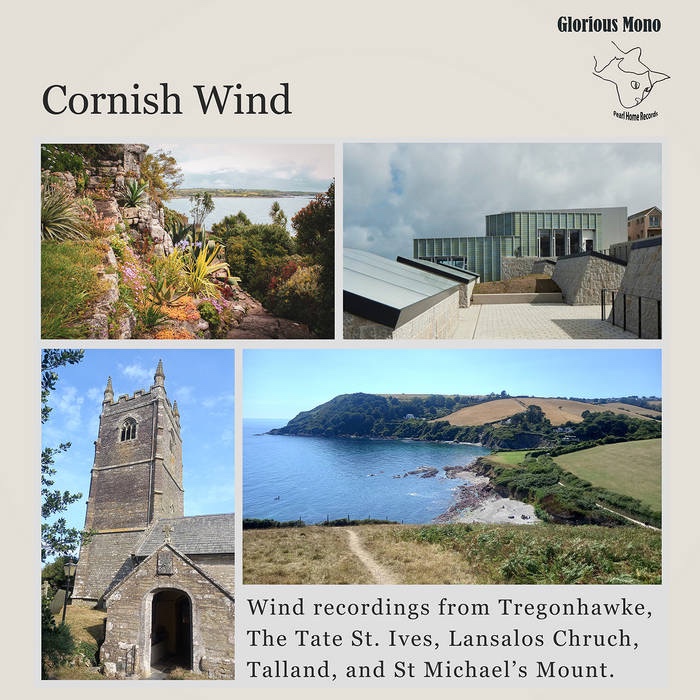
PEARL HOME RECORDS – CORNISH WIND (Pearl Home Records)
Several decades ago, this type of vinyl record wouldn’t have seemed out of place. While hanging out in my friend Steve’s record shop (Junkwax) in Penzance at the weekend, I alighted upon Sounds Of West Cornwall, a 1970 LP from the defunct Cornwall-based Sentinel label, which included various field recordings made in the westernmost part of the county, as well as arrangements of traditional songs. This lathe cut 7-inch looks like it could very well be one of those old Sentinel LPs, and includes recordings of wind made at five locations – Tregonhawke Beach, Tate St. Ives, St. Ildierna’s Church in Lansallos, Talland and St. Michael’s Mount off the coast of Marazion. As most field recordists will tell you, recording breezes and gusts of wind is fraught with problems, but Cornish Wind contains wonderfully tranquil, yet dramatic, sonic postcards of fairly typical Cornish weather. Easy, breezy. Released 18 January 2024.
VARIOUS ARTISTS – TFL VOL 1 (Moolakii Club Audio Interface)
I remember talking to Neil Stringfellow (Audio Obscura) as he was about to head to London to record sounds on the Elizabeth Line for this compilation, curated by Chris Bullock (Bone Music). When Stringfellow returned, he commented on how incredibly quiet and airy the line and its stations were. That quality feeds into his piece for TfL Vol 1, which is full of peaceful silences and unhurried rhythmic moments. The Elizabeth Line is, however, an enigma. Most of the Undergound is old, cramped and noisy, and that can be heard best on pieces like Moray Newlands’ edgy ‘176 Seconds’ and Looptronica’s cloying ‘Bakerloo Line’, where the clamorous abundance of captured passenger voices over a thudding techno pulse approximates a fairly typical trip during rush hour. Elsewhere, Stoltz’s ‘Central Undersound’ has a sort of industrial, symphonic quality, not unlike Laibach busking in a carriage of a Central Line train after a late night recording session at Guerilla for Nova Akropola. Released January 24 2024.
LETTERS FROM MOUSE – CLOTA (SubExotic)
Clota is a welcome return for Edinburgh’s Steven Anderson (Letters From Mouse). Very much a continuation of his focus on Scottish topographies and mysteries that began with An Garradh and the Robert Burns-focused Tarbolton Bachelors Club, Anderson’s focus here is the mythical Celtic goddess Clota. Believed to be the goddess of the River Clyde, that gives the seven enveloping modular synth pieces on Clota a beautiful flowing fluidity. In pieces like opening track ‘Frogspawn’, Anderson taps into a sense of wispy ephemerality, as if highlighting the way that the goddess Clota has become largely forgotten as time has passed. The key track here is ‘Bowling Greens And Tennis Courts’, featuring birdsong, footsteps and other field recordings alongside fragile reverb-drenched melodies. Released 26 January 2024.
Reading The Air is Norway’s Jan Bang’s first vocal album since 1998. In recent years, Bang has focused on recording with Dark Star Safari, his quartet with Erik Honoré, Eivind Aarset and Samuel Rohrer. Aarset makes an appearance here, and the album was co-produced with Honoré, who also adds subtle synthesiser flourishes to the majority of tracks.
This is an album that rests in a deeply contemplative space. Many of the musicians spent the majority of their time as critical members of Oslo’s vibrant modern jazz scene, but these pieces are characterised by extreme restraint and reductivism. That approach gives Reading The Air a fragile sparseness, where the spaces say just as much as Bang’s lyrics.
The title track is perhaps the more overtly jazz-infected piece here, with liquid bass from Audun Erlien and shuffling kitwork from Anders Engen set against fluttering electronics from Bang, Eivind and Honoré. Inspired by Japanese philosophy, this is a song about optimism and moving on, positively; about putting the past behind you and finding somewhere to heal. A chord shift seems to act as a metaphor for what happens if you don’t move forward positively – “remain here, decay here”.
‘Burgundy’ and ‘Food For The Journey’ are two standout songs. On the former, Bang sings about someone experiencing mental anguish and who has been tortured by abuse, but who has triumphed over adversity. The framing here is key, with gentle electronics from the three Dark Star Safari members and muted percussion from Adam Rudolph. Twin vocals from Bang and Erik Honoré give this a plaintive, softly soaring sound against a backdrop of intense subtlety.
‘Food For The Journey’ consists of Bang’s piano and vocals, accompanied by delicate strings. Some unknown, vast tragedy seems to occupy the protagonist, drawn away across waters, trying to escape sadness. Bang’s central piano middle eight is laden with mournfulness, while additional vocals from a siren-like Simin Tander voice swirls around, leading our saddened sailor further away from his misery.
Elsewhere, ‘Cycle’is presented as clipped, off-centre synth pop where its electronic structures are offset by Anneli Drecker’s sweet, folksy vocal harmonies with Bang. Lots of sonic turbulence and tension bubble just below the surface of ‘Cycle’, creating what feels like a dubby, psychedelic lounge music. The tragic ‘Winter Sings’ contains amournful, fragile backdrop of sounds that feel like they’re blown in from a frozen landscape. Haunted, dejected vocals suggest disappointment at a sort of impotence, an inability to help someone. A duduk melody from Canberk Ulas concludes the track, over a trace outline of a beat and submerged, almost electronic dub-like pulse.
The album’s clear highlight is its only cover, a complete deconstruction and rearrangement ‘Delia’, originally performed by Harry Belafonte in 1954. This version is characterised by a subtle calypso swaying, like a soft breeze across a palm tree-fringed beach. Bang and Benedikte Kløw Askedalen’s voices are perfectly matched, framed by very little accompaniment bar quietly strident bells, woozy tropicalia guitar from Aarset and percussion from Engen. Everything here is wrapped in a gauzy heat-haze ephemerality. Hopeful and warmly optimistic, Bang’s stunning version of ‘Delia’ is wonderfully wistful.
A beatific, affecting collection of songs, Reading The Air is one of the most moving, attention-grabbing albums I’ve heard in a good while. Warm and enveloping, these songs have a profound, haunting quality that stays with you long after the final song has finished. Understated yet powerful, and frequently breathtaking.
Reading The Air by Jan Bang was released January 19 2024 by Punkt Editions. Thanks to Jim.
















 Further.
You must be logged in to post a comment.