Various Artists – Fictions

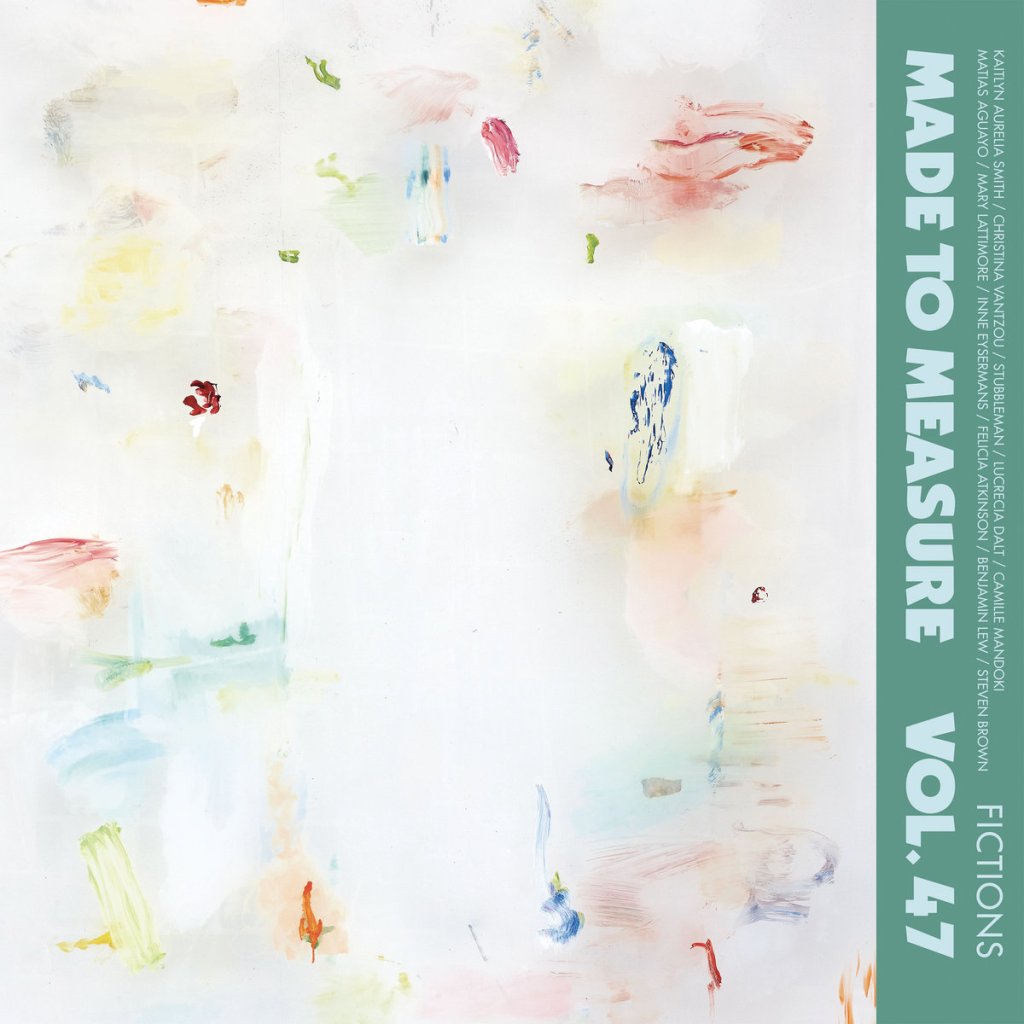
The latest release from Crammed Discs’ reinvigorated Made To Measure series is described as a compendium of ‘wordless fiction’. Curated by Crammed Discs co-founder Marc Hollander (Aksak Maboul), the album compiles eight tailor-made pieces that navigate a path between ambient, soundscapes, adventurous electronics and modern classical stylings.

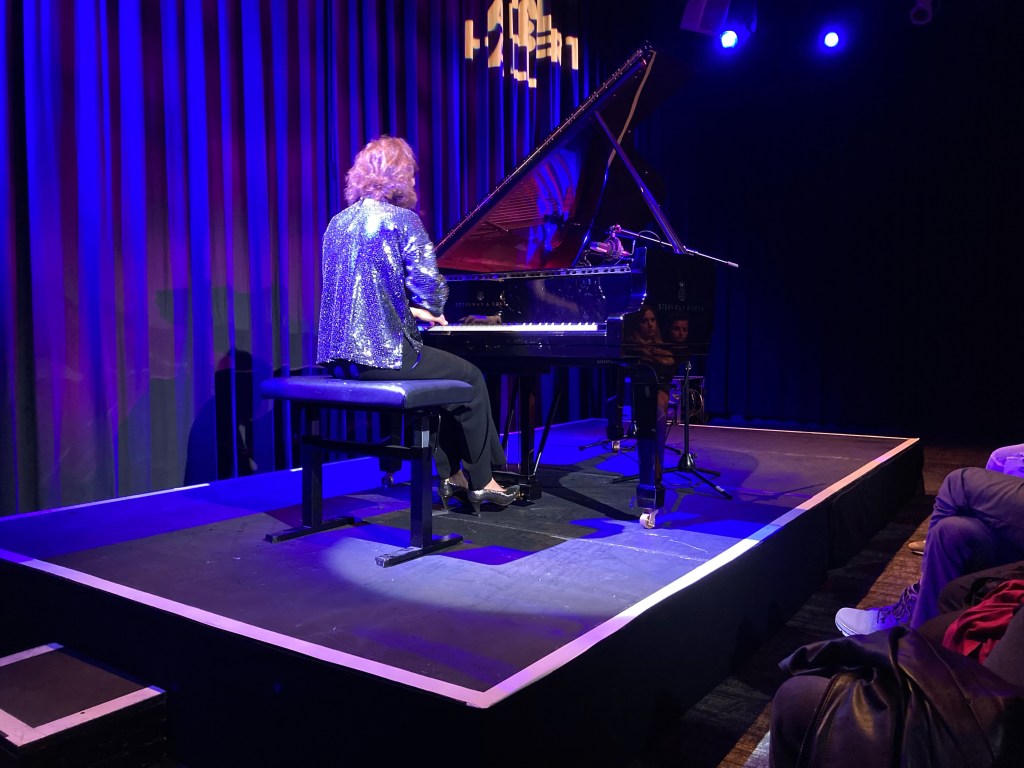
While the pieces here are new, there is a sense of reverence through the inclusion of a track by Benjamin Lew and Tuxedomoon’s Steven Brown. The pair originally worked together during Made To Measure’s initial years, releasing Douzième Journée: Le Verbe, La Parure, L’Amour in 1982 and its follow-up A Propos D’Un Paysage in 1985, creating mesmerising and innovative clashes between tapes of African music and electronics. After hooking up again at a Made To Measure event in 2019, they found themselves rekindling a creative partnership, and their track – ‘A.D. Sur La Carte’ – is a haunting stew of inquisitive synths and mournful trumpet that together feel amorphous and ephemeral.

Another Made To Measure alumnus is Pascal Gabriel, here appearing in his Stubbleman alias. Gabriel released his critically-acclaimed Mountains And Plains audio travelogue for the label in 2019 and has collaborated with Crammed Discs and Aksak Maboul in the past. His piece finds him working with Norweigian trumpet player Nils Petter Molvær. ‘Ne Pas Se Pencher Au Dehors’ has definite soundtrack credentials, the melodic synth refrain and more direct trumpet playing that comes in after two minutes sounding (to me) like the perfect accompaniment to Michael J. Fox’s final scene in Bright Lights, Big City as he watches the sun rise over Manhattan’s East River and contemplates starting his life afresh.

Elsewhere, Kaitlyn Aurelia Smith delivers a cascade of burbling synths on ‘Waterways’, managing to enrich analogue sounds with an aquatic sense of motion, over which floats a pretty xylophone motif. LA’s Mary Lattimore is an artist that has truly redefined approaches to playing the venerable harp, and her ‘Bird’ offers up a sweet, heart-wrenching duet with electronics that is simultaneously hopeful yet thwarted, as if gazing wistfully on the fleeting nature of existence.

Not that these are all delicate, gentle sonic experiments. French composer and sound artist Félicia Atkinson’s ‘The Sun, Perhaps Three Of Them’ bristles with wild energy, a central white noise drone and what could be a voice is nothing short of chilling, while Christina Vantzou’s tone poem ‘Museum Critic’ use of out-of-place found sound to catch you off guard and knock you out of the meditative state provided by other tracks here.

Taken as a whole, Fictions represents an absorbing, inspiring collection onto which you can write your own personal narrative.

Fictions was released October 14 2022 by Crammed Discs / Made To Measure

Thanks to Jim at Ampersand and PG.

Words: Mat Smith

(c) 2022 Further.

Seaming To / Leverton Fox – IKLECTIC, London 11.06.2022

Seaming To

Seaming To is a London-born vocalist, sound artist and multi-instrumentalist whose most recent release, ‘Natural Process’, was released earlier this year by Lo Recordings. Her set saw her switch vocal stylings between sibilant sounds, anguished outbursts and warm jazz-like torch singing, while her musical accompaniment veered from gently pulsing synths to mounrful clarinet.

Leverton Fox

Leverton Fox – a trio of Isambard Khroustaliov, Tim Giles and Alex Bonney – release their new album In The Flicker later this week. Fully improvised, much of the recording was undertaken outside in the Sussex countryside, imbuing its pieces with a delicate, naturalistic sound. The trio approximated that external influence by deploying field recordings alongside a rich, undulating web of electronics, augmentted by Bonney’s pocket trumpet and Giles’ percussion.

IKLECTIC faces an uncertain future following a potentially catastrophic planning application that would see the venue, its neighbouring city farm and park replaced by yet more needless construction. It doesn’t have to be this way. Sign the change.org petition to give IKLECTIC the best chance of continuing its vital, exciting programming.

Thanks to Andrew Plummer and Oli Richards.

(c) 2022 Further.

Espen J. Jörgensen / Rupert Lally – Stillium Partita (archive review)

Ten years ago, Espen J. Jörgensen and Rupert Lally released Stillium Partita, heralding the start of a vital distance collaboration which produced a rich seam of albums and projects together while never once managing to go over old ground or repeat themselves.

According to Lally, I was one of the first to pick up on the album, reviewing the release for my Documentary Evidence blog. To commemorate its anniversary, the duo recorded a video about the release, its creation and how they feel about it now. The video also features my thoughts on the album, a decade on. An edited version of my original review appears below the video.

Espen J. Jörgensen, a Norwegian documentary film-maker, fan of circuit-bent instruments and one-time collaborator with Simon Fisher Turner on the Soundescapes album that Mute released in 2011, has launched his own label – No Studio – and crafted an album with Swiss-based ex pat Rupert Lally entitled Stillium Partita. Consisting of seventeen electronic tracks that manage to blend together chilled-out Global Communication-style synthetic ambience with some more harsh, gritty sound sources, Stillium Partita arrived quietly and with little notice via Bandcamp in July 2012.

Like Soundescapes, which arose from a chance encounter, what would become Stillium Partita started with a simple question. “Rupert asked Simon and I if he could do a remix of the track ‘Soundescaped’,” explains Jörgensen by email. “I didn’t know Rupert then, but he had done a remix of something which was included in Simon’s score for The Great White Silence. I thought the ‘Soundescaped’ remix was okay, but I thought Rupert’s personal stuff was way better, and I thought, though I was burnt out and all, that his stuff could be interesting with my stuff.”

At this point, Jörgensen wasn’t sure whether to make any more music. “I was tired and I wanted to quit,” he continues. “But I thought, ‘What the heck. Let’s ask him if he wants to do something,’ and Rupert said yes. It was as simple as that.” As with Soundescapes, tracks for Stillium Partita would start with Jörgensen compiling sounds which would then be sent to Lally to add his own ideas.

Tracks like opener ‘Åpen Sår’, ‘Cobalt Night’ or the majestic ‘Gefangen’ have a sort of glitchy, electronic soundtrack quality to them, full of complex layers, burbling synth patterns, delicate melodies and a rich array of almost industrial noise effects; ‘Skallax’ goes further into the noise oeuvre with a central ‘riff’ that could have come from either a transmitting modem or a ZX Spectrum computer game tape loading up. Despite such ear-challenging interludes, Jörgensen confirms that, unlike on Soundscapes where his sounds were processed to the point of unrecognisability by Simon Fisher Turner, the intention on his collaboration with Lally was to allow for more straightforward electronic sources to be incorporated.

“It doesn’t feel like a bad follow up to Soundescapes, as it’s a very different thing,” explains Jörgensen on the different approach taken through working with Lally. “When I record stuff, I’m kind of finished with it. I send it out, and insist that my collaborator only use the best bits, or the bits they connect with. From there I think it’s best that they do whatever they want to do in that moment; it’s best that they give a 100% on their front, and if it means that they only use a fragment from my recordings, then fine, that’s the best decision. So Rupert’s used my stuff as either background ‘noise’, things which he looped, or things that played the main theme. And I’m glad he did, I’m glad he put so much of himself into this. Simon added a few recordings to Soundescapes, but it was 98% my recordings. I’m sure if Rupert just edited my stuff it would sound different, but I´m glad he added synths, beats and guitars himself. He took my recordings to a different level.”

If Stillium Partita has a major reference point, it would be the electronic soundtracks that emerged most prominently in the Eighties, the interest in which has been rekindled and updated through the likes of Cliff Martinez and his pulsing score for Drive. Icy synth melodies converge with slowly-evolving rhythms and layers of more challenging, Rephlex-esque beats, sounds and textures. Whilst not conceived as a soundtrack at all, while listening to pieces like the expansive and ethereal ‘What’s The Film In Your Head?’ or the menacing, deep ‘Structure & Analysis’, you do find yourself wondering how these sounds might interact with scenes in some imaginary movie.

Jörgensen is emphatic that there wasn’t a plan at all for how these tracks ended up. “I approached Rupert because his take on music is very different from Simon’s. Lally’s stuff was more synth-driven. I’m not going to say that Rupert belongs to a category, but he’s this guy who knows a lot about programs and so on, plus is good at playing and arranging. He uses a lot of soft synths and I wanted to have a contrast to my stuff, which can be very harsh or organic, sound-wise. Rupert felt that the music was genre-less, though I think the album hat tips to certain sounds and ideas. That´s Lally´s fault since he actually knows how to play. But I like it. It has a great contrast sound-wise.”

As was the case when recording Soundescapes with Simon Fisher Turner, Jörgensen and Lally have never actually met. “Ironically, Simon and I finally met at the Great White Silence live performance here in Norway, which was after Soundescapes was made,” says Jörgensen. “We said that we could only work together because there was a distance, and now that we’ve met there can’t be another collaboration. Luckily, I haven’t met Rupert which means that there might be another release or two to come.”

Stillium Partita by Espen J. Jörgensen and Rupert Lally was released 15 July 2012.

Words: Mat Smith

(c) 2022 Further.
An earlier version of this reviewed appeared on Documentary Evidence in 2012

Mortality Tables: Goodparley – Two Meditations For Freya

MORTALITY TABLES
GOODPARLEY – TWO MEDITATIONS FOR FREYA

digital EP released today | remixes by Alka & Xqui

mortalitytables.bandcamp.com

Two improvised pieces for guitar. Recorded by Oli Richards (Goodparley) on 10 February 2022 in response to a concept by Mat Smith.

1. Meditation Twenty-Four (i) (For Freya)
2. Meditation Twenty-Four (ii) (For Freya)
3. Meditation Twenty-Four (i) (For Freya) – Alka Remix
4. Meditation Twenty-Four (ii) (For Freya) – Xqui Remix

Response: Oli Richards
Concept: Mat Smith
Mastering: John@SEODAH
Design: Neil Coe

A Mortality Tables Product
MTP10

CONCEPT NOTES BY MAT SMITH

‘Two Meditations For Freya’ is a sound response to anxiety.

On 10 January 2022, my youngest daughter found herself too scared to sleep. She was never a great sleeper as a baby and toddler, and now, as a teenager, often struggles to relax enough for bed.

This night was different, however. She seemed to be gripped by an intense and unrelenting panic which she could not explain. In context, she had been receiving weekly cognitive behavioural therapy treatment for anxiety and depression through CHUMS, a Bedfordshire charity focused on helping young people cope with mental health issues. She’d had one of her weekly sessions earlier that day and it seemed to have triggered something inside her, but she could not – or perhaps would not – articulate it.

In an effort to help her, I offered to stay in her room so that she could feel safe and reassured enough to drift off. As she tossed and turned, I decided to practice some guided meditation in the midnight darkness of her room. She eventually fell asleep while listening to the rhythm of my breath. For the next week, we practiced short meditations together every night just before bed, and she slept better every night that week.

Around that time I was working with Oli Richards as he prepared his album Meditations Vol. 1 for release by Wormhole World. The album collected five improvised guitar ‘meditations’, each one recorded in the first few minutes after he woke up in the morning. Oli had begun releasing these pieces in November 2021, and I had been struck by their beauty and simplicity. I began seeing them as brief moments of acute stillness in which to detach from the world, and support my own meditation practice.

I approached Oli with the story of how Freya couldn’t sleep and asked if he’d consider recording an improvisation for her, to support the meditations she and I were doing together. His recordings were made on 10 February 2022 at his home in Cardiff. They were originally released through Oli’s Bandcamp page later the same day.

All proceeds from this release will go to CHUMS. CHUMS provides mental health and emotional wellbeing support for children, young people and their families.
chums.uk.com

ABOUT GOODPARLEY

Goodparley (Oli Richards) is a Cardiff-based musician and sound artist. His sounds are largely based around improvised ambient guitar loops and textures, manipulated in real-time using various modulating effects to create inherently experimental soundscapes.
goodparley.bandcamp.com

ABOUT MORTALITY TABLES

“In an effort to circumvent our unalterable mortality, we create. We make SOUNDS, ART, WORDS. These things are our INSURANCE against death.”
– Mortality Tables, On Mortality, Immortality & Charles Ives (2022)

E Peritia Ratio: reason from experience.

Nothing happens without context. Every event has a catalyst. There is no such thing as a blank page.

So it goes that each Mortality Tables Product must begin with an outline of an initial creative concept – a thought; a notion; a moment of serious whimsy; a considered reflection on life, memory, love, loss, trauma, death.

We document those ideas, then invite collaborators to respond freely to them.

They may ignore us. They may say no. They may say yes. Whoever we invite to participate shall be unencumbered by restriction, constraint, expectation, convention, limit or judgement.

There are never any right or wrong answers, because there are no questions. There is nothing more than the idea and the response.

Mortality Tables
Est. Bloomsbury, 2019
mortality-tables.com
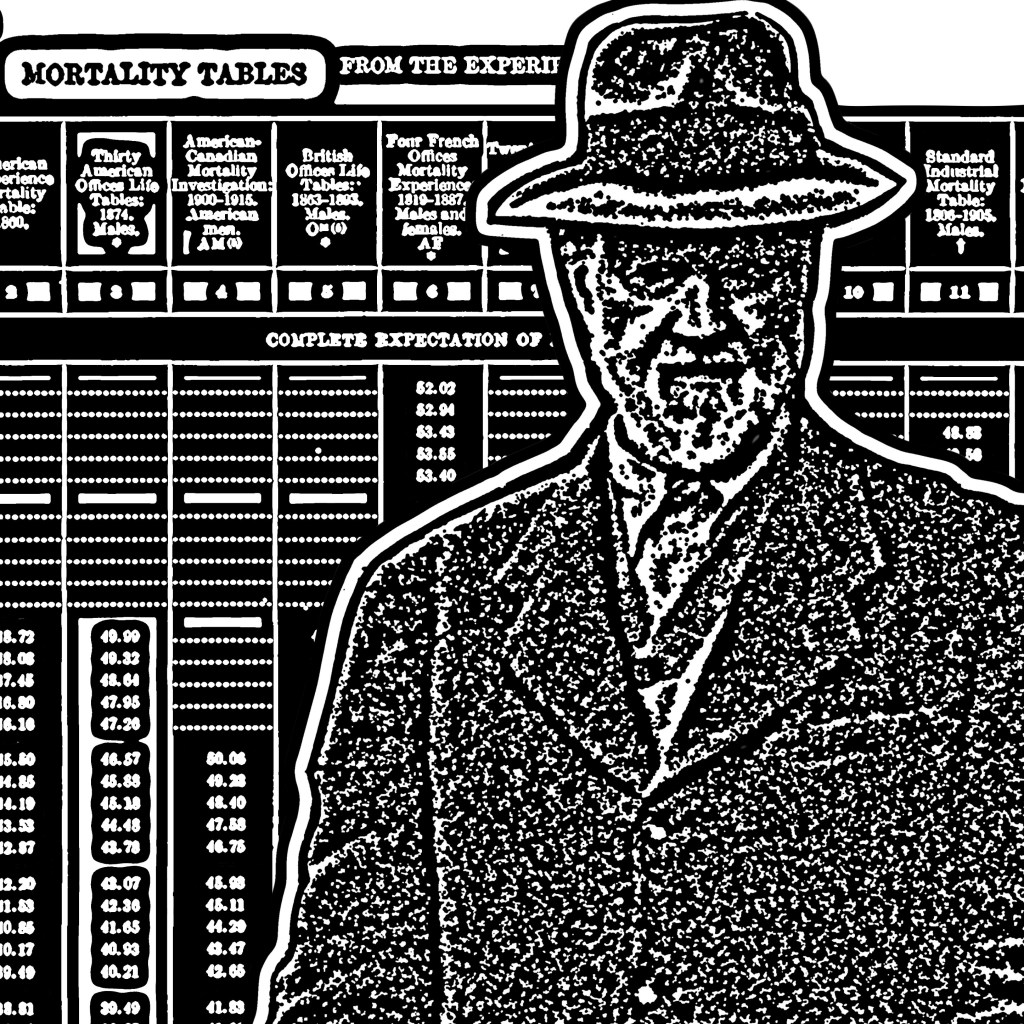
Mortality Tables illustration by Savage Pencil

(c) 2022 Mortality Tables

Hems / Merkaba Macabre / Pagan Red / Sybil – IKLECTIC, London 11.06.2022

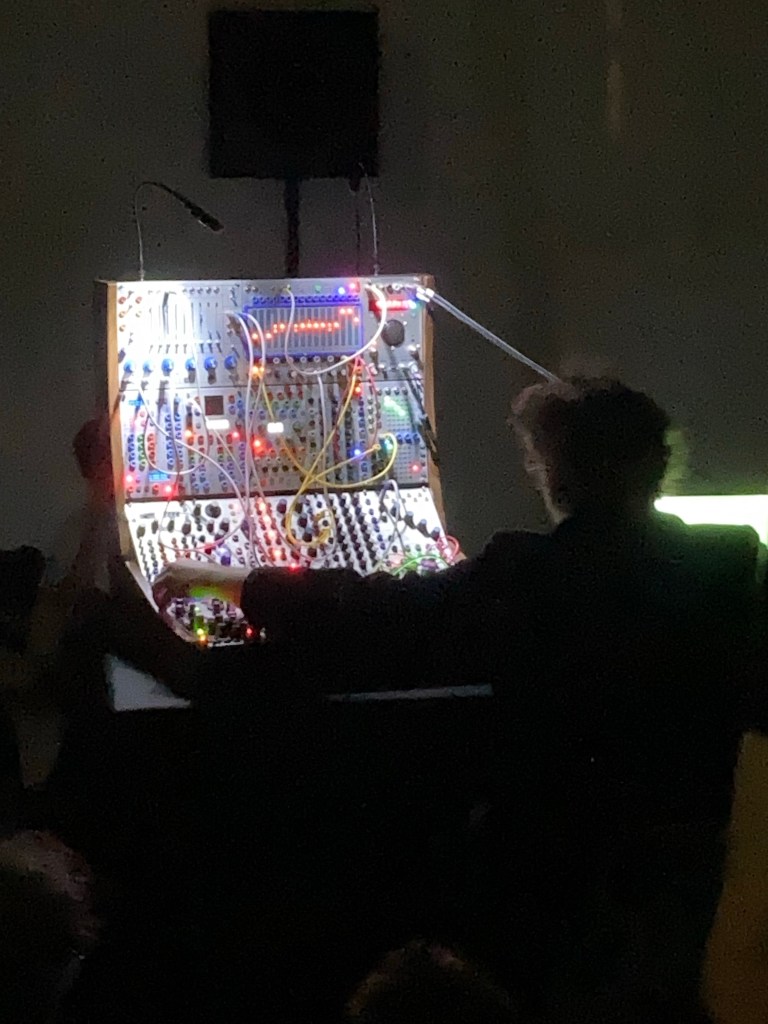
New label Titrate took over South London’s IKLECTIK for a night of modular electronic adventures interspersed with a drones ‘n’ tones DJ set from Sybil.

Pagan Red

Pagan Red’s set, featuring material that will form an upcoming release on Titrate, was all about that bass. After beginning with ghostly voices that are possibly about physics, a pulse emerges like a heartbeat rendered like a dub riddim, eventually replaced by quickening pattern that approximates rave or techno. The unbroken composition features undulating bass tones that fuck with your sense of perception, being focused and resolute yet open-minded enough to permit gentle, almost imperceptible changes to appear.

Merkaba Macabre

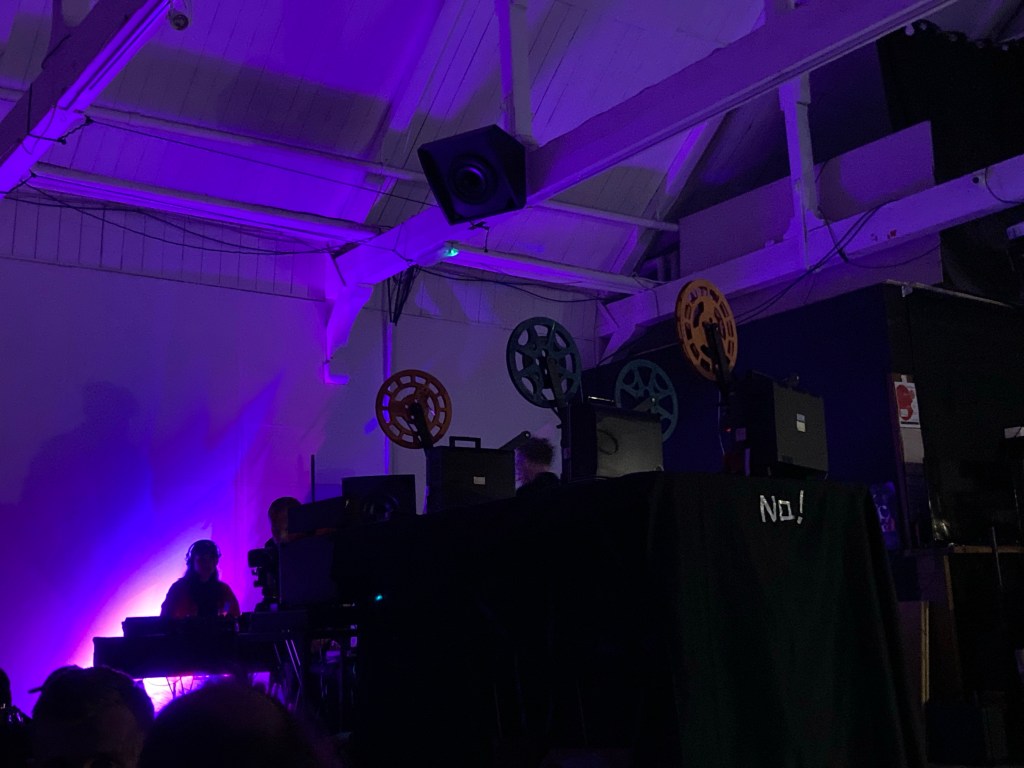
The last time I came upon Steven McInerney was with his film ‘A Creak In Time’, featuring a soundtrack from Howlround. ‘Trilateral Descent’, his performance as Merkaba Macabre, combines 16mm projections and modular synth patterns, in part triggered by three light sensors affixed to the wall of the performance space. The result is a suite of rapid fluctuations and intense, bass-heavy pulses gathering pace, while the imagery alternates between shots of woodland and twisting, mind-melting geometric lines. Imagine Disney’s Fantasia hacked by Warhol’s Exploding Plastic Inevitable set to a vibrant modular score and you’ll be somewhere close.

Hems

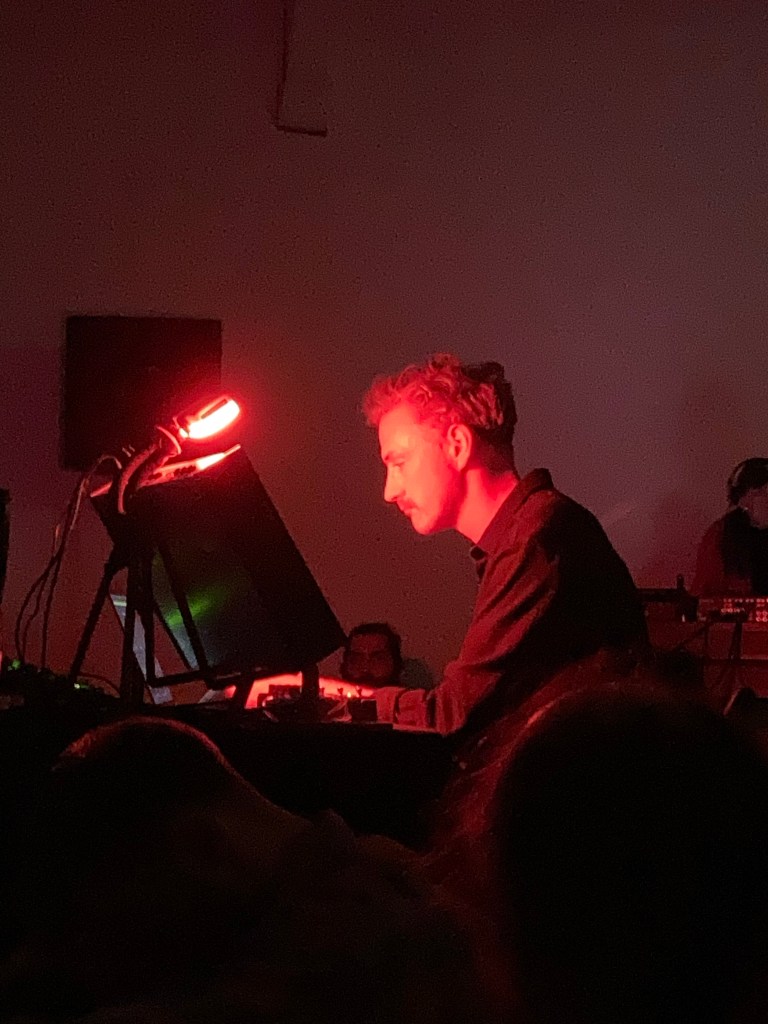
The headline from Hems set begins with a conversation, about what or who I can’t tell, before evolving into a shadowy, indeterminate soundfield. White noise and gradually intensifying sound waves give way to a soft whooshing, a singular crash providing a precursor to a rhythm that only arrives much later. From where I stand at the sound desk someone bites into a crisp; someone’s wristwatch advises that it’s 2300; a person orders a drink at the bar outside. These sounds are somehow integral, though accidental. An intensifying crackle, like a transmission from elsewhere, is sparse and spooky. A nascent kick drum reaches rave-y intensity before falling back into nothingness, replaced by a snarling, intense pattern that seems to appear out of nowhere, set to a recurrence of that solitary kick drum. In contrast to his debut release for Titrate, Chaotic Affair, Henrique Matias’ set is unnervingly brutal yet intensely subtle.

Based on the performances tonight, Titrate is definitely a label to watch.

Words and bad photography: Mat Smith

(c) 2022 Further.

The Tapeworm: Alex The Fairy / The Howling / Blood Music

Three new ferric masterpieces from the endlessly-uncoiling Tapeworm imprint.

Can I Hear The Sound Of A Falling Branch is the latest missive from Alex The Fairy (Alexander Catlin Freytag), who manages to sidestep the expected norms of minimal electronic music by offering a series of mostly canapé-sized pieces. ‘Waking Up In Your Bed’ is a fast-paced electro cut whose crisp and frenetic rhythm is offset by murmuring synths and drones that recall the fogginess of a gap-filled night.

The brilliantly-titled ‘There’s A Cashier On The Beach They’re Scanning Pebbles Very Quickly’ is full of layers of crisscrossing bleeps that sound like saxophone blurts over a beat that lurches along like a sunbather with heatstroke, while ‘Green White’ offers woodblock percussion, a low-slung bassline and wobbly, indecipherable vocal interjections. Final track ‘User Sale’ is the Double Big Mac to the sliders elsewhere, a hypnotic, eleven-minute, restless banger built from a relentless, sinewy synth sequence and crisp, resolute techno beat.

The second cassette comes from The Howling – broadcaster and writer Ken Hollings and Robin The Fog’s Howlround project. Both sides feature a short snippet of narrated text from Hollings looped, processed and manipulated in real-time using to reel-to-reel tape machines. The result is like an updated take on Alvin Lucier’s ‘I Am Sitting In A Room’, except that Hollings wasn’t at home but at the Wimpy Bar on Streatham High Street. After listening to approximately 360 brilliantly evolving iterations of the b-side’s single enquiry – “Are you man enough for Mega Force?” – pushed through Howlround’s macho manipulations, I can confirm, regrettably, that I’m probably not.

Completing May’s wormy triptych is Blood Music’s For The Vagus Nerve. The project of London’s Simon Pomery, here we find Blood Music offering two weighty dronescapes, each laden with weighty power electronics and tense guitar distortion. Like all the best drones, there’s two games being played here – the intense fluctuations occupying the foreground and the more delicate, overlapping microtonal oscillations off in the background. Less music to relax meditate to and more music to dissect and dismember to, For The Vagus Nerve is a brutal, all-encompassing listen best played extremely, nay offensively, loud, ideally when your neighbours are having a garden party next door and the smoke from their barbecue is making your freshly-washed smalls smell like burning flesh. Uncompromising, violent and beautiful, replete with a macabre narrative from Pomery not unlike a philosophical Patrick Bateman delivered while draped in a victim’s entrails.

Can I Hear The Sound Of A Falling Branch by Alex The Fairy, All Hail Mega Force by The Howling and For The Vagus Nerve by Blood Music were released May 20 2022 by The Tapeworm: www.thetapeworm.org.uk

Words: Mat Smith

(c) 2022 Further.

Rupert Lally – Forgotten Futures

I recently found myself watching a National Geographic documentary about the 1986 Challenger disaster. I was nine years old when that tragedy unfolded over Florida. I remember vividly watching it on Newsround when I got home from school and again on the evening news with my father. I hadn’t realised until I watched the film, but that was probably the first time I became aware of death. It also seemed to end my fascination with all things space and science fiction, which had been an obsession thanks to growing up with the Star Wars movies.

Rupert Lally’s Forgotten Futures reminded me of that day and that life pivot. The premise of Lally’s album, originally recorded for Lost Futures magazine, was to look back on his own childhood in the late 1970s and early 1980s. As he acknowledges, memory is a troublesome companion – whereas, at the time, we might have been filled with hope, optimism and the dreams of a thousand possible futures, with the benefit of hindsight we often see things differently. So it was for Lally while recording Forgotten Futures. On the title track we find him running through a list of futuristic visions that all seemed possible back then, but which now seem fanciful and a long way out of reach – except for TVs in kitchens and slightly limited approximations of smart homes – brings to mind how utterly disappointing those exciting versions of the future actually were. (Growing up, my vision of the future was basically informed by the Smash mashed potato adverts. The future has definitely not lived up to those expectations.)

This is undoubtedly one of Lally’s most introspective albums. Not dark, per se, but certainly more questioning and reflective than some of his other material. Pieces like ‘Everything We Leave Behind’ and ‘Kaleidoscope’ have an unresolved, restless and often thwarted dimension to them. Central to those tracks, and in fact every track on the album, is an undulating, queasy edge to the sounds as if each one has had its pitch changed in real-time. A a plot device, that technique is a useful way of evoking how memories become less certain over time, how they change, and how we question their accuracy through the lens of contemporaneity. For me, that sound nostalgically reminds me of buying a battered 7-inch of ‘(Keep Feeling) Fascination’ by Human League. The electronic horn melody on that song sounds a little out-of-tune at the best of times, but when your copy of the single is warped so badly that the vinyl looks like a circular walk through hills and valleys, any sense of euphoria in that riff is brutally suppressed. It remains one of my most disappointing charity shop purchases.

‘The Lost Places’ finds Lally recounting a dream where he revisits the town of his childhood – the architecture, the restaurant he’d visit with his father, the supermarket he frequented with his mother and the basement carpark beneath that still fills him with fear. His delivery is detached and uncertain, reflecting that recurring idea of a disappointed nostalgia and how our memories deal with joy and trauma over time. It is a deeply personal – yet completely relatable – moment, and one that seems to unlock the critical sentiment of this ruminative album.

Forgotten Futures by Rupert Lally was released May 6 2022.

Words: Mat Smith

(c) 2022 Further.

The Eternal Chord – Bis dat

Bis dat (Give more) is the latest release from the long-running Spire project, which celebrates the venerable organ and the long shadow cast over the development of contemporary music, from its Roman origins to its divisive association with the architecture of Christian churches. This collection is the second to feature various artists creating new pieces using The Eternal Chord ensemble’s Semper Liber (Always Free) album from 2018 as their source material, and finds artists as diverse as Faith Coloccia, BJ Nilsen and Zachary Paul offering tracks that further invert any commonly held misconceptions about the organ.

The Eternal Chord is curated by Touch’s Mike Harding and consists of Marcus Davidson, Hildur Gudnadottir, Charles Matthews, Clare M. Singer, Maia Urstad, Anna Von Hausswolff and others. Live performance is a critical aspect of The Eternal Chord, and Semper Liber was compiled and edited from various Spire events that have taken place around the world since 2009. Generally being custom-built for the specific location into which they were going to be installed, the players are just one aspect of Semper Liber – the other is the distinct sonic personality of the organ which is being played, whether that be the 1877 ‘Father’ Henry Willis organ at London’s Union Chapel or the comparatively modern 1967 Karl Ludwig Schuke instrument at Berlin’s Passionskirche.

Very often, it’s not really possible to identify anything resembling an organ on these pieces. Even allowing for aggressive processing and atypical performance, the instrument has a distinctive character which manages to cut through any alteration process. Brief moments of that character emerge in Faith Coloccia’s ‘Voice IV Sarcode’ or in the frozen stillness in the background of strom|morts’ ‘Absolute Magnitude Hermetism’, but for the most part what the organ provides to these pieces is a suggestion of its tonal familiarity.

One of the organ’s technical innovations was the ability to create infinitely held tones, and these pieces are filled with such drones – static, immovable blocks of texture that are anything but still. In the hands of Rhodri Davies’ ‘HAARP’, he deploys his e-bow to his harp to create layers of squalling, overlapping drones over the course of his 31-minute contribution. His piece is, at first, aggressive and uncomfortable, but listen to the delicate microtonal shifts sitting just on the edges, and what emerges is strangely hypnotic and uplifting. Something similar happens on Zachary Paul’s visceral ‘Sunken Cathedral’, where his scratchy violin rests on top of a a shimmering, impenetrable blur of rapid oscillations and drones so ephemeral that they could be sonic approximations of heat haze.

The Eternal Chord is a collaborative project in its own right, and Bis dat is broad minded enough to accommodate collaborations within that collaboration. Alcibiades is a pairing of the elusive radio static-manipulating venoztks and Jay Glass Dubs. Their ominous ‘Omicronology’ exists as a combination of skipping, hopping waves of intrafrequency growling and unfathomable vocal bursts, over which an inquisitive gamelan-style melody is interwoven. We hear echoes of the piece’s background radiation in a concluding piece from The Eternal Chord – ‘Omnia transeunt’ – which is many steps removed from anything resembling an organ, a ringing synth pulse and whistling sound approximating an unpredictable melody.

We all have a perception of what organ music sounds like. With Bis dat, and indeed all the various Spire activities, we are encouraged – forcibly, noisily and occasionally uncomfortably – to rethink that perception.

Bis dat was released May 6 2022 by Spire / Touch.

Words: Mat Smith

(c) 2022 Further.

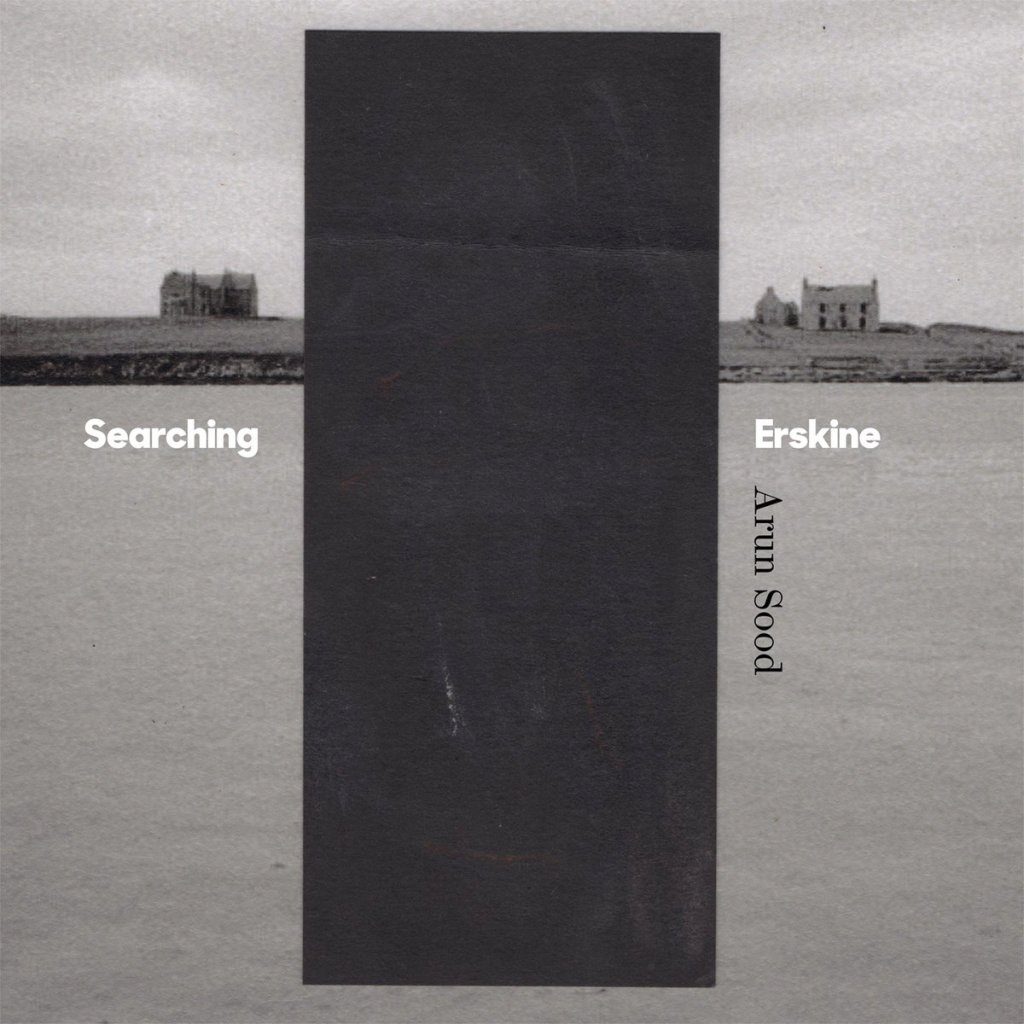
Arun Sood – Searching Erskine

In the last few years, the music that’s resonated with me the most has tended to have a connection to Scotland: Andrew Wasylyk’s Eastern Scotland trilogy, Erland Cooper’s Orkney triptych, Letters From Mouse’s Tarbolton Bachelors Club, Emeka Ogboh’s Song Of The Union and Simon Kirby / Tommy Perman / Rob St. John’s Concrete Antenna.

Scotland is in my blood and an important facet of my everyday life. My mother was both in Stirling’s Royal Infirmary and lived in Scotland until she was twenty-five years old. Every year of my childhood we’d travel up to see relatives near Falkirk. I was aware, appreciative and proud of my family tree and my connection to Scotland. Great aunts, cousins, friends of the family that were positioned as relatives yet weren’t – all of these figures, and their myriad accents and pasts appeared prominently in my childhood and left me with an unbreakable fondness for a country that, though I have never lived there, feels like where I am from. We took our two teenage daughters to Scotland for the first time in 2020, during a period of heightened awareness of mortality and the value of family bonds, and I attribute the way I have gravitated to these Scottish-related releases above others, in part, to that.

Unquestionably, to this can be added Arun Sood’s stirring Searching Erskine.

Sood is a Scottish-Indian academic and artist operating in the disciplines of sound art, music and writing. While Sood is currently based in Devon, the focus of Searching Erskine is some 700 miles away, namely the uninhabited small island of Vallay, just over a strand from North Uist in the Outer Hebrides. For Sood, this is not a romantic far-flung location upon which to base a project; this is where the Scottish side of his family’s history lies, and it has proven to be a source of creative inspiration for him since 2011.

Sood’s grandmother, Katie Maclellan, worked as a housekeeper on the island until she left in 1944. Her employer was one Erskine Beveridge, a wealthy linen manufacturer and archaeological historian who had erected a grand house, Taigh Mòr, on the island in 1905. Sood made field recordings while camping on Vallay in 2019, some of which were recorded in the ruins of Beveridge’s crumbling house. In his introductory essay to a book accompanying the twelve musical pieces, Sood recounts the moment he became very aware of the sounds of the island. “The geese, the gull shrieks, the grassy whispers,” he muses. “I began to wonder if my grandmother might have heard similar sonic tapestries to the ones I was hearing, only in a different time.” This question prompted Sood to explore the idea of sounds “triggering memories and re-imaginings of the past.”

Vallay’s remote location puts it on a direct collision course with climate change. It is already changed from when Sood’s grandmother walked across the strand at low tide to North Uist for the last time, and in truth it had already changed through successive ice ages, evidence of which was uncovered by Erskine Beveridge’s archaeological excavations. The fading island topography and the ruin of Beveridge’s house is an allegory for Sood’s personal history, and all of our personal histories. Disney’s Coco reminds us that departed people only live in so long as our memory preserves them. In this way, Searching Erskine can be viewed and heard as a poignant document of his own family lineage, made immortal so long as digital and physical media endure.

Searching Erskine begins with ‘Katie’, setting a verse delivered by Sood to a backdrop of delicate synths, sprinkles of piano and cello from Alice Allen, suffused with field recordings of his 2019 camping trip. His words are, in part, recollections from his grandmother, but also questions about whether the sounds surrounding him in 2019 might in fact be the long-range echoes of what his grandmother herself had heard. On ‘Land Seeps’, Sood recorded inside the remains of her cottage, setting his words to a bed of intense accordion drones, while Alice Allen’s cello gives the many-layered ‘Taigh Mòr’, prompted by recordings inside the sad ruin of the Beveridge house, a mournful, wistful tone.

This is not just Sood’s rumination on his own family connection to Vallay. His own ancestry is inextricably linked to the Beveridges, and their own histories appear vividly in some of the pieces here. ‘He Was Drowned’ and ‘The Cairn’ are responses to the story of George Beveridge, Erskine’s son, who drowned crossing the strand to North Uist, while ‘Vasa’ features spoken extracts from Erskine’s book North Uist: Its Archaeology And Topography read by his grand-nephew.

Crucial to the emotional impact that these pieces possess are Sood’s wonderful and evocative arrangements. In addition to his many field recordings and captured conversations with his family, these pieces are filled with strings, chanter, organs, guitars and delicate synths from his friend and collaborator Alastair Smith. Identifying individual instruments – with the possible exception of Allen’s austere cello – is virtually impossible thanks to looping and processing, all of which deliver the gauzy, sepia-tinged sonic personality that gives this body of work its personal and emotional impact.

Though it is possible to listen to Searching Erskine and get a measure of the narrative, the accompanying book is essential for unlocking its secrets. Alongside Sood’s wonderful, evocative introductory essay are visual responses to Vallay by photographer Emile Kees, artist and academic Rosalind Blake and Outer Hebrides-based visual artist Meg Rodger. Each of these artists draws something unique from the idea of Vallay. For Kees, his approach was to digitally process old photographs, including one of Sood’s great-grandfather, leaving visual ghosts and intentional obfuscation. Blake centred her attention on the the various impressions of the island’s tidal geography through vibrant colour schemes and repeated lines. For Rodger, the idea was to use abstract skyscapes to evoke the gulf between art (imagination) and archaeology (facts).

Most crucial are Sood’s own notes for the musical pieces, revealing the inspiration, intention and story behind each. It is always intriguing to peek inside an artist’s motivations, and Sood leaves no detail hidden. Through these descriptions we alight upon the intense personal connection he has to his family history, and to Vallay, including in the naming of his daughter, Vallya. “Our children are ancestors too,” he explains of ‘Crossing’. “They bind our future with what came before us.” Vallya’s heartbeat, recorded while still in the womb, is just audible in this piece, beneath a stirring translated version of the Gaelic song ‘Cailin Mo Ruinsa’, something that Sood’s uncle Colin – possibly the last to be born on Vallay – was to be heard singing after a wee drop of firewater every night.

Searching Erskine might be deeply, intentionally personal in nature, but its ultimate conceit is to make such a personal story relatable to anyone aware and appreciative of their own history. Our lineage may not be as interesting or storied as Sood’s, but his sensitive recognition of the importance of how we got here – and the legacy we bequeath to those who come after us – is what makes this release resonate so strongly, and Sood’s understated technique so powerful.

Searching Erskine by Arun Sood was released March 4 2000 by Blackford Hill.

Words: Mat Smith

(c) 2022 Further.

Shots: Strategic Tape Reserve – The Center For Understanding New Trigonometries / Chorchill

THE CENTER FOR UNDERSTANDING NEW TRIGONOMETRIES – Shapes, For Experts (Strategic Tape Reserve)

More bonkers electronic music from Cologne’s Strategic Tape Reserve and their Learning By Listening series. Shapes, For Experts by the mysterious Center For Understanding New Trigonometries* purports to be an academic study of the humble shape and its hidden dimensions. Using spoken word segments delivered by a pair of professorial types, as well as bursts of rapturous – if slightly uncomfortable – vocals, all set to fizzing, science documentary electronics that remind me of soundtracks in the Epcot pavilions. Even if shapes like the tolstoyanmetaphoria, hemi-helix or appalonian gasket don’t actually exist – though who can honestly say that they don’t? – the presentation here is convincing, tapping into themes of conspiracies and wonky YouTube-delivered science theories. The Center are keen to offer shape assistance to anyone looking for it – however, as they readily admit, their website doesn’t work. Released March 18 2022. * Not to be turned into an acronym.

CHORCHILL & APEL OKUYAN – Modern Tavla (Strategic Tape Reserve)

In a moment of genius, the seventh volume in the Learning By Listening series turns out to be about something that actually exists! Whereas previous releases have traded in the vague, fantastical and simply outlandish, Modern Tavla by Germany’s Chorchill places its attention on an actual Turkish board game. Tavla is a slight variation on backgammon and Chorchill’s cassette is neatly split between one side focussed on the traditional form of the game, and another focussed on its modern modifications. These ruminations on the board game are delivered through narrations by Apel Okuyan, also known as Nachtfisch, a figure – unlike tavla – who probably doesn’t exist outside of Chorchill’s imagination. The musical accompaniment is delicate, inquisitive and full of wonder, comprised of sprinkles of electronic melody and sparse sound design that evoke the notion of a sedate, leisurely game played outside Turkish pavement cafes. Released April 1 2022.

Words: Mat Smith

(c) 2022 Further.