Tears|Ov – A Hopeless Place

When I was a small child my parents bought a copy of a children’s music LP called All Aboard. It had a whiff of a K-Tel compilation about it, containing songs like ‘Right Said Fred’ by Bernard Cribbins, ‘Ernie’ by Benny Hill and ‘Grandad’ by Clive Dunn. Side one of the album opened with a version of ‘The Laughing Policeman’ by Charles Penrose. I suspect because of mishandling on the part of my mischievous toddler fingers, that track was irreparably scratched, right at the point where the jocular copper of the song started laughing. That looped chuckling left an indelible mark on my childhood, running through the fear I felt as I watched the original version of IT, through TV shows with canner laughter and pretty much right up to the point I heard ‘I Stand On The Cable’ and ‘Dancing Without’ by Tears|Ov.

Tears|Ov is a trio of Lori E. Allen (vocals, samples, sequenced percussion, piano, synth, noise), Deborah Wale (vocals, percussion, tube, synth, noise, scratching, spoken word) and Katie Spafford (cello). Although the three performed together as part of Allen’s 2016 album for The Tapeworm, Tears Of The Material Vulture, the catalyst for this LP was a performance commission by artist Wolfgang Tillmans as part of the South Tanks series that ran alongside his 2017 Tate Modern retrospective. These are not the pieces that Allen / Wale / Spafford performed, exactly, as these are tracks formed of a collective after-hours improvisation process wherein each is a discrete moment unto itself. Triggered initially by Allen’s foundation loops, Wale and Spafford are then free to respond as they see fit, creating a feedback loop that allows Allen to alter and answer in return.

The eight pieces here are powerful, driven moments that sound perfectly composed rather than carrying the scratchy, inchoate gestures that one normally associates with freeform music. The tracks mentioned earlier – ‘I Stand On The Cable’ and ‘Dancing Without’ – possess a rich, interwoven tapestry of sonic events, glued together as tight layers (pulsing electronics, clipped instructions reminiscent of ‘Revolution #9’, and that incessant, troubling laughter – which collapses into distress on the latter track). If these found sound layers appear skittish and randomised, Spafford’s cello and Wade’s spoken word, when placed next to Allen’s finely-wrought electronics on moments like ‘Trapdoor Ant’ provide a stentorian focal point to proceedings, even if they are almost immediately sliced through with brief snatches of noisy intervention.

On the whole, this is a dark and brooding album befitting of both its title and the two tracks with the same name that bookend the LP. Surprising, then, to find two tracks that are, at least in part, completely at odds with the prevailing tone of A Hopeless Place. ‘Overstimulated Arcade Rat’ carries a sci-fi edge reminiscent of Don Dorsey’s soundtracks for Disney attractions at Epcot, full of fizzing futuristic electronic energy and perverse optimism, while ‘Family Feudal’ begins with genuinely laugh-out-loud faux pas culled from shows like Family Fortunes, before being taken into a mournful conclusion by Spafford’s cello, angry loops and an oddly unsettling segue into Satie.

Taken as a whole, A Hopeless Place leaves an uncertain, unresolved impression on the listener. There are difficult themes at work here, if you search them out, hiding beneath the splotches of sonic colour that dominate the trio’s music. How you elect to interpret those, just as with any work of art, in whatever discipline, is entirely up to you. You can be horrified, despondent, amused, ignorant or – if you perhaps hear the echo of a terror that dominated your early years – deeply terrified all over again.

A Hopeless Place by Tears|Ov is released November 1 2019 by The Wormhole.

Words: Mat Smith

(c) 2019 Further.

Doug Wieselman – From Water

Clarinettist Doug Wieselman is one of those adaptable players that can alternate between New York’s music scenes effortlessly, straddling involvement with artsy bandleaders like Laurie Anderson and Yoko Ono, the left-of-mainstream pop of Martha Wainwright or the freedom of the city’s jazz firmament. From Water is a solo album consisting of several Doug Wieselmans in the form of a many-layered suite of eleven pieces whose melodies were inspired by water, beaches, rivers and hot springs.

Each piece here is led by a fluid, evocative melody operating somewhere on a continuum stretching between classical minimalism, delicate ambience and the most lyrical phrasings of jazz. Those melodies have a lightness of touch yet also a largesse and grandeur befitting of pieces often inspired by the vastness of oceans. It would have been all too easy for Wieselman to leave From Water precisely there, and it would have been compelling enough as an album were he to have done that. Instead, his approach was to add loops, layers, discordancy, drones, and, on ‘Tennessee Valley’, a whole-instrument technique involving vocalising rhythmic sounds through the reed. He also adopted a technique of playing predominantly deployed in Turkish folk music, giving pieces like ‘Gloria Fleur Madre’ an exotic mystique, like detritus arriving on the shores of the Hudson from the cargo of a sunken vessel running the historic trade routes of the Middle East.

The trippy phased effects on the standout ‘Moonhaw’ lend that piece a volatility and turbulence, reminiscent of standing on a beach during a storm, while the plaintive, relatively unadorned ruminations of ‘Salmon’ contain a gentle, laconic playfulness that ultimately concludes with rippling passages of echoing upper register note clusters.

One of the most haunting moments here is a stunning, muted version of John Lennon’s ‘Julia’, its instantly-recognisable lyricism offset by the subtlest of background processing to create a moment of calm, yet pensive, tranquility.

From Water by Doug Wieselman is released October 25 2019 by Figureight Records.

Words: Mat Smith

(c) 2019 Further.
Ernest Hood – Neighborhoods

A sense of personal yet universal nostalgia runs through Ernest Hood’s Neighborhoods: you overhear the playfulness of children’s voices; the natural birdsong, distant dog barking and cicada rhythms of endless summers; ragtime music playing on someone’s radio through a window; the opening and closing of porch doors that evoke a time when you’d spend all day out of the house, returning only to reload on snacks, grab a water pistol or let your parents know you were gong to be over at so-and-so’s house until it was time to reluctantly go to bed.

These are the sounds of youth, of innocence, of freedom, recorded from the purview of a Portland, OR jazz musician confined to a wheelchair thanks to contracting polio in his late twenties. Released in 1975 as a private LP pressing, Hood’s opus developed a long-standing interest in field recordings by augmenting those captured sounds with synthesizer and zither, instruments that he was drawn to when his physical limitations prevented him from playing the guitar with the same intensity that he had previously played.

The combination of the two elements – the captured and the created – is curious. On the one hand, his playing is filled with a vibrancy and clarity of texture and movement, occasionally slipping into the melodic dexterity begat from cutting his teeth in jazz, but mostly offering a sort of wistful, evocative accompaniment to his taped conversations and environmental sound. ‘The Secret Place’ has a gentle, rolling mournfulness, a languid tone full of both promise and regret; ‘The Store’ has a jaunty irreverence, the embodiment of the local, family-run Main Street store that predated the out of town mall and the emptying of traditional town life; the episodic synth interventions of ‘After School’ have a wonky, optimistic energy, full of retro-futuristic hope, redolent of pent-up kids being let out the school gate, homework-free and only the limits of their imagination to stop them.

The oddness of the juxtaposition comes in the sepia-tinted field recordings. These taped elements don’t necessarily lack fidelity, but they sound dated and quintessentially of their time. We are used to life being much noisier, filled with clamour, omnipresent traffic noise, the unholy chatter of incessant FaceTime / Skype / phone conversations and a sort of modern vernacular that seems like the most distant of cousins to that which Ernest Hood was recording in the mid-1970s. In celebrating a certain well-meaning voyeuristic and celebratory now-ness with Neighborhoods, Hood had knowingly created documentary evidence of an age that’s now slipping rapidly out of collective recollection.

Neighborhoods by Ernest Hood was originally released by Thistlefield / Rexius Records in 1975 and was reissued by Freedom To Spend on October 11 2019.

Words: Mat Smith

(c) 2019 Further.

Bremer / McCoy – Utopia

Utopia is the fourth album by Copenhagen duo Jonathan Bremer (bass) and Morten McCoy (keyboards and tape delay). Their music nods firmly in the direction of mellow jazz and vintage bossa nova while also hinting at classical formalism, the result being sublimely meditative and hauntingly evocative instrumental music, overflowing with ideas despite the pared-back line-up and restrained instrumentation.

The pieces on their new album carry melodies which could haunt you forever, from opener ‘Åben Bog’s Satie-esque refrains through to the tranquil gestures of ‘Vega’. Oftentimes Morten McCoy’s melodies are resplendent enough to carry these tracks, Jonathan Bremer’s subtle bass accompaniment content to wriggle gently underneath; at other times it’s the weaving of other reference points around their playing that carries the track forward. ‘Tusmørke’ is a case in point, wherein McCoy’s keyboards drift off into an echoing distance while strings evoking that most untranslatable of Brazilian concepts, that of saudade, mournfully dominate the middle section.

The album was recorded during Bremer’s divorce, and it’s hard not to hear a saddened, regretful tone in the playing on the likes of the lyrical ‘Salme’. His bass here is reduced to minimalist forward motion, while, in what feels like a sort of empathetic gesture toward his partner, McCoy offers some brilliantly-layered passages for piano and organ that have a dreamy, wistful air about them. ‘Dråber’ is perhaps the most ‘full’ track here, with the interaction between McCoy’s organ and piano and an urgency to Bremer’s bass carrying a tightness and insistence, while a pretty sequence containing something like Mellotron flutes after a patch of atmospheric nothingness provides a strangely affecting left-turn at the very end.

Meanwhile, the strident, emboldened notation of concluding track ‘Determination’ suggests a firmness, a new resolve of sorts, the interplay between electronic strings, piano and bass being a small wonder to behold.

It would be easy to let these pieces drift quietly toward the background of your existence, but to allow them to become like sonic wallpaper would be to do this duo an incredible disservice; these pieces demand and deserve your attention, leaving you ever so slightly altered in exchange.

Utopia by Bremer / McCoy is released by Luaka Bop on October 18.

Words: Mat Smith

(c) 2019 Further.

Graham Dunning – 1947

The ever-inventive Graham Dunning’s Music By The Metre process involves the deployment of automated machines to create chance-inflected art that sits somewhere between an installation and performance. The method was inspired by Italian Situationist Giuseppe Pinot-Gallazio (1902 – 1964) whose Industrial Painting method employed machines to create large-scale paintings.

Dunning used his Music By The Metre technique on 1947, a new album released as a recycled cassette edition of just ten copies. This is something Dunning has done several times over – he acquires a batch of old pre-recorded cassettes and records over the existing sounds with new music, leaving the title of the original cassette intact. For 1947 the overdubbed cassette was a soundtrack to an Indian film of (more or less) the same name, the new album featuring two distinct sides of Dunning’s music, each lasting twenty-one minutes.

The A-side found Dunning using an automated mixing desk, analogue synth, effects, modified records and flicked springs. The result is a murky soundworld of dubby bass tones and skittish rhythms, held together by a metallic non-melody and echoing sounds. It is at once both entrancing and unnerving, carrying a playfulness that’s offset by a darker, semi-industrial impulse, like an extract from a soundtrack to a movie about corrupted home appliances turned into savage death machines.

On the B-side, Dunning took the game Half-Life and replaced all of the sounds with samples of 90s rave music. A character was then manoeuvred into a specific location to allow the maximum layering of the replaced sounds to dominate the piece. The rapidly-cycling sounds creates an effect that alternates between the disorienting and the mesmerising, your ear trying to identify any recognisable element but ultimately failing – if it wasn’t for Dunning meticulously explaining the provenance of his sounds, we would really be none the wiser.

The recycled cassette edition sold out more or less immediately but you can listen to both sides at Dunning’s Bandcamp page. 1947 by Graham Dunning was released October 4 2019 by Fractal Meat Cuts.

Words: Mat Smith

(c) 2019 Further.

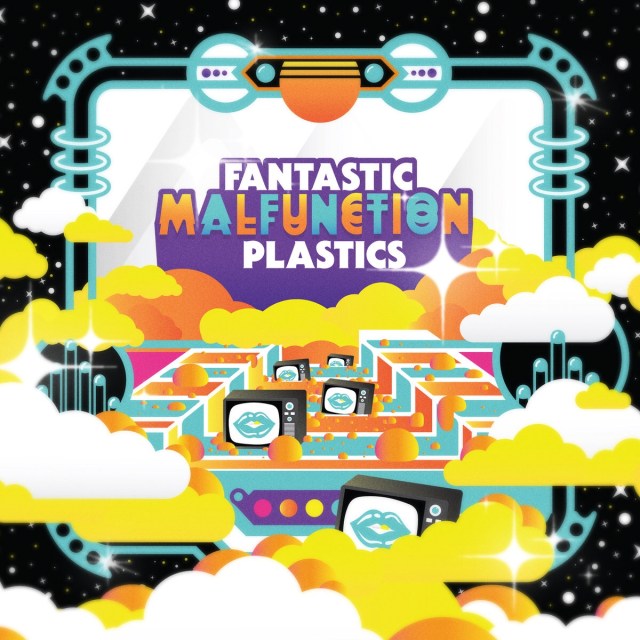
The Fantastic Plastics – Malfunction

Recorded over a period of two years at their brilliantly-monikered CoCo Beat Studios in Brooklyn, Malfunction is the follow-up to The Fantastic Plastics’ 2015 debut album, Devolver. As with that first record, the order of events here is hyperactive tracks threaded with spiky guitar riffs, buzzing synths and chunky drums that offer up a futuristic vision of pop drawing a line back to the most effervescent and innovative moments of electrically-infused post-punk.

From the energetic forward motion and symbolism of ‘Numan’ (with its general nod in the direction of the erstwhile Gary Webb and possibly Wayne Knight’s annoying character in Seinfeld) to the insistent high-speed glam-punk of opening track ‘Disintegration’, Malfunction is (mostly) an upbeat record. The harmonic interplay between the band’s Tyson Plastic and Miranda Plastic has a gleeful charm, even if their outwardly euphoric tracks appear to mask a general cynicism at the state of the world today. The effect, on the sinewy, Cars-y ‘Telephone’ or the feisty political grandstanding of ‘Disconnect’ – a thinly-veiled bash at a certain high profile abusing the freedom of social media – is slightly disorienting: here you are, pogo-ing around like a complete lunatic, and then when you start to focus in on the lyrics, you realise you’re actually hearing a cheerful protest song.

The frantic pace drops just twice, once on the charming space-age instrumental vintage synth interlude ‘Neon Satellite’ and again – briefly – with the jangly guitar intro to the otherwise perky ‘Bad Day’. The latter has a brilliant, cutesy quality that wouldn’t go amiss on a kids’ TV show, even if its theme – about either being chronically hungover or clinically depressed – sit slightly uncomfortably with the joyous ‘la-la-la’ing and generally upbeat mood of Miranda’s delivery.

The standout track here, ‘Evacuate’, finds Tyson doing a brilliant impersonation of Phil Oakey’s leaden delivery, its lyrics and insistent guitar riffery urging us to get the hell out of dodge before the world ends. That it ends suddenly with a brief, dissonant electronic tone suggests we didn’t quite make it, but if this album was the last thing you heard before the world ended, frankly it doesn’t seem like the worst way to go.

Malfunction by The Fantastic Plastics was released October 4.

Words: Mat Smith

(c) 2019 Further.

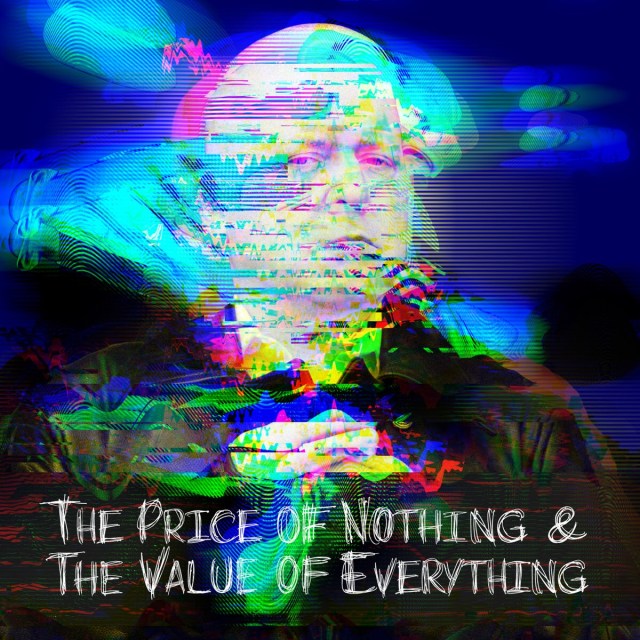
Circuit3 – The Price Of Nothing & The Value Of Everything

“My debut album sold out, so I spent all the money on more synths,” says Dublin’s Peter Fitzpatrick, who trades under the name Circuit3.

His third album, the sagely-titled The Price Of Nothing & The Value Of Everything follows a 2017 collection of Yazoo covers and vocal contributions to Jonteknik’s intensely-personal Alternative Arrangements LP from last year. Both projects were reverential, in similar ways: they both looked back wistfully on songs that were important to their creators, songs that inspired their own individual musical journeys and fervent experiments with electronic music technology.

A prevailing sense of nostalgia for the best-preserved vintages of 1980s synthpop can be felt throughout Fitzpatrick’s latest record. This isn’t remotely intended as an insult. In Fitzpatrick’s hands, the signature sounds, drum machine rhythms and lyrical stylings of that era are handled with exceptional care, with the fragile mystique of a track like ‘Face In The Crowd’ sounding like a newly-discovered tape of a Reset Records session left in a dusty corner of Vince Clarke’s Splendid studio space.

Throughout the record there is a deep connection to the vibrancy and forward-looking – yet alien-sounding – optimism that came with that period of electronic pop music: that sense of punk rock (and its post-punk reconfiguration) sounding as dated and irrelevant as the hairy prog music that punk spat at so vehemently. Partly this is down to the palette of period synths that Fitzpatrick uses, and partly it’s a consequence of his vocal style. On tracks like the standout ‘Electric’ or ‘The Rain’, you hear a questing, unresolved quality in that voice, a sort of searching and uncertainty that offsets the shimmering melodies and arpeggios that characterise the ten tracks here. The effect is gently disorientating, being neither fully happy on the most upbeat of tracks or fully maudlin on the most saddening of ballads.

Perhaps the most surprising moment here comes with the cynicism and anguish of closing track ‘For Your Own Good’, a sparse, infectious, chunky little gem of a pop song which jerks back and forth along a pleasantly unpredictable, carefully randomised pathway. As I always suspected, The Price Of Nothing & The Value Of Everything tells me that the future I wanted is hiding squarely in the past.

The Price Of Nothing & The Value Of Everything by Circuit3 was released October 1 2019 by Diode Records.

Words: Mat Smith

(c) 2019 Further.

Twenty-Three Hanging Trees – Cat’s Cradle

Another week, another immediately sold-out cassette on Stuart McLean’s eclectic Bibliotapes. This time around the subject is Kurt Vonnegut’s allegorical Cat’s Cradle (1963), and the artist offering up a soundtrack is Twenty-Three Hanging Trees, the alias of UK-based French electronic musician Xavier Watkins.

For a book so intertwined with dramatically apocalyptic sentiment, Watkins’ accompaniment is surprisingly and remarkably ephemeral. Fuzzy melodies and gauzy atmospheres dominate the eleven tracks, creating a sort of detached, observational response to Vonnegut’s dark humour. The album’s most dramatic moments come on ‘As It Happened’, finding Watkins creating a soundfield of crackling static approximating the terminal solidifying of the world’s oceans thanks to the escape of the ‘ice nine’ chemical on the island shores of San Lorenzo; the piece is full of a nauseating, unstoppable terminal motion, reaching a crescendo as gentle liquified ripples are replaced by a horrifying stillness.

Elsewhere, ‘The Illustrious Hoenikkers’ finds layers and cycles of vintage, fluttering synthesizer passages, full of mystery and retro-futuristic promise; its gentle phasing and questing arpeggios recall the earliest electronic albums, only offset by a brooding sense of things being far from optimistic. The languid guitar-like textures and delicate melodic washes of ‘I See The Hook’ are arguably among the most surprising moments here given that their serene tonalities are paired to the San Lorenzo ruler’s favoured form of execution and dictatorial enforcement.

Cat’s Cradle by Twenty-Three Hanging Trees was released by Bibliotapes on September 27 2019 and is now sold out. A digital version is available at Bandcamp.

Words: Mat Smith

(c) 2019 Further.
Pétra – Aunis

Pétra is a collaboration between dancer, musician and former NYC gallery owner Chantal Chadwick and LA electronic musician Brian Allen Simon, better known by his alias Anenon. The vast majority of Aunis was created on the Greek island of Nisyros after Chadwick and Simon were invited to participate in an artist residency, its thirteen beatific moments acting as a response to the unspolit rocky environs they found themselves among juxtaposed with the curious built environment photography of Daniel Boudinet.

The album operates at a significant distance from Simon’s long-standing Anenon project. While both Petrol (2016) and Tongue (2018) – like Aunis – found Simon creating musical responses to a specific place (LA and Tuscany respectively), both of those albums found Simon complementing field recordings with expressive soprano sax and a consummate modern classical compositional dexterity. Placed in Nisyros with Chadwick, the music they have created together is structured principally around a more pronounced electronic palette of sounds, each piece taking the form of a soundscape evoking, in some way, the landscape of the island. Simon’s saxophone appears briefly on the meditative ‘Aire’ and as the coda on ‘Tavel’, but for the most part his horn rarely comes out of its case.

Like Boudinet’s pictures, these pieces are presented with a directness and a flat, almost emotionless observational quality. A piece like ‘Lave’ has an inner warmth, its soft pads, bassy undercurrent and occasional flutters of synth arpeggios as gently evocative as a Boudinet Polaroid of the sun rising over a crumbling Parisian palace balustrade. Other tracks feature the gentle lapping of waves against the shore, creating a serenity and mournfulness thanks to the unresolved textures that surround the field recording, while pieces like ‘Tavel’ or ‘Hydra’ are more consciously melodic, their chiming synths carrying a roughened, imperfect quality bordered by atmospheric white noise.

On these pieces, it is as if Chadwick and Simon are drawing attention to the essential chaos and unpredictability that characterises all of nature, despite our best endeavours to apply a sense of order to that which we cannot control. That their collaboration can be so expressly in tune with nature while never once sounding like ambient new age meandering is a wonder to behold.

Aunis by Pétra was released September 20 2019 by Injazero.

Words: Mat Smith

(c) 2019 Further

Aki Onda + Paul Clipson – Make Visible The Ghosts

R-13903378-1563715033-1258.jpeg

“It’s not about the sound and image resolving. It’s about the ambiguity between them and suddenly this feeling of coalescence, then also disparity and dissonance.” – Paul Clipson (1965 – 2018)

For the best part of nine years until his untimely death at the start of 2018, filmmaker Paul Clipson and experimental audio artist Aki Onda were friends and like-minded collaborators, both sharing similar and complementary sensibilities and interests despite working in arguably distinct disciplines.

Make Visible The Ghosts was originally conceived for a date at Brooklyn’s ISSUE Project Room. The premise that the pair came up with was a collaboration without collaboration: each would prepare a seventy-minute piece in isolation without revealing to the other what they were doing, which the pair would then perform simultaneously in February 2013.

In Onda’s case, his intended accompaniment to Clipson’s film left ample room for improvisatory, in-the-moment responses. He talks about hearing the whirring motion of the reels as something that needed to be brought into the sound-field he had crafted, quickly amplifying the sound during the performance with a microphone and giving that prominence in his audio collage; similarly, the progress and switches of Clipson’s images inspired him to add intra-channel radio static – that unpredictable, ghostly, between-frequency, unplaceable sound somewhere between the capture of spirit voices and out-of-control analogue synth spurts – across the length of his piece.

The version of Make Visible The Ghosts released by audioMER consists of four ten-minute tracks developed out of the material delivered at ISSUE and subsequently reworked over a period of three years, with stills from Clipson’s visuals presented as a regimented collage to form the LP sleeve. Perhaps out of reverence, or perhaps because it felt like it had become an integral part of the piece, Onda’s amplified reel recordings provide an occasional rhythm of sorts, and the freeform radio manipulations run throughout the four tracks like an improvised solo by a bandleader. Beneath those two chance-derived elements you hear the staples of Onda’s approach to field-recorded sound: traffic, conversation, atmospheres, all glued together by electronic tones, drones and processing that, while meticulously prepared, nevertheless feel spontaneous and brimming with energy. Though often contemplative, there are also moments of tension, such as the growling electronic interjections that dominate large sections of ‘Palm Held Out For Us To Read’.

Make Visible The Ghosts could not have existed, in this form, without Clipson. His death has left an indelible mark on Onda, and this album represents both a tribute to a friend and mentor, while also acting as a necessarily unique celebration of what is possible in the field of multi-disciplinary collaboration.

Make Visible The Ghosts by Aki Onda and Paul Clipson is released September 20 2019 by audioMER.

Words: Mat Smith

(c) 2019 Further.