Take Five: Alka

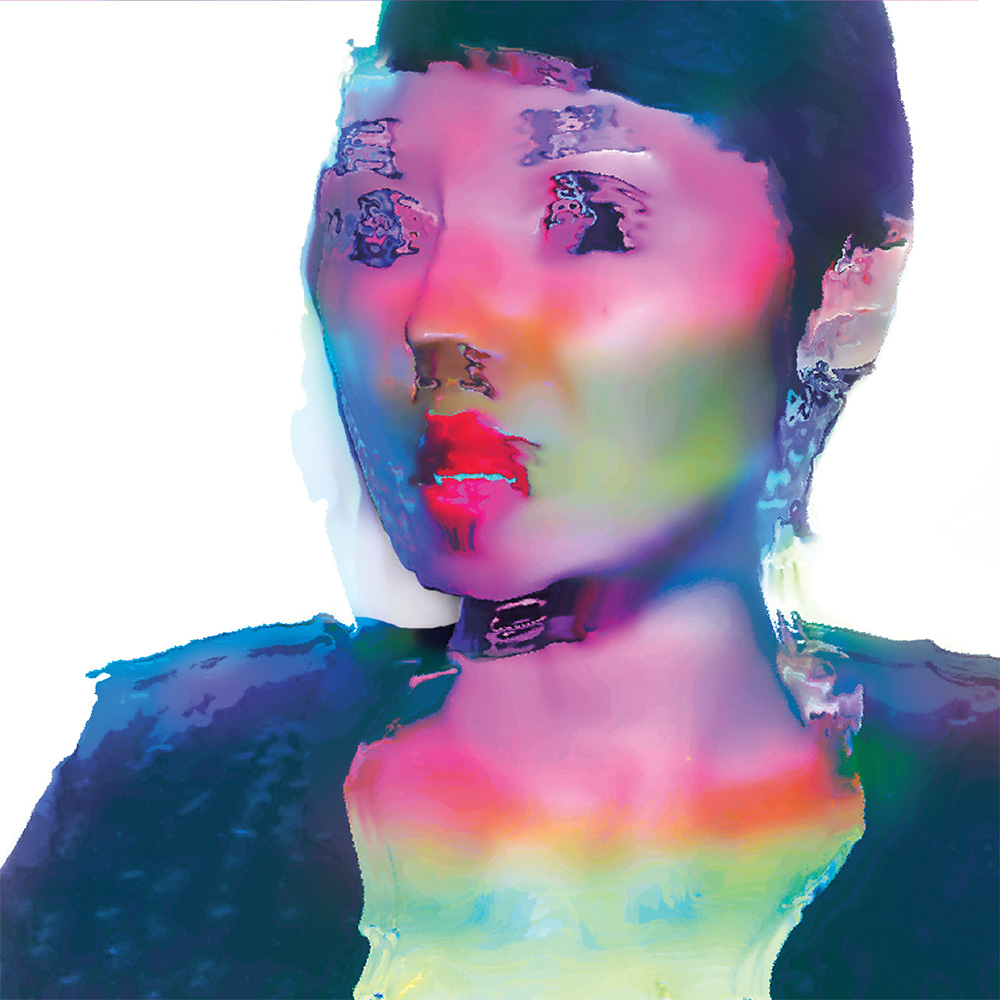
Philadelphia-based Alka release their fourth album, the portentously-titled Regarding The Auguries, on October 9th through Vince Clarke’s VeryRecords. Originally a solo IDM project of Bryan Michael, Alka is now reconfigured as a trio with visual artist Erika Tele and likeminded electronic producer Todd Steponick, a line-up familiar from their pre-lockdown live shows. 

“I think we’ve always been working towards being a more cohesive unit,” explains Bryan. “We like calling ourselves a unit – I mean, are you really a ‘band’ in the electronic music world? When I started the Alka project it was really just me and a laptop, and while I had fun with that, eventually I got bored with the process. Recording this album was really collaborative – I might start an idea; I’ll send it to Todd; he’ll send it to Erika; they’ll send it back, I’ll hear something else and we do this back and forth until we get a sound we like. It’s spontaneous, but it was done in a kind of slow motion.” 

We spoke to Bryan, Erika and Todd about some of their favourite albums and major influences. For more information on Regarding The Auguries, head to veryrecords.com

Xymox – Twist Of Shadows
Wing Records / Polydor, 1989

I can admire a band wanting to do something different. After two solid albums on 4AD, Clan Of Xymox was ready for a change. Perhaps a nod towards making their music more accessible, Twist Of Shadows’ production values are slightly different than their former releases whilst retaining the band’s signature gloomy vibe. Having dropped the ‘Clan Of’ from their moniker, switching from 4AD to Polygram, and partnering with fellow Dutch synthesist Bert Barten for songwriting and production efforts, Xymox went on to create what is quite possibly the best synthpop record of the late 80s. Decidedly less goth and more melancholic synthpop, Twist of Shadows is an underrated classic filled with beautifully dark vibes. The idea that something could be this introspective yet still synthpop is something I carry with me in our music as Alka. – Bryan

Newcleus – Space Is The Place
Sunnyview, 1985

Space Is The PlaceNewcleus’s second full-length album from 1985, following up from their first album Jam On Revenge in 1984, is soulful, melancholic, contemplative and upbeat at the same time. It brings out so much of the personality of the band, their originality and such a futuristic space narrative from the heydays of hip -hop. It’s so out of this world that it’s really a mystery as to why they are so much lesser known than their flashier hip-hop counterparts. Electro-funk took much more of an underground passage that slid beneath the louder mainstream rap and hip-hop, yet this band was creating imaginative, innovative live electronic funk! The first album Jam On Revenge, has the hit b-boy anthem ‘Jam On It’ (with an amazing video to go along), but this second album really resonates in my soul and inspired me as a person and artist. I have so much respect for this band, and am so humbled to share the airwaves with Cozmo D and his son DJ Dogtrane on Global Funk Radio. The composition, performance, writing and concept makes it a magical masterpiece – definitely one to experience. Come on and take a ride! – Erika

Coil – Horse Rotorvator
Force & Form / K.422, 1986

After hearing ‘Ostia’ in the 80s on my local college radio station and future alma mater (WKDU Drexel) I was instantly enchanted with Coil. The cascading and meandering Fairlight guitar sample sounding like it was programmed by some broken medieval robot, punctuated by haunting strings and Jhonn Balance’s melancholic delivery. “There’s honey in the hollows and the contours of the body…” It’s just perfect. I loved how it was this deeply sad song yet somehow upbeat, clocking in at 126 BPM. The entire album is genuinely a masterpiece and an enigma of its time having been recorded on a hired Fairlight and Emulator II in 1986, both extremely expensive bits of gear for English underground musicians. I guess what I pull from Coil’s influence is their diversity in sound – one moment brooding drones, the next acid house, all while never losing the mystery. – Bryan 

Julia Kent – Asperities
The Leaf Label Ltd, 2015

There is no way to put on happy music in a century like this and not feel like you’re somehow lying to yourself. More vulnerability and confrontation with the uncomfortable than anything like an escape, Julia Kent‘s cello work resonates with nuanced reflection navigating real-world hardships. Similar to the way glaciers once steadily scraped landscapes bare and carved mountains and vales, what remains is that which may have had more integrity than the friction could take. Strengths, and a handle on the centre, but at a cost. Something of this mammoth, austere process feels inherent in the enduring heart of the artist working the cello, and the strewn grey boulders of Asperities is the evidence. In early Autumn 2020, its somber story quietly commiserates, like an intricate monument to hard-earned survival left to be found by others lost and struggling in the bleak grey stretches of time. Mysterious electronics occasionally emerge and remind of only more uncertainties. Anxieties over accelerating existential threats weigh and grind. Powerlessness and atomization frustrate through a pandemic under narcissistic mismanagement. Default anxieties fester in the mix. Asperities feels like it takes in all of these things, scores a harrowing way through, and consoles as we wait to heal. – Todd

Plaid – P-brane EP
Warp, 2002

Something about Plaid‘s programming always intrigues and inspires me. It’s so intensely intricate and sonically rich but it’s the creeping melodies and chords changes that make my brain shiver with delight. It’s impossible to choose one album as their best but this particular EP was the sole reason for me to quit traditional guitar-based bands and return to my electronic roots with Alka once and for all. With shimmering almost new-age arps and delicate pads juxtaposed with complex, ever-evolving, and at times quite heavy rhythms, Plaid are at once eminently danceable and yet completely brooding and thoughtful. I challenge you to listen to the ending of ‘Coats’ and not get chills. – Bryan 

Regarding The Auguries by Alka is released October 9 2020 by VeryRecords.

Interview: Mat Smith

(c) 2020 Further.

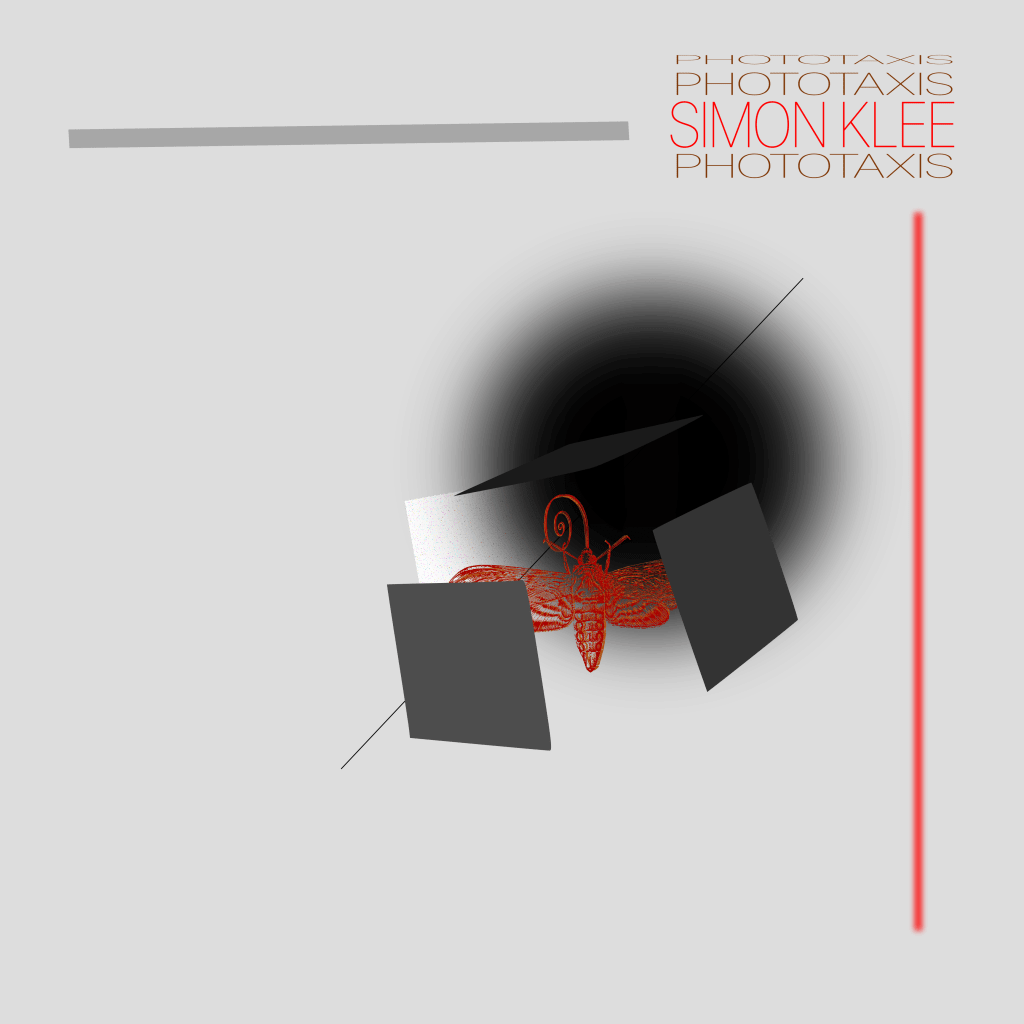
Simon Klee – Phototaxis

‘Phototaxis’ is the natural process of animals or plants moving towards the light. Ironic, perhaps that this latest nature-themed release from London-based electronic musician Simon Klee emerged a few days after the Autumnal equinox. But as those of us in the northern hemisphere head towards the darkness of a depressing Covid-shrouded winter, this could prove the perfect electronic tonic to lift our spirits. 

The opener ‘Corixadae introduces gentle, gleaming synths that evoke shards of light on a spring morning, before a gentle beat unfurls into a gorgeous chunky melody. From here, the six tracks progress slowly yet purposefully, as layers of percussion crawl, build and recede, giving way to uplifting shimmering melodies.   

The most joyous of these are ‘Light Radiates From Within Me’ and closing track ‘Transendence’. You can imagine these tunes soundtracking inspirational nature documentaries, as, say, an egret launches itself from its nest and makes its first swooping flight across a mountainous vista. 

The only minor quibble is that such tracks draw to a close just as they’re getting going, giving the impression that Phototaxis could easily have been stretched to a full-length long player were these ideas allowed greater room to develop further. 

In six months’ time, as we hopefully emerge into a warmer, more carefree world I for one will be digging this out again. Klee will probably choose this time to put out a release celebrating Autumn mists and the turning of the leaves.  

Phototaxis by Simon Klee was released September 25 2020 by Subexotic Records. 

Words: Chris Hill 

(c) 2020 Further. 

Amongst The Pigeons – Before The Storm Hits

‘Before The Storm Hits’ is the new single by Amongst The Pigeons, the avian-inspired alias of producer Daniel Parsons, and the first evidence of his forthcoming fourth album. The track finds Parsons in collaborative mode, with vocals from Fast Trains (Tom Wells). 

Over snaking electronics and turbulent (but never intrusive) rhythms, ‘Before The Storm Hits’ is a moment charged with latent energy and the portentous uncertainty of not quite knowing what’s about to hit you. Think back to what life was like in January, back when COVID-19 vaguely felt like someone else’s issue and that nagging feeling that maybe your confidence wasn’t actually justified. 

Many-layered and working short, sharp ideas that appear quickly and disappear just as rapidly, ‘Before The Storm Hits’ has a sculpted sonic anxiety about it; a restless, edgy disposition befitting the subject matter. Wells’ vocal is, in contrast, delivered with quietly detached soulfulness, for the most part a calming contrast to Parson’s electronics in spite of observational lyrics that sound nightmarishly bleak. 

Before The Storm Hits by Amongst The Pigeons is released October 2 2020 by Peace And Feathers. 

Words: Mat Smith 

(c) 2020 Further. 

Various Artists – Isolation And Rejection Vol. 4

Various Artists - Isolation And Rejection 4

In 2019, to my immense disappointment, the Front & Follow label decided to shut up shop. It looked like either a temporary cessation of activities or a complete end of a 12-year run that had seen the Manchester-based imprint issue an incredible run of adventurous sonic material from a diverse set of artists. 

Fortunately, 2020’s lockdown presented the ideal opportunity to bring the label back, specifically for the Isolation And Rejection series of artist compilations. From the off, the premise was simple – Justin Watson, who runs the label, put out an open call for artists to send in tracks that had been rejected by other compilers. Isolation And Rejection became something of a home for the unwanted, overlooked and unloved. All proceeds from the sales of the digital albums go to The Brick in Wigan, a charity focussed, like Isolation And Rejection, on the homeless. 

In keeping with the previous three editions of the series, the tracks presented on the penultimate instalment are far from mere

offcuts or poor quality knock-offs. Volume 4 collects together twenty-four tracks from established, well-known artists like Kepier Widow, Howlround, Rupert Lally and Pulselovers – none of whom, frankly, should ever find their music on a compiler’s cutting room floor. These artists nestle evenly alongside material from less well-known individuals, creating a sense of even-handedness that is a credit to Watson and his label. That he selected an acoustic guitar strumfest – MJ Hibbett’s ‘Rocking Out But Quietly’ – as the album’s centrepiece is downright audacious amid the anxious, squalling, buzzing, droning and quietly ethereal electronics elsewhere, but then again Front & Follow were always defiantly atypical in their release schedules.

So here you get the woozy, hypnotic structures of Stellarays’ ‘Butterfly Control Tower’, all delicate melodies and an electro-shoegazery disposition; the nod in the direction of Cabaret Voltaire on Function Automat’s resolute ‘Data Data’; Earthborn Vision’s haunting, edgy electro pulses on ‘Effects Of Isolation’; Graham Reznick’s processed cello and choral vocal textures melding with stirring electronics on the beautiful ‘The Visit’; Kepier Widow’s brooding ‘Perfect Latency’. Elsewhere, Rupert Lally immerses himself in the same ambient sonic foreshore that inspired his Marine Life album with the pastoral ’It Learns From Its Mistakes’ and Lammergeiers delivers a psychedelic stew of amorphous, shapeshifting processed blues guitar riffs and grainy textures set to motorik rhythms on ‘Ephemeris’. 

My personal favourite here comes from Joe Evans’ Runningonair. His ‘Cocktail Hour’ is a breezy slice of gentle exotica, all tranquil beats, discrete acid squelches, blurry shapes, vibes and jazzy piano, just perfect for mixing a Mai-Tai or three in the comfort of the Tiki bar you fashioned up because you had nothing else to do in lockdown. Cheers. 

Isolation & Rejection Volume 4 is released September 25 2020 by Front & Follow. 

Words: Mat Smith 

(c) 2020 Further. 

Rupert Lally – Marine Life

Rupert Lally - Marine Life

For reasons that I don’t fully understand, for a significant proportion of lockdown I found myself drawn to the sea. Initially this was a strange feeling: in my mind’s eye I imagined the tranquillity of sunsets over rippling waves, the coolness of ocean spray and the scent of water in constant motion, but I was also reminded of how stressful I would find trips to the beach as a child – the embarrassment of changing into and out of swimming shorts under a towel, the uncomfortable feeling of sand between my toes and a sense of intense boredom that manifested itself, conservatively, seventeen minutes into a day by the sea. Nevertheless, the idea of the sea won out, and as soon as lockdown eased slightly, I took myself to the Cornish coast, to where I now find myself temporarily relocated. 

Swiss-based electronic artist Rupert Lally’s latest album, Marine Life, also concerns itself with the sea, perhaps representing an emotive, wistful nod in the direction of his childhood growing up in Brighton. Across six deeply ambient pieces, Lally evokes both the calm quietude and intense volatility of the water. Taking together processed, degraded samples of orchestras and overlaying those with choral samples and plaintive synth accents, Lally has assembled a suite of sounds that drift gently between the acoustic and the electronic. 

Pieces like ‘Deceptively Calm’ or ‘Shimmering Waves’ have a muted drama, an evolving pattern of beatific drones and constant cycles of minor crescendos smothered in a sort of hypnotic, though-provoking serenity. Like the ocean, what appears still on the surface might hide a restless, dangerous turbulence that prevails beneath; Lally’s work on Marine Life is sensitive to both, simultaneously carrying a reflectiveness but also a respect for the water and its latent, unpredictable power, best exemplified by a sequence of fluctuating discordancies on the title track. 

A sense of danger floats to the choppy surface on ‘High Speed Crossing’ and the submerged pulse of ‘Diving Bell’, the former progressing on a submerged motorik rhythm that sounds like the close-up recording of a boat engine, and the latter on an unswerving sweeping sound reminiscent of sonar. These two pieces seem to symbolise, for me, mankind’s fragile relationship with the water and its untameable nature. I also found myself pondering how our continual disrespect for the natural order of the oceans have jeopardised the delicate ecosystem that it represents, feeling anxious about what overfishing, oil spills, engine emissions and plastic waste have done to those who call it home. 

I found myself listening to Marine Life with the sound of seagulls chattering outside the Velux windows in the space I have commandeered for writing and reflection while I find myself here in Cornwall. It was a moment of natural, unexpected symbiosis that felt like it was completely in tune with the powerfully introspective yet elegiac tonalities of Lally’s latest work. 

Marine Life by Rupert Lally is released September 21 2020 by Glass Reservoir in a limited edition of 50 CDs.

Words: Mat Smith. With thanks to Grant Wilkinson.

(c) 2020 Further. 

Gareth Jones – ElectroGenetic

Gareth Jones - ElectroGenetic

Gareth Jones is no stranger to helping artists shape astounding music. Having produced and mixed acts such as Depeche Mode, Erasure, Einstürzende Neubauten, MGMT, Can, Neu!, and beyond, it is safe to say Gareth knows his way around the studio. It is one thing to assist artists in honing their craft, however, and another to create original work, especially in a void of individualism. 

With ElectroGenetic, his first solo release, Gareth has successfully managed to create a sonically-rich aural snapshot of his recent journey through loss. Although deeply personal, the emotions Gareth has managed to capture are immediately relatable as they are being told – not simply as one person’s reaction to the travails of life – but through the lens of an all-encompassing spiritualism. 

ElectroGenetic sounds as the title suggests: a perfect blend of deep, earthly ambience accented with rich cosmic synth work. The listening experience of the nine-track ElectroGenetic (a seamless and flowing 40 minutes of morphing sounds) is a continuous journey one hardly knows they are on – much like life. Buzzing insect-like sferics hover over fields of sound in ‘Goonhilly’, low-pass filtered rhythms fluctuate atop ethereal beds in ‘Farewell’, choral swaths emerge from the depths as synth arps punctuate the darkness in ‘Trinity’, and effected spoken words reinforce a spiritual element throughout.

Gareth intricately blends raw modular electronics with floating atmospheres and the result is remarkably gentle and expressively emotive. There is a distance in the sound like someone observing a storm from afar. One is reminded of the pastoral ambience of O Yuki Conjugate’s Undercurrents (Into Dark Water) or the dream-laced techno of Air Liquide’s The Increased Difficulty Of Concentration

With ElectroGenetic, Gareth presents a momentary journey through life – one fraught with sadness but never losing sight of a grand spiritual order to the perceived chaos. A journey immaculately reinterpreted through electronics, field recordings, poetry, and dreamcatchers. Gareth has made a deeply personal album based on a deeply personal journey but one that is relatable to all of us as it is presented by someone who is not only an expert in the field of sound manipulation but also cognisant of when it is best to abandon ego and let higher consciousness control the ebb and flow. Kahlil Gibran’s The Prophet, which inspired the final piece ‘Alone Together’, offers a touching summation of the album:

“Let there be spaces in your togetherness, And let the winds of the heavens dance between you.” 

ElectroGenetic by Gareth Jones is released on September 18 2020 by Calm + Collect. Pre-save here: https://ffm.to/electrogenetic

Words: Bryan Michael. Bryan is one third of Alka. Alka’s new album, Regarding The Auguries, is released October 9 2020 by VeryRecords.

(c) 2020 Bryan Michael for Further.  

In Conversation: Rival Consoles

Rival Consles (Ryan Lee West) by  Özge Cöne.
Rival Consoles (Ryan Lee West) by Özge Cöne.

Rival Consoles released their seventh album, Articulation, at the end of July. The album continued Ryan Lee West’s deep explorations of electronic music, combining the recognisable rhythms and dramatic gestures of dance music, but filtering them through concepts that owed a debt to the natural world and modern classical music through graphic scores inspired by György Ligeti.

Further. spoke to Ryan about the album and his idiosyncratic approach to composition, the emotional potential of synthesisers and writing for strings.

It seems like you tore up your own compositional rulebook with this album, particularly in the use of something akin to a graphic score. Was that a conscious effort to challenge yourself? How did the visual score influence how you organised the tracks? Was it a freeing experience? 

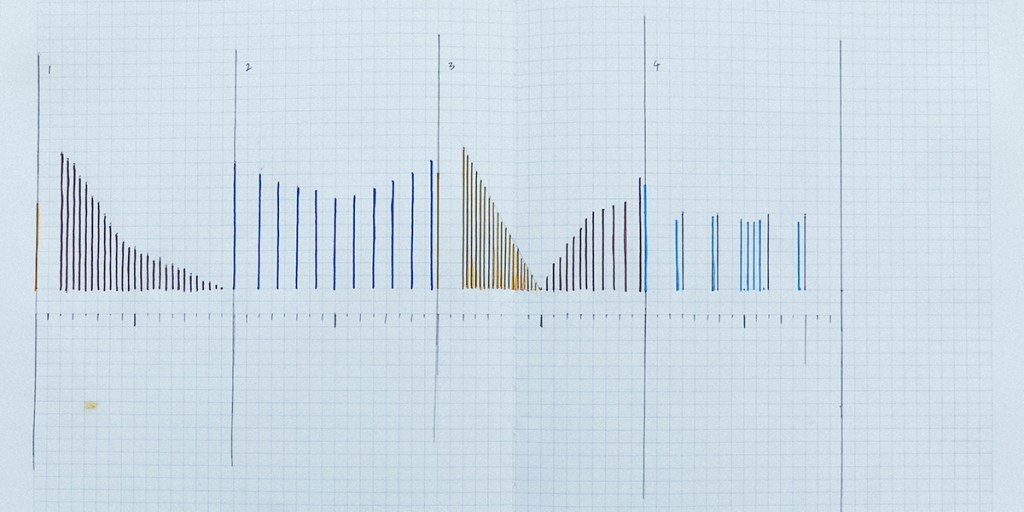
It was mainly a way to problem solve and to daydream possibilities. For example, say I have several pieces of music that are stuck. Perhaps they reach a point where I am bored of what I have tried to move them toward. I would sketch various structures and then try to recreate them. The beauty is that because it isn’t a science, simply drawing anything makes you re-consider things in a refreshed way. 

My main issue is that because the computer is so quick and infinite at what it can do, I feel my creative choices are steered a lot – that the ideas don’t come from me, and that I am just randomly stumbling through some forest trying to grab onto things. This can produce great unexpected results of course, but for the most part I guess, I am sceptical about whether it is me or the computer that is making music. 

In the process of sketching music structures and then trying to recreate them, it helps remove the influence of the computer and is a way to just be playful in a more simplistic way. 

I also feel that electronic music in particular has a deep connection with graphic score like this, because electronic music is generally abstract, it feels perfect that the graphic score is a way to understand it. 

Drawing of Articulation by Ryan Lee West.

The press release for the track ‘Vibrations On A String’ talks about you trying to ‘mimic the physical world with synths’  placed in context next to the use of a different way of structuring the tracks, it sounds like you’re almost trying to rally against what me might call the traditions of electronic music. Why is that? Where’s that coming from do you think? Do you feel trapped by electronic music convention somehow? 

I feel I am always doubting the authenticity of my ideas in electronic music. It’s easy to make something loud, multi-layered, chaotic or complex, but I find it extremely hard to create simple things that mean something to me, and I am kinda drawn to do this thing that is difficult. I think by trying to mimic nature is one way to help do this. As I grew up a guitarist, I’ve noticed that I am often making synths behave like post rock / shoegaze guitar parts at times. It’s not intentional, so I guess it’s more of an unconscious thing. 

‘Sudden Awareness Of Now’ begins with birdsong, which is something that I’ve become acutely more aware of since lockdown began. To me, birds sound like tiny synth improvisations. Your notes on that track seem to reflect back this need to escape  from what? Are you a naturally restless creator? 

Yeah, I think most makers are though. I mean I do subscribe to that cliché of escapism: I want music to escape into, or a film to escape into. When you are transported somewhere it is magical, so a part of me desires to do that with my own music, but of course it is sickly to force this, so I am trying to find moments of it that appear amongst my constant music making. 

I’ve quoted this before for my Persona album, but there is this amazing video on YouTube of Legowelt demoing a synthesiser, and out of nowhere he just casually says “synthesizers are like translators for unknown human emotions”! I really love that, and I think there is some truth to it. So in Sudden Awareness of Now, I think there is a sense of nostalgia – hope, bittersweet regret, escape – but it’s not really fully certain; there is some unknown quality, and this is probably the strength of music, that you can describe feelings without the precision of language but with just as much power. 

Rival Consoles - Articulation.
Rival Consoles – Articulation

You’ve performed with the London Contemporary Orchestra  what was it like to fuse together electronic music with classical convention? It feels like that experience might have had an impact on your approach to your music, giving the tracks on Articulation a sort of depth and austerity that feels familiar from the world of classical music. Where do you think you might go next with Rival Consoles? 

I think a lot of the parts of my music are influenced by strings, so there is some immediate crossover from synths into strings and strings into synths. 

I have explored writing for strings a lot over the last ten years (though with a computer string library) although I did learn to play the violin to a pretty bad standard some years ago also! I do find a natural connection when writing for strings, especially as my main focus in my music is harmony, so it is something I definitely would like to explore more, and perhaps create a release with the LCO. 

Articulation by Rival Consoles was released July 31 2020 by Erased Tapes – https://idol.lnk.to/articulation With sincere thanks to Zoe. 

My review of Articulation was published in Electronic Sound 68 – www.electronicsound.co.uk 

Interview: Mat Smith 

(c) 2020 Further.  

Tracks: Matthew Barton – Queen Of England

Further. favourite Matthew Barton, a singer-songwriter originally from Rugby, released his debut EP Queen Of England yesterday.

Containing introspective, tender reflections on masculinity, isolation and a diaristic paean to the passing of his hero Prince, Queen Of England acts like a fully-realised window into Matthew’s vivid songwriting style. Stripped back, for the most part, to his voice and guitar, the tracks here are fragile yet evocative story-like vignettes.

We spoke to Matthew about the seven tracks on the EP and the different ideas and personal inspirations that they individually represent.

CRUISING

In the spring I was thinking about playing live, and I wanted a rhythmic, fun, rocking song to play. That was when ‘Cruising’ began. But then of course we went into lockdown and all live shows were cancelled.

As with many of my songs, it started on acoustic and then I recorded it on electric. It’s got a tiny bit of harmonica in there and a bit of slide and harmonium. I did the vocals in the garage and a plane flew overhead during the take, but I kept it in. I hope I do get to play it live one day.

QUEEN OF ENGLAND

‘Queen of England’ was written before 2020 happened, but it seems like it was a harbinger of things to come. It is a bleak picture, but we are living in these times for real. The harmonium playing ‘London Bridge is Falling Down’ as the coda is, in my mind’s eye, a Salvation Army band at the end of the world. It’s like my song version of the This Is Fine meme.

An early version, without the guitar and autoharp, appeared on Z Tapes’ Covid compilation Hope For European Bedrooms in the Spring.

LADY JANE DAYS

During lockdown, Knifepunch Records, who are putting out the cassette version of Queen Of England, assembled a compilation of new songs – Songs To Stay Home To – the challenge being that each song had to be 100% written and recorded in quarantine. I was drawn to the autoharp and ‘Lady Jane Days’ emerged.

I was thinking about Lady Jane Grey in the Tower Of London and the nature of isolation. I recorded the vocals in my car, trying to avoid the sounds of dogs barking leaking into the recording.

BARB

The seeds of ‘Barb’ came when I was travelling in Hong Kong. I was walking along and some of the lyrics began to form; these are the moments I’m thankful to have a phone that I can just sing into, or write a note.

I was thinking about self-image, identity, ideals of masculinity… what is with the phrase “man up”” What about “woman up”?

ALCATRAZ

I was in San Francisco on the day Prince died, with my friend Michael. Prince’s music filled the streets that day. ‘Alcatraz’ was the last song to come together for this EP, and the missing piece of the puzzle that I didn’t know was missing.

Another song, ‘Mamie’, was originally in its place, which you can find that on the cassette version, but there was something in ‘Alcatraz’ that demanded it be included. Just like ‘Lady Jane Days’ didn’t need to be longer, it never occurred to me to edit ‘Alcatraz’ from its seven minutes. I just let it be what it is.

JUDY GARLAND

Some of my favourite music has that Phil Spector sound – all 60s girl groups, Brill Building pop. I love the simplicity and the directness. ‘Judy Garland’ is my tip of the hat to that; it’s got my version of the Ronettes triple drum beat and a deconstructed surf guitar. It’s also my friend Alice’s favourite, and a fun one to play. The kitchen wall is often my Carnegie Hall, when I’m drying the dishes.

WHEN I WAS YOUNG

‘When I Was Young’ the oldest of these seven songs, and it resurfaced for me in the past year. It felt like there was something about the passing of time and this kind of nostalgic, wistful feeling. It was also the first one I finished.

I had a lot of fun layering the guitars and harmonies. I learned harmonies from listening to Fleetwood Mac records and Laura Nyro. If you haven’t got a harmony group, be your own, I say.

Queen Of England by Matthew Barton was released August 28 2020. A special cassette version is available through Knifepunch Records.

Interview: Mat Smith

(c) 2020 Further.

First Play: Novelty Island – Thoughts Of The Fish Quay

Novelty Island - Thoughts Of The Fish Quay.jpg

On August 21 Further. favourites Novelty Island follow up their debut EP with Suddenly On Sea, a concept suite of five tracks based around a trip – you can use that word with whatever meaning you like – to an imaginary seaside town. With a nod squarely in the direction of The Beatles’ Magical Mystery Tour, Suddenly On Sea is full of vivid imagery, strange characters, quirky buildings and a brilliantly diverse set of instrumentation – organs, samples of old 78s, burbling electronics and tinny beats.

Whereas Welcome To Novelty Island set its sights on distant planets, Suddenly On Sea is concerned with a bonkers alternative vision of seaside England, all hankies tied atop sunburned scalps, faded ballrooms and dimpled beer mugs. Today, Further. is delighted to bring you the first play of the fourth single from the EP, the jangly, oompah-bassed, lysergic recollections of ‘Thoughts Of The Fish Quay’, a sort of dream-like shanty to crayoned oceans and boats made out of tissue paper. Probably.

“We’ve reached the fourth track from the EP,” explains Novelty Island’s Tom McConnell. ”It’s like the summer holiday that no one can have this year. You’ve checked in at the ‘Jaunty View’ hotel, gone for a ballroom dance to hit-of-the-day, ‘Francesca Relax’, and sank a few pints at ‘The Desperately Strange’. Now you’ve been out a bit too long. The early hours have turned to daylight. People are going to work, but you’re walking further and further out to sea.”

So there you have it. It’s The Beatles meets Reggie Perrin, set at an LSD-ravaged Butlins resort where Vic and Bob are the entertainers – and it rocks, in its own inimitably wonky way. Listen to ‘Thoughts Of The Fish Quay’ below.

Novelty Island - Suddenly On Sea EP

Thoughts Of The Fish Quay by Novelty Island is released by August 7 2020 by Abbey House Records. Thoughts Of The Fish Quay is taken from the Suddenly On Sea, released August 21.

Words: Mat Smith

(c) 2020 Further.

Tom Wheatley – Round Trip

31_RT COVER smaller

Tom Wheatley’s Round Trip is described as “an imaginary journey for double bass”.

For those who haven’t seen Wheatley performing, this potentially requires some explanation. For those who have, the journey through the limitless sonorities, textures and possibilities that he can manifest from his instrument will be all too familiar – scratches, hissing sounds, the sound of strings, scraped and subjected to intense pressure, noises that you cannot reconcile with an instrument that ordinarily seems to lend itself to ponderous, languid playing.

Wheatley is a master of using the whole instrument in his exploration of sound. Nothing is off limits. Nothing is sacred. Anything that can produce a sound is legitimate and accepted. I saw him perform once with such intensity that by the end the horsehair of his bow was detached, flailing, pathetic and thwarted; he had exploited the strings so close to the very limits of their elasticity that I thought they might snap; his performance was so physical and determined that if he had smashed the wood body against the gallery wall and played among the splinters it would have felt utterly logical.

You can imagine some of that technique being used to coax the myriad sounds that can be heard across Round Trip – frantic / frenetic; quiet / intricate; creaking / whining; droning / murky. At around the twenty-two minute mark, Wheatley creates a squall of bleats and stuttering sounds that feel like they must have been played on a sax, its performer bent double and pushing every last breath through the horn with wild abandon. I was not remotely surprised to be told that it was still Wheatley and his bass.

On Round Trip, he is accompanied by nothing more than location sounds. Birds tweet, chirp and trill melodically; pedestrians chatter; a lone dog barks; traffic can be heard far off in the distance; a delivery truck reverses nearby. Tune into that and you hear the cacophony of daily existence; a dramatic, disquieting, vibrant tapestry of ceaseless, beautiful noise. Heard in that context, Wheatley’s investigative playing here acts as an allegory for life’s quintessential, wonderful restlessness.

Round Trip by Tom Wheatley is released July 29 2020 by TAKUROKU. TAKUROKU is the download imprint of Café Oto in Dalston, London. Buy Round Trip at the TAKUROKU website here.

Related: Daniel Blumberg & Hebronix – Liv & Milton Keynes Gallery performance October 11 2018.

Words: Mat Smith

(c) 2020 Further.