Plasma Splice Trifle pairs together Vibracathedral Orchestra member Neil Campbell’s Astral Social Club project with Alexander Tucker and Daniel O’Sullivan’s Grumbling Fur, and follows the duo’s collaborations with organ and stuffed toy enthusiast Charlemagne Palestine.
Recorded over the course of three years, Plasma Splice Trifle consists of four longform pieces full of arresting sonic detail and overflowing with ideas, each one possessing an inner turbulence resulting in layer upon layer of engaging ideas. ‘Back To The Egg’ bespeaks humankind’s backwards motion rather than its enlightenment, moving forward on an unstoppable pulse across which all manner of textures are permitted to develop – vocal loops, percussive splinters, the sounds of babies crying and gurgling wordlessly. The piece is placed in direct contrast with ‘Three Years Apart’, its restless clustering of synths, strings, drones and stuttering non-melodies swirling with a kind of psychedelic elegiac rapture.
The standout piece here is ‘Ozone Antifreeze Intelligence’, which progresses on a muted, heavily-phased rhythm at the intersection of dub’s atmospherics and a mid-70s Germanic motorik groove, offset by beautiful, questioning, haunting vocals and a hypnotic, cinematic piano refrain. The effect is like staring at a distant horizon, the entire landscape taking on a hazy, amorphous, liquified otherness.
Plasma Splice Trifle by Astral Social Club & Grumbling Fur Time Machine Orchestra is released on June 7 2019 by VHF Records.
When I interviewed Brighton quartet Fujiya & Miyagi two years ago around the time of the reissue of their second album, 2006’s Transparent Things, singer and guitarist David Best expressed his admiration for Talking Heads and what he called their “awkward funk” sound. Perhaps more so than on any other Fujiya & Miyagi album, that reverence for that slightly off-kilter groove can be heard right across Flashback, containing seven of the band’s most precisely-executed cuts to date.
In the last couple of years, both Best and fellow F&M founder Steve Lewis have busied themselves with side projects – Lewis’s crystalline torch songs with Johanna Bramli as Fröst and Best with Fujiya & Miyagi bandmate Ed Chivers as the Terry Riley-inspired art-rock of Ex-Display Model. Surprisingly, none of that time out from their main group seems to have had any sort of influence on these new songs. You won’t find any fuzzy introspection here – just solid drumming from Chivers, elastic basslines from Ben Adamo and an effortless interplay between Best’s signature guitar styles and Lewis’s sinewy and infectious electronic patterns.
That tightness provides the backdrop to some of Best’s most oblique and deceptively humorous lyrics – a semi-political character assassination rant on the closing track ‘Gammon’, a bitter tirade against self-importance on ‘Personal Space’ and a brilliantly ironic (and astute) rumination on our modern obsessions on ‘Fear Of Missing Out’. The highlight among highlights is ‘For Promotional Use Only’, a low-slung, many-layered slow-builder that plays on one of the most mundane of piracy risk warnings and turns it into a hypnotic, restless epic, Best’s vocal taking on a distinctly paranoid hue as it progresses.
Flashback by Fujiya & Miyagi is released by Impossible Objects Of Desire on May 31 2019.
FRUM is the electronic pop project of Jenny Augustudóttir Kragesteen. Hailing from the Faroe Islands, an archipelago of nearly twenty islands between Iceland and Norway in the Atlantic, Kragesteen has quietly issued a handful of singles over the past couple of years that highlight her dreamy, gently heartfelt approach to pop.
Her latest single, ‘Ocean’, follows on from last year’s anthem to defiant individualism, ‘Beat’, a song that played with the rhythms and textures of R&B and hip-hop intersected by a buzzing synth riff and deceptively uplifting chorus. ‘Ocean’ finds FRUM racing headlong into euphoric territory again, blending springy electronics, chunky beats and a carefree, swirling vocal together in a mesmerising displaying of summery, emotional pop songwriting prowess.
FRUM’s debut album is expected to land in 2020.
What is your earliest memory?
I sometimes feel like I can remember when I was in my mother’s womb but I know that’s not true – I just wish it was. It’s actually probably when I was two or three years old, sleeping on my mother’s chest or maybe sitting outside on a swing, looking at the blue sky.
What’s the best piece of advice anyone’s given you?
Be honest.
When are you most productive or inspired?
Definitely when I’m out in open nature. I get overwhelmed by a powerful feeling that everything is a part of everything and that I am somehow connected to it. I’m also quite productive when I’m sad and when I feel lonely. Being creative always makes me feel better.
‘Ocean’ is out now on hfn music. Listen to ‘Ocean’ at Spotify.
For the past sixteen years, Portland, OR’s Matthew Cooper has been issuing ambient albums full of dense layers and affecting emotional resonances. Pianoworks, as its name suggests, is an album made entirely with piano, a sequel to 2004’s An Accidental Memory In The Case Of Death. The inspiration this time around was the notion of childhood innocence and the struggle to retain that as the gravity of adulthood reveals itself.
That heavy sentiment gives pieces like ‘Quiet Children’ a hopefulness, its central melody evoking the notion of looking back on early memories through the sepia-tinged lens of time. In contrast, ‘Carrier 32’ has a subtle stridency, portraying the determination of a child to talk, walk or grab at objects that you’d rather they didn’t touch. There’s also a prevailing sadness that those days seem like a lifetime ago, with that melancholic dimension existing most notably in the concluding, unresolved melodies of ‘Empathy For A Silhouette’.
By stripping back the layers Cooper normally deploys, he has created a precise, beatific album that will leave an indelible mark on anyone – even the most curmudgeonly of souls – who are prone to bouts of wistful nostalgia for those halcyon, simple, lost days of youth.
Pianoworks by Eluvium is released on May 31 2019 by Temporary Residence.
Japanese composer and future Fluxus acolyte Mieko (Chieko) Shiomi was the founder of Group Ongaku, a spirited collection of likeminded experimental artists that she brought together in 1960 specifically to explore improvisation. After completing her studies in Tokyo, Shiomi returned to her native Okayama and began solo performances by the likes of John Cage, who Group Ongaku had previously invited to Japan to perform.
Cage’s influence is evident in Shiomi’s series of action poems penned in 1963 and 1964, wherein musical notation was entirely eliminated in place of specific, but necessarily vague, performance instructions. In the case of Boundary Music (1963), the instruction to the performer is “Make your sound faintest possible to a boundary condition whether the sound is given birth to as a sound or not. At the performance, instruments, human bodies, electronic apparatuses and all the other things may be used.”
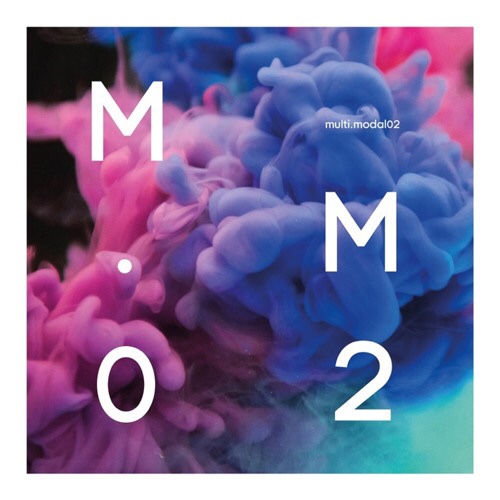
A new LP from the multi.modal imprint finds seasoned improvisers David Toop and Jan Hendrickse separately tackling Shiomi’s piece. In Toop’s case, his version is anything but quiet, but as he himself has pointed out, to assume that Boundary Music is about silence is entirely incorrect. Taking Shiomi’s instruction that any sound source may be utilised, his version employs field recordings of what are possibly prayer calls, inchoate percussion, electronic pulses, whistles, squeaks and a foundation sound in the form a high-pitched sound that runs with prominence through the entire piece. The result is a series of restlessly evocative events alternating between density and levity.
Hendrickse’s interpretation is much quieter, but not a bit less intense. In his hands, Boundary Music is offered as a series of low-level rumbles, thuds, scrapes and fuzzy tones that each lurk in the background until suddenly being thrust forward. For Hendrickse , the piece becomes fraught with unresolved tension, having all the notional silence of an empty space with all the atmospheric drama of a horror soundtrack, particularly when an ominously distorted drone emerges and rapidly cuts away again into squelchy, alien sounds.
Side two of the LP is given over to a performance by London’s City University Experimental Ensemble (CUEE) recorded at the IKLECTIK venue. Here, the 25-piece big-band improvising orchestra perform two works by saxophonist Cath Roberts (Off-World and March Of The Egos). Their placement alongside Shiomi’s Boundary Music almost acts as a form of confrontation, given how these pieces wilfully avoid faintness: clangorous synth splinters collide with plucked sounds, clusters of overlapping piano parts and expressive saxophone parts. This ensemble works best when they dive headlong into the maximalist sounds you would expect from this many musicians, with the thrilling denouement of Off-World taking the form of a vibrant, colourful, euphorically noisy collision between noir jazz and electronics.
March Of The Egos, meanwhile, is a discordant, joyously sprawling piece wherein each instrument and player seems to be vying for airtime. The initial winners are a 1920s ragtime trumpet solo and a sustained synth tone that seems to cut across (and through) just about everyone else until the horn section and wandering piano join forces with the drums for a massed, and ultimately successful, assault on the electronics.
Boundaries by David Toop, Jan Hendrickse and CUEE is out now on multi.modal. See Mieko Shiomi’s instructions for Boundary Music at the MoMA website.
Electronic pop singer-songwriter Niki Kand was born in Tehran but is now based in Liverpool.
Kand released two singles in 2018 and has just issued ‘Naughty Boy’, a subversive, slick track produced with Sweden’s Summer Heart (David Alexander Lomelino) that documents the messy collapse of a relationship thanks to infidelity.
Niki Kand will release her debut EP, Pinkish, later this year. While she continues prepping the songs for the EP, we subjected her to a handful of searching questions as part of our new 3 Questions micro-feature series.
What is your earliest memory?
I’ve got two sisters and I vividly remember the day my youngest sister was born. My aunt was looking after us and she was supposed to take us to the hospital to see my mum and my sister. I remember I cried all the way to the hospital just because I wasn’t happy with the way my poor aunt had done my hair. Now, when I look back, I can’t imagine how annoying I had been as a kid!
What’s the best piece of advice anyone’s given you?
My dad always tells me to do my best but forget about the result. I like that state of having no expectations.
When are you most productive or inspired?
Inspiration comes from everywhere for me, but I’m mostly inspired when I meet and talk to people I don’t know. My productivity drops when I’m hungry, my phone isn’t silent and my workload is overwhelming – any one of those would be enough to affect me.
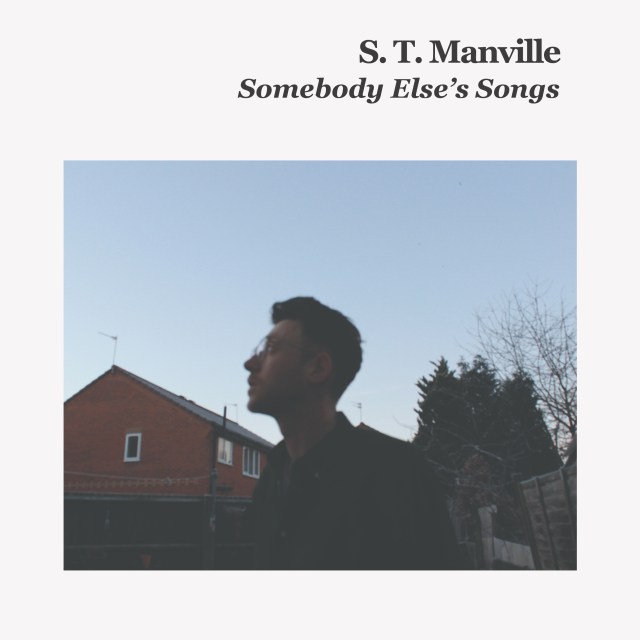
Sam Manville is a singer-songwriter dividing his time between Nottingham and Leicester. His debut album, as its title suggests, is a collection of covers; however, unlike most such albums, what shines through most clearly is Manville’s credentials as a talented arranger.
Think of these songs as the stylistic opposite of Me First And The Gimme Gimme’s Green Day-ification of songs into high-speed Ramones-y salvos; here, Manville takes eleven songs from the modern pop-punk canon – songs by Bad Religion, The Offspring, blink-182, The Postal Service and others – and presents them as delicate, sensitive acoustic pieces, each highlighting Manville’s beguiling voice, delivered with a quiet tenderness like a friend’s kindly whisper in your ear that everything will be okay.
Central to this type of album is an ability to surprise you, to offer a fully new perspective on songs that have become so familiar that they’ve become like aural wallpaper. Manville does that time after time here, drawing out qualities and emotions that were often buried in the originals. His version of Jimmy Eat World’s ‘The Middle’ and Alien Ant Farm’s ‘Movies’ are two signal highlights here, while his enthralling take on Weezer’s ‘Butterfly’ is recast as a regretful, mournful torch song.
Somebody Else’s Songs by S. T. Manville is out now on Difficult. The album is accompanied by a guidebook to the album – more information can be found here.
New York is a fickle mistress: all are welcome (subject to having the right immigration papers), its charms are universal, but few are invited to stay forever. Each and every time I visit, I hope that at some point the city will just absorb me, cling onto me, plead with me to hang around for as long as I want, rather than sending me back to JFK feeling as rejected and unwanted as a cast-off, spurned lover; like I have no place there; like I just don’t have what it takes to make it there.
It was in that state of mind that I arrived back into London from New York on early Friday morning, and it was in that state of mind that I listened to I Am Easy To Find by The National. This was possibly a mistake. Notwithstanding the mood of this album which, like much of The National’s music, has a brooding, maudlin quality – if that’s what you’re drawn to, which I generally am, it seems – there’s one lyric on the fragile, electronics-laden title track that seemed to be intended just for me: “You were never much of a New Yorker / It wasn’t in your eyes.” To me, it reaffirmed how I felt right then: you just didn’t fit in; you’ll never completely fit in; feel free to come back, but don’t expect us to let you stay.
Even though that track arrives almost a third of the way into the album, it was that quality of emotional turbulence and displacement that I heard throughout I Am Easy To Find. I’m sure that tracks like ‘Hey Rosey’ (with guest vocals from Bowie collaborator Gail Ann Dorsey) or the stuttering, complicated trademark Bryan Devendorf rhythms of opening track ‘You Had Your Soul With You’ and ‘Where Is Her Head’, or even Kate Stables’ plaintive ruminations of the title track do have some sort of transcendent, euphoric quality to them – if that’s what you’re seeking – but for me I just wanted the darkness, and that’s what I found in this album. I wanted to feel shit about my lot and the non-linear rock gestures – processed and infused with copious synths and electronic rhythms with the assistance of Mouse On Mars’ Jan St. Werner – all sitting restlessly beneath Matt Berninger’s quietly expressive vocals, enabled that. Maybe one day I’ll acknowledge the sparse and tender balladry of ‘Kansas’ or the shimmering synth textures of the duet with Lisa Hannigan on ‘So Far So Fast’, or maybe I’ll forever associate this record with feeling jetlagged and empty.
If the album spoke to me in a way that suited my mood at that particular point, the accompanying twenty-five minute black and white film, directed by Mike Mills, left me with profuse tears running down my cheeks; tears that were years and years in the making.
The film charts a life, from birth to death; through joy and sadness; from innocence gained to innocence lost; the discovery and development of oneself; the anguish of relationships; the first meetings and last goodbyes; the endless, endless, endless arguments; the wanting of different things; the inexorable passage of time; the purposefulness and futility of existence. The central character, played vividly and sensitively by Alicia Vikander, never ages throughout the film, even though all those around her do, while the captions – acting as the film’s dialogue – are largely culled from tracks on the album, with the words of ‘Dust Swirls In Strange Light’ and ‘Hairpin Turns’ suddenly making infinitely more sense once coupled to the visuals.
It takes a few short scenes to figure out what Mills’ story is showing us, but the gravity of what is unfolding becomes apparent when Vikander races abruptly into teenagehood, with the attendant and all-too-common hatred of her mother, despite everything she provided her daughter. There’s something about the duration of the film, and the way songs from the album – with all their evocative traits of unresolvedness – soundtrack Vikander’s passage through her life that takes its toll on you; if Mills had compressed her life into the length of a single three-minute song, you’d have no opportunity to adjust to what is inevitably going to happen to everyone she has ever loved or cared about, and then her own passing. Instead, by stretching this out over an intermediate length of time – too long for a promo video, too short for a feature film – the progress feels unswervingly, unbearably, savagely languid.
The film of I Am Easy To Find is thus harrowing viewing in the way extreme horror films are, and yet everything the camera shows you is utterly quotidian, unexceptional, unremarkable – reflections of your own life, maybe. As with the tone I was drawn to on the album, perhaps it was the mood I was in and my own vantage point from probably halfway along my life’s own twenty-five minute high- and lowlights reel – that point where you start to acknowledge your parents’ mortality, where your kids don’t idolise you anymore, where nothing that was previously carefree and innocent seems to be straightforward any longer – this beautiful film made difficult viewing for me. There is plenty of unbridled joy here, I’m sure, but I was mostly oblivious to any of that.
That’s all I have to say. Maybe the entire I Am Easy To Find package will affect you this way and leave an indelible mark on you like it already has for me; maybe it won’t. Maybe you’ll see the happiness in all of this that I can’t see. Maybe your eyes will suggest you belong in New York after all. Maybe you’ll brush off your teenage daughter’s disdain for you or the feeling that you’re exactly where you were yesterday, last year, a decade ago – just older. Take a listen (or a watch) and decide for yourself. I’ll still be right here. I am easy to find. I’m not going anywhere.
I Am Easy To Find by The National is out now on 4AD.
If you’ve followed the path of Breeders bassist Josephine Wiggs, you’ll have become accustomed to expecting surprises, and nothing about her latest album – recorded with longtime collaborator and Spacemen3 / Spiritualized mainstay Jon Mattock – has very much at all to do with anything else in her peripatetic back catalogue. If you don’t especially have the patience to read on, then these words will suffice: it is a collection of ten beautiful pieces, each one loaded with sparseness and understated drama.
Each piece here is led by either meditative piano or cello, augmented by a panoply of ever-so-subtle but incredibly expressive additions – scratchy little electronic impulses for which the lazy electronic music journalists’s favourite descriptor ‘glitchy’ is absurdly excessive; quiet bass motifs; guitar passages and non-rhythms that seem to have been cut and spliced in from something far larger.
Pieces like ‘The Weeping Of The Rain’, ’37 Words’ or ‘In A Yellow Wood’ could have been presented as fragile, almost folk-leaning acoustic ballads; instead, an acute capacity for adding fragmentary detail and gentle sound design makes these tracks far more engaging and open, washing them in ambient texture and providing a perfect soundtrack for nature’s omnipotence – and our individual, ephemeral legacies.
We Fall by Josephine Wiggs is out now on Sounds Of Sinners.
Sule Skerry is the second album in a three part sequence by composer and multi-instrumentalist Erland Cooper, intended to evoke the air, land – and, for this LP, the sea – of his native Orkney. As with last year’s Solan Goose, this collection of nine pieces shines a spotlight on Cooper’s fastidious approach to recording, and his borderless, free-thinking arrangements.
Comprising field recordings made on Orkney, strings, tape loops, electronics, vocals, poetry and a diverse set of collaborators, Sule Skerry is a concept album with naturalistic poise. The ebb, flow, power and violence of the North Sea is apparent throughout these pieces, most prominently on the evocative looped recordings of wind gently buffeting the masts of fishing boats and the enveloping see-sawing strings of ‘Flattie’, also featuring readings by Kris Drever and Kathryn Joseph.
Perhaps the most surprising of all these delicate and evocative pieces is ‘First Of The Tide’, which opens with a gently pulsing Moog sequence from Benge. Over the course of this short, journeying statement, Cooper nudges this piece imperceptibly from a plaintive synthscape to a piano and string evocation of the same motif, brilliantly augmented by haunting operatic vocals and a denouement of waves gently lapping the shore.
Sule Skerry by Erland Cooper is out now on Phases.





 Further.
You must be logged in to post a comment.