Brighton’s Third Kind are celebrating their tenth birthday in September 2023. To celebrate the occasion, the label released three new typically diverse gems, with further exciting projects expected to surface later in the year.
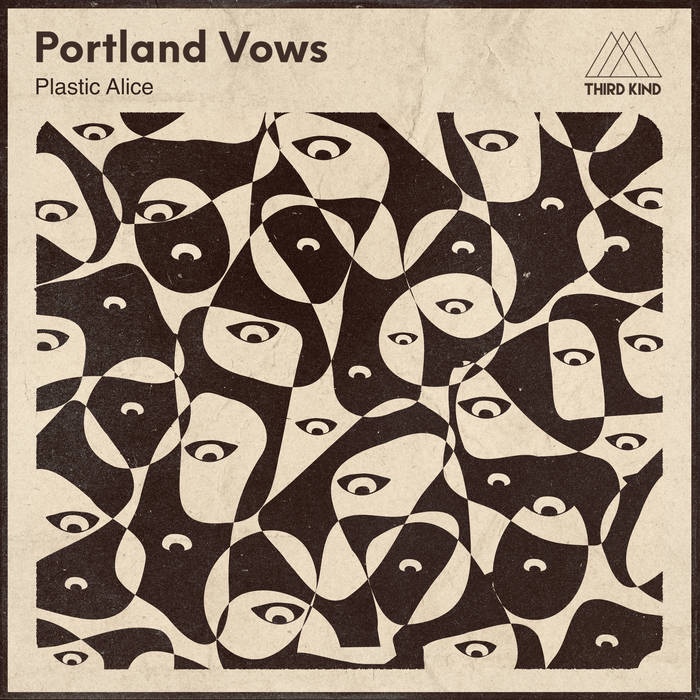
Portland Vows – Plastic Alice
Plastic Alice is the first of two new releases from Aberdeen-based modular electronic musician Bob Plant. Its seven delicate, ruminative tracks ponder the existential (post-existential?) philosophical question that bothers us all from time to time: what if I’m already dead and nothing is actually real? Plant describes this as “a soundtrack to that imagined disappearance”, and this collection has a very corporeal presence even if it can’t offer definitive reassurance that this isn’t all a freaky dream. Wafts of gentle, half-heard melodies and gauzy wisps of electronic texture cling to pieces like ‘A Friend Or Relative’, while a powerfully resonant searching quality emerges through the haunted strings of the dense (yet minimalistic) ‘Neurology’. The album concludes with the firm and resolute synth melodies and squalling strings of ‘Tangled Again’, carrying a weightiness, certainty and acceptance. Plant’s other Third Kind release is the similarly bewitching ‘Witches Of Hopsas Woods’, which will be released in September.
Plastic Alice by Portland Vows was released July 14.
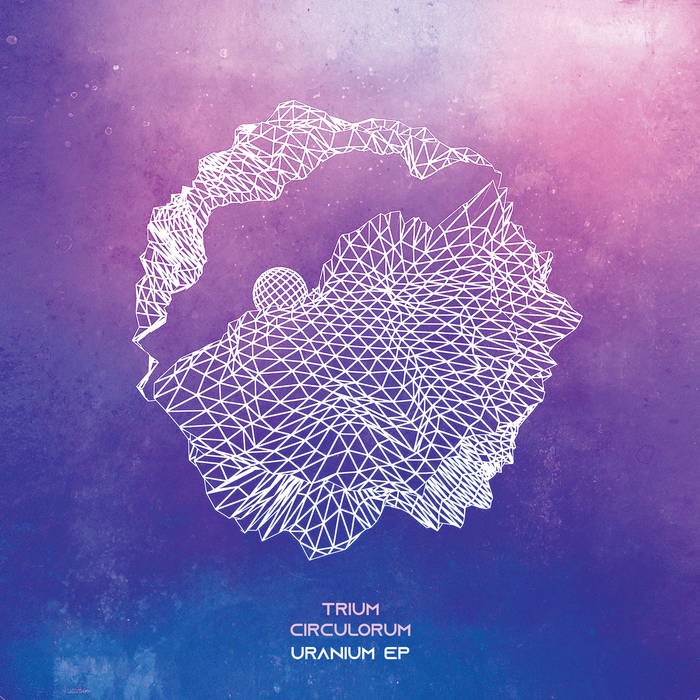
Trium Circulorum – Uranium EP
Probably already long sold-out, Uranium is a follow-up to German drum ‘n’ bass producer Martin Hansel’s recent Third Kind release Boodoo Khan. Released as a lathe-cut three track single, Hensel offers up vibrant new mixes of two album tracks – ‘Uranium’ and ‘Enter Boodoo Khan’ – which both isolate the mysterious, ritualistic rhythmic energy of the original pieces but transform them into urgent, powerful and thrilling new shapes. Hansel got so immersed in the idea of reinterpreting his own work that he went on and remixed the whole of Boodoo Khan for a digital version of the physical release. The lathe-cut release is rounded out by a mix of ‘Uranium’ by labelmate Fisty Kendal, who reduces the sub bass and hopscotch beats of the original to a twitchy, nervous cut full of deep, shimmering synth work.
Uranium EP by Trium Circulorum was released July 21.
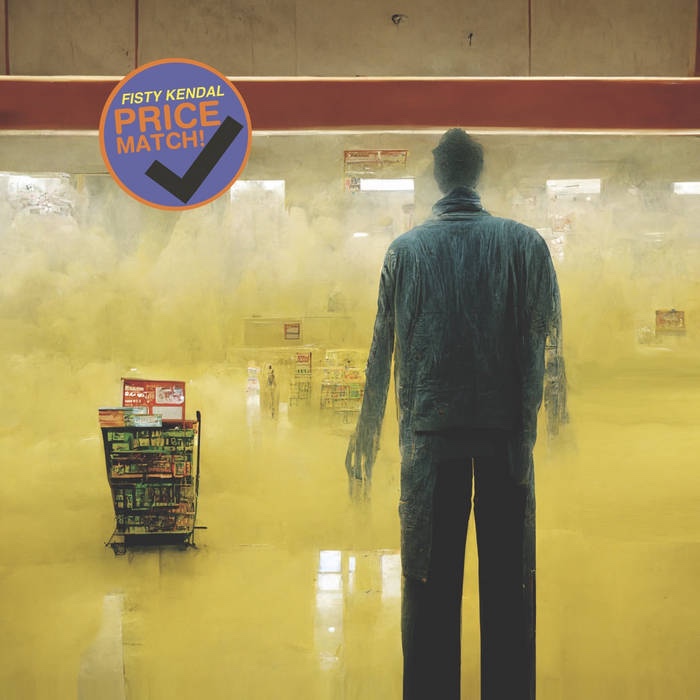
Fisty Kendal – Price Match!
Price Match! is a follow-up to one of the earliest Third Kind releases, and catches the wonderfully obtuse electronic producer Fisty Kendal (Stephen Cousins) in fine form. Unplaceable and restless, this precision-sharp collection switches seamlessly between the liquified electro shapes of ‘Coolin’ With The Renegades’, the semi-acoustic lo-fi techno of ‘Dead Crow Blues’ (a collaboration with Croydon’s Superman Revenge Squad) and the semi-cynical askance look at the ramifications of AI on the rapidfire pulsework of ‘Softmax ‘98’. The highlight here is the dreamy ‘You Know, For The Kids’, which skews its own sublimeness with humorously juxtaposed samples of interviews presented in such a way as to highlight the lonely love life of an electronic music-making nerd.
Price Match! by Fisty Kendal was released August 4 2023.
If a tape loops infinitely, where does it start and end?
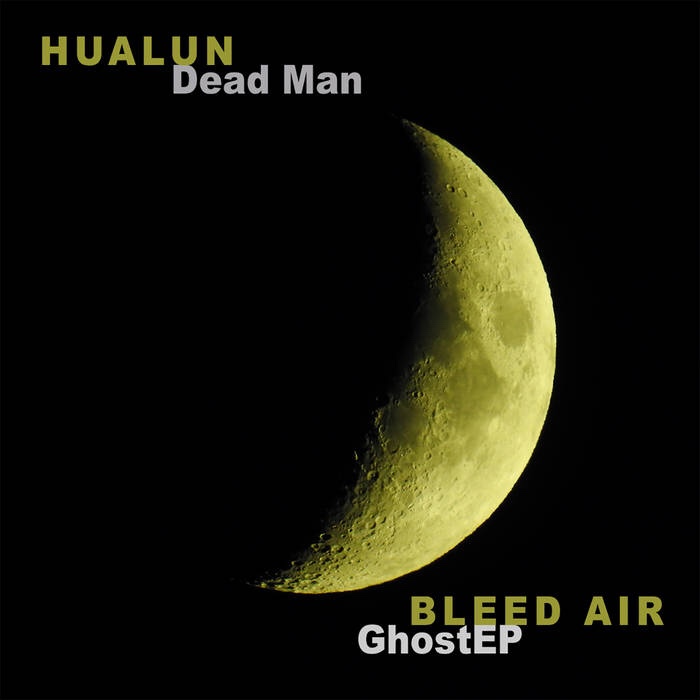
A new split cassette from anonymous electronic artist and bassist bleed Air and Shenzhen legends Hualun ruminates quietly on that enquiry. The beginnings and conclusions are not clear. There is an A-side and a B-side, one by bleed Air and one by Hualun, but the labels glued to each side of the cassette shell might as well be interchangeable.
But there is a starting point to the story of this collaboration. Because it is a true collaboration. It is not simply two artists each throwing together music to fill a side of a tape, with little that obviously connects either side of the ferric oxide frontier. This began with an idea and a response: Hualun would make some new music, and bleed Air would respond to it. Idea and response. Two distinct creations. One unique source.
And yet it was agreed that bleed Air’s response would occupy the A-side, meaning that you hear the response before the idea. The net effect is one of reversal: even though you know it not to be the case, the relative positioning makes you feel like Hualun are in fact responding to bleed Air. If a tape loops infinitely, where does it start and end?
These two sides are, then, inextricably and umbilically linked. They both occupy a contemporary vantage point overlooking some of 1970s German electronic music’s finest moments, completely in tune with the sonic adventuring that the likes of Conrad Schnitzler and a select pioneering few bravely undertook.
There are three pieces that open Hualun’s side that form a beautiful and engaging triptych. ‘Snow Bath’ carries a fragile outline of a melody that evolves slowly over the course of the track, giving rise to a sense of gentle, fluttering motion and a languid, purposeful but relaxed poise. ‘Strand Man’ floats forth on horn-like textures, being funereal yet joyful simultaneously. Your attention is directed to those thick, resonant notes, but just behind them is a constantly shifting backdrop full of the minutest details. A sense of euphoric resolution arrives at the very end, just before it collapses into white noise. A surprise comes in the form of ‘Folks’, which is constructed from gentle cascades of guitar and electronic melodies. The piece is almost Beverly Glenn-Copeland-esque in its mesmeric, warm and loving presentation.
bleed Air’s side – the response to all of the above, remember – begins with ‘GhostEP’, built from wraith-like electronic transmissions and background static from a broken radio. These (im)pulses are then replaced by placid synth melodies that are sweetly moving, arranged either like classical motifs or fairground organ music, even as they are threatened by grinding machine sounds. One of my favourite pieces follows. ‘Travelogue’ features deep, spacey atmospheres uncoiling at a sedate and graceful pace. Resonant, swelling melodies give this a widescreen, sci-fi soundtrack quality; stirring, despite its minimal presentation. Elsewhere, the plaintive, echoing piano of the evocative ‘Ajar’ creates the image of sitting silently in a cafe, looking sadly through the window at the world going by and feeling completely detached from everything.
Both sides end in similar territory. bleed Air’s ‘Gap Map’ and Hualun’s ‘Before The Storm’ are stylistically inseparable. A white noise gale blows through these tracks, punctuated by a haunting (haunted?) melody. We are left with many questions. Who is who? What is what? Are they the same artist performing the same track? Or two artists standing in front of a mirror, so alike and yet so divided by the original idea and the reflected response?
If a tape loops infinitely, where does it start and end?
GhostEP by bleed Air / Dead Man by Hualun is released September 1 2023 by superpolar Taïps.
“Don’t overdose on this stuff,” The Dark Jazz Project’s Andrew Spackman told me when he sent me his new album, 3. “It’s pretty potent!”
I reckon I can handle it. I’ve been consuming Spackman’s music for years, first when he was know as SAD MAN and more recently as The Dark Jazz Project. Wonky jazz bangers were always Spackman’s medicine of choice, but with his most recent reinvention, it’s like he’s taken his music into a whole new dimension. I don’t mean into some sort of spiralling, ‘groovy, baby’ timewarp. I mean darker. Jazzier. Projectier.
3 is intense, though, even by Spackman’s standards. The risk advisory is to be noted. Twenty tracks. Two hours. An accompanying play called Dead King (A Play In Three Acts). This sort of stuff would take most artists years to come up with, but Spackman is able to deliver this kind of wonderful sprawl with a spontaneity and fluidity – at high speed – that’s resolutely fresh and refreshingly imaginative.
Never one to repeat himself, 3 flips and flops like around like manic three-legged frog, delving deep into dance music’s murkiest corners to drag out skewed rhythms, off-kilter half-melodies, headcleaning glitchy noise and a seemingly limitless collection of cool jazz samples. And that’s just the first track, the decisively-named ‘Jazz’. The effect here is like watching an especially dexterous DJ seeking out the most floor-clearing tracks in his collection and yet managing to get the stoic crowd to wiggle along with manic glee.
Picking out standout tracks from 3’s vast number of cuts is a tough, nay impossible task. They’re all belters. If highlights you must have, check out ‘The Great Ones’, a track which lurches from graceful, contemplative piano to a segment that sounds like Moby’s ‘Thousand’ remixed by a Dutch hardcore artist while juggling cans of ball bearings. Meanwhile, ‘Carloza’ twitches forth on a breakbeat reimagined by Gene Krupa, over which Spackman sprinkles tinkly synths and buzzing, vital hooks.
‘Babonza’ sounds like a shoot-out between Star Wars laser pistols and a drinking straw noisily chasing the final drops in a plastic beaker containing Ken Kesey’s Kool-Aid. ‘The Stranger Again’ is a tight, 4/4 monster that rapidly switches direction into a noisy mess, just as you’ve started showing off your best moves. It rather reminds me of when I was dancing to the Paul Oakenfold remix of U2’s ‘Even Better Than The Real Thing’ at Stratford-upon-Avon’s Wildmoor nightclub and the DJ switched tracks just as I had started playing air guitar along with The Edge.
3 is effectively the informal soundtrack to Dead King, involving a medieval monarch, a timewarp (okay, so I was wrong about the timewarp: groovy, baby) and a magical, energy-providing creature. The play is beautifully presented, with fantastic photography and a totally bonkers narrative. Spoiler alert: it doesn’t end well for the King, though the title may have already yielded that clue.
Mr. Spackman, you have outdone yourself this time.
Footnote: this review was completed while flying over Canada. As ever, I had eschewed the onboard entertainment in favour of the moving map. Two places were beneath us as I concluded the final sentence – Flin Flon and Pukatawagan – while Medicine Hat was off in distance. I fear that my mind had reached such befuddlement by Spackman’s latest collection that place names and track titles had become indistinguishable. Sheesh, he wasn’t wrong about the potency.
Shameless plug: Spackman contributed to my Mortality TablesLIFEFILES series with a track that was literally made with nothing but clothes hangers. Check it out here. All proceeds to the Deaf Children’s Society and Birmingham Children’s Hospital.
3 and Dead King were released / published by Irregular Patterns on July 7 2023.
Embrace The Point Of No Return by Daniel Parson’s Amongst The Pigeons project couldn’t be more different from his 2021 album Silence Will Be Assumed As Acceptance. For a start, this is a solo flight for Parsons, whereas Silence Will Be Assumed… was very much a collaborative release. It’s also instrumental, eschewing the vocal contributions that have characterised his last few releases. And yet, in spite of these differences, Embrace The Point Of No Return feels like a strangely logical follow-up.
Celebratory and upbeat, tracks like ‘Swipe For Latex’, ‘Trespass’, ‘Proximity Alert’ and ‘Who Do You Have To Go Home For’ have a compelling urgency and intensity – solid beats, dominant synth hooks and a propulsive, irresistible forward motion. That sense of intensity was also evident on Silence Will Be Assumed… with its focus on environmental disaster, social inequality and racism, but here it’s as if Parsons has accepted that the world is totally fucked, so we might as well just give up and dance. With that in mind, these pieces all shimmer and twitch with a euphoric, hedonistic carefreeness, devoid of any existential worries or troubles.
‘Nightshade’ is this writer’s personal favourite, a delicate, low-key banger that transports me back to early 1990s dance music. That track seems to encapsulate a sense of levity and optimism. I may be conflating this with my own now-distant youthfulness at the start of that decade, but it really felt like you could lose yourself completely in dance music’s rhythms and melodies and ignore what was going on in the world and the rest of your life.
This is the joyous, positive, life-affirming DJ set that plays while we watch our final sunset. We are dancing on the terminal beach, our eyes fixed on the diminishing horizon, outside the last nightclub on Earth.
Embrace The Point Of No Return by Amongst The Pigeons is released August 4 2023 by Peace & Feathers.
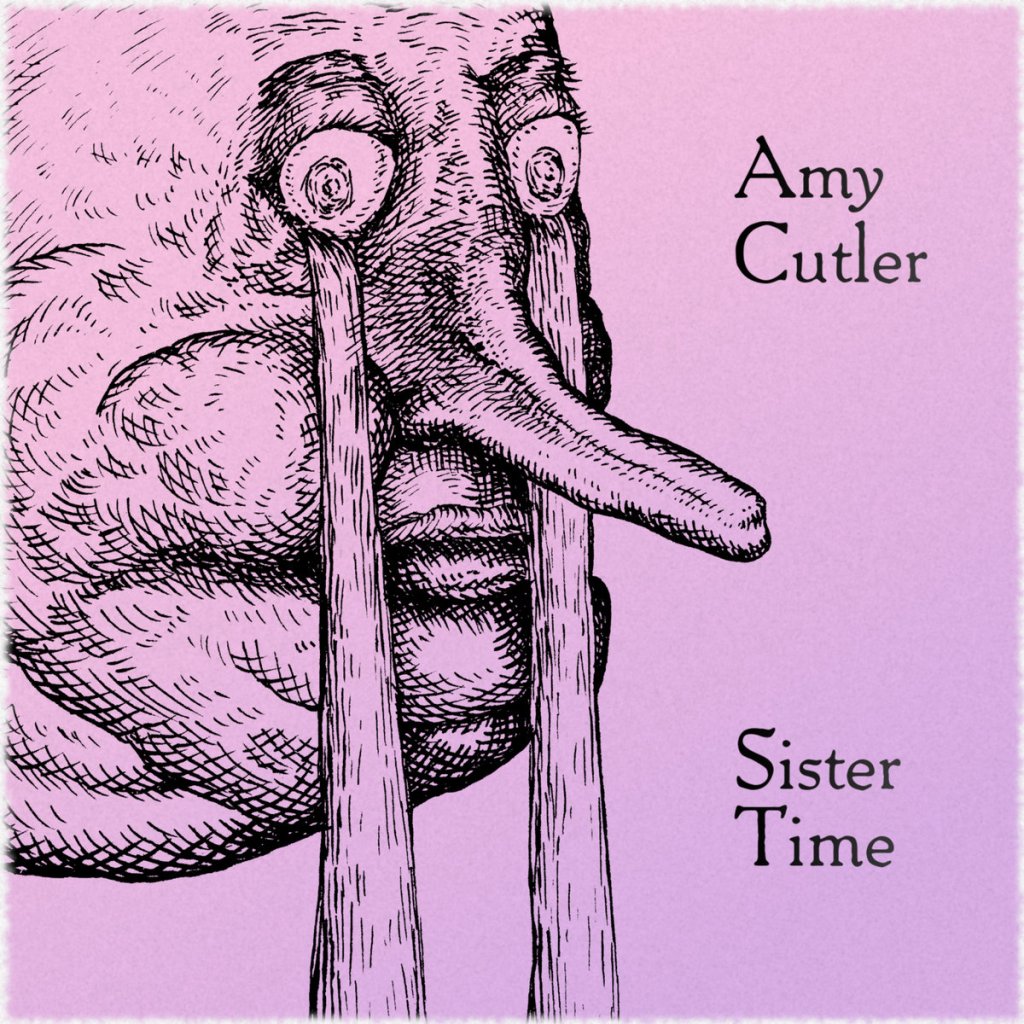
“For the full intended listening experience please use a cheap pair of headphones in the backseat of a car, bus, or in your bedroom,” advises the press release for Amy Cutler’s Sister Time. That instruction immediately transports you to a time and place before iPhones, Bluetooth earphones and all the comfortable trappings of modernity. For me, it takes me to the back of my parents’ car, listening to Kylie Minogue’s first album on a crappy Sanyo cassette player with uncomfortable orange foam stretched over the earpieces, only to find the batteries were running out and I hadn’t thought to bring spares.
Cutler’s cassette for Strategic Tape Reserve is a metaphorical duet between two of her selves, namely the person she is today and the person she was at the start of the 1990s. The source material for the 24 pieces here were mixtapes and other recordings made on a hi-fi she bought with the winnings from a drawing competition she entered as a child. This conversation between her youthful aspirations and her current sensibilities produces a collection which is both fragile, moving and also strangely unsettling.
The best example of that intended queasy feeling comes on ‘Sleeper Train To Nowhere’, featuring a looped and manipulated section of Coil’s brittle, emphatic ‘Cold Cell’ submerged under gauzy textures, unspooling sounds and heavily altered voices that sound like the ceaseless chattering of an uncertain mind. The album is interspersed with pieces like ‘It Is Only A Dream Of The Grass Blowing’ and ‘Lost Field, Empty Reins’ that have a mournful, choral dimension, full of fleeting, floating voices and untraceable field recordings, like tiny eulogies for lost and irreplaceable time. This is the domain of small loops, minor gestures, distressed fragments and obscured views.
These pieces, for me, are analogous to the concept of fading memories. There is something powerfully resonant in taking a preserved artefact, with all its attached recollections, hopes, dreams, innocence and associations, and trying to see (or hear) that world again from the vantage point of your changed self. Thought-provoking, uneasy listening from the mind(s) of Amy Cutler.
Sister Time by Amy Cutler was released 26 May 2023 by Strategic Tape Reserve
In a message to me accompanying a link to his new album, Switzerland-based electronic musician Rupert Lally cautioned that the collection was “VERY ambient.”
That sort of risk warning isn’t a problem for me. I’ve been listening to ambient music intently since the mid-1990s. I’ve always found it one of the most underrated, engaging genres of electronic music, and have always resisted the notion of it simply being sonic wallpaper. Neither is this unfamiliar territory for Lally, whose back catalogue is full of releases that offer the sort of weightless ephemerality that Multitudes floats upon.
The tools of Lally’s trade might be modular synths, but, for the most part, the tracks on Multitudes are informed by naturalistic sensibilities, with pieces named after wildernesses, rivers, beaches, woodlands and naturally-occurring phenomenon. Unlike the actual places that inspired Lally’s recent pastoral excursions through his local area (Wanderweg), these locations and events are entirely metaphorical, but they nonetheless highlight an artist completely at one with the natural world.
Lally is masterful composer of evocative melodies, and that’s evident here in spite of the tracks being constructed primarily from textural materials. One of the stand-out pieces, ‘Fjords’, might be presented under a drapery of intense reverb, but its core signifier is a sweeping, long-form melody that suggests an almost classical grandeur. The title track has a searching central refrain with a clean Fender Rhodes jazziness, held in place by the faintest trace of a rhythm. Elsewhere, the brief ‘Wasteland’ carries a sense of mournfulness and regret as it alights its attention upon an environment ravaged by the opposite of Lally’s respect for the natural world.
VERY ambient it maybe, but VERY good it also is. A beautiful, engaging, subtle and moving addition to Lally’s expansive catalogue.
Secret Flight first floated ethereally past my music radar at a performance at Milton Keynes Gallery in January 2020. Built from wonderfully delicate synth sounds, heat-haze hooks and brittle rhythms, overlaid with hypnotic, angelic vocals, that Secret Flight performance occupied a unique zone bordering lo-fi electronica, classical melodies and a sort of shoegazer-y feeling of numbness and detachment.
This self-titled album follows an initial release in 2018, My Forever Mirage. Secret Flight contains some truly mesmerising, haunting pieces, each constructed using that fragile, sparse approach to arrangements that left such an indelible impression on me back in 2020. Along with more resolutely ephemeral pieces comprising just voice and elegiac synth chords, there are some truly breathtaking standout moments. One of these is the seven-minute ‘A Prism’, laden with detuned beats, subtle arpeggios, a relentless spiral of synth tones and a chamber choir coda about grief that offers a sense of resolution and closure.
Another outstanding track is ‘On The Day’, which has a beautiful, 1981-vintage synth-pop outlook, the combination of precise, restrained electronics and soaring, beguiling voice recalling Yazoo’s finest moments. ‘Vertigo’ has a crunchy beat with a vaguely glam rock swing, the accompanying vocal having a sort of muted euphoria that reminds me of early Smiths, while the quietly defiant progressions of closing track ‘To Lose’ is going to be the music accompanying the final scene in the movie adaptation of the book I haven’t written yet.
Secret Flight is a remarkable, if consciously understated album. It maintains a firm hold on your attention, enveloping you with its delicate presentation and revealing more of itself and its sentiment the more time you spend with it. Its vocal themes are open and honest, yet also shrouded and deliberately obfuscated, offering a window into emotional turmoil, love, loss and personal anxieties. A powerful (yet subtle) journey from start to finish.
Secret Flight by Secret Flight is released May 26 2023.
Gvantsa Narimanidze is a sound artist from Tbilisi, Georgia. Her latest work was inspired by the winter season and was composed between the end of 2022 and start of 2023. It was a winter fraught with anxiety given the ongoing Russia – Ukraine conflict and fears that gas supplies across Europe would be insufficient to cope with extremes of cold weather, ushering in nightmarish predictions that countless people, suffering fuel poverty, would freeze to death.
How much of that backdrop fed into Apotheosis Animæ is hard to discern. What is evident is a frosty stillness that presides over the delicate, sparse pieces that Narimanidze presents here. The piano-led opening track ‘Apotheosis’ is augmented by gentle reverb which only enhances a mournful, slightly dejected tone. It’s almost as if Narimanidze is sighing outwardly at the start of colder weather and the unstoppable slipping by of time.
That air of austerity and acceptance wends its way with intense subtlety through the pieces here. The ten-minute ‘Amnesia’ begins like an outline of itself, wherein all detail has been scrubbed away and replaced by tiny, almost imperceptible changes in momentum, a growling synth tone and high-pitched string sound drifting in like a bitter breeze. Snatches of voice, eulogising humankind’s relationship to the Earth, taps into Narimanidze’s belief system, foreshadowing a dramatic denouement wherein all the disparate elements previously buried deep in the mix coalesce into something tangible, something living.
‘Born In The Mist’ consists of suppressed, howling sounds that carry a sense of danger, heavy processing giving rise to a murky, dramatic, almost claustrophobic soundworld. It reminds me (pleasantly) of the first time I came upon one of Thomas Köner’s quiet works, whereupon I turned the volume up to an ear-splitting level to experience the brutality of amplified near-silence. ‘Train’ is easily one of the most mesmerising pieces in this collection, beginning with icicle-sharp pirouettes and gradually opening out into a crystalline field of synth pads on the axis between the haunting and the joyous. Elsewhere, the expansive ‘Codex’ has a lingering latency, an unswerving drone loop dominating the background while tendril-like synth arpeggios creep slowly into earshot. A stately, muffled glissandi piano motif adds a sense of grandeur as it weaves through the drone and synth spirals.
Narimanidze is a masterful sound designer, capable of infusing her pieces with a naturalistic spirit but also a searching, inquisitive, unresolved quality. Those signature flourishes can be found all over Apotheosis Animæ, representing a fantastically intricate, complex and yet spiritually rewarding body of work.
Apotheosis Animæ by Gvatsa Narim is released on 26 May 2023 by Cruel Nature.
Main Street Electrical Parade 7-inch (Disneyland, 1973)
Disneyland’s Main Street Electrical Parade is one of the most unusual parades presented anywhere in the world. More than a quarter of a million colorful, twinkling lights re-create scenes from many of Walt Disney’s most memorable film classics. A staff of 65 artists and craftsmen created the sparkling stages featured in the electrical pageant. Some of the brilliant units, powered by close to 75,000 watts of battery power, measure up to 14 feet in height and 75 feet in length. As for the music, the basic theme is titled ‘Baroque Hoedown’, around which a number of themes were interwoven as counter melodies.”
– Liner notes, The Main Street Electrical Parade picture disc 7-inch, 1973
First premiered in summer 1972 at Disneyland in Anaheim, California, the much-loved Main Street Electrical Parade was an innovative technological marvel, consisting of a series of slow-moving, brightly-lit parade vehicles covered in miniature electric bulbs, memorable Disney characters and a large vehicle in the shape of Pete’s Dragon. Their movement along the parade route was accompanied by a cheerful, bouncy electronic score using segments of familiar Disney themes. Those sections were laid on top of an obscure stepping stone on the journey to electronic pop: Jean-Jacques Perrey and Gershon Kingsley’s irrepressibly upbeat ‘Baroque Hoedown’, originally released on Kaleidoscopic Vibrations (Vanguard, 1967).
In its original format, the Main Street Electrical Parade ran at Disneyland for three years and then returned with an updated soundtrack in 1977. Its relaunch coincided with its parallel introduction to Walt Disney World, the vast Orlando, Florida resort that opened in 1971. Since then, the parade has had long periods of being a daily feature at many of the Disney parks worldwide, returning to Disneyland most recently for just under six months across the summer of 2022. Adding up attendance figures for Disney’s US theme parks during its various runs easily makes the soundtrack one of the most-heard pieces of electronic music ever created, with upwards of 75 million visitors having enjoyed the seamless blending of electronic pop and synthesiser versions of familiar Disney themes by 1998.
—-
Walt Disney World’s Electrical Water Pageant represents one of the most unusual concepts in entertainment pageantry seen anywhere in the world today. With the nighttime beauty of the ‘Vacation Kingdom’ as a backdrop, thousands of brilliant lights are utilized to create a spectacular water parade of imaginative creatures which include a sea serpent, dancing dolphins, flying fish, a spouting whale, an octopus, a giant squid, a turtle, and King Neptune in a chariot pulled by four frolicsome sea horses. As the ‘Creatures of the deep’ wind their way across the waters of Bay Lake and the Seven Seas Lagoon, the visual elements of the parade change as if by magic into a patriotic ribbon of giant American flags linked together by brilliant units of stars. The music accompanying the Pageant is a combination of various Disney and American patriotic melodies produced by an electronic Moog Synthesizer.
– Liner notes, The Electrical Water Pageant picture disc 7-inch, 1973
It’s often reported that the predecessor to the Main Street Electrical Parade at Disneyland was the Electrical Water Pageant at Walt Disney World in Florida. One of a small number of attractions still in operation today that premiered with the park’s opening in 1971, the pageant consists of a series of large connected barges, each containing 25-foot-tall screens filled with patterns of electrical lights arranged as sea creatures. These connected displays float across the manmade Seven Seas Lagoon, accompanied by a cheerful electronic accompaniment.
In reality, the Electrical Water Pageantdid premiere in 1971, but only for a private event. Its original music wasn’t specially arranged or composed for that event, and likely featured some pre-recorded music edited for that singular occasion. When the Electrical Water Pageant did become a nightly feature of the Seven Seas Lagoon, its signature electronic soundtrack was borrowed completely from the Main Street Electrical Parade, which debuted at Disneyland the year after Disneyworld opened.
Reading first-hand stories of the development of Walt Disney World by key Imagineers like Marty Sklar (Dream It! Do It!, 2013), it becomes clear that all of the Disney theme park energy in the late 1960s and early 1970s was being expended on the Florida park, largely at the expense of Disneyland. The Californian park was, by 1971, badly in need of attention and new reasons for guests to visit again. Disney president Card Walker, impressed by the Electrical Water Pageant concept after its one-off showing in Orlando, requested that a nighttime attraction be brought to Disneyland in an effort to encourage more guests to the park.
Electrical Water Pageant 7-inch (1973)
Responding to Walker’s instruction, Vice President of Entertainment for Disneyland and Walt Disney World Robert Jani (1934 – 1989) and project manager Ron Miziker set about creating what became the Main Street Electrical Parade. It would consist of one hundred vehicles and scores of performers, each wearing costumes covered with lights. In total, the Main Street Electrical Parade required almost half a million battery-operated, hand-painted miniature Italian lightbulbs, inspired by Christmas decorations that Disney executives had seen on Michigan Avenue in Chicago.
Another member of the Main Street Electrical Parade project team was Jack Wagner (1925 – 1995). Prior to arriving at Disney, Wagner had a storied career as an actor, radio presenter and DJ. He provided many of the original announcements that could be heard across both Disney resorts, including the fabled warning on the Monorail trains: “Please stand clear of the doors. Por favor manténgase alejado de las puertas,” – still more or less the same today, though Wagner’s original recording has long been replaced.
His role with Disneyland Entertainment was more extensive than just providing memorable voiceovers for attractions and transportation systems, however – he was directly responsible for overseeing music production in the park, including parade attractions like the Main Street Electrical Parade. For the new attraction, Wagner would work with Jim Christensen (1935 – 2020), Music Director for Disneyland Entertainment and an accomplished conductor, composer, arranger and trombonist.
There are differing accounts of what was proposed for the parade’s music. Wagner and Christensen both recalled that the original music proposal for the parade was to use an orchestral piece like ‘Night On Bald Mountain’ by Leopold Stokowski, which appeared in Walt Disney’s 1940 ambitious, experimental animated endeavour Fantasia, or something similarly dramatic. Other accounts suggest that Jani always intended to use an electronic score. Unfortunately, we’ll never now know for sure.
Perrey – Kingsley Kaleidoscopic Vibrations (1967)
One version of events can be found in the liner notes to Disney’s Electrical Parade, released to commemorate the introduction of a version of the parade at Disneyland’s California Adventure in 2001. According to those notes, the notion of an orchestral proposal jarred with Wagner. He thought that the use of orchestral music was out of character with the vibrant, modernist spectacle of the new parade, and, apocryphally, was given 48 hours to come up with a better idea. After scouring his personal record collection he alighted upon Kaleidoscopic Vibrations, the 1967 album of early electronic instrumentals by Jean-Jacques Perrey and Gershon Kingsley. Among arrangements of pieces like ‘Umbrellas Of Cherbourg’ and ‘Moon River’ was an irrepressible, upbeat Perrey – Kingsley original called ‘Baroque Hoedown’. That piece was proposed by Wagner for the fledgling Main Street Parade, and Christensen was tasked with creating a new version of ‘Baroque Hoedown’ to accompany the parade.
He enlisted Paul Beaver, best known as one half of the duo Beaver & Krause, to program Christensen’s new arrangement on a large modular Moog system at his Los Angeles studio. Beaver was an artist able to occupy many fields, often simultaneously. As a California Moog sales rep with his musical partner Bernie Krause, he had sold Moog synthesisers to George Harrison, The Byrds, The Monkees and countless other musicians and studios, while with Krause he had crafted one of the most seminal early electronic music records, The Nonesuch Guide To Electronic Music (Nonesuch, 1968). The double album wasn’t a conventional music record, and instead provided a beginner’s guide to electronic sound, demonstrating the various noises and effects that a synthesiser could offer the composer, as well as an informative accompanying sixteen-page text bound into the gatefold sleeve. In a sense, through its decomposition of electronic sounds, The Nonesuch Guide… was trying to position synthesisers as unique creative tools, not just something that could be used to make new versions of standards, which is what a lot of Kaleidoscopic Vibrations offered.
Beaver & Krause The Nonesuch Guide To Electronic Music (1968)
Work on a new version of ‘Baroque Hoedown’ commenced in May 1972 but the demo was ultimately abandoned because it was felt to be unsatisfactory. With the planned premiere of the parade approaching, Wagner arranged to licence the original Perrey – Kingsley version on Kaleidoscopic Vibrations for use in the parade as a base layer. Beaver and Christensen then added additional melodies and effects, including sections of Disney themes from Dumbo, Cinderella and It’s A Small World as well as patriotic American anthems, and this arrangement provided the accompaniment for the Main Street Electrical Parade’s debut at Disneyland that summer.
Somewhat strangely, the same piece of music was used for the Electrical Water Pageant at Walt Disney World, despite the fact that the arrangement didn’t fit the nautical imagery of the pageant at all. Only one section of the music that Christensen and Beaver had created – the stirring finale – had any real connection to the water spectacle at all. The music for both the Main Street Electrical Parade and the Electrical Water Pageant were released as commemorative picture disc 7-inch records in 1973. The music on the records was identical but the packaging was different.
—-
Main Street Electrical Parade poster (permission requested)
Allen Cohen: Some composers are relying more and more on electronically generated music, causing many musicians to be concerned over the possibility of being supplanted by synthesizers. Do you foresee a day when muscians will become obsolete?
Don Dorsey: Don’t be silly. If musicians become obsolete, then who will play the synthesizers?
‘A Conversation With Don Dorsey’ in the liner notes to Beethoven Or Bust (1988)
Standing on the sidewalks of Main Street with some friends, not long after the Main Street Electrical parade opened in 1972, was a young Orange County music student by the name of Don Dorsey. Watching the parade had an immediate impact on Dorsey. “I knew instantly that electronic music and live entertainment would be my new career focus,” he says.
Music had been a major focus for Dorsey from a very early age. “My first notes on the piano were played while I was in kindergarten,” he remembers. “I came home from school and found notes on our home piano that matched the ones my teacher used. Based on this, my mom urged me into piano lessons during Grade One. I had a good ear and consequently didn’t learn to actually read music notation until high school when I wanted to start composing. My formal classical keyboard training started in high school with private studies at California State University at Fullerton (CSUF), across the street from my high school. I would check out orchestral scores from the college library and dissect them at home. After high school, I became a music major at CSUF and studied music theory and composition.”
Don Dorsey by Adam J Bezark (c. 1985)
Dorsey’s first music sensibilities were, then, broadly classical, something he would return to in the 1980s with two albums of electronic reinterpretations of pieces by Bach and Beethoven – Bachbusters (Telarc, 1986) and Beethoven Or Bust (Telarc, 1988). Dorsey’s early interest in electronic music started as he graduated from high school, when Bob Moog’s eponymous company unveiled the Minimoog in 1970. Compact and portable compared to Moog’s earlier modular system, the Minimoog was the first synthesiser available in retail stores and sold for around $1,500 (around $11,000 in 2023 terms).
“I immediately purchased one after talking my mother into making me a loan,” remembers Dorsey. “I also had a 4-track tape recorder and was doing multi-track layering of electronic music at home. I forget when, exactly, but I remember I was in touch with the Southern California Moog sales representative and because of that, I started demonstrating my Minimoog around Orange County schools.”
Dorsey’s Minimoog performances gained him a sufficient reputation to attract the attention of Jack Wagner, who contacted Dorsey through the sales representative that had originally sold the synthesiser. “He wanted to use my MiniMoog on a project,” recalls Dorsey. That project was the 1974 Orange Bowl halftime show production Fifty Happy Years, celebrating the passing of half a century since Walt Disney and his brother Roy had founded their animation studios. Rather than needing Dorsey’s Minimoog to create electronic music, as might have been expected, Wagner and Christensen simply needed it to generate a click track.
Still from Fifty Happy Years (1974)
“He was interested in what I was doing with it and asked to be kept informed, however,” says Dorsey. “Shortly after that I landed a live performance gig with the Fullerton Jr. College Concert Band. They paid me to do an arrangement for the band and then perform solos on the Moog. Jack came to the concert and suggested there could be a job for me with Disney in the near future.”
It would take over a year before Wagner got in touch again to ask Dorsey to work on the music for America On Parade, which replaced the Main Street Electrical Parade in 1975 as part of a two-year celebration of the Bicentennial. Paul Beaver had been ill for a while, and ultimately passed away in January 1975. With their original synthesiser programmer too unwell to work on America On Parade, Wagner turned to Dorsey to work on the music. That decision proved to be the start of Dorsey’s long association with Disney’s theme parks, particularly with the lagoon shows at Walt Disney World’s Epcot.
After working on America On Parade, Dorsey was asked to update the music for the Electrical Water Pageant at Walt Disney World in early 1977. It was, he recognises in hindsight, a precursor to potentially working on the updated Main Street Electrical Parade, scheduled to return later in 1977. “I felt like it was sort of an audition before they granted me the keys to the larger project,” he says. His music radically updated the original, ditching ‘Baroque Hoedown’ completely in favour of more nautical tunes like ‘Hornpipe’.
Dorsey passed the audition and began working on updating Main Street Electrical Parade and giving the parade its own unique soundtrack at Wagner’s studio with Jim Christensen that year. Initially, the emphasis was on updating the original music, along with adding new sections from the Disney theme music catalogue, including music from Snow White And The Seven Dwarfs and Song Of The South. The music that soundtracked the parade’s return was all made using Dorsey’s trusty Minimoog, but the synthesiser ensemble was expanded in 1978 to include an enviable array of analogue equipment, including a Moog Model III modular system and a Sequential Circuits Prophet 5.
“It took a total of one week to record the music in 1977,” remembers Dorsey. “Subsequent units would take a day or two to arrange, followed by another day to record. Each unit uses less than 16 tracks, including the ‘Baroque Hoedown’ bed mix, and most were fewer than eight.” As had been the case in 1973, a 7-inch picture disc of the 1977 theme music was issued by Disneyland Records. A similar disc of Dorsey’s new music for the Electrical Water Pageant wasn’t pressed by Disneyland Records.
Bode 7702 Vocoder
Like Disney’s theme parks, the music for the Main Street Electrical Parade was constantly evolving. In addition to new theme songs, in 1977 Dorsey added a stirring fanfare to herald the arrival of the parade into the various zones on the route, which then ushered in the rendition of ‘Baroque Hoedown’. Even ‘Baroque Hoedown’ was open to change, initially being performed as a short 1:03 segment before being fully looped a second time in later modifications to the parade music. A spoken word segment, featuring Wagner’s voice run through a Bode 7702 Vocoder, was added in 1978. That replaced an original announcement sequence written by Robert Jani and delivered by Wagner, where he described the synthesiser music as ‘electro-synthe-magnetic’. The description was retained for the vocodered version of the opening speech.
Like Wagner, with his seemingly incompatible role as both theme park voice over artist and music producer, Dorsey’s role was soon to expand from composing and arranging the musical accompaniment to involving himself in the technical presentation of the parade’s music. Anyone watching a Disney parade will more than likely be blissfully unaware of the multiple complexities involved with synchronising music to a long-form performance that’s continually moving forward, and rightly so: Disney’s whole theme park aesthetic was about leaving reality at the gates and entering a world of magical fantasy.
Disney’s parade experience was directly informed by some of their earliest semi-commercial attraction experiments. These began with the Pepsi-sponsored It’s A Small World, originally designed as a tribute to the work of UNICEF, and presented at the 1964 World’s Fair at Flushing Meadow in Queens, New York City. It’s A Small World was a boat ride through various different international scenes filled with cute characters wearing local costumes, with each scene containing a unique local language version of the joyous song that gave the attraction its title, penned by Richard and Robert Sherman. The movement of the music from one scene to another was seamless and fluid, with no discernible gap in its presentation, giving the soundtrack a feeling of a continuous piece of music when it was in fact constructed from short loops in different scenes of the ride that were perfectly synchronised with one another – the music stayed were it was, continually repeating itself, while the listener that moved forward through the ride and its depiction of an interconnected world of different cultures.
During the parade, each unit features its own musical theme. The fully synchronized melodies and rhythms, produced on an electric Moog synthesizer are ‘on the air.’ They are transmitted from the Castle via seven individual FM radio channels to each electrical unit’s powerful amplifier / receivers. These delightful musical themes are broadcast to the guests viewing this dazzling musical procession of fantasy in lights – the ‘Main Street Electrical Parade.’
– Liner notes, The Main Street Electrical Parade picture disc 7-inch, 1977
“Technically, parades work the same way as rides like It’s A Small World, but the opposite way around: scenes pass by you instead of the other way around,” explains Dorsey. With the exception of a basic version of ‘Baroque Hoedown’ playing continuously from speakers on the buildings to glue the whole experience together, all of the music being played in the initial versions of the Main Street Electrical Parade was coming from the ride vehicles themselves. Each scene contained its own looped section that played continuously but which was synchronised to the basic ‘Baroque Hoedown’ track so precisely that when a subsequent scene followed, it seemed to blend together without any audible join. The entire parade route at Disneyland was 2,000 feet in length. It started, appropriately enough, at It’s A Small World, worked its way through Fantasyland and concluded on Main Street U.S.A.
“There was a misconception that the music on the buildings along the parade route tracked along with the individual floats,” remembers Dorsey. “That was actually not done until 1980 when I helped develop the first parade control system. In that first system, we could only change a whole zone of 75-150 feet at a time, and the original parade route consisted of 21 zones. All the control systems and features were envisioned and guided by me, but I did not do any of the actual coding. Now in a third generation, the control system addresses each speaker individually and there are more than 100 speakers along any given Disney parade route.”
Versions of the Main Street Electrical Parade have, over the years, been nighttime features at Disney theme parks in Tokyo and Paris, and Disneyland’s sister park, California Adventure. As well as being one of the most memorable and longstanding features in Disney park history, its innovative parade control system forms the basis of all the parades that have followed. Dorsey’s music would feature at all of the international versions of the Main Street Electrical Parade until 2008. The only exception was the Tokyo DisneylandDreamlights version, which replaced the original Japanese copy of the parade in 2001. For that parade, a whole new musical approach was taken. It was still built on ‘Baroque Hoedown’, still started electronic, but evolved over the length of the parade, adding more and more orchestral parts until the finale unit comprised all orchestral music. It reverentially concluded with a brief return to electronic sound.
—-
Just as Disney’s attention had shifted from Disneyland to Walt Disney World’s Magic Kingdom ahead of its opening, something similar would happen when ground broke on what became Epcot, the second theme park to open at Disney’s Florida resort.
Originally inspired by Walt Disney’s idea for an Experimental Prototype Community Of Tomorrow, by the time it opened in 1982, Epcot was radically altered from Walt’s early designs for a fully integrated residential community into two distinct ‘lands’ focused on education and entertainment: a futuristic, science-led area called Future World and a series of pavilions clustered around a large lake called World Showcase, where you could stroll between depictions of England, Canada, Norway, Mexico, China, USA, Japan, Morocco and France without ever leaving Orlando. It was, in essence, modelled as a permanent World’s Fair, a nod in the direction of where Walt and his team of adaptable Imagineers began developing and innovating attraction concepts.
With some irony, the actual 1982 World’s Fair, held in Knoxville, TN struggled to attract larger corporations because Epcot was successfully attracting more big-ticket sponsorship names. Don Dorsey found himself with a musical foot in both camps that year, making music for use at both Epcot and Knoxville (as well as applying his distinctive synthesiser nous to three songs on Donna Summer’s eponymous album from the same year). His arrangement of the theme tune for the World’s Fair Energy Express Train, composed by former Love Generation member Tom Bahler, is a celebratory, effervescent burst of instrumental electronic pop perfectly suited to the kind of scientific innovations that the World’s Fair offered that year and which are now part of our everyday lives, including touch-screen technology, the cordless telephone and pay-at-the-pump fuel. Oh, and Cherry Coke.
Don Dorsey Energy Express (1982)
When I first walked around Future World in 2001, my ears were filled with electronic sounds – oscillator sweeps, pulses, the sounds of pure and thrilling electricity. Years later, when I learned about Dorsey’s involvement with Disney, I wrongly assumed that they were his designs. Instead, apart from a piece of music written for an exhibit the Seas Pavilion at Future World, his role with Disney was already rapidly moving from something musical to producing the elaborate, technical, firework-filled spectacles that have become an established, crowd-pleasing nightly feature of Epcot’s World Showcase.
“My involvement with Epcot started with trying to get them to build the correct parade control system,” Dorsey explains. “Alas, they were too far down the wrong path before I could get involved. Then I was commissioned to do the music for the first lagoon show for the opening of Epcot in 1982, Le Carnival de Lumière. The show content for Epcot was ‘pictures of big events’ with barges, projections, lights and fireworks. It turned out to be a flop, but they liked my synthesiser music. I offered a rehab concept which became A New World Fantasy in 1983. It was from that point that I became a lagoon show director.”
Dorsey’s music for the show included pieces by Beethoven, Strauss, Handel, Bach, Bizet, Schubert, Prokofiev and others, and was realised using a Synclavier II, Prophet 5, Rhodes Chroma and his trusty Minimoog. His soundtrack was used again in A New World Fantasy’s replacement, Laserphonic Fantasy, which ran from 1984 to 1988. The majority of his music for the show (titled ‘The Festival Of Festivals’) can be found on Busted (Telarc, 1997), a CD compilation of tracks taken from his Bachbusters and Beethoven Or Bust albums, as well as pieces that he conceived originally for a third volume of electronic versions of classics. “I started a third CD project of Mozart pieces but decided it wasn’t a good idea after a couple of tunes,” he says. “Most of the Mozart work that people know is orchestral. As a keyboard player and programmer, I decided to stay with works better suited to my style.”
Don Dorsey Busted (1997)
The electronic presentation of ‘The Festival Of Festivals’ was was dropped in favour of an orchestral arrangement for IllumiNations, which ran from 1988 to 1996 and after that, Dorsey’s role was more focused on developing and driving the overall show design and direction rather than also contributing the music, and he hasn’t used a synthesiser since 1997. His singular understanding of large-scale events that are moving and breathtaking at once have undoubtedly contributed to millions and millions of enduring memories, alongside those created while watching the Main Street Electrical Parade.
—-
Electrical Water Pageant from Disney’s Polynesian Resort, April 12 2012
April 12, 2012, Disney’s Polynesian Resort, Walt Disney World: I am stood on the outside deck with my two young daughters and wife watching the Electrical Water Pageant floating past.
My daughters were transfixed by the colourful show of lights, pointing across the water at displays like the sea serpent with the unbridled joy that only comes with being five and four-years-old respectively gazing at what must have felt like pure magic. Their young minds had already been overwhelmed by everything Walt Disney World had to offer – the characters, the scale, the rides, everything.
I was so caught up in the atmosphere that it took me a while to realise that I was listening to what sounded liked analogue electronic music being played across the lagoon. For some reason, it seemed vaguely out of place compared to the music heard elsewhere at Walt Disney World, yet completely natural. I’d seen the Main Street Electrical Parade when my wife had visited Florida in 2001, but I hadn’t retained any knowledge of the music for some reason, probably because I was again totally absorbed in the moment.
Main Street Electrical Parade, Walt Disney World (Michelle Smith, 2001)
Something about the music for the Electrical Water Pageant and the magic of that evening with my family really caught my attention. I googled the music on my wife’s phone, came up Don Dorsey’s name and think I shot an email to Don Dorsey’s assistant that same evening, primarily to see if a recording of the music was ever released. I was promptly disappointed when a message came back to say that no, to the best of their knowledge no recording of Don’s version had ever been released. (I’d also wrongly assumed that the version of the music I had heard was his; it isn’t any longer and I don’t know who it’s actually by these days.)
Little did I realise that I’d opened the door to an obsession with trying to tell a story of not one, but two, pieces of electronic music heard by phenomenal numbers of people that didn’t seem to have been acknowledged adequately as part of electronic music history. The obsession came back with considerable force in February 2020 with a visit to Walt Disney World, and maybe the idle time afforded by the pandemic lockdowns that arrived not long after drove me to actually write it.
Why it’s taken over three years and two post-pandemic vacations in Florida to complete the piece is beyond me. To get it over the line took an interview with Veryan for her Insights & Sounds magazine where I mentioned the unwritten piece; some sagely advice from Walt himself (‘Everyone needs deadlines’); countless plays of Perrey – Kingsley’s original ‘Baroque Hoedown; spending a small fortune tracking down the various released (and unreleased) versions of the music to both the Main Street Electrical Parade and the Electrical Water Pageant; and, finally, sending lots of annoying emails with yet more questions to Don, for whose patient correcting of my accumulated misinformation and the wealth of insights he offered I’m eternally grateful for.
Resources:
Perrey – Kingsley Kaleidoscopic Vibrations – Electronic Music From Way Out (Vanguard LP, 1967) Paul Beaver & Bernard L. Krause – The Nonesuch Guide To Electronic Music (Nonesuch LP, 1968) Paul Beaver – Walt Disney World’s Electrical Water Pageant (Disneyland picture disc 7-inch, 1973) / The Main Street Electrical Parade (Disneyland picture disc 7-inch, 1973) Don Dorsey – Electrical Water Pageant (unreleased recording, 1977) Don Dorsey – The Main Street Electrical Parade (label picture disc 7-inch, 1977) Don Dorsey – Bachbusters (Telarc LP / CD, 1985) Various – The Music Of Disneyland, Walt Disney World & Epcot Center (Disneyland CD, 1988) Don Dorsey – Beethoven Or Bust (Telarc CD, 1988) Don Dorsey – Busted (Telarc CD, 1997) Don Dorsey – Disney’s Electrical Parade (Buena Vista Records, CD, 2001)
With thanks to Bryan Michael for technical insights.
Spread across six volumes, Rental Yields is a typically broadminded concept from Justin Watson’s Front & Follow imprint. In what he describes as a ‘landlord / tenant’ model, the project found each participating artist borrowing sounds created by another, and using those sounds to create their track – creating a home in someone else’s house, if you will, without ever actually owning it. Squatter’s rights, perhaps.
A glance down the track lists of the three volumes released to date acts like a roll call of some of the most exciting artists operating today – Bone Music, Camp Of Wolves, Elizabeth Joan Kelly, Runningonair, The Incidental Crack, Dave Clarkson, Rupert Lally, Letters From Mouse, Graham Dunning, Kemper Norton, Audio Obscura, Robin The Fog and countless others.
As Watson busily readies the fourth eclectic volume in the series, Further. distracted him from his elaborate project planning spreadsheet to ask him a few questions.
Where did the idea for Rental Yields come from?
Rental Yields feels like a natural progression from our You Can Never Leave project, continuing the theme of inequity in Manchester, but also more broadly, and working with artists to explore (directly or indirectly) what this means.
The idea itself came from a desire to do another collaboration project, and a complete lack of acknowledgement (again) of the administration involved. As ever these things are a collaborative effort which emerge through real world and online chats, throwing ideas around (some more sensible than others) and seeking ways to using creativity and musical nonsense to have some fun, and hopefully contribute something positive at the same time
The specifics of the ‘landlord / tenant’ concept came from Stephen Buckley (aka Polypores), so we can all blame him. I think the initial idea was probably quite simple, but over time a series of PowerPoint slide decks and spreadsheets have turned it into what it is today.
A PowerPoint slide by Justin Watson
Personally, I enjoy the convoluted nature of it (possibly more than the reviewer at The Wire…).
You seem to have a knack of collating these incredible collections – how did you choose the artists for this project? Did you set any rules for contributors?
All artists are self-selecting and it is as inclusive as possible – anyone can join in (as it should be), and we try and remove any barriers to being involved, or to people knowing about it and feeling they can be a part of it.
But yes, there are rules – I refer you to the previously-mentioned slide decks. They are really fun.
If we didn’t have rules where would we be Mat? And then where would we be without a series of annoying and pointless rules, created by someone who should have probably gone for a walk instead?
Were there any tracks that particularly surprised you?
It has been great to have so many submissions from people I didn’t know much about, or who are now doing amazing things. It feels weird to highlight anyone in particular, but Yol was my artist of 2022. Just incredible, and bringing something so refreshing and much needed at the moment.
This series is for charity. Can you tell us a bit more about the charity you’re working with here?
We’ve previously work with Coffee4Craig, another fantastic charity in Manchester, and before that The Brick in Wigan.
For this we chose SPIN. They were recommended to us by one of the artists involved in the project who also worked in the charity sector in Manchester. They are doing vital work, so it is great to be able to support them a little bit – with a bit of money (our target is now £2,000), but also with a bit of promo and maybe some more opportunities in the future. We keep thinking about doing some gigs…
You must be logged in to post a comment.