drøne & Julia Mariko / Philip Marshall – Vox Interruptus

Vox Interruptus took place at London’s Iklectic on 19 September. Its central focus was the not wholly unprecedented confluence of opera music with electronic sound, prompted by a collaboration between English Touring Opera and drøne (Mark Van Hoen and Mike Harding). A set by drøne, accompanied by the ethereal, haunting voice of soprano Julia Mariko, formed the centrepiece of the evening, and used sounds scraped from two English Touring Opera productions currently wending their way around the UK – Cinderella and The Coronation Of Poppea.

Mariko appears in the second half of this twenty-minute recording from that night. In the ten or so minutes that preceded her casually walking from a seat among the audience, Van Hoen and Harding delivered a suite of intricate, impenetrable and generally unplaceable sounds and loops, each one tinged with a metallic, purring static. These textures evoke the idea of opera, though it’s hard to define precisely why that is the case. Voices appeared occasionally, creating the impression of the two sound artists standing in the wings of a theatre, voyeuristically recording the sounds of the singers, but for me the sounds that Van Hoen and Harding developed felt like the mimetic approximation of breathing exercises before a performance.

I was there, and it was an utterly mesmerising, experience. Missing from this recording was an abrupt squall of heavy sound that arrived as Mariko finished singing. It was so sudden, loud and unexpected that I jumped out of my seat. It also seemed to surprise Mariko, who smiled briefly, breaking the otherwise earnest demeanour that had characterised her performance.

Noise, however, shouldn’t have been unexpected. As we entered the venue, we were confronted with extreme sonic turbulence, courtesy of The Tapeworm’s Philip Marshall manipulating a batch of found opera cassettes. His set-up was battery-operated and minimalist – a Walkman, a Korg handheld synth, a Bastl Bestie mixer – but the sound he produced was anything but. His set, twenty minutes of which are presented here as ‘Operattack’ was almost the inverse of the drøne set. Where theirs was relatively quiet and ruminative, their source voices suppressed into unrecognisable shapes, voices were omnipresent in Marshall’s performance: loud, bold, and brash; soaring moments of vocal power distorted into nauseating, terrifying shapes. Wilfully unpredictable, Marshall’s set showed vivid imagination and endless possibility.

Elsewhere on the bill at Vox Interruptus were sets from Dale Cornish, The Howling (extracts from whose latest album Incredible Night Creatures Of The Midway were used at a Paris Fashion Week show last month, no less) and JTM (Jonathan Thomas Miller).

Of these, I only caught the JTM performance. The foundation of his set was constructed from one recording of a single vocal sound made by Miller. This was manhandled ahead of time into myriad shapes and structures, over which he then built up live accompaniments with a SOMA Pipe synth. This was all about breath, but the sounds that he forced out of the Pipe reminded me of everything from whale song to the shimmering, ephemeral clouds of sound that Robert Fripp used to create in his solo performances.

This release, then, is only a partial document of that night at Iklectik. What is here, in the recordings of drøne and Marshall, acts as a vivid depiction of a clash of musical worlds, the elemental deconstruction of an established form, and a powerful sonic challenge to centuries of traditionalism.

Bravo.

Vox Interruptus was released September 28 and is available here.

Words: Mat Smith

(c) 2023 Further.
drøne – The Long Song

drøne is a duo of Mark Van Hoen and Touch’s Mike Harding, accompanied by ‘invited guests’. Presented as a single piece divided into discrete sonic movements, The Long Song captures the pair exploring a soundworld characterised by tiny, almost imperceptible changes in currents.

On ‘Escapement’, snatches of overheard conversation and baritone prayer calls join hissing noises that sound like gas escaping from a damaged canister, what could be a faltering shortwave data broadcast and tiny clusters of electronic melody. The interplay between these disparate elements is sudden and fleeting. Nothing stays in place for long. Everything – literally everything you hear – is ephemeral and inconsequential.

The approach taken on ‘Escapement’ runs through the entire duration of The Long Song. On ‘Altamura’, sounds arrange themselves into an inchoate, distant rhythm, but just as you start to lock into its abstract groove, it drops away and is replaced by a grainy – possibly VHS – recording of a weather broadcast from a location that isn’t specific. The effect is like listening at twin speeds: a sense of things unfolding both slowly and also rapidly. This isn’t some intense trading of ideas designed to appeal to the hyperactivity of the modern age, as the pace is rarely ever frantic; yet somehow ideas are allowed to evolve here at a surprising velocity, just one that is delivered with the extremest subtlety.

‘Inanna’ is one of the most gripping and arresting pieces on the album. Here, a collection of haunting, overlapping choral vocals (from Bana Haffar, Jana Winderen, Anna von Hausswolff and others) floats delicately and elegiacally into view. The presentation is at once uplifting, joyous and vital, yet they float above a foundation layer of gravelly, impenetrable sub-bass and clusters of wild static. As soon as your attention locks onto that, any sense of joy immediately evaporates, leaving you suddenly doubtful and uncertain. Something similar happens on ‘He Frightened The Bird Away’ which follows, only here it is a vaguely sinister, alien tapping sound and restless non-rhythm that punctures its way through clouds of becalming, descending harmonies.

There are countless moments like this across ‘The Long Song’, moments that trip you up and force you to reconsider what it is that you thought you might have heard, that decontextualise and recontextualise themselves endlessly. It shows two artists in complete control of their sound palettes, fully aware of the powerfully disorienting impact their assemblages can have on a listener.

The Long Song by drøne was released 5 May 2023.

Words: Mat Smith

(c) 2023 Further.

Touch: Isolation

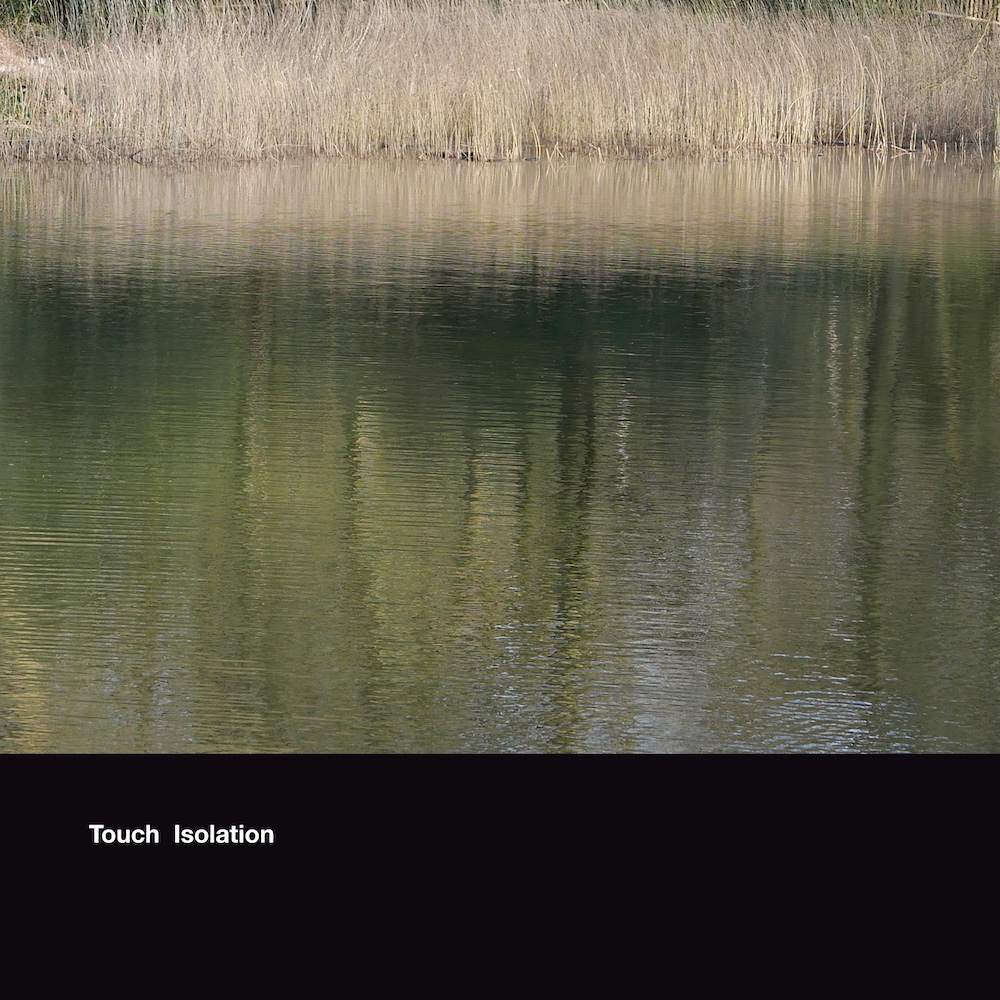
Touch: Isolation. Photograph by Jon Wozencroft.

As things like self-isolation and social distancing became phrases and concepts the majority of the world has quickly become accustomed to, it’s been the art of the hasty pivot that has characterised lockdown: businesses that relied on face-to-face interactions suddenly thrust themselves into the hitherto unknown territory of digital engagement, restaurants suddenly offered take-out where they previously relied on seated diners, wholesale retailers suddenly became direct-to-customer operations; we have moved from the need to see, touch and meet people to drinking espresso and gin over video conference, walking in the middle of the road to bypass another pedestrian walking toward you, and following authoritarian one-way systems around supermarkets. None of this we could have conceived of a few months ago, yet we are now all – mostly – suddenly expert.

The way we consume and enjoy music was almost immediately disrupted by the measures governments put in place. Gigs and festivals were cancelled; release dates got put back; pressing plants shut down; critical calendar entries like Record Store Day were postponed; venues were almost immediately shuttered. These are existential events for artists, bands, labels, designers and the countless individuals and businesses that support the music industry.

In response, all manner of COVID-19 projects quickly sprang up: compilation releases to support frontline essential workers; isolation playlists were hastily assembled, often comprising lots of soothing ambient music; live-streamed solo bedroom gigs delivered your favourite artist into your front room; noodling Soundcloud tracks appeared with high velocity, the product of idle fingers, a need for expression, boredom and the advantage of a broadband connection.

One very special and highly distinctive project to emerge from this is Touch: Isolation, announced last week by Touch. “The pack of COVID-19 cards came down quite quickly, and we wanted to respond to some immediate problems many of our artists were experiencing,” says Jon Wozencroft, who founded the label 38 years ago, later bringing in Mike Harding to work with him.

Available through Bandcamp for a minimum £20 subscription, all of which is divided up among its contributors, Touch: Isolation consists of at least twenty tracks from Touch artists, each one mastered by Denis Blackham – that, in itself, an example of the label’s dependable obsession with quality presentation despite the speed with which the project was conceived and realised. At the time of writing, releases have already come through from Jana Winderen, Chris Watson, Bana Haffar, Mark Van Hoen and Richard Chartier with tracks incoming from Howlround, Claire M Singer, Fennesz, Oren Ambarchi, Philip Jeck, Carl Michael von Hausswolff and others who have issued released material through Touch.

chriswatson_gobabeb
Touch: Isolation – Chris Watson ‘Gobabeb’. Photograph by Jon Wozencroft.

“By the nature of what we do, it’s quite hand-to-mouth,” Wozencroft continues. “For Mike and I, the project is also a declaration of intent in a personal sense because we’ve both been experiencing some highs and lows in recent months.” Those lows are self-evident and are common to most of us, yet uniquely personalised to our own lives; the Touch highs include recent releases like Eleh’s brilliant Living Space, nurturing new artists on the label and Hildur Gudnadottir‘s success at the Oscars. Wozencroft justifiably calls it the “culmination of years of collaboration and shared ambition”. The idea of Touch going on hiatus just because normal life has been paused would thus have been a terrible, terrible notion.

“Between Mike and I it was kind of a Eureka decision to step ahead and do this,” he continues. “In effect, we pressed the switch in the third week of March and in no time we had a strong response from almost everyone we asked.”

A critical signifier of Touch has always been Wozencroft’s photographic accompaniment to the imprint’s releases, which presented a challenge for Touch: Isolation. “I had to think hard about how the Isolation series could be given a visual counterpoint, given the lockdown restriction,” he says. The result is a series of photographs of trees, leaves, pools, each one of something strangely quotidian yet now, thanks to the lockdown, mostly off limits; each one was taken on March 25 on Hampstead Heath’s West Heath and Golder’s Hill areas, just as the lockdown began.

“I’d been going to Hampstead Heath since being a teenager growing up in North London,” Wozencroft continues. “It was always a special trip, and so it was a challenge to make this familiar space reflect a certain unreality; the suspended state of beauty in the full gleam of the recent sunshine. But also its rarity and rawness as an urban environment in the current conditions. I was also remembering the damage of the Great Storm of 1987 – seeing the evidence of regeneration and a landscape transformed, and that sense of faith in the future.

“For me,” he concludes, “it’s about hope and detail, the hidden and its brilliance.”

Support Touch: Isolation at touchisolation.bandcamp.com

Thanks to Jon, Mike and Philip.

Interview: Mat Smith

(c) 2020 Further.