Shots: Luce Mawdsley / Leaving / Xqui

LUCE MAWDSLEY – NORTHWEST & NEBULOUS (Pure O)

Luce Mawdsley is a Liverpool-based composer and multi-instrumentalist. Their latest album was recorded in the city’s Scandinavian Church and found Mawdsley playing guitar, organ and percussion alongside Nicholas Branton (clarinets) and Rachel Nicholas (viola). Describing their music as part of a journey, the title of the album focuses in on the starting point of Mawdsley’s own journey in Formby, a town in the North-West of England; the nebulousness refers to where they find themselves arriving today, as a non-binary, neurodivergent artist.

There is a sense of grace and harmony here, infused with expansive atmospheres inspired by Western cinema soundtracks. Pieces like the title track bounce and sway with a melodic levity, the three musicians weaving in and out of another like converging tributaries of water. Elsewhere, ‘The Growing Rooms’ has a devastating, heart-wrenching quality, its reverberating slide guitar reminding this writer of a motif running through Francis Lai’s ‘Love Story’ or sections of Mark Knopfler’s music from ‘Local Hero’. On many of these pieces, including the plaintive opening piece ‘Latex Feather’, Mawdsley is content for Nicholas’ viola to act as the music’s focal point, offering questing, searching, swooning, lyrical reflections of Mawdsley’s ceaseless curiosity.

Released 29 March 2024. Bandcamp: here

XQUI – GITHERMENTS AND THE MRI (Human Geography)

Prompted by a harrowing trip to A&E amid a breakdown, Githerments And The MRI represents an astonishing release in the catalogue of prolific and consistently inventive sound artist Xqui, wherein the recorded sounds of an MRI scanner become central characters in his idiosyncratic sound world.

Noisy, complex and nuanced, this is Xqui at his most terrifying – and this comes from the perspective of a writer who has interviewed him, where the mask that he wears when he decides to come out of the shadows left me with endless nightmares. This is often so terrifying that if you’re about to go for an MRI scan, listening to this slab of caustic sound art may prompt you to cancel. There are, however, plenty of moments here that poke their way through the industrial atmospherics dominating these two twenty-minute pieces. Dub rhythms occasional emerge from the threatening whir of the scanner; a ticking clock fashions itself into a springy King Tubby mixing desk cast-off; a brief sample of Erik Satie offers a much-needed sense of respite; effusive backwards melodies offer a mournful moment of reflection. While these pieces might sit as complete polar opposites to more ethereal Xqui works like Hymns For Terry Francis, they add new and fascinating insights into the mind of this prolific creator.

Released 21 April 2024. Bandcamp: here
LEAVING – HIDDEN VIEW (Moon Glyph)

Leaving is the alias of Perth’s Rupert Thomas, who first came to my attention as one half of the duo Erasers, whose Constant Connection album was a personal highlight from 2022. For Hidden View, Thomas’s second solo album, he explores fragile, sparse arrangements that evoke a sense of emotional trepidation and the wild naturalistic environments surrounding his home.

Usually consisting of off-kilter rhythms, minimal effects and haunted, enquiring synth melodies, pieces like the standout ‘Mirrored Feeling’ offer a sense of restlessness and unease; at first glance, they are bathed in beatific, enveloping ambient texture and persuasive layers of undulating melodies, but listen closely and those emotive gestures are gently punctured by a pinprick of doubt and darkness. Elsewhere, on the subtle widescreen atmospherics of key track ‘Hidden Dreams’ he assiduously evokes those brief moments spent in the weird interzone between wakefulness and sleep. Thomas has a seemingly innate ability to produce synth passages that imprint themselves devastatingly into your consciousness, making for an instrumental album with a low-key expressive depth.

Released 26 April 2024. Bandcamp: here

Words: Mat Smith

(c) 2024 Further.

Shots: Paul Reset / Everyday Dust / BMH / Pearl Home Records / Moolakii Club Audio Interface / Letters From Mouse

PAUL RESET / EVERYDAY DUST – ARCHIVE 23 (Dustopian Frequencies)

A new split cassette release from Dustopian Frequencies pairs two artists comfortable operating deep under cover, with a track apiece influenced by the numerologically significance of the number 23. The release notes claim that both tracks were created using processes that were in some way developed with that number as a catalyst, but both are staying tight-lipped about precisely how. If you know, you know, I guess. Paul Reset’s ‘DotXm’ is a trip through his sound archive, presented as a collage of beats (electro, dub, fractured breakbeats) and interventionist overlays that veer from stalking, horror soundtrack synths and industrial bleakness that taps into a vivid and harrowing vision of dystopia. In contrast, Everyday Dust’s ‘Red Scavenger’ is dark and ominous, relying on processed sounds and haunting melodies inserted into a blanket of murky, impenetrable texture that nods squarely in the direction of Coil. There’s a flute melody at the start of this piece that is so utterly displaced that I can’t tell if it’s a particularly expansive Herbie Mann-style riff or some sort of ritualistic Pagan Muzak. The fear of the number 23 is, apparently, eikositriophobia, something you might well begin to experience if you listen to Everyday Dust’s piece in the dark and haunting chill of the early hours. Released December 28 2023.

BMH – EYE-EYE_[II]_IMMORTAL INFLUENCE (Colander)

The latest album from BMH, a duo of Dark Train’s Kate Bosworth and Matt Jetten, is quite honestly bonkers. In a good, nay great, way. Here you’ll find found sound, abstract percussion, rural accents, beautiful and abrasive noise, metallic kitchen sink percussion sounds, Coil-esque psychological terror, a sort of detuned 1990s Warp-style deep pulsing electronica and an ongoing commentary (with lots of laughter) that runs throughout the album that feels like an insight into Bosworth and Jetten’s creative practice. Honestly, this is an absolute joy to listen to and the perfect antidote to the unfortunate sequence of GWR train delays and cancellations that accompanied my first play of the album. My personal favourite track is ‘Radio Times’, which evolves from deep-slung dubby electronica to a sort of Heath Robinson playfulness that sounds like Brian Cant making sounds with the wind-up metal toys from the end of Bric-A-Brac. Released January 15 2024.

PEARL HOME RECORDS – CORNISH WIND (Pearl Home Records)

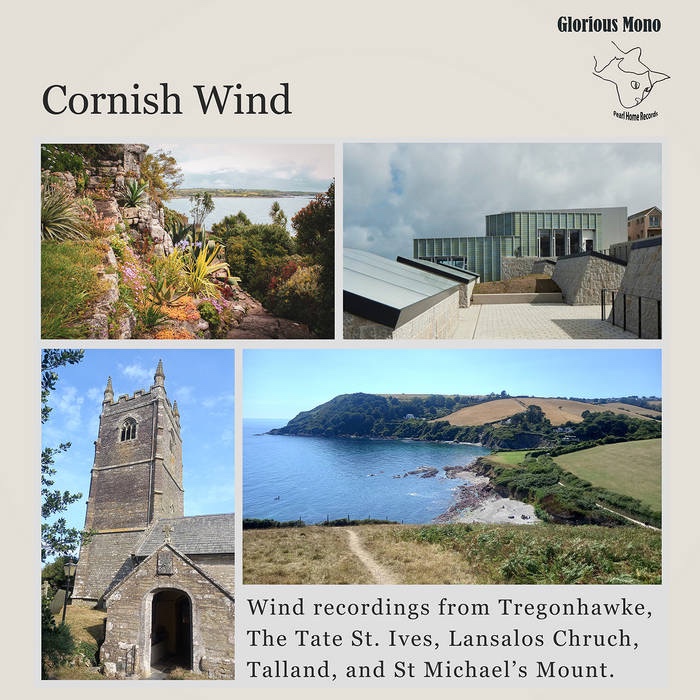
Several decades ago, this type of vinyl record wouldn’t have seemed out of place. While hanging out in my friend Steve’s record shop (Junkwax) in Penzance at the weekend, I alighted upon Sounds Of West Cornwall, a 1970 LP from the defunct Cornwall-based Sentinel label, which included various field recordings made in the westernmost part of the county, as well as arrangements of traditional songs. This lathe cut 7-inch looks like it could very well be one of those old Sentinel LPs, and includes recordings of wind made at five locations – Tregonhawke Beach, Tate St. Ives, St. Ildierna’s Church in Lansallos, Talland and St. Michael’s Mount off the coast of Marazion. As most field recordists will tell you, recording breezes and gusts of wind is fraught with problems, but Cornish Wind contains wonderfully tranquil, yet dramatic, sonic postcards of fairly typical Cornish weather. Easy, breezy. Released 18 January 2024.

VARIOUS ARTISTS – TFL VOL 1 (Moolakii Club Audio Interface)

I remember talking to Neil Stringfellow (Audio Obscura) as he was about to head to London to record sounds on the Elizabeth Line for this compilation, curated by Chris Bullock (Bone Music). When Stringfellow returned, he commented on how incredibly quiet and airy the line and its stations were. That quality feeds into his piece for TfL Vol 1, which is full of peaceful silences and unhurried rhythmic moments. The Elizabeth Line is, however, an enigma. Most of the Undergound is old, cramped and noisy, and that can be heard best on pieces like Moray Newlands’ edgy ‘176 Seconds’ and Looptronica’s cloying ‘Bakerloo Line’, where the clamorous abundance of captured passenger voices over a thudding techno pulse approximates a fairly typical trip during rush hour. Elsewhere, Stoltz’s ‘Central Undersound’ has a sort of industrial, symphonic quality, not unlike Laibach busking in a carriage of a Central Line train after a late night recording session at Guerilla for Nova Akropola. Released January 24 2024.

LETTERS FROM MOUSE – CLOTA (SubExotic)

Clota is a welcome return for Edinburgh’s Steven Anderson (Letters From Mouse). Very much a continuation of his focus on Scottish topographies and mysteries that began with An Garradh and the Robert Burns-focused Tarbolton Bachelors Club, Anderson’s focus here is the mythical Celtic goddess Clota. Believed to be the goddess of the River Clyde, that gives the seven enveloping modular synth pieces on Clota a beautiful flowing fluidity. In pieces like opening track ‘Frogspawn’, Anderson taps into a sense of wispy ephemerality, as if highlighting the way that the goddess Clota has become largely forgotten as time has passed. The key track here is ‘Bowling Greens And Tennis Courts’, featuring birdsong, footsteps and other field recordings alongside fragile reverb-drenched melodies. Released 26 January 2024.

Words: Mat Smith

(c) 2024 Further.

Jan Bang – Reading The Air

Reading The Air is Norway’s Jan Bang’s first vocal album since 1998. In recent years, Bang has focused on recording with Dark Star Safari, his quartet with Erik Honoré, Eivind Aarset and Samuel Rohrer. Aarset makes an appearance here, and the album was co-produced with Honoré, who also adds subtle synthesiser flourishes to the majority of tracks.

This is an album that rests in a deeply contemplative space. Many of the musicians spent the majority of their time as critical members of Oslo’s vibrant modern jazz scene, but these pieces are characterised by extreme restraint and reductivism. That approach gives Reading The Air a fragile sparseness, where the spaces say just as much as Bang’s lyrics.

The title track is perhaps the more overtly jazz-infected piece here, with liquid bass from Audun Erlien and shuffling kitwork from Anders Engen set against fluttering electronics from Bang, Eivind and Honoré. Inspired by Japanese philosophy, this is a song about optimism and moving on, positively; about putting the past behind you and finding somewhere to heal. A chord shift seems to act as a metaphor for what happens if you don’t move forward positively – “remain here, decay here”.

‘Burgundy’ and ‘Food For The Journey’ are two standout songs. On the former, Bang sings about someone experiencing mental anguish and who has been tortured by abuse, but who has triumphed over adversity. The framing here is key, with gentle electronics from the three Dark Star Safari members and muted percussion from Adam Rudolph. Twin vocals from Bang and Erik Honoré give this a plaintive, softly soaring sound against a backdrop of intense subtlety.

‘Food For The Journey’ consists of Bang’s piano and vocals, accompanied by delicate strings. Some unknown, vast tragedy seems to occupy the protagonist, drawn away across waters, trying to escape sadness. Bang’s central piano middle eight is laden with mournfulness, while additional vocals from a siren-like Simin Tander voice swirls around, leading our saddened sailor further away from his misery.

Elsewhere, ‘Cycle’is presented as clipped, off-centre synth pop where its electronic structures are offset by Anneli Drecker’s sweet, folksy vocal harmonies with Bang. Lots of sonic turbulence and tension bubble just below the surface of ‘Cycle’, creating what feels like a dubby, psychedelic lounge music. The tragic ‘Winter Sings’ contains amournful, fragile backdrop of sounds that feel like they’re blown in from a frozen landscape. Haunted, dejected vocals suggest disappointment at a sort of impotence, an inability to help someone. A duduk melody from Canberk Ulas concludes the track, over a trace outline of a beat and submerged, almost electronic dub-like pulse.

The album’s clear highlight is its only cover, a complete deconstruction and rearrangement ‘Delia’, originally performed by Harry Belafonte in 1954. This version is characterised by a subtle calypso swaying, like a soft breeze across a palm tree-fringed beach. Bang and Benedikte Kløw Askedalen’s voices are perfectly matched, framed by very little accompaniment bar quietly strident bells, woozy tropicalia guitar from Aarset and percussion from Engen. Everything here is wrapped in a gauzy heat-haze ephemerality. Hopeful and warmly optimistic, Bang’s stunning version of ‘Delia’ is wonderfully wistful.

A beatific, affecting collection of songs, Reading The Air is one of the most moving, attention-grabbing albums I’ve heard in a good while. Warm and enveloping, these songs have a profound, haunting quality that stays with you long after the final song has finished. Understated yet powerful, and frequently breathtaking.

Reading The Air by Jan Bang was released January 19 2024 by Punkt Editions. Thanks to Jim.

Words: Mat Smith

(c) 2024 Further.

Mortality Tables: Andrew Brenza / Alka – pod (Chapter 2)

ANDREW BRENZA / ALKA
pod (Chapter 2)

a collaboration between visual poet Andrew Brenza and sound artist Alka

released today

“So many machines alive and singing in a single room…”

A new release from Mortality Tables, the collaborative project of Further.’s Mat Smith. Out now at mortalitytables.bandcamp.com

‘pod’ by Andrew Brenza (2023):

“Over a period of several months in the winter of 2022, a nameless entity, via manipulations of entangled particles across time, or pods, as they referred to them, transmitted an expressive model for the development of an eternally sustainable utopian consciousness into the plastic architecture of the author’s dreams. ‘pod’ is the visual-textual record of those transmissions.”

‘pod’ is published by ghosTTruth, an imprint of Montag Press (montagpress.com)

CREDITS

Words, narration and design by Andrew Brenza
Sounds by Alka
Mastered by James Edward Armstrong

andrewbrenza.com
magicksquares.com

A Mortality Tables Product
MTP33

(c) 2024 Andrew Brenza / Alka for Mortality Tables
Sign up for Mortality Tables news here.

Shots: Bowing / Claire M Singer / Astrïd / Tape Loop Orchestra / Amon Ra Collective

BOWING – NORTH STANDING (Downstream Records)

A collection of 13 ambient moments, Bowing’s North Standing eschews the casually drifting pads and gauzy textures of most music in the genre. Often constructed with expressive cycles of pretty melodies in the foreground, pieces like ‘Sway Of The Rushes’ and ‘Tomorrow Will Bring’ are languid, enveloping and moving. A jazzy momentum and looseness infiltrates the latter, giving the piece a questing, enquiring mystique. Released 17 July 2023.

CLAIRE M SINGER – SAOR (Touch)

Influenced by trekking through the Cairngorm region of northern Scotland and an 1872 pipe organ installed in a church in Forgue, Aberdeenshire, Saor finds Claire M Singer reflecting on the topography of her homeland, as well as ruminating on existence itself. Many of Singer’s ancestors are buried at the church in Forgue, and the vast Cairngorms expanse would be largely unaltered from when they were alive. That gives these pieces the notion of things staying the same, but at the same time always changing. This is expressed in beautiful, thought-provoking pieces like ‘Cairn Toul’, through long, unmoving held notes on the organ over which more fluid moments are laid. The album’s 25-minute title track is nothing short of mesmerising, its organ drones rising gracefully like one of the mountains and plateauing with hopeful, joyous interventions. Singer is currently raising funds to help the restoration of the Henry Willis organ in the Union Chapel In Islington, which is featured on Saor – to donate, go here. Thanks to Mike and Zoe. Released November 3 2023.

ASTRÏD – ALWAYS DIGGING THE SAME HOLE (False Walls)

French quartet Astrïd is comprised of Vanina Andréani (violin, piano), Yvan Ros (drums, percussion, harmonium, metallophone), Cyril Secq (guitars, piano, synth, harmonium, percussion, metallophone) and Guillaume Wickel (clarinet, percussion). Their new album for the False Walls imprint is stunningly beautiful, a perfect accompaniment for frozen days. Opening piece ‘Talking People’ is plaintive and contemplative, opening with Wickel’s expressive yet subtle clarinet and a particularly introspective piano motif from Andréani. As the piece builds, with unobtrusive percussion, violin and tender guitar, ‘Talking People’ takes on a gently towering dimension, full of uncertain emotion. Subtly majestic, the five pieces on Always Digging The Same Hole act as an emotional salve, like wrapping yourself in the comfort of your favourite blanket. Mesmerising and beguiling. Released November 10 2023.

TAPE LOOP ORCHESTRA – ONDE SINUSOÏDALE ET BANDE MAGNÉTIQUE (Quiet Details)

Tape Loop Orchestra is an alias of Andrew Hargreaves (lately of The Mistys). For his contribution to the always beatific Quiet Details label, his sound palette was restrained to an oscillator, a tape machine and minimal effects. That set-up gives the three long pieces here a stillness and fragility. Central overlapping tones build and coalesce slowly, fringed by subtle additions and gentle interventions, creating an effect not dissimilar to Claire M Singer’s organ preparations on Saor (above). The entire Quiet Details series has a delicate sparseness, but Hargreaves’ Onde Sinusoïdale Et Bande Magnétique is probably the most ephemeral release yet. Released November 15 2023.

AMON RA COLLECTIVE – AT THE CENTRE OF EVERYTHING (Lamplight Social Records)

Amon Ra Collective are an ensemble comprising over 20 members, all of whom are jazz students at Leeds Conservatoire. Their debut album is ostensibly a astro-spiritual collection, but is not restrained by any particular genre boundary. The centre of the album is occupied by a wonderfully sprawl of experimentation, culminating in the aptly-named ‘Explorations’, where bleeping synths, treacly bass, atonal reverberating horns and intense percussion suggest a restless, inquisitive spirit. Concluding track ‘Astro Funk’ starts out in a joyous, danceable frame of mind before oscillating rapidly into territory somewhere between 1970s German rock and sound art. Released November 24 2023.

Words: Mat Smith

(c) 2024 Further.

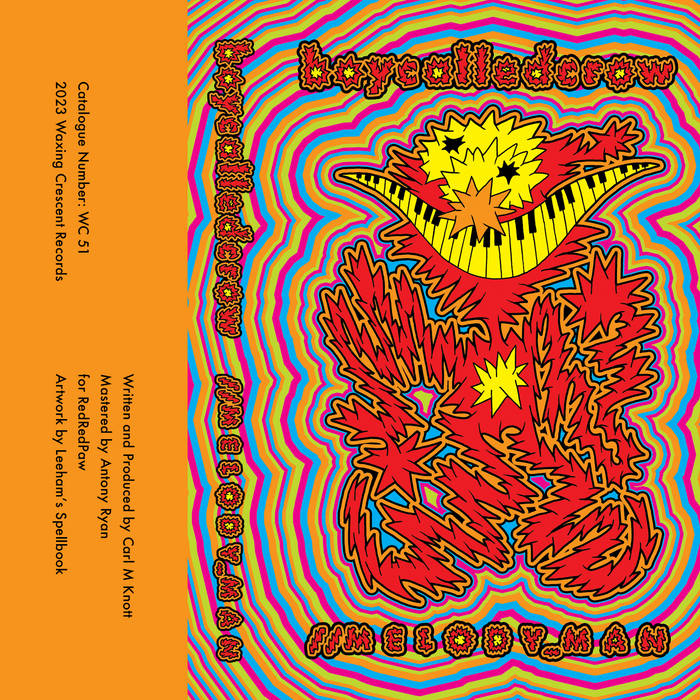
boycalledcrow – //M E L O D Y_M A N

The premise for Carl Knott’s latest boycalledcrow release is an imagined world where decommissioned transmitters and dusty radios awake from the slumbers of redundancy and begin functioning again. Imagine fractured sounds, faltering rhythms and glitchy sonic non sequiturs, transmitted abruptly into a era more used to the vapid sterility of streaming and internet radio.

I can’t think of a better place for Knott’s music to exist, even if it is fantastical. As boycalledcrow, his work has always occupied a sort of fragmentary landscape of its own: sounds form, burst into sharp sonic fractals and re-emerge in infinitely rearranged forms; melodies falter and collapse in on themselves; guitars, betraying his origins as a folk musician, offer recognisable shapes but are clipped, alien and discordantly unsettling.

Each of the fourteen pieces here is accompanied by a brief and evocative poem, and at times it feels like these collections of words have been subjected to the same skewed logic with which Knott’s music is developed. The verse to accompany the title track is a more adroit description of his work than any reviewer could muster:

And now
He’s pulling all of the strings
A cat’s cradle
Of tangled tunes
Weaving paths
And making up names

I’ll get my coat. I would encourage you to ignore everything I’ve ever written about Knott’s music.

None of this is intended to suggest that //M E L O D Y_M A N is some sort of messy, randomised sprawl of an album, even if the complicated algorithm-like names of the tracks might indicate otherwise. To suggest this would be to undermine Knott’s skills as a sound artist. In fact, quite the contrary – the album contains some of Knott’s most beatific, resonant works to date. ‘God * Woman = C I R C L E ()’ and ‘dr dr dr || WOODS 777’ consist of tiny cycles of pretty melodies that evoke comparison with Steve Reich, offset by plaintive, organic gamelan textures and shimmering reverb that, when combined, produces an arresting, enveloping minimalist warmth.

Nevertheless, there is something endlessly intriguing about Knott’s more restless moments. The velocity at which ideas form and are replaced creates a sort of turbulence within pieces like ‘(S) illy Song #2’ that leaves you more than a little dizzy as it skips and hops along a path seemingly all of its own. Such pieces are an offset to more delicate tracks like ‘’, ‘~ f o r e s t … MOON ~’ and ‘SUN sun +’, leaving the listener stood perpetually on a precipice of expectation.

And that’s what’s ultimately so interesting here: as one track finishes and another starts, you find yourself trying to anticipate where Knott might pivot you to next. To predict this, however, is a fruitless endeavour, and it’s that sense of bold adventurism that makes //M E L O D Y_M A N such an extraordinary and enriching listening experience from start to finish.

//M E L O D Y_M A N by boycalledcrow is released October 27 2023 by Waxing Crescent.

boycalledcrow recently recorded a piece for my Mortality Tables collaborative series LIFEFILES. Listen to ‘LF13 / Westbury’ here.

Words: Mat Smith

(c) 2023 Further.

drøne & Julia Mariko / Philip Marshall – Vox Interruptus

Vox Interruptus took place at London’s Iklectic on 19 September. Its central focus was the not wholly unprecedented confluence of opera music with electronic sound, prompted by a collaboration between English Touring Opera and drøne (Mark Van Hoen and Mike Harding). A set by drøne, accompanied by the ethereal, haunting voice of soprano Julia Mariko, formed the centrepiece of the evening, and used sounds scraped from two English Touring Opera productions currently wending their way around the UK – Cinderella and The Coronation Of Poppea.

Mariko appears in the second half of this twenty-minute recording from that night. In the ten or so minutes that preceded her casually walking from a seat among the audience, Van Hoen and Harding delivered a suite of intricate, impenetrable and generally unplaceable sounds and loops, each one tinged with a metallic, purring static. These textures evoke the idea of opera, though it’s hard to define precisely why that is the case. Voices appeared occasionally, creating the impression of the two sound artists standing in the wings of a theatre, voyeuristically recording the sounds of the singers, but for me the sounds that Van Hoen and Harding developed felt like the mimetic approximation of breathing exercises before a performance.

I was there, and it was an utterly mesmerising, experience. Missing from this recording was an abrupt squall of heavy sound that arrived as Mariko finished singing. It was so sudden, loud and unexpected that I jumped out of my seat. It also seemed to surprise Mariko, who smiled briefly, breaking the otherwise earnest demeanour that had characterised her performance.

Noise, however, shouldn’t have been unexpected. As we entered the venue, we were confronted with extreme sonic turbulence, courtesy of The Tapeworm’s Philip Marshall manipulating a batch of found opera cassettes. His set-up was battery-operated and minimalist – a Walkman, a Korg handheld synth, a Bastl Bestie mixer – but the sound he produced was anything but. His set, twenty minutes of which are presented here as ‘Operattack’ was almost the inverse of the drøne set. Where theirs was relatively quiet and ruminative, their source voices suppressed into unrecognisable shapes, voices were omnipresent in Marshall’s performance: loud, bold, and brash; soaring moments of vocal power distorted into nauseating, terrifying shapes. Wilfully unpredictable, Marshall’s set showed vivid imagination and endless possibility.

Elsewhere on the bill at Vox Interruptus were sets from Dale Cornish, The Howling (extracts from whose latest album Incredible Night Creatures Of The Midway were used at a Paris Fashion Week show last month, no less) and JTM (Jonathan Thomas Miller).

Of these, I only caught the JTM performance. The foundation of his set was constructed from one recording of a single vocal sound made by Miller. This was manhandled ahead of time into myriad shapes and structures, over which he then built up live accompaniments with a SOMA Pipe synth. This was all about breath, but the sounds that he forced out of the Pipe reminded me of everything from whale song to the shimmering, ephemeral clouds of sound that Robert Fripp used to create in his solo performances.

This release, then, is only a partial document of that night at Iklectik. What is here, in the recordings of drøne and Marshall, acts as a vivid depiction of a clash of musical worlds, the elemental deconstruction of an established form, and a powerful sonic challenge to centuries of traditionalism.

Bravo.

Vox Interruptus was released September 28 and is available here.

Words: Mat Smith

(c) 2023 Further.

Shots: Script Kid / Witch On Horseback / Andrew Weathers / Xingu Hill

SCRIPT KID – SKSI

SKSI is a five-track EP from anonymous Philadelphia producer Script Kid, which follows his dizzyingly accomplished debut album, Music For A Deprecated Dataset (2021). Intended as a metaphorical sonic bridge between his debut and a future new album, SKSI is a hot mess of crunchy beats, wispy synths and fragmented samples. ‘Nunya’ flinches and twitches with a nervous euphoria, a swirl of soft ambient textures fluttering around a suppressed rhythm. ‘The Groove’ hitches similarly ephemeral synth samples to a resolute breakbeat, giving me warm and fuzzy Mo’ Wax memories, while the curt ‘$Beatz’ highlights Script Kid’s minimalist flair with 90 seconds of scratched-up chat about ‘money-beats’ that had me tapping my toes on the train home in the rush hour.

SKSI by Script Kid was released July 28 2023 by Music Is The Devil.

WITCH ON HORSEBACK – Jumand

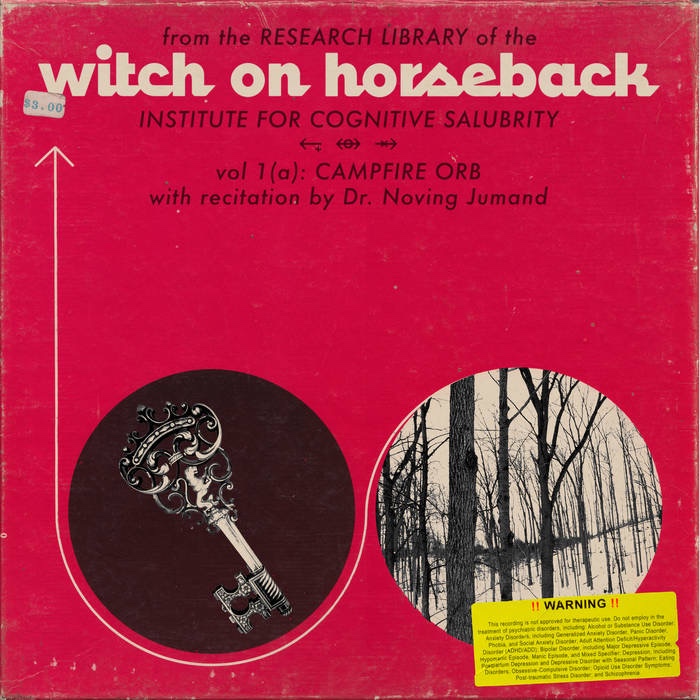
This is purportedly an unearthed suite of four recordings from The Witch On Horseback Institute For Cognitive Salubrity, founded by the narrator of these pieces, Dr. Noving Jumand, in New York State in the 1970s. The story goes that the new age performance space and education centre was founded by some ex-Moog employees, which would explain the deep drones, pulses and half-melodies that frame Jumand’s delivery. It’s all completely made up, of course. There was no Institute, there was no Jumand, and these pieces of strange and abstracted fiction – each delivered by the Jumand character in a flat voice reminiscent of guided meditations – are each one part-Welcome To Night Vale and one part David Lynch. The thirty-minute ‘Unusual Restaurant’ is wry and harrowing, putting you in a dreamlike story that concludes with you tucking into a dish of wafer-thin objects made from the body of a creepy childhood neighbour. You may think twice before listening to that next supposedly relaxing podcast on the Calm app after hearing this.

Jumand by Witch On Horseback was released August 25 2023 by Difficult Art And Music.

ANDREW WEATHERS – A Cardinal With A Sign Of Blood

A Cardinal With A Sign Of Blood is Texan sound artist and multi-instrumentalist Andrew Weathers’ eulogy to his late father and aunt. Their passing prompted this collection of discovered quarter-inch tapes that his father had made, field recordings, guitars, horns and electronics. Ghostly and haunting, the opening piece ‘28 Feb 1975’ features Weathers delivering a sparse, hesitant guitar melody loaded with plaintive contemplation over a murky bed of impenetrable voices and delicate keyboard tones. The 10-minute centrepiece, ‘The Cardinal, The Bike, The Stars’ features taped reportage about and from childhood and thoughts of aliens, Weathers manipulating an unintended cough in one of the recordings into a vague and unpredictable rhythm that ushers in an increasingly complex series of minimalistic layers. Reverential and absorbing, Weathers’ grief has produced a sonic adventure of great and mesmerising power.

A Cardinal With A Sign Of Blood by Andrew Weathers was released September 1 2023 by Full Spectrum Records.

XINGU HILL – Grigri Pavilion

The latest album from John SellekaersXingu Hill project contains eight tracks of enquiring electronics, and key moments like ‘Hi-Fi Simulant’ and ‘Moving Mirrors’ fizz with a palpable energy. Fragile, hooky synth melodies rest on top of complex beats that nod to minimal techno, electro and splintered drum ‘n’ bass. And yet, despite the components all feeling like they might have a place in a 1990s warehouse rave somewhere outside Amsterdam, something about Sellekaers’ presentation of these pieces feels vaguely… detached. The euphoria that should exist here is suppressed, in its place a sort of ephemeral, almost New Age-y introspection. That sleight of hand – used liberally on each of these pieces – creates beautiful shades of texture and nuance. An enriching auditory experience from start to finish.

Grigri Pavilion by Xingu Hill was released September 15 2023 by Subexotic Records.

Words: Mat Smith

(c) 2023 Further.

Strategic Tape Reserve: Whetmann Chelmets / Ergo Phizmiz ft. Depresstival

Two recent releases from the Strategic Tape Reserve label both continue the label’s fascinating voyage into the heart of adventurous electronic sounds.

Whettman ChelmetsKoppen finds the US sound artist foraging for sounds at The Gathering Place, a park in Tulsa, Oklahoma. It can be thought of sonic reconnaissance trip before Chelmetts upped sticks and moved to the area. These found sounds and field recordings were then augmented with elements such as snatches of radio broadcasts, the wind chimes outside his house and electronic melodies. Its title – Koppen – refers to a system of dividing the world into different climate zones, and the names of these pieces here refer to a specific zone in the Koppen classification system.

One could easily suggest that Chelmets’ deployment of serenity and turbulence in each track is a reflection of the volatility present across the world. These pieces are all restless, never still, always moving. Even in moments of tranquility, something edgy is just around the metaphorical corner. ‘ET’ and ‘Dfd’, for example, present vibrant soundworlds of many layers – metallic, ringing, bell-like tones, slowed-down rain sounds, whistling half-melodies, and something earthy and naturalistic, maybe the sound of walking through a damp wood in Fall. They are simultaneously enveloping but also threatening and brooding, poised with a sort of calm and resolute danger.

Something similar happens on ‘Cfa’. Here we are presented with a cluster of pretty, almost classical melodies. At some indefinable point these sounds become buried and lost as a harsh, sawing, back-and-forth sound and crushing white noise blanket drapes itself over the track. On ‘Dfc’ and ‘BWh’ the inverse happens, with a cloying, impenetrable web of sound dropping out into randomised bursts of dislocated radio recordings – ghostly voices and snatches of broadcast music. They are respite, perhaps, from what comes before, but somehow more ghostly and unsettling because of the starkness of contrast.

Koppen is presented as a single long piece, its constant shifts creating a dizzying, relentless unpredictability: in the quieter moments you are filled with anticipation of noise overtaking any sense of calm, and in the noisier moments you are waiting for the sudden drop into beatific, pastoral sweetness. None of this is remotely accidental, of course, and Chelmets proves himself to be an absolute master of sculpted, dramatic, enlivening sound art.

Owl And Monkey Haven by Ergo Phizmiz and Depresstival brings to an end their fabled Leisure Pop Trilogy. The third instalment of their series for Strategic Tape Reserve, following Plaza Centraal (2001) and Elmyr (2020), this is an utterly madcap leftfield pop sprawl.

The tone for this is largely set by opening track ‘Foyer’, an effervescent, skittish, lo-fi banger with wiry guitars, a decidedly awkward funkiness, birdsong, recorders, bleeping Casio synths, oompah bass, dull documentary samples and a vocal about paradise that sounds suspiciously like the late Mark E. Smith. All in one song!

Ergo Phizmiz has made a career of operating fluidly around copyright, and that’s no different here. Meanwhile, multimedia artist Depresstival set an ambition – this is deadly serious, so please approach it that way – to “become the ultimate post-structuralist Geri Haliwell tribute act.” This heartfelt reverence to the onetime Ginger Spice would certainly the interjection of a sample of the Spice Girls’ ‘Wannabe’ on the standout ‘Heartslashwallet’, a track that sounds like a Numanoid replicant thoroughly pissed off at having to constantly pay for romance. Meanwhile, ‘Stalker’, which includes lyrics about voyeuristically watching someone taking out their bins, has more than a stench of The Residents about it, and ‘Four Things I Would Have Done If It Wasn’t For Fucking Brexit’ is a protest song dressed as an erudite expression of love for motorik German music.

Quite honestly, nothing I write here could do justice to how completely bonkers this collection is. What I will say is that the final track, ‘John Lewis Christmas Advert’ envisions an alternative reality where a female torch singer covers the Sex Pistols over a tear-jerking stop-motion short film to support a department store’s flagging seasonal sales. Seriously ridiculous and ridiculously serious by turns, and a high watermark in the Ergo Phizmiz prankster portfolio.

Koppen by Whetmann Chelmets was released July 7 2023. Owl And Monkey Haven by Ergo Phizmiz ft. Depresstival was released September 8 2023. Both releases are on the Strategic Tape Reserve label.

Words: Mat Smith

(c) 2023 Further.

The Dark Jazz Project – 3 / Dead King (A Play In Three Acts)

“Don’t overdose on this stuff,” The Dark Jazz Project’s Andrew Spackman told me when he sent me his new album, 3. “It’s pretty potent!”

I reckon I can handle it. I’ve been consuming Spackman’s music for years, first when he was know as SAD MAN and more recently as The Dark Jazz Project. Wonky jazz bangers were always Spackman’s medicine of choice, but with his most recent reinvention, it’s like he’s taken his music into a whole new dimension. I don’t mean into some sort of spiralling, ‘groovy, baby’ timewarp. I mean darker. Jazzier. Projectier.

3 is intense, though, even by Spackman’s standards. The risk advisory is to be noted. Twenty tracks. Two hours. An accompanying play called Dead King (A Play In Three Acts). This sort of stuff would take most artists years to come up with, but Spackman is able to deliver this kind of wonderful sprawl with a spontaneity and fluidity – at high speed – that’s resolutely fresh and refreshingly imaginative.

Never one to repeat himself, 3 flips and flops like around like manic three-legged frog, delving deep into dance music’s murkiest corners to drag out skewed rhythms, off-kilter half-melodies, headcleaning glitchy noise and a seemingly limitless collection of cool jazz samples. And that’s just the first track, the decisively-named ‘Jazz’. The effect here is like watching an especially dexterous DJ seeking out the most floor-clearing tracks in his collection and yet managing to get the stoic crowd to wiggle along with manic glee.

Picking out standout tracks from 3’s vast number of cuts is a tough, nay impossible task. They’re all belters. If highlights you must have, check out ‘The Great Ones’, a track which lurches from graceful, contemplative piano to a segment that sounds like Moby’s ‘Thousand’ remixed by a Dutch hardcore artist while juggling cans of ball bearings. Meanwhile, ‘Carloza’ twitches forth on a breakbeat reimagined by Gene Krupa, over which Spackman sprinkles tinkly synths and buzzing, vital hooks.

‘Babonza’ sounds like a shoot-out between Star Wars laser pistols and a drinking straw noisily chasing the final drops in a plastic beaker containing Ken Kesey’s Kool-Aid. ‘The Stranger Again’ is a tight, 4/4 monster that rapidly switches direction into a noisy mess, just as you’ve started showing off your best moves. It rather reminds me of when I was dancing to the Paul Oakenfold remix of U2’s ‘Even Better Than The Real Thing’ at Stratford-upon-Avon’s Wildmoor nightclub and the DJ switched tracks just as I had started playing air guitar along with The Edge.

3 is effectively the informal soundtrack to Dead King, involving a medieval monarch, a timewarp (okay, so I was wrong about the timewarp: groovy, baby) and a magical, energy-providing creature. The play is beautifully presented, with fantastic photography and a totally bonkers narrative. Spoiler alert: it doesn’t end well for the King, though the title may have already yielded that clue.

Mr. Spackman, you have outdone yourself this time.

Footnote: this review was completed while flying over Canada. As ever, I had eschewed the onboard entertainment in favour of the moving map. Two places were beneath us as I concluded the final sentence – Flin Flon and Pukatawagan – while Medicine Hat was off in distance. I fear that my mind had reached such befuddlement by Spackman’s latest collection that place names and track titles had become indistinguishable. Sheesh, he wasn’t wrong about the potency.

Shameless plug: Spackman contributed to my Mortality Tables LIFEFILES series with a track that was literally made with nothing but clothes hangers. Check it out here. All proceeds to the Deaf Children’s Society and Birmingham Children’s Hospital.

3 and Dead King were released / published by Irregular Patterns on July 7 2023.

(c) 2023 Further.