Music journalist for Electronic Sound and occasional press release writer for VeryRecords. Father, husband, vegan. Co-founder of Mortality Tables - mortality-tables.com
Ralph Heidel belongs to a new generation of musicians for whom the supposedly hard borders between genres mean very little. In the case of his debut album, we find him deploying his classical studies from Munich’s celebrated Academy of Music alongside the saxophone he began playing before he was a teenager, melded in with occasional bursts of the sort of glitchy electronics and bold synth strokes that modern classical musical seems to embrace most easily.
Ambitious, evolving tracks like ‘Kadiköy Shimmer’ or the serene ‘Während die Feigen’ or the thrilling, feisty punk-funk-with-strings of ‘Blurred Idiosyncrasy’ are peripatetic, expansive affairs, covering so much ground that it’s often hard to keep up. From austere orchestrations to bleating sax, questing piano runs and droning, distorted electronics, when viewed as a whole, Moments Of Resonance can be something of a dizzyingly complex affair, sometimes taking a reflective stance on pieces like ‘Our Kingdom’ and at others bordering on a noisy intensity that nods to the rapture of fire music.
It is a testament to Heidel’s gutsy vision that these eight pieces can hold together so well in spite of their purportedly incompatible genetic codes, placing him neatly into today’s vibrant and unapologetic fusion scene.
Moments Of Resonance by Ralph Heidel / Homo Ludens is released by Kryptox Records on April 5 2019.
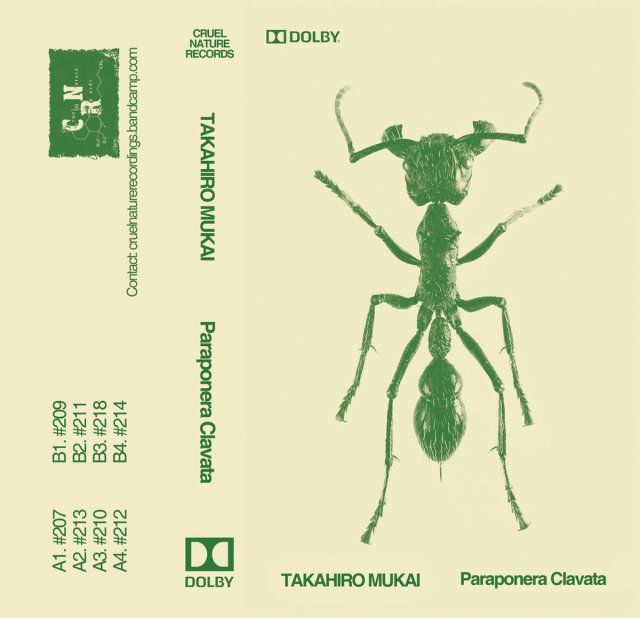
Prolific doesn’t come close: with forty releases to his name since arriving in 2014, Osaka’s Takahiro Mukai makes everyone else’s output seem, well, pretty amateur. His latest album for UK cassette imprint Cruel Nature continue’s Mukai’s exploration of a refracted, splintered form of electronic music, one principally informed by the limitless pulses and twitches of minimal techno but nudged toward its expansive, borderless frontiers. To be able to deliver this level of output and still produce something that’s consistently engaging without continually repeating yourself is Mukai’s principal conceit.
The tracks here range from the insectoid scratching of ‘#207’ to the crazy elasticity of ‘#210’, through to the robust rhythms of ‘#211. You get the impression that it would be all too easy for Mukai to settle into the predictable beats and tropes associated with the thirty plus year legacy of techno, and tracks like ‘#218’ carry an energy and urgency that is perpetually on the edge of coalescing into something firmer. ‘#212’ has a skittish, irrepressibly elusive quality with sounds that seem to spring at you from obscure angles, while ‘#214’ sounds like a malfunctioning machine trying to pick up any trace of a signal on some barren alien landscape.
Paraponera Clavata by Takahiro Mukai is out now on Cruel Nature Records.
Further. launched in January 2019. Its objective was to create a place where I could review things that caught my attention but which didn’t ‘fit’ Documentary Evidence, or where I didn’t get to cover that particular release for Electronic Sound.
During the first quarter of the year I reviewed 15 albums or singles, published one interview, and included a guest review written by Erasure’s Vince Clarke. It was a modest start to the blog, a testing of the water if you will. I will try harder during the second quarter.
Below is the full list of content published during the first quarter. There’s also an accompanying Spotify playlist including tracks from each record (where available on that platform), along with ‘Gallery’ by Californian electronic pop artist Dresage which completely passed me by at the time.
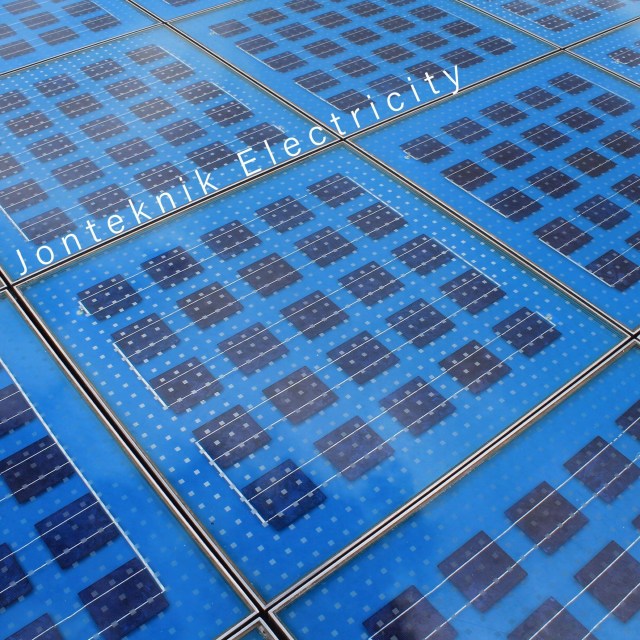
To mark the fortieth anniversary of Orchestral Manoeuvres In The Dark, Jonteknik (Jon Russell) has recorded a tribute in the form of a cover version of the band’s first single, ‘Electricity’, which was originally released by Factory in May 1979.
Russell is no stranger to the work of OMD, having worked with the band’s Paul Humphreys, remixing their 2013 ‘Metroland’ single and covering ‘Of All The Things We’ve Made’ on last year’s Alternative Arrangements LP. In Jokteknik’s hands, the track’s distinctive melody is slowed down a notch, shimmering its path across a bed of rich and detailed electronics instead of the original’s post-punk framework.
Andy McCluskey from OMD has often recounted a story that OMD nabbed the idea (and melody) for ‘Electricity’ from Kraftwerk’s ‘Radioactivity’, and in Russell’s new arrangement at its more languid pace you can hear that umbilical link between the two tracks, deploying vocodered vocals and the vocal chord loops that both bands used to different degrees as hallmarks of their sound. That Russell has also worked with Kraftwerk’s Wolfgang Flür in the past is no surprise.
‘Electricity’ by Jonteknik will be released on March 26 2019 by The People’s Electric. The track will be exclusively available here.
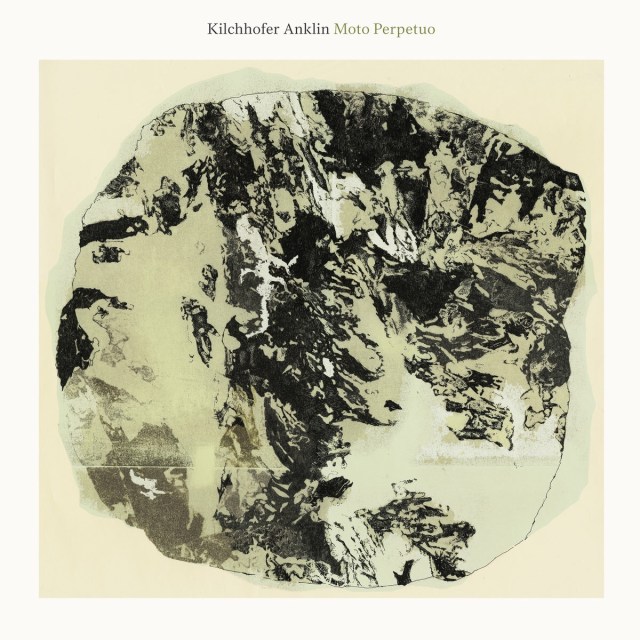
Over the past few years, Swiss electronic artist Benjamin Kilchhofer has quietly issued some fantastically interesting releases, culminating in last year’s eclectic and diaristic The Book Room for Toronto’s Marionette label. For Moto Perpetuo, Kilchhofer hooked up with Michael Anklin, whose adaptable drumming could be found on The Book Room. This session saw Kilchhofer sensitively interacting with his collaborator’s kit, using his modular system to augment and alter the varied percussive sounds that Anklin offered.
The result is a release containing seven idiosyncratic pieces that sit squarely between some of the most intricate of improvised music and adventurous, carefully-wrought electronics, with the results ranging from robust blocks of challenging sound to more complex, more meditative excursions. Throughout, there is a sense of Kilchhofer allowing Anklin to wander freely, sometimes adding obvious accompaniment and at other times being content to add subtle interventions that never detract from the underpinning structure.
The finest moments on this engaging collection arise on the skittish, unpredictable gestures of ‘Flor’ or the brooding, gloomy synthwork of ‘Unstet’. Like Benjamin Kilchhofer’s 2017 pairing with Hainbach, there’s a sense of this being a mere glimpse of the potentially infinite permutations possible from these intense interactions with Michael Anklin.
Moto Perpetuo by Kilchhofer Anklin is released by Marionette on March 15 2019.
d’Voxx is Gaetano (Nino) Auricchio and Paul Borg. Together they have composed, performed and recorded Télégraphe, an electronic journey of beautifully-crafted melodic instrumentals. Every piece is seamlessly connected with field recordings from different subway stations from around the world, each one acting as an introduction to each of the album’s nine unique soundscapes.
Opening track ‘Opera’ is a minimal affair. A lonesome Baroque-like arpeggio subtly changes key throughout, giving a calming, almost pastoral quality, accompanied halfway through by an electronic click rhythm pattern which glues the whole piece together. ‘Akalla Norr’ is more urgent. The underlying groove seems to change throughout without any apparent time signature, an effect expertly executed via the clever use of Eurorack sequencers such as the Stillson Hammer and the Make Noise René.
The album’s title track starts as an ambient wash of underground trains and distant strings before evolving into something far less subtle. Raucous bass and drums break the surface and become the main driving force. The bass sequence stays fairly constant but the mad drummer (machine) seems to be improvising, a kind of release from the structured musicality of the rest of the track.
‘Aotou’ is perhaps the most robotic piece on Télégraphe. Although the bass melody is played on a Fender Jazz guitar by a human, it’s the machine-like percussion sounds and filtered sequences that drive the track relentlessly forward.
In contrast, ’Tempelhof’ is a futurescape, like something imagined from the opening scene of Blade Runner. This minimalistic soundtrack is full of space and it’s the space that conjures up images of Tomorrow’s World. ‘Akalla Söder’ makes me think of an ant colony, a sequence of scurrying insects, each with purpose, working together to create a unique and complete musical picture.
‘Dinamo’ is based around a repeated musical phrase that builds and develops as the track progresses. The hypnotic trance theme then morphs into a frenetic bass line which eventually subsides to mirror the opening theme. ’Skalka’ centres around a simple vocoder-like filtered sequence. The effect sounds like digital communication in an imagined computer network.
The final track, aptly named ’Terminus’ is beat-less, soulful and lonesome; the perfect ghostly ending.
In all, this is a meticulously-constructed album. The carefully-sculptured sounds have been created precisely with a treasure trove of Eurorack sound modules and sequencers. It’s a beautifully melodic piece of work with flashes of inspired improvisation.
The synthesizer marked the beginning of the electronic music revolution and the sequencer became the means by which these fantastically un-natural sounds could be utilised. Télégraphe is a fine example of what can be created with this ever-evolving technology, and paves the way for what is yet to be discovered.
Télégraphe by d’Voxx will be released by DiN on March 15 2019.
Norway’s Maja S. K. Ratkje has built a formidable reputation for vocal and electronic experimentation. Despite that pedigree, this is a performer who can still find room to challenge her compositional methods, and this latest release for Rune Grammfon is case in point.
Accompanying a Norwegian National Ballet realisation of Knut Hamsun’s 1890 novel Sult, to compose the score Ratkje ditched her electronics and employed a broken pump organ subjected to all sorts of Cageian preparations. The output takes the form of curious, and occasionally unsettling, drones and tones, over which Ratkje threads her distinctive voice, itself ranging from quiet murmuring to powerful rapture.
The result is a suite of nine intense pieces that have the power and breadth to utterly displace you. The urgent note clusters and noisy cycles that open a track like ‘et hvitt fyrtårn midt i et grumset menneskehav hvor vrak fløt om’ (roughly translating as ‘a white lighthouse in a muddy sea of humans where wrecks floated about’) will either quicken your pulse with restless energy or cause massive panic depending on the way you approach it. Closing track ‘Kristiania’ is perhaps the most fragile, unadorned moment here, containing a wistfulness that disguises a turbulent, volatile centre.
Sult by Maja S. K. Ratkje is released by Rune Grammofon on March 8 2019.
Rooms, the debut album by The Silver Field, was released on O Genesis in January. The project of Coral Rose, Rooms is an arresting, enthralling and yet wholly personal journey through nine exquisitely-developed soundworlds, each one full of intricate layers and surprising, unexpected textures.
In this conversation, Coral explains how the album came about and what it’s like to allow something so inherently introspective to be made accessible to everyone.
Rooms is a very accomplished debut album, and I would argue that it’s the kind of thing that couldn’t just emerge quickly. How long were you working on this? Had you been in bands or worked on anything before Rooms?
Thank you! I guess I was working on it for around six months to a year, on and off, but it’s probably the culmination of ten years or so of bedroom music making that hasn’t really seen the light of day beyond my circle of friends and a few strangers on the internet. I’ve been in bands for years and released stuff – shout out to my good friends Red River Dialect – but this is the first thing I’ve made myself that I’ve been pleased with enough to actually put energy into getting it out there. I made an EP before Rooms called Shelter, which I never released, but I played live once or twice. That was the beginning of this journey, in a way, and the start of me exploring these themes and sounds.
I know it’s a pretty naff question, but what influences am I hearing on Rooms? I hear a folksy quality on pieces like ‘Rosebud’, but lots of other things too. Is there a place, or style, or instrument that you feel most drawn to?
I’m drawn to all sorts, and it’s hard to pin down what it is that draws me to things. I often feel a bit embarrassed when I play people music I’m into, you know, on a car journey or something, and end up saying something like, ‘All the music I like is a bit intense,’ so maybe that sums it up. Like, I could have a great party to the music on my phone on shuffle but I don’t know if anyone else would? It’d be Smashing Pumpkins followed by Grouper followed by Carly Rae Jepsen followed by some old folk song. I just like music that grabs you and makes you feel something.
In terms of stylistic influences though, Massive Attack’s Protection, Kate Bush’s Hounds Of Love, Arthur Russell’s World Of Echo, they’re a big three. When I was a teenager I listened to a lot of Tool and Nine Inch Nails, and I think that’s there too, in a way. And there’s definitely a folk influence, yeah – specifically the 60s/70s folk revival with Nic Jones, Shirley Collins, Fairport Convention, Alan Stivell and so on. A lot of that comes from my family. It’s kinda what I grew up on. That and New Age music, which I think you can also hear on Rooms.
The album was described as concerning itself with moving on and leaving the past behind. Can you tell me a little more about that? It’s hard to know on these songs and pieces whether that was – or indeed is – a painful transition or a positive one. A track like ‘Dolino’, for example, has a kind of defiant, upbeat quality even though it’s hard to precisely place where it’s coming from when hearing the track as a whole.
It’s definitely both. I think that happens on a couple of levels, too. I think growing up involves both a kind of liberation and a kind of loss, and I think coming out does too, and I guess this record is about both of those things.
Given it’s so personal, did you ever have doubts about releasing it for others to hear?
Yes, definitely, and I still find it hard to talk in much detail about the feelings involved in it.
I think it’s one of the reasons the vocals are quite shrouded in effects. It’s like I’m kind of hiding what I’m saying in a way. I think the next record is going to be more naked though.
There’s a lot going on across the album. There’s a very varied set of styles and instrumentation – violins, guitars, electronics, horns, your voice, the breath-operated analogue synth and tape loops. Are you naturally drawn to that kind of diversity of sound? Did you ever worry that it might sound uneven?
I am drawn to different sounds. I like to play with sound, have fun and see what happens. I often buy unusual instruments that I see at car boot sales or whatever and they form part of my world of music-making. Some of the sounds on the album are musical toys that I’ve had since I was a baby!
I don’t think I worried it would sound uneven but it was important to me to find a kind of overall balance across the album, and for the strangeness to be anchored in the melodic and rhythmic in a way that is enjoyable to listen to – I hope!
What was your process for recording the album? How important was the use of tape loops in its genesis? Because of the layers in each track it feels like the songs themselves may have gone through several transformations to get to their final state, either through chance or from active composition. Again, it all sounds very coherent, but I wonder – when using layers like you do – when you know when to stop? The tracks are full, but still with enough space within them. How do you strike that balance?
Haha – I don’t know! But I’m glad it sounds coherent.
It all comes together quite organically, I guess. A lot of the tracks start with the loop, and then I’m kind of improvising with myself over the top of it, layer by layer. And I do end up pulling quite a lot of layers back down in the mix. There are all sorts of things that are barely there but they add something.
I think I do composition in terms of frequencies or textures: I listen and I think, ‘Okay, this needs something scratchy or something hissy or something bassy or something reedy, or…’
It’s actually kind of hard to find the words to use to describe what the things I might want to hear are, because in my head they’re sounds, something quite bodily. I sometimes wonder if I make music for my body, and when I talk about the track ‘needing’ something, is it my body that needs it? I’m still working that one out.
It sounds like a lot of the pieces here were highly personal, but also largely it’s just you working on them, though there are a couple of pieces with involvement from others. I’m intrigued – for something that feels so inherently personal, how easy it is then to work together with someone else, either when recording or performing live? Are you comfortable collaborating, or do you find it easier to work completely alone?
I love playing music with people. The songs are personal, the album is personal, but it’s also music and I think that music somehow has a need to be shared. That sounds so cheesy but I think it’s the way it works, you know – everyone sings songs written by other people, or hums a catchy tune or something.
I think it’s very human to share music, in a way that doesn’t happen so much with visual art – people don’t casually doodle sketches of their favourite paintings from memory! And I think through being played in different ways and by different people, songs can take on all sorts of new lives, which I love.
I’ve had a really wonderful time working out live versions of these songs with some good friends of mine, Kiran Bhatt and Rachel Margetts, and playing with them has been a real joy. I love hearing what they bring to the tracks and the ways that they change and grow. It feels very in keeping with the themes of the album really, like the songs get to grow up and leave home too.
It sounds like you paint as well, and the sleeve image seems perfectly in tune with the theme of the music – although that might be the effect of association. Do you consider yourself a visual artist or musician? Or are they effectively interchangeable facets of your creative self?
I would say it all comes from the same place. I just like to make things. I actually make clothes more than I paint.
The paintings for the album artwork I did in 2012, but yeah they felt really in tune to me too. They were kind of an expression of the house I was living in at the time: the front cover is essentially a view out of the living room window onto the north Wales weather.
There’s some photography I did around the same time on the inner sleeve too. I’d really like to do a project someday that ties more of the things I do creatively together. I’d love to work with someone to put on a play or make a movie or something.
The Silver Field on tour
5 April – London, Sutton House – with Daniel O’Sullivan and Richard Youngs
6 April – Bristol, Cube Cinema – with Alex Rex
5 May – Liverpool, Constellations Garden – Tim Peaks Diner at Sound City 2019 – with Daniel O’Sullivan and Nik Void
Rooms by The Silver Field is out now on O Genesis. Listen to Rooms on Spotify.
Trestle Records’ One Day Band series unites musicians for special one-off recordings, consistently resulting in collaborations full of wonder and surprise. For the 17th album in the series, electronic musician Roly Porter (Vex’d) was put to work alongside esteemed percussionist Dame Evelyn Glennie.
This is a session where Glennie’s technique is often more felt than heard thanks to Porter’s intense processing. The exception is ‘Part 3’, which starts with some atmospheric rhythms and drum sounds while Porter seems to be respectfully biding his time for the right moment to interact with these rich and varied sounds. It’s not until the second half that he emerges from the shadows, whereupon his interventions crash upon one another, leading to a deafening and vital conclusion of rapturous and thrilling feedback.
The track exists in direct contrast to the album’s first piece, which is full of gnarly drama, tense drones and abrupt crashes derived from Glennie’s timpani but converted via Porter’s kit into shards of punishing electronic weaponry. The album’s final piece is where everything locks together uniformly, a challenging yet transcendent epic presented as an impenetrable wall of sound, through which you can just make out Glennie’s intricate patterns and Porter’s electronic flourishes.
One Day Band 17 by Evelyn Glennie and Roly Porter is out now on Trestle Records.
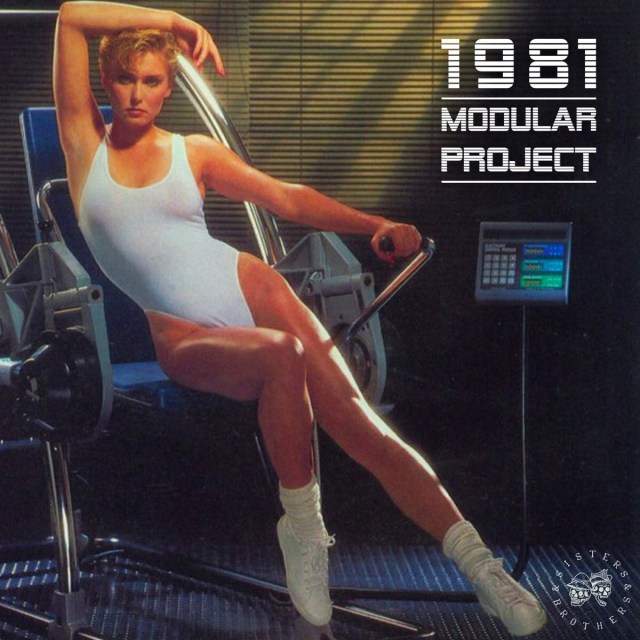
The sixth volume of hfn’s Sisters & Brothers series comes from Modular Project, a duo of Italian producers Alberto Iovine and Alessandro Fumagalli. With a title referencing a pivotal year for the development of electronic pop, and wrapped in a sleeve praising the keep fit fads of yesteryear, it probably comes as a surprise to absolutely nobody that Iovine and Fumagalli are fans of 80s synth music.
And so it is that the three tracks here nod firmly in that direction. The title track, a brief, 90-second , beatless progression through stalking bass synths and winter-crisp melodies is like an abandoned demo from a particularly meditative Kling Klang studio session.
‘Past Present Future’ finds the duo offering a steady, immovable web of quiet tones, fuzzy guitar samples and vocoders, hitching all of that to early drum machine rhythms. Taken together, it makes for a hypothetical imagining of how techno minimalism might have sounded had it been created forty years ago. ‘Freshback’ takes a similar approach but from a firmer starting position, with heavier beats, a nagging bass line and a squelchy, elastic pattern that flutters and gyrates around and through the whole track like the blades of Stringfellow Hawke’s Airwolf.
1981 – Sisters & Brothers Vol. 6 by Modular Project will be released by hfn music on February 22 1981, sorry, 2019.





 Further.
You must be logged in to post a comment.