Further. : Quarterly Report Q1 2019 & Playlist

Further. launched in January 2019. Its objective was to create a place where I could review things that caught my attention but which didn’t ‘fit’ Documentary Evidence, or where I didn’t get to cover that particular release for Electronic Sound.

During the first quarter of the year I reviewed 15 albums or singles, published one interview, and included a guest review written by Erasure’s Vince Clarke. It was a modest start to the blog, a testing of the water if you will. I will try harder during the second quarter.

Below is the full list of content published during the first quarter. There’s also an accompanying Spotify playlist including tracks from each record (where available on that platform), along with ‘Gallery’ by Californian electronic pop artist Dresage which completely passed me by at the time.

Reviews

Kaada – ZombieLars (Soundtrack) (Mirakel Recordings)
Kamaal Williams – New Heights / Snitches Brew (Black Focus Records)
The Silver Field – Rooms (O Genesis)
TOTM – Bliss / Blurred (Flickering Lights)
Karolina Rose – Invicta (Violet Sunset Records)
Neu Gestalt – Controlled Substances (Alex Tronic Records)
Lucy Mason – Flashback Romance (self-released)
Hugh Marsh – Violinvocations (Western Vinyl)
Bayonne – Drastic Measures (City Slang)
Modular Project – 1981 (hfn music)
Evelyn Glennie/ Roly Porter – One Day Band 17 (Trestle Records)
Maja S. K. Ratkje – Sult (Rune Grammofon)
d’Voxx- Télégraphe (DiN) – reviewed by Vince Clarke
Kilchhofer / Anklin – Moto Perpetuo (Marionette)
Jonteknik – Electricity (The People’s Electric)

Interview
The Silver Field

Playlist
Spotify

Words: Mat Smith

(c) 2019 Further.

Kilchhofer Anklin – Moto Perpetuo

Over the past few years, Swiss electronic artist Benjamin Kilchhofer has quietly issued some fantastically interesting releases, culminating in last year’s eclectic and diaristic The Book Room for Toronto’s Marionette label. For Moto Perpetuo, Kilchhofer hooked up with Michael Anklin, whose adaptable drumming could be found on The Book Room. This session saw Kilchhofer sensitively interacting with his collaborator’s kit, using his modular system to augment and alter the varied percussive sounds that Anklin offered.

The result is a release containing seven idiosyncratic pieces that sit squarely between some of the most intricate of improvised music and adventurous, carefully-wrought electronics, with the results ranging from robust blocks of challenging sound to more complex, more meditative excursions. Throughout, there is a sense of Kilchhofer allowing Anklin to wander freely, sometimes adding obvious accompaniment and at other times being content to add subtle interventions that never detract from the underpinning structure.

The finest moments on this engaging collection arise on the skittish, unpredictable gestures of ‘Flor’ or the brooding, gloomy synthwork of ‘Unstet’. Like Benjamin Kilchhofer’s 2017 pairing with Hainbach, there’s a sense of this being a mere glimpse of the potentially infinite permutations possible from these intense interactions with Michael Anklin.

Moto Perpetuo by Kilchhofer Anklin is released by Marionette on March 15 2019.

Words: Mat Smith

(c) 2019 Further.
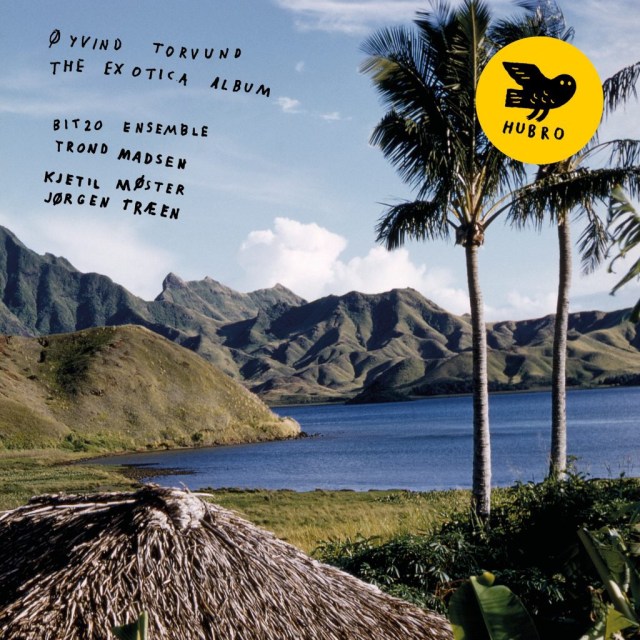
d’Voxx – Télégraphe

d’Voxx is Gaetano (Nino) Auricchio and Paul Borg. Together they have composed, performed and recorded Télégraphe, an electronic journey of beautifully-crafted melodic instrumentals. Every piece is seamlessly connected with field recordings from different subway stations from around the world, each one acting as an introduction to each of the album’s nine unique soundscapes.

Opening track ‘Opera’ is a minimal affair. A lonesome Baroque-like arpeggio subtly changes key throughout, giving a calming, almost pastoral quality, accompanied halfway through by an electronic click rhythm pattern which glues the whole piece together. ‘Akalla Norr’ is more urgent. The underlying groove seems to change throughout without any apparent time signature, an effect expertly executed via the clever use of Eurorack sequencers such as the Stillson Hammer and the Make Noise René.

The album’s title track starts as an ambient wash of underground trains and distant strings before evolving into something far less subtle. Raucous bass and drums break the surface and become the main driving force. The bass sequence stays fairly constant but the mad drummer (machine) seems to be improvising, a kind of release from the structured musicality of the rest of the track.

‘Aotou’ is perhaps the most robotic piece on Télégraphe. Although the bass melody is played on a Fender Jazz guitar by a human, it’s the machine-like percussion sounds and filtered sequences that drive the track relentlessly forward.

In contrast, ’Tempelhof’ is a futurescape, like something imagined from the opening scene of Blade Runner. This minimalistic soundtrack is full of space and it’s the space that conjures up images of Tomorrow’s World. ‘Akalla Söder’ makes me think of an ant colony, a sequence of scurrying insects, each with purpose, working together to create a unique and complete musical picture.

‘Dinamo’ is based around a repeated musical phrase that builds and develops as the track progresses. The hypnotic trance theme then morphs into a frenetic bass line which eventually subsides to mirror the opening theme. ’Skalka’ centres around a simple vocoder-like filtered sequence. The effect sounds like digital communication in an imagined computer network.

The final track, aptly named ’Terminus’ is beat-less, soulful and lonesome; the perfect ghostly ending.

In all, this is a meticulously-constructed album. The carefully-sculptured sounds have been created precisely with a treasure trove of Eurorack sound modules and sequencers. It’s a beautifully melodic piece of work with flashes of inspired improvisation.

The synthesizer marked the beginning of the electronic music revolution and the sequencer became the means by which these fantastically un-natural sounds could be utilised. Télégraphe is a fine example of what can be created with this ever-evolving technology, and paves the way for what is yet to be discovered.

Télégraphe by d’Voxx will be released by DiN on March 15 2019.

Words: Vince Clarke

(c) 2019 Vince Clarke for Further.

Maja S. K. Ratkje – Sult

Norway’s Maja S. K. Ratkje has built a formidable reputation for vocal and electronic experimentation. Despite that pedigree, this is a performer who can still find room to challenge her compositional methods, and this latest release for Rune Grammfon is case in point.

Accompanying a Norwegian National Ballet realisation of Knut Hamsun’s 1890 novel Sult, to compose the score Ratkje ditched her electronics and employed a broken pump organ subjected to all sorts of Cageian preparations. The output takes the form of curious, and occasionally unsettling, drones and tones, over which Ratkje threads her distinctive voice, itself ranging from quiet murmuring to powerful rapture.

The result is a suite of nine intense pieces that have the power and breadth to utterly displace you. The urgent note clusters and noisy cycles that open a track like ‘et hvitt fyrtårn midt i et grumset menneskehav hvor vrak fløt om’ (roughly translating as ‘a white lighthouse in a muddy sea of humans where wrecks floated about’) will either quicken your pulse with restless energy or cause massive panic depending on the way you approach it. Closing track ‘Kristiania’ is perhaps the most fragile, unadorned moment here, containing a wistfulness that disguises a turbulent, volatile centre.

Sult by Maja S. K. Ratkje is released by Rune Grammofon on March 8 2019.

Words: Mat Smith

(c) 2019 Further.
Evelyn Glennie & Roly Porter – One Day Band 17

Trestle Records’ One Day Band series unites musicians for special one-off recordings, consistently resulting in collaborations full of wonder and surprise. For the 17th album in the series, electronic musician Roly Porter (Vex’d) was put to work alongside esteemed percussionist Dame Evelyn Glennie.

This is a session where Glennie’s technique is often more felt than heard thanks to Porter’s intense processing. The exception is ‘Part 3’, which starts with some atmospheric rhythms and drum sounds while Porter seems to be respectfully biding his time for the right moment to interact with these rich and varied sounds. It’s not until the second half that he emerges from the shadows, whereupon his interventions crash upon one another, leading to a deafening and vital conclusion of rapturous and thrilling feedback.

The track exists in direct contrast to the album’s first piece, which is full of gnarly drama, tense drones and abrupt crashes derived from Glennie’s timpani but converted via Porter’s kit into shards of punishing electronic weaponry. The album’s final piece is where everything locks together uniformly, a challenging yet transcendent epic presented as an impenetrable wall of sound, through which you can just make out Glennie’s intricate patterns and Porter’s electronic flourishes.

One Day Band 17 by Evelyn Glennie and Roly Porter is out now on Trestle Records.

Words: Mat Smith

(c) 2019 Further.

Bayonne – Drastic Measures

Echo can be a troublesome thing.

You’ll be hard pressed to find a track on Austin-based Roger Sellers’ second Bayonne album that isn’t drenched in shimmering reverb. The ten tracks here are all complex, painstakingly-wrought, many-layered affairs achieved in a manner not dissimilar to the way Brian Wilson developed the distinctive sound of Pet Sounds; but the final layer throughout is an impenetrable fog of echo, and the effect is to give even the most upbeat moments here – the mesmerising piano-led ‘Uncertainty Deranged’ or the densely percussive title track – an uncertain, awkward, unfathomable quality.

Sellers wrote the album in a relatively dissociative frame of mind amid the relentless gigging that accompanied his debut; a feeling of arriving but never staying. That gives Drastic Measures a dynamic of constantly moving, never once still, even its most tranquil moments containing a propulsive restlessness.

From the tender, resigned balladry of the haunting ‘Bothering’ to the insistent drama of ‘I Know’, Drastic Measures is an album that can’t help but leave an indelible mark on you – you just won’t be able to tell if you feel better or more confused about yourself when it’s all over.

You can thank that pesky echo for that.

Drastic Measures is released by City Slang on February 22 2019.

Words: Mat Smith
(c) 2019 Further.
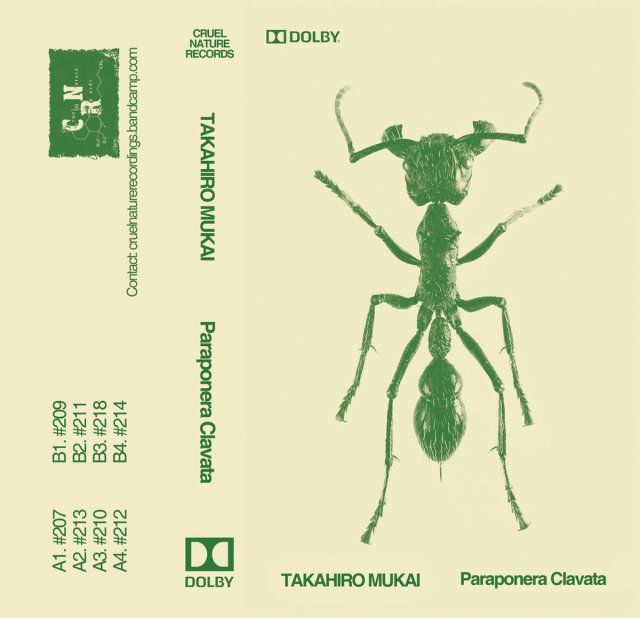
Hugh Marsh – Violinvocations

Hugh Marsh - Violinvocations - Artwork

Violinvocations by violinist Hugh Marsh was recorded at the Los Angeles home of Jon Hassell and owes its entire genesis to enormously frustrating circumstances: schlepping all the way to LA from Toronto to work on a project, only to find that it had been scrapped without anyone bothering to tell him. Frustrating though it was, it afforded the time that Marsh used to craft this innovative, colourful collection using only his violin and a cabinet full of effects.

Marsh is an adaptable player, and that versatility is evident across the eight diverse pieces here. What isn’t immediately evident is his chosen instrument, given how subsumed it is under layers of processing and looping. You hear plucked notes and melodies underpinning the likes of ‘Thirtysix Hundred Grandview’ or the scratchy, plaintive soundscapes of ‘The Rain Gambler’ but on other moments – such as the crazy ‘Miku Murmuration’, wherein Marsh’s violin is converted into babbling Hatsune Miku gibberish or the Hendrix-y riffery of ‘A Beautiful Mistake’ – you’d be hard pressed to believe a violin was ever involved.

The effect is to do for the violin what Robert Fripp did for the guitar, turning your perception of this humble instrument entirely on its head.

Violinvocations by Hugh Marsh will be released by Western Vinyl on February 15 2019.

Words: Mat Smith
(c) 2019 Further.

Lucy Mason – Flashback Romance

Think of Flashback Romance as hotly-tipped singer Lucy Mason concluding some unfinished business: four of the nine tracks on Mason’s debut LP appeared last year, including her fragile re-rendering of Radiohead’s ‘High And Dry’ and the sparse, dreamy, glacial build of ‘Out Of The Blue’ that achingly opens the record.

Produced with Jess Ellen, Mason might have perfect pop poise – a voice that could melt the heart of even the stoniest disposition and songs that nod to both soulful quarters and the casually anthemic – but her conceit is to wrap emotional outpourings like the mournful ‘3am’ in delicate arrangements enriched by vintage analogue synth warmth, hazy reverb and atypical rhythms.

‘Sunday’ is a profound highlight at the album’s centre. Here, Mason’s voice carries a flat, regretful quality draped with echoing piano and a barely-there architecture of beats that opens out unexpectedly into a buzzing electronic pop conclusion blessed by an irrepressible, muted rapture. The album concludes with ‘Kids That Night’, the curious highlight of the tracks that appeared last year. The song is beautifully, cruelly, affecting, offering a wistful view back into carefree days of innocence before life got in the way and heaped unwanted responsibilities on your callow shoulders.

Flashback Romance by Lucy Mason is self-released on February 15 2019.

Words: Mat Smith
(c) 2019 Further.
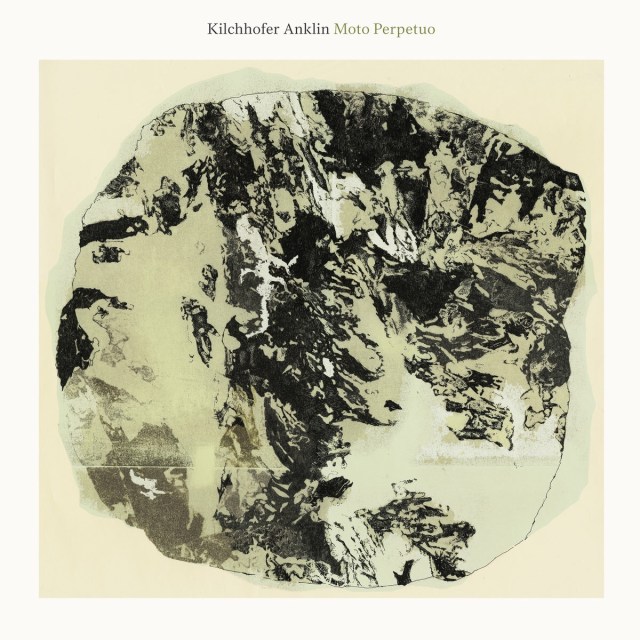
Neu Gestalt – Controlled Substances

Neu Gestalt is the alias of Edinburgh-based electronic musician Les Scott, whose fourth album Controlled Substances was created using a deliberately pared-back set of tools: a violin, a guitar, a modular system for processing source material, Akai samplers and an Atari computer from the late 80s to bring it all together.

The result is twelve tracks of extreme fragility, each and every sound within them processed and sculpted into their final form, and only occasionally betraying their original sources. On the standout ‘Kintsugi’, echoing temple percussion and glitchy rhythms provide a basis for heavily processed guitar patterns and frozen half-melodies, while on opening track ‘Machines Of Grace’ plaintive violins emerge as crackly, embrittled textures over a bass-heavy electronic dub rhythm slowed down to a glacial pace.

Scott is a fan of the way that timestretched samples have an inherently degraded quality, and you can hear that play out across the material here, providing an evocative fabric through which more clarified sounds are permitted to wend their way. The effect, on tracks like the mesmerising ‘A Glow From The Wreckage’ or ‘Drowned Worlds’, is like trying, and ultimately failing, to precisely alight upon memories from the gauzy mists of your past.

Controlled Substances will be released by Alex Tronic Records on February 8 2019.

Words: Mat Smith
(c) 2019 Further.

TOTM – Bliss / Blurred

cover

The debut album from Brussels-based fourpiece TOTM cuts a distinctive path through dreamy folk, the rhythmic fluidity of Krautrock, percussive minimalism and hypnotic electronics. In vocalist and guitarist Charles Bernard they have a frontman that pours quiet emotion into each of the tracks on Bliss / Blurred, poised on a tension-filled wire between anguished musings and beguiling wonder, that voice being perfectly placed amid Nicolas Magrez’s intricate synth layers, Adrien Kaempf’s bass figures and Thomas Vaccargiu’s complex drumming.

Bliss / Blurred opens with the rapidly-evolving synth cycles and expanding sound palette of ‘Silver Apples’, becoming by turns serene and angular, finally opening out into a mass of restrained drumming and fuzzy riffs. The track sets the scene for the album’s frequent switches in direction, from ‘Stellar Door’s tight, proggy spacefunk to the dreamy ‘Ghost Dance’ with its attendant rapidly arpeggiating synth patterns.

The album closes with the droning interplay of ‘The Sleeper’, anchored in motion by a steady bass pulse and some of Bernard’s most affecting vocals. Like a lot of the tracks here, ‘The Sleeper’ is far from docile, coalescing via dexterous drumming toward a noisy, clangorous conclusion, marking Bliss / Blurred as a powerful, resonating body of work.

Bliss / Blurred is released by Flickering Lights on February 1st.

Words: Mat Smith
(c) 2019 Further.