Shots: Cromwell Ate A Twix Here & Yol / Schmitz & Niebuhr / Audio Obscura / Autoreverse

CROMWELL ATE A TWIX HERE – FRAGILE / YOL – GLASSED ASCENSION (Strategic Tape Reverse)

Cromwell Ate A Twix Here is a typically wry and obtuse new alias from More Realistic Goals polymath Justin Watson. ‘Fragile’ features purloined spoken word commentary from David Yates set to a sound bed of pleasant strings, high-pitched voices, birdsong, noises of unknown provenance, occasional disharmony and myriad other sonic accompaniments. Yates’ chat recounts the first flushes of a new relationship in frank detail, his delivery carrying a frank flatness that belies a sense of dry humour – especially when he describes how the nascent couple arrange their breakfast plates. And then, a moment of revelation when Yates reveals that he is a widower. The sentences are delivered in the same dispassionate voice, and yet the implication is of extreme and devastating sadness, even if none of this is necessarily evident. Finally, the story lurches into a sort of Welcome To Night Vale weirdness. I won’t spoil the surprise, but the title makes a lot more sense after what happens.

In contrast, the Yol side is noisy, expressive and agitated, the voice as a sound source rather than a method of reportage. Insectoid vocal sounds and flat blocks of distortion occupy the background here, punctured by machine-like, menacing sonic objects that sound like they were entirely crafted from recordings of vintage late-1990s modem tones, as well as a sound that could be a spun glass bottle attached to a faulty contact mic. Yol’s voice flutters between shouted statements and exasperated, desperate repetitions about cushions and body parts. It is insistent, forceful and pretty terrifying, if I’m honest, but its challenging aesthetic is also weirdly liberating for reasons that I can’t quite explain. Uneasy listening for the hard of hearing, to quote Fad Gadget and Non. Released March 21 2025.

https://strategictapereserve.bandcamp.com/album/fragile-glassed-ascension


SCHMITZ & NIEBUHR – PORZ 1975 (Tillerfisch / Superpolar Taïps)

Well, this is an interesting one. An email popped into my inbox from Superpolar Taïps head honcho Marco Trovatello, entitled ‘Prog…?’, which certainly caught my attention. It wasn’t what I’d expect to receive from him. Then again, with Marco and his cassette imprint, I’ve come to expect the unexpected. Schmitz & Niebuhr sounds like a duo, but is in fact a trio of Trovatello, Dierk Düchting and Bernd Wilberg – none of whom, you will observe, is called Schmitz or Niebuhr.

To execute PORZ 1975, the trio were joined by at least a dozen guest musicians and also a marching band. The concept (there’s always a concept in prog music!) was to make an album celebrating the 16 districts of the German town of Porz, which was, in 1975, absorbed into Cologne. Each track is named after one of the districts, and Trovatello / Düchting / Wilberg constrained themselves to only using instruments that were available in 1975. That gives standout tracks like ‘Urbach’, ‘Westhoven’ and ‘Wahnheide’ all sorts of Moog-y richness, with impossibly groovy hooks laid over writhing nests of jangly guitars and driving rhythms. Crucially, there’s no showy-offy, onanistic, fifteen-minute soloing to be found here – just a double-album window into the 1970s electronically-augmented rock music that time politely forgot. Released May 2 2025.

https://superpolar.bandcamp.com/album/porz-1975


AUDIO OBSCURA – AS LONG AS GRAVITY PERSISTS ON HOLDING ME TO THIS EARTH

It may not seem like it, for an artist as prolific as Audio Obscura (Neil Stringfellow), but As Long As Gravity Persists In Holding Me To This Earth arose from an extended period of doubt, resulting in a form of creative paralysis. In 2024, Stringfellow hadn’t made any new music for some time because of that overriding lack of belief in something that anyone who has spent any time with his music will know is a rare talent that he possesses, but such is the way with our personal fears and inhibitions: we rarely see in ourselves what others see in us. His focus shifted away from composition toward live performance, and the process for preparing for a show in Whitby in November 2024 yielded the improvised piece that opens this collection, ‘Pyramid Song’

‘Pyramid Song’ has a hauntingly beautiful quality, something that is shared by all ten pieces on the album. There is a lightness of touch here that has perhaps been missing from Stringfellow’s previous music – unadorned field recordings; delicate and emotive piano; fragile and muted, dubby electronics; effusive but not intrusive strings; disparate and dislocated samples. There is, however, an undeniable sadness to pieces like ‘The Weight Of The World’, which speaks to this overriding mental state that he found himself prior to its creation. Being honest and transparent about these things, as we know, can liberate you from these feelings, and this austere, emotional collection is evidently a cathartic listen. A number of Stringfellow’s works, particularly his series of albums focused on impending climate disaster, have been about the macro – those things that will impact all of us; As Long As Gravity Persists In Holding Me To This Earth instead trains its lens on no one other than Stringfellow himself, but in so doing, he has made a universally-relatable album. Sequentially, there is another project that came before this album which explains more about how he unlocked his creativity, which will be released in September. Released May 23 2025.

https://audioobscura.bandcamp.com/album/as-long-as-gravity-persists-on-holding-me-to-this-earth

AUTOREVERSE – AUTOTUNES (Éditions Gravats)

Autoreverse is a duo of Arnaud Rivière and Nina Garcia, and Autotunes is their first studio album. Collaborations like this don’t just happen, however. Garcia and Rivière are seasoned partners in sound, their symbiotic technique and sonic presentation forged through countless gigs, some of which have been documented as live cassettes. It goes like this: Garcia is a renowned, Thurston Moore-tipped noise guitarist (check out her recent solo album Bye Bye Bird, which I enthusiastically covered for Electronic Sound), and Rivière utilises a busted turntable.

‘HI-SPEED DUB switch’ is a joyously abstracted collision between these elements. You hear Garcia’s growling, purring, distorted guitar, and then it is overwhelmed by an initially impenetrable block of squalling feedback from Rivière’s stylus. Listen closer, and textures and details reveal themselves, only they are frazzled and fractured beyond recognition. I thought I could hear voices at the epicentre of the din at one point, but quite honestly it could have been my imagination. The ensuing section seems to be where Garcia and Rivière begin to co-exist, an enmeshed discourse between hissing feedback, textures with all the smoothness of course-grade sandpaper, nuanced pulses, buzzing drones and finally a sense of latent, angry energy expressed as an anti-ambient, amp-bothering soundscape. Thrillingly and wilfully unpredictable. Released June 6 2025.

https://editions-gravats.bandcamp.com/album/autotunes

Words: Mat Smith

(c) 2025 Further.

Audio Obscura – The Xenakis Station

The latest release from Audio Obscura (Norfolk’s Neil Stringfellow) couldn’t be more different from last month’s LF11 / The Naming Of Storms, which was issued through my own Mortality Tables collaborative project. Whereas The Naming Of Storms was elusive and ephemeral in its presentation, The Xenakis Station is immediately distinctive, more resolute in its sonic template.

A suite of eight pieces using shortwave radio transmissions as their jumping-off point, The Xenakis Station finds Stringfellow creating a false narrative of a ‘fantasy research station’ on Redpoint Sound that doesn’t officially exist. That story leans into the fable of shortwave and the idea of these strange, possibly redundant broadcasts that may or may not contain strategic military information.

A standout piece like ‘Sjælland Sound’ is draped liberally with that conspiratorial concept. Containing a crisp but minimal beat, ‘Sjælland Sound’ emerges out of clouds of pure texture that part and give way to bursts of controlled static, hissing tones and a general air of mystery. Dreamy, almost jazzy melodic hooks and swirls of dissonance, when placed alongside the more ambient sounds, give this a widescreen perspective. It’s as if we are far out at sea, our gaze suddenly locked onto the building that is purportedly the shortwave station on the distant horizon.

My personal favourite track here is ‘East From Somewhere’, which begins with a muffled radio station ident and seemingly random speech. In the background, a haunting motif and subtle squeaking gives the piece a nauseating, unravelling quality; it is immediately disorienting, like waking out of a savage nightmare into the horrors of real life. The title track is another favourite, with what could be wonky wind chimes reframed into a sort of paranoid exotica, scuttling sounds and uplifting choral tones lending this an unplaceable, uncertain quality somewhere between terror and euphoria.

As Stringfellow’s catalogue continues to expand, his ability to steer his sound into myriad new directions shows an adaptable artist wilfully following his own path. That these pieces bear no resemblance to his previous releases is a triumph of originality, and another fine addition to the Audio Obscura catalogue.

The Xenakis Station by Audio Obscura is released October 6 2023 via Woodford Halse.

Words: Mat Smith

(c) 2023 Further.

Audio Obscura – Adventures In The Anthropocene

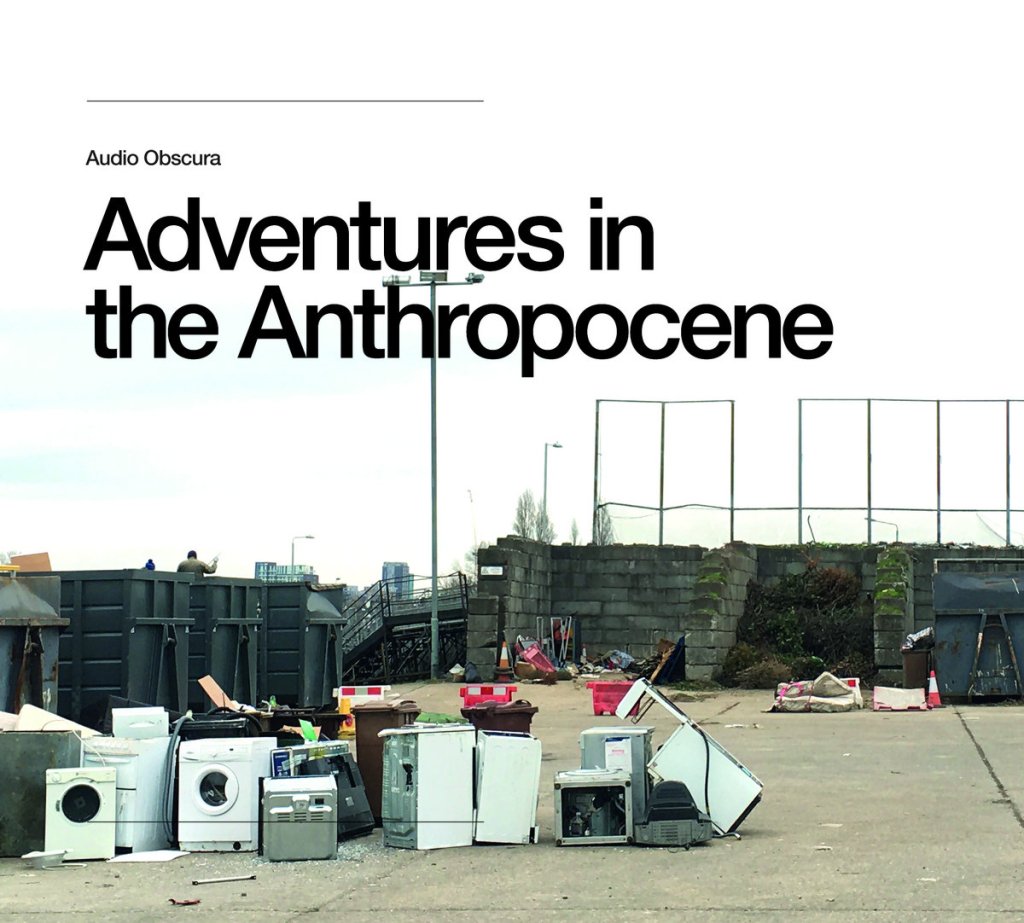
News stories about climate change are generally coupled with their own distinct imagery. We are now well used to seeing images of, variously, the terrifying silhouettes of forest fires, of cliff faces or ice shelves crumbling into the ocean, of factory chimneys billowing fumes into the atmosphere, of aerial shots of vast, sprawling megacities or images of mute animals acting as a short-hand for extinction. In this context, there is something both depressing and terrifying about the image that Neil Stringfellow selected for the sleeve image of his follow up to last year’s Audio Obscura album, Love In The Time Of The Anthropocene

Not for Stringfellow these stock images; instead he has chosen something somehow more relatable, more impactful, and more shameful than images that we have become, if not inured to, then certainly used to – a municipal dump, the vast industrialised means of disposing of mankind’s waste en masse, and a row of washing machines, ovens and televisions. The circumstance of their disposal is, of course, not clear, but it is a thought-provoking image nonetheless. Were they replaced because they didn’t fit the household’s aesthetic and changing tastes? Were they replaced because they were no longer working? Could they have been repaired? What will happen to these appliances next? Will they be dismantled, their parts stripped, salvaged and recycled into new appliances? (Unlikely.) Or will they be shipped on vast diesel-powered vessels to distant shores where they will become some other community’s problem? As I said: depressing and terrifying. 

Adventures In The Anthropocene is, itself, partly recycled. It includes remixes of tracks by Scanner, Belly Full Of Stars and Rupert Lally; it includes an alternative version of ‘The Clattering Train’ from Love In The Time Of The Anthropocene; it includes a thirty-minute live performance of the original album reworked into a single tapestry. The album also includes five new pieces, including the stunning opening track ‘Komorebi 木漏れ日’, named for the untranslatable Japanese expression for sunlight passing through leaves. 

The impact of Love In The Time Of The Anthropocene was perhaps most felt in its afterglow. Stringfellow’s message was both direct, but also subtle. It inspired you to think differently, but its bleak, detached tonality also offered little hope to cling on to. It arrived smack in the middle of the pandemic, where the world felt unexpectedly united, for once. There was a common enemy, a common problem, a need to collaborate across borders to tackle a common threat; a new President was shortly afterwards installed into the White House, and one of his first gestures was to reverse his predecessor’s dismissal of climate change and his conjoined, hateful nationalistic rhetoric. There was a sense of hope: what if this effort to mitigate a virus could be applied to climate change (something, lest we forget, that has the potential to cause many, many more deaths than COVID19)? Fast forward to the release of its (sort of) sequel and things feel like they’ve shifted. Rather than celebrating the speed and efficacy of cross-border vaccine development, it has instead become a geo-political warzone and the embodiment of vaccine-led colonialism (a new book by Peter Hotez, Preventing The Next Pandemic, adroitly deals with this subject). And spend any time in your local English shopping centre or high street the weekend after non-essential retail opened and you will see just how far we haven’t come, being the embodiment of greed and self-centred individualism, not the ‘we’re all in this together’ spirit that existed for a lot of 2020. 

Adventures In The Anthropocene’s release is, thus, timely. The central live piece, using extensive segments of narrated commentary about what humankind has wrought on this world – including creating the perfect conditions for global pandemics such as COVID-19 – is a useful wake-up call for anyone whose sole focus has been booking a flight to some far-flung destination or queuing for hours outside Primark just to buy some cheap, disposable, unsustainable fashion frippery. There is a significantly larger issue at hand; we may have survived the pandemic, but it is merely a symptom of the bigger war we’re in danger of forgetting about if we don’t act now. 

Scanner’s remix of ‘Goodbye Helocene’ at least sounds optimistic. For his mix, Robin Rimbaud has developed a sort of woozy, shimmering, journeying exotica from the bones of the original track, which has the effect of distracting you from its less-than-cheery subject starting point. In contrast, Further. favourite Rupert Lally takes ‘Radio Anthropocene’ off in an appropriately darkened, brooding direction, its plaintive piano and droning backdrop sounding like the final broadcast of a damaged transmitter before the end of the world, while Belly Full Of Stars re-imagine ‘Love Is…’ as a modern classical duet for swirling saxophone and mournful cello set to clipped, inchoate beats. 

The album ends with one of Stringfellow’s new pieces, ‘The Last Full Day Of Civilisation’. There is a fragility here, and a sense of pretty, stirring wistfulness. Its delicate, overlapping, chiming music box melodies might sound celebratory, but only in the sense that music played at a funeral is celebratory. To this listener, it wordlessly says, ‘Here lived homo sapiens, who consciously squandered the gift they were given, and in so doing made themselves extinct.’ If that doesn’t make you sit up and take action, then really nothing will, and we’re all doomed to the fate foretold in Stringfellow’s ruminative closing arguments. 

Adventures In The Anthropocene by Audio Obscura was released March 4 2021. 

Words: Mat Smith 

(c) 2021 Further. 

Audio Obscura – Love In The Time Of The Anthropocene

One of the earliest things I remember of the COVID-19 pandemic was how quiet the skies became. We live on a corridor that runs out of Heathrow, less than fifty miles south of us, and the unmistakeable drone of jet engines or the graceful plumes of parallel contrails, slowly dissipating behind an airliner, were part of the sonic and visual focal points of our skies. 

I find myself returning to this recollection again when listening to ‘Three Sisters’ from Neil Stringfellow’s new Audio Obscura album. In ‘Three Sisters’, Francisco Cantú reads a story about his own lockdown experiences. He too notices the quietened skies and the sudden drop of air traffic by up to 95% as he contemplates the failure of the crops he tries to grow during lockdown. Where his forebears might have known instinctively how to work the land, Cantú watches as each of his crops – each one an ancient species common to North America – fails. It seems to underline, in a detached, almost resigned way, how little we understand of so much of that which sustains us. 

Love In The Time Of The Anthropocene’s focus is squarely placed upon the proven reality that humankind has created the singularly destructive destiny we are now living through; whereas, at other points in Earth’s history, nature has wrecked devastation on our planet, setting in motion massive evolutionary changes and sculpting the way our home looks, the Anthropocene is entirely manmade. Even pandemics like COVID-19 are singled out in the words written by Stringfellow’s chosen experts, pre-eminent authorities on the Anthropocene like Professors Simon L. Lewis and Mark A. Maslin, as symptoms of what we have wrought. 

For Stringfellow, the motivation to produce this album came from parenthood. Like a lot of us, the introduction of children into your life gives you pause to think and reflect about the world that they will inherit. In Stringfellow’s case, this set in motion a three-year process of developing the album, seeking permission to use texts, gathering samples of the likes of Greta Thunberg and choosing narrators and collaborators. Its release on the eve of Halloween is appropriate, for this is likely the most unsettling, chilling thing you will experience this weekend. 

Presented with an unflinching gaze upon the state of the world, how this came to be, and the tipping point we find ourselves at – or more than likely already beyond – Love In The Time Of The Anthropocene is a contemplative sequence of fifteen pieces. Skipping electronics, eerie birdsong, delicate strings are Stringfellow’s chosen backdrop for narrations by Cantú, Anders Harboe, Julia Blackburn, Simon Medley and others. Each piece is draped in either mournful texture or a sense of violence – fractured sounds, broken rhythms, cycles of abrasive dissonance. The effect, on pieces like ‘Welcome To The Anthropocene’ or the plaintive ‘Magpies’ is arresting; at times an aggressive tonality seems to shake you violently out of your complacency, quickening your pulse and giving genuine shivers. 

It is the messages that are important here. Stringfellow’s role is thus that of the curator, creating the conditions for these messages to reach your ears, often in the most brutal and direct of ways. The album was concluded in lockdown, and we hear snippets of BBC broadcasts from the summer, when lockdown panic seemed to be receding and the forgotten – or, as is the actual case, linked – virus was further down the headlines; where the focus on ecological disaster once more became our focus. Wildfires ravaged vast tracts of land, another species lurched closer to extinction, and so depressingly on and on. Nothing had changed; we were just looking elsewhere, and that rather sums up our collective attitude to impending environmental doom. 

Love In The Time Of The Anthropocene borrow its title from the classic novel by Gabriel García Márquez. Like the way that Márquez’s book peeled back the layers of life story of its protagonists, Stringfellow’s album does something similar with the Anthropocene, explaining its origins and painting an anguished picture of its irreversibility. Unlike Márquez’s book, however, there is no dark humour at play here; no one falls out of a tree trying to rescue a parrot. In Stringfellow’s case, the character saws down the tree, murders the parrot and thus proceeds to take a blowtorch to an ancient rainforest. It presents a damning indictment of humankind’s legacy, and the worst of all possible gifts to our children. 

Love In The Time Of The Anthropocene by Audio Obscura was released October 30 2020. 

Words: Mat Smith 

(c) 2020 Further. 

Audio Obscura – Self Isolation Tapes

Early on in the COVID-19 outbreak, Etsy took down a t-shirt design emblazoned with the words ‘I Survived Coronavirus’ on the grounds that it was poor taste amid the progress of the disease. We are only four months into this – whatever this will eventually become – and despite government plans to try and progress toward a return to normality, when I think of that t-shirt I’m reminded chiefly of Captain Darling’s line at the end of Blackadder Goes Forth: ‘We lived through it! The Great War, 1914 – 1917!’

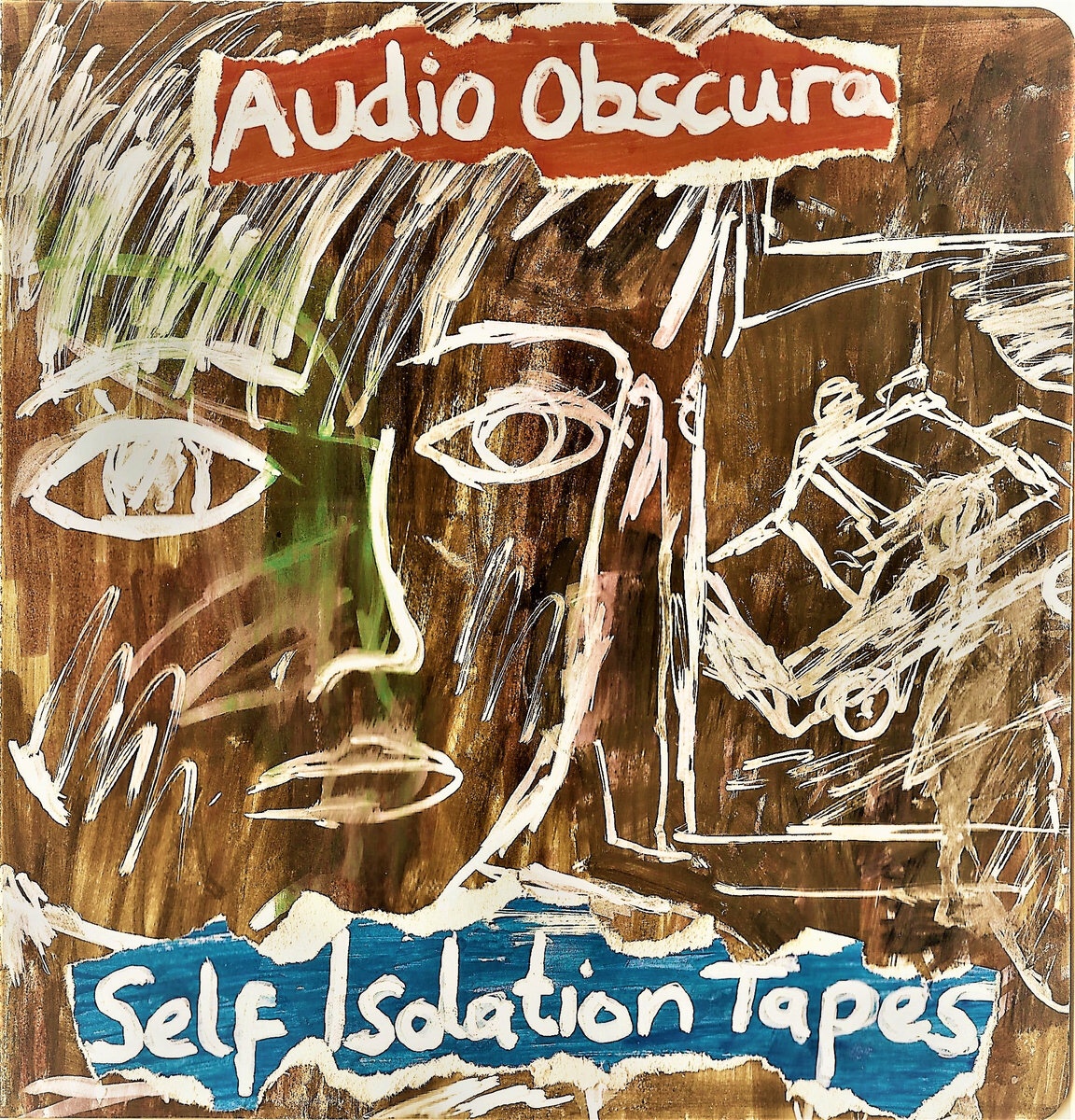
So it may also be that releasing music made at this point in isolation, when we could well just be at the start of something that, unlike Blackadder, runs and runs and runs (I’m thinking The Archers, perhaps), may also prove to be similarly premature. Fortunately, amid the slew of self-indulgent self-isolation releases are some genuine gems, and of these is Norfolk-based Neil Stringfellow’s Audio Obscura release, Self Isolation Tapes.

Electronic musicians, as a rule, have never had a problem with self-isolation of course. Theirs is a life of relative solitude, and so it is often hard to see what’s different between music made before isolation, during, and how it might sound when things return to whatever normal we’ll face after this. In Stringfellow’s case, a precedent for the sounds here could be found on his June 2019 Bibliotapes-released imaginary score for George Orwell’s 1984. I’m not prone to self-quoting, but this is how I concluded that piece: ‘Something about the way that Stringfellow has crafted these pieces seems to simultaneously remind us of the unflinching horror of daily life … while also presenting a sense of resignation and dismay that this is the world we currently occupy.’ I’m not saying that this is prescience on my part; more that Stringfellow’s music already seemed to be perfectly suited to dystopia, and so it goes that these seventeen pieces (plus three remixes) are perfectly suited to the current bleak outlook.

Talking of bleakness, not for nothing does Stringfellow include a track nodding in the direction of another savage work of fiction (or is it, now, biographical?) – Albert Camus’s The Plague, a depiction of a highly infectious disease wreaking devastation on an Algerian port. ‘Life In Oran’ is an unsettling listen amid unsettling pieces, beginning with the sounds of Stringfellow’s children playing innocently, which he then frames with murky pulses, dread-ridden haunted tones and a general sense of urgency and insistence. Stringfellow’s children appear again on ‘Each Day The Radio…’, calling for his attention against a backdrop of the daily news stories charting the progress of COVID-19 on the radio. (As an aside, I’m sure I’m not the only one who feels like the daily governmental proclamations feel a bit like something from 1984.)

Fortunately, Self Isolation Tapes isn’t a wholly bleak listen – it just mostly is. For example, buried deep in the track ‘Ghosts, Dusk, Decay’ is a solitary, tentative, almost hopeful synth note which appears fleetingly, only for the track to return to more discordant territory by the end; elsewhere, ‘Quiet World’, one of the shorter tracks here, is a piece floating forth on a delicate, soothing ambience. The pair of tracks ‘The 33rd Of April’ and ‘The 44th Of May’ may be titled with sardonic humour, but are presented with brooding textures and muted beats that become sonic approximations of industrial, noxious soundscapes or the fading broadcasts of horror soundtracks heard across post-apocalyptic wastelands.

‘One Day I’ll Grow Nostalgic For These Days’ is one of the most memorable pieces here, containing wistful piano and scratchy little sounds, a little like static coming from an old radio transmission. Here you find little melodic lines that seem to belong elsewhere, stuttering vocal segments and pretty bird song, a sparse rhythm outlining the weird sense of nostalgia embedded in the piece’s title.

It is a collection that is necessarily dark, even in the context of Stringfellow’s work. But perhaps it’s worth returning to ‘Life In Oran’ to put this all in context. Alongside the more negative moments are the interjections of real life – washing up, maybe, along with other quotidian tasks. Initially these throw you off and confuse you, but between those sounds and Stringfellow’s kids playing, they serve to remind you that life does indeed go on, even in the strangest of circumstances. Long after this is over, these sounds will be our reminder of how we felt while COVID-19 took its toll on us, with Self Isolation Tapes a diaristic time capsule into collective self-isolation.

Self Isolation Tapes by Audio Obscura was released Friday April 24 2020.

Words: Mat Smith

(c) 2020 Further.

Audio Obscura – Nineteen Eighty-Four

bib03 1984 front final

The third cassette release in the Bibliotapes label’s pairing of iconic books to music finds Norwich’s adaptable electronic sound artist Audio Obscura (Neil Stringfellow) providing a soundtrack to George Orwell’s chillingly accurate Nineteen Eighty-Four, released to coincide with the 70th anniversary of the its publication.

To be clear, this is not an opportunity for Stringfellow to cover, or even offer an alternative to, the (controversial) soundtrack put together by Eurythmics for the movie released in the year that the book was set in; this is about interpreting the actual text through the medium of completely newly-imagined music, and, a bit like a media-controlled slogan in Nineteen Eighty-Four itself, for the purposes of this we should profusely deny the existence of said film.

What that means is that his accompaniment to the daily, mandatory ritual of venting and screaming in collective anger on ‘Two Minutes Hate’ is presented as a bleak, primal, dissonant noisefest set to a insistent post-industrial beat; the pieces soundtracking the scenes depicting Winston, the book’s protagonist, and his attempts to wilfully evade surveillance and the controlling hand of the Party are freighted with both a pastoral, naturalistic serenity and a sort of nagging tension, filled with mournful strings and birdsong; the scenes set inside Room 101 are laced with a nagging, slow-motion sense of foreboding (and the displaced voice of Frank Skinner).

In Stringfellow’s hands, the haunting familiarity of ‘Oranges And Lemons’ is presented twice, first as a shimmering, gauzy memory resplendent in childhood innocence, and later laced with harshly-processed impending operatically-voiced doom, a vestigial scrap of something that didn’t get fully processed in a memory hole.

Something about the way that Stringfellow has crafted these pieces seems to simultaneously remind us of the unflinching horror of daily life that Orwell predicted in his dystopian musings, while also presenting a sense of resignation and dismay that this is the world we currently occupy – and one that we have willingly submitted to.

Nineteen Eighty-Four by Audio Obscura is released on June 8 2019 by Bibliotapes.

Words: Mat Smith

(c) 2019 Further.