Touch: Isolation

Touch: Isolation. Photograph by Jon Wozencroft.

As things like self-isolation and social distancing became phrases and concepts the majority of the world has quickly become accustomed to, it’s been the art of the hasty pivot that has characterised lockdown: businesses that relied on face-to-face interactions suddenly thrust themselves into the hitherto unknown territory of digital engagement, restaurants suddenly offered take-out where they previously relied on seated diners, wholesale retailers suddenly became direct-to-customer operations; we have moved from the need to see, touch and meet people to drinking espresso and gin over video conference, walking in the middle of the road to bypass another pedestrian walking toward you, and following authoritarian one-way systems around supermarkets. None of this we could have conceived of a few months ago, yet we are now all – mostly – suddenly expert.

The way we consume and enjoy music was almost immediately disrupted by the measures governments put in place. Gigs and festivals were cancelled; release dates got put back; pressing plants shut down; critical calendar entries like Record Store Day were postponed; venues were almost immediately shuttered. These are existential events for artists, bands, labels, designers and the countless individuals and businesses that support the music industry.

In response, all manner of COVID-19 projects quickly sprang up: compilation releases to support frontline essential workers; isolation playlists were hastily assembled, often comprising lots of soothing ambient music; live-streamed solo bedroom gigs delivered your favourite artist into your front room; noodling Soundcloud tracks appeared with high velocity, the product of idle fingers, a need for expression, boredom and the advantage of a broadband connection.

One very special and highly distinctive project to emerge from this is Touch: Isolation, announced last week by Touch. “The pack of COVID-19 cards came down quite quickly, and we wanted to respond to some immediate problems many of our artists were experiencing,” says Jon Wozencroft, who founded the label 38 years ago, later bringing in Mike Harding to work with him.

Available through Bandcamp for a minimum £20 subscription, all of which is divided up among its contributors, Touch: Isolation consists of at least twenty tracks from Touch artists, each one mastered by Denis Blackham – that, in itself, an example of the label’s dependable obsession with quality presentation despite the speed with which the project was conceived and realised. At the time of writing, releases have already come through from Jana Winderen, Chris Watson, Bana Haffar, Mark Van Hoen and Richard Chartier with tracks incoming from Howlround, Claire M Singer, Fennesz, Oren Ambarchi, Philip Jeck, Carl Michael von Hausswolff and others who have issued released material through Touch.

chriswatson_gobabeb
Touch: Isolation – Chris Watson ‘Gobabeb’. Photograph by Jon Wozencroft.

“By the nature of what we do, it’s quite hand-to-mouth,” Wozencroft continues. “For Mike and I, the project is also a declaration of intent in a personal sense because we’ve both been experiencing some highs and lows in recent months.” Those lows are self-evident and are common to most of us, yet uniquely personalised to our own lives; the Touch highs include recent releases like Eleh’s brilliant Living Space, nurturing new artists on the label and Hildur Gudnadottir‘s success at the Oscars. Wozencroft justifiably calls it the “culmination of years of collaboration and shared ambition”. The idea of Touch going on hiatus just because normal life has been paused would thus have been a terrible, terrible notion.

“Between Mike and I it was kind of a Eureka decision to step ahead and do this,” he continues. “In effect, we pressed the switch in the third week of March and in no time we had a strong response from almost everyone we asked.”

A critical signifier of Touch has always been Wozencroft’s photographic accompaniment to the imprint’s releases, which presented a challenge for Touch: Isolation. “I had to think hard about how the Isolation series could be given a visual counterpoint, given the lockdown restriction,” he says. The result is a series of photographs of trees, leaves, pools, each one of something strangely quotidian yet now, thanks to the lockdown, mostly off limits; each one was taken on March 25 on Hampstead Heath’s West Heath and Golder’s Hill areas, just as the lockdown began.

“I’d been going to Hampstead Heath since being a teenager growing up in North London,” Wozencroft continues. “It was always a special trip, and so it was a challenge to make this familiar space reflect a certain unreality; the suspended state of beauty in the full gleam of the recent sunshine. But also its rarity and rawness as an urban environment in the current conditions. I was also remembering the damage of the Great Storm of 1987 – seeing the evidence of regeneration and a landscape transformed, and that sense of faith in the future.

“For me,” he concludes, “it’s about hope and detail, the hidden and its brilliance.”

Support Touch: Isolation at touchisolation.bandcamp.com

Thanks to Jon, Mike and Philip.

Interview: Mat Smith

(c) 2020 Further.

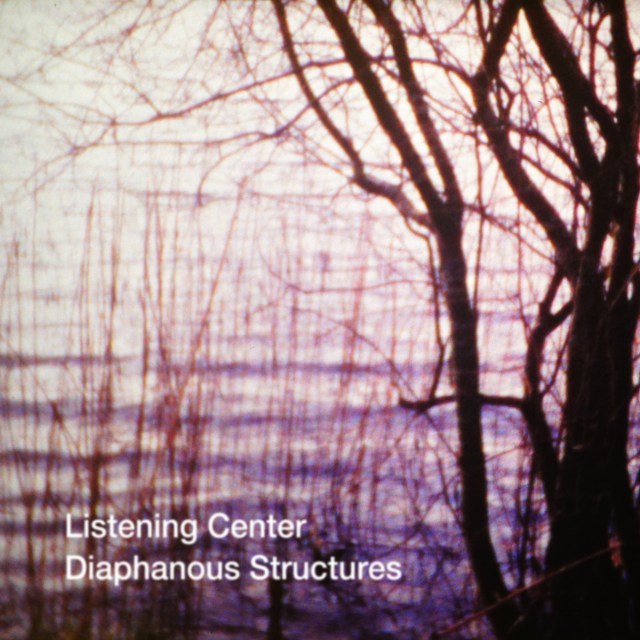
Listening Center – Diaphanous Structures

Artwork.jpg

Listening Center is the project of Beacon, NY electronic musician David Mason, and Diaphanous Structures is the follow-up to last year’s Retrieving.

Where Retrieving was an album that managed to straddle the elastic explorations of 1970s Moog excursions and the fragile architecture of 1981-vintage synthpop, Diaphanous Structures is a much more meditative exercise. Built, for the most part, on delicate, almost wistful layers of gentle, swaying electronics, these eleven pieces nevertheless proceed with a sense of purpose, sidestepping any notion of directionless musing on the part of Mason.

Devoid of beats and obvious rhythms, pieces like ‘Sapling Three’ rely on a languid form of forward motion, buzzing with latent energy and overlapping, effervescent arpeggios. With the addition of soft reverb and subtle modulations and a coda filled with urgent bass sequences, these pieces take on a melodic intricacy without ever sounding anything other than minimalistic.

Elsewhere, ‘Concentric Circles’ carries a gauzy, melancholic edge, the sparsest of patterns creating a stirring, heart-wrenching micro-masterpiece, while ‘A Torn Hedge’ ripples with a brooding mystique and sense of compelling danger; what can Mason see through that hedge? What lies just behind its frontier? Was that tear placed there precisely to permit a voyeuristic glimpse of something elusive?

The album is punctured by three short, sub-one minute vignettes, wrapping complete and intense emotion in the briefest of statements. While ‘Sad Center’ has a profoundly moving quality, the wonderful ‘Interior Hue’ is a classically-leaning piece nodding contentedly in the direction of early electronic albums and the long shadow cast by their innovative sound palettes.

Diaphanous Structures by Listening Center was released April 9 2020 by Temporary Tapes.

Words: Mat Smith

(c) 2020 Further.

First Play: Matthew Barton – Christie Christie

2christie

Today, Further. presents the first play of Matthew Barton’s new single ‘Christie Christie’, due for release tomorrow. Barton first hit our radar with the mesmerising ‘Orchid’, a sensitive slice of avant pop released earlier this year.

‘Christie Christie’ finds Barton in rockier territory while still showcasing a personal lyrical and compositional style that defies categorisation. “It’s a song about escape,” he explains, “whether that’s fleeing from a situation, another person – or yourself. Is the lyric an internal monologue, or an address from a lover? What has Christie done that means they must flee so rapidly? Or what has been done to them? Caught doing what? I wanted to explore in the song the meaning of loyalty (“the ties won’t sever but the will just might“), identity (“a misfit no more in a foreign land“), and memory (“inside I store the silhouette of your head in the light“) in the face of a seemingly urgent situation.”

Reflecting the inner anguish in the song, Barton’s evolving arrangement of keyboard, banjo and layered process is designed to augment the song’s themes of confusion, tension, conflict and paranoia while never letting his singular vocal style be subsumed. “I guess at its heart the song is about the ‘fight or flight’ impulse,” he says.

With dream-like artwork by the Dutch Expressionist artist Tinus van Doorn, ‘Christie Christie’ is another strange trip into Barton’s subconscious. Listen to ‘Christie Christie’ below.

Matthew Barton is currently working on his debut EP, which will be released by Knife Punch Records later this year. Barton has also contributed songs to some benefit compilations – Z-Tapes’ Hope For European Bedrooms to benefit DIY artists hit by COVID-19, and two compilations benefiting healthcare and community services in the wake of COVID-19: Brace Cove Records’ Quarantine Comp and Under The Counter Tapes’ Banders.

Words: Mat Smith

(c) 2020 Further.

Grate Expectations: Max Neuhaus – Times Square (1977)

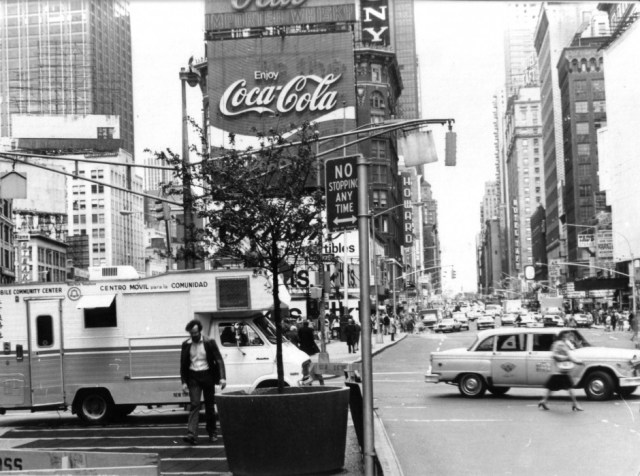
Max Neuhaus (foreground) - Times Square (1977)
Max Neuhaus – Times Square (1977). © The Estate of Max Neuhaus. Used with the kind permission of the Estate of Max Nehaus.

It’s 6am on a balmy New York morning in October 2017; Reed Hays, one half of Reed & Caroline, is leading me to a specific section of Times Square. On the way, he tells me what the area was like when he lived nearby in the late 1980s, a time when this part of the city was shorthand for a gaudy seediness, bordered by low-rent porn cinemas and XXX-rated video stores, with pickpockets and scammers taking advantage of the tourists that have congregated at the intersection between Broadway and Seventh Avenue for over 100 years.

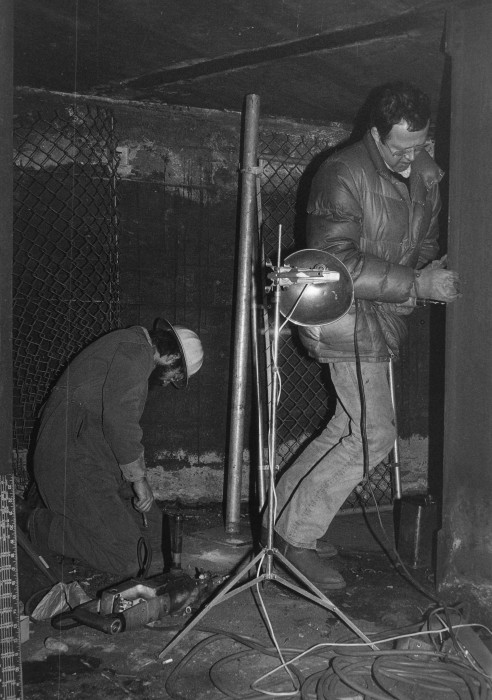
Our destination is an unmarked, nondescript triangular grate between 45th and 46th streets, covering a ventilation shaft from the subway tracks running just below the street. Unimpressive it may be, but it is the location of what may well rank among the most frequently-visited works of art on the planet, even though the vast majority of those visiting Times Square have no idea that it’s even there. This is Max Neuhaus’s Times Square, originally – and appropriately – titled Underground Music(s). Neuhaus installed his most famous piece of sound art here in 1977 after four years of back and forth with New York’s transit authority, and it ran continuously, 24/7, until 1992; it was restored and activated again in 2002, and has again run uninterrupted ever since*.

Neuhaus was no stranger to New York’s art world in 1977, and neither was he an unknown in the field of sound. He had started out as an avant garde percussionist, realising definitive versions of pieces by Karlheinz Stockhausen’s Zyklus and moving on to embrace electronics for a recording of John Cage’s Fontana Mix. By the mid-60s he had moved squarely into the domain of sound art, creating pieces like Fan Music (1967) on rooftops in the Bowery, where the volume and nature of the sonic output depended entirely upon the prevailing weather, a read across to Cage’s obsession with chance and the I Ching. Fan Music was the first of what Neuhaus would call his Place pieces for their physical and geographical characteristics, and it is within this series that Times Square would become his most prominent work.

“The work is an invisible block of sound,” wrote Neuhaus about Times Square in 1992, just as the installation concluded its first run. “Its sonority, a rich harmonic sound resembling the after ring of large bells, is an impossibility within its context. Many who pass through it, however, can dismiss it as an unusual machinery sound from below ground.” The sound is elusive, varying according to where you stand on the grate, appearing to swell and move toward the periphery of your hearing imperceptibly. With timetabled regularity a subway train interrupts the sound, distorting and confusing the otherwise smooth resonances of the piece.

Max Neuhaus (R) - Times Square (underground construction 1977)
Max Neuhaus – Times Square (1977). © The Estate of Max Neuhaus. Used with the kind permission of the Estate of Max Nehaus.

The sound – a calming, ringing drone, in the manner of La Monte Young and Marian Zazeela’s Dream House works – is a major seventh chord made up of many tiny pulses arranged rapidly in sequence, similar to the work of fellow duration music aficionado Phill Niblock. Hays and I ponder how the sound was made, assuming that for it to have been activated in the 1970s it must have been of analogue construction, though period synths of that time needed a stable electric current to prevent them from going out of tune; precise schematics of Neuhaus’s design aren’t readily available, but we conclude that the subway system must have provided the constant current, which might explain the protracted delay in realising the work, alongside securing permission to use of one of transit authority’s ventilation shafts.

What to make of this work? On the one hand, many critics have celebrated Neuhaus’s desire to democratise art by making something like this available freely to so many; on the other hand, its lack of signage or discernible identifying markings means it remains the exclusive preserve of those in the know, thus making it both anti-elitist and elitist simultaneously; Neuhaus himself wrote about moving from the rarefied environs of Carnegie Hall to Times Square as a way of engaging with the ‘culturally uninitiated’, which doesn’t come across as hugely democratic. He observed the piece almost daily on CCTV and volunteered ways of stopping the area’s many street performers – particularly the guitar-strumming Naked Cowboy (Google at your peril) who was something of an offensive nemesis to the artist – from using the piece as a makeshift stage. Some have drawn a thematic link between Times Square and Cage’s 4’33”, the former being bounded by geographical detail and the latter by temporal limits; one whose sounds can never be allowed to operate among complete silence with the other unable to be anything other than hypothetically silent.

Even at 6am, perhaps the ideal time to experience Times Square, the area crackles with a grim energy and if it wasn’t for the precise navigation skills of Hays, I doubt I would have even found the right grate. The billboards are illuminated, a few dispossessed people drag suitcases to or from red-eye flights, an early morning TV programme is being filmed in full view of a small gathering of people keen to catch a glimpse of whichever celebrity figure is being interviewed – but it’s certainly about as quiet as this place ever gets.

Only a couple of hours later, the area will be flooded with selfie-snapping tourists and modern day scammers dressed in abysmal Sesame Street costume rip-offs, making Neuhaus’s work more or less undetectable unless you happen to tune into it while fleetingly passing through.

Some six months later I found myself doing just that on my way to see Reed & Caroline perform down on the Lower East Side. My only clue to the location of Times Square was the fact that the Naked Cowboy ceased his afternoon performance at the precise moment that I was being carried along by the crowd of awestruck tourists, their eyes raised upward toward the famous neon advertisements, blissfully unaware of the meditative sonic events taking place just beneath their feet.

Words: Mat Smith.

With thanks to Reed Hays, Pidu Russek at the Estate of Max Neuhaus, Dia Art Foundation, Neil Mason and Tin Soldiere. This unpblished piece was originally written for Electronic Sound but was not ultimately published. * At the time of writing, owing to the ongoing COVID-19 outbreak, Times Square is not currently operational (according to the Dia Art Foundation, who maintain the piece), concluding the second run that began in 2002. I Heart NY.

(c) 2018 – 2020 Mat Smith for Electronic Sound / Further.

Johannes Burström – Dyad

a2761069972_16

In sociological terms, a dyad is the smallest possible social group, consisting of just two counter-parties. In the case of Stockholm-based Johannes Burström’s latest project, those two elements are his double bass and electronics, the result being a thirty-seven minute exploration of the sonic potential of an instrument, well beyond its normal, familiar setting.

The approach Bürstrom took reminds me chiefly of Toshimaru Nakamura’s work for no-input mixing boards, here using a microphone to record the sounds of the bass as it was subjected to a loop played through a device placed above it. As far as one can tell from the notes on Burström’s Bandcamp page, the similarity with Nakamura’s work is that the process seemed to involve no actual playing of the bass in the traditional sense, only that the bass responded using tension, resonance and vibrations to the pre-programmed loop from a computer.

In spite of that, it remains possible to discern that the instrument being ‘played’ is a bass. There is an earthy, elastic quality to the resultant sounds that are immediately recognisable, whether in the context of expressive jazz motifs or in the whole-instrument manipulations used by improvising players like Tom Wheatley.

For the most part, however, the chance-filled sound world that emerges here is a dirty, slowly-evolving, almost industrial bed of beautiful noise somewhere between a rapidly-spinning washing machine and quietly humming air-conditioning unit. To do that with an instrument like a bass, with all its distinctive, springy tonalities is a testament to Burström’s interventions and sense of sonic adventure.

Dyad by Johannes Burström was released March 27 2020 by BoogiePost Recordings.

Words: Mat Smith

(c) 2020 Further.

Sad Man – Indigenous Mix 3

Indigenous Mix 3 is the counterpart to The King Of Beasts, the latest album from Andrew Spackman’s Sad Man alias. The King Of Beasts offered all the expected characteristics of a Sad Man album in the form of jerky, vibrant electronic music that draws heavily on the legacy of jazz music, giving his pieces a natural freedom and looseness that is rare to find in music made on a grid.

Here, each of the album’s twelve pieces are given a substantial makeover, the approach varying between incorporating tribal percussion and throwing out some of the jazzier reference points in favour of a skewed, wonky electronica, and most points in between. That approach gives the mixes of ‘Carbonated’ and ‘Kalifornia’ an awkward, clipped, chunky quality offering a firmness in place of the original’s lightness of touch.

Elsewhere, ‘After After’ is re-rendered as a longform electro workout full of ringing motifs and buzzing melodies, while a standout new version of ‘Door’ becomes a metallic hip-hop groove knocked off course by springing, unpredictable electronic percussion and nauseatingly spiked vocal samples.

Indigenous Mix by Sad Man is released April 1 2020.

Read Further.’s interview with Andrew Spackman about ten of his musical influences here.

Words: Mat Smith

(c) 2020 Further.

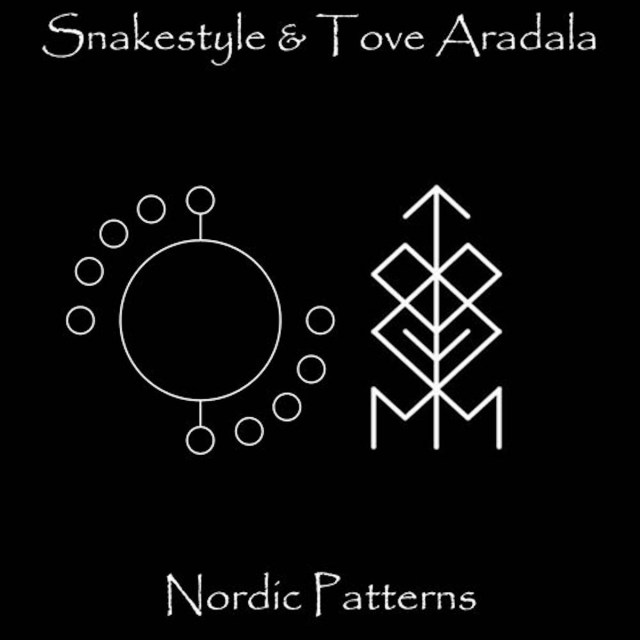
Snakestyle & Tove Aradala – Nordic Patterns

Somewhere along the lines, Nordic culture got a major overhaul, becoming shorthand for sleek minimalism and clinical modernism. Nordic Patterns, a collaboration between electronic musician Matthew Leigh Embleton’s Snakestyle alias and Tove Aradala seeks to redress that, delving deep into the essential fabric of Norse tradition with all its attendant mystique and rich, unique mythology.

Tove Aradala, or Tove Aradala Barbrosdotter Buhe-Stam to give her full name, is well-placed to comment on this. A High Priestess of the Temple Of The Eternal Goddess, a reconstituted religion which taps into the essential polytheism of Norse culture, a belief system which celebrated multiple spirits, gods and creatures. Using sections of Eddas (holy texts), songs and pieces written in the spirit of the region’s folkloric essence, Nordic Patterns affixes Aradala’s gentle singing and resonant chanting to an intricate, entrancing electronic backdrop crafted by Embleton. The album began with a series of field recordings on the Swedish island of Gotland in August 2019 before Embleton returned to London to complete the tracks.

Pieces like ‘Gnisvärd’ exemplify the approach. Here Aradala took traditional folk song rewrote it as the coda to a sparse backdrop of ebbing and flowing electronic sequences wrapped in hazy, frosty textures. Echoing sampled vocals wend their way through the piece, like voices lifted from an old Edison Cylinder, creating a subtle tension between the present and the past. Embleton reveals himself as a sensitive collaborator to Aradala, bathing her ethereal, yet commanding, voice in shimmering reverb and framing her vocal with structures built with a naturalistic fragility. On ‘Klangstenen’, that backdrop is fashioned from liquified, jazzy tones and beats reduced to a primal essence of clicks and pulses; on ‘Trullhalsar’ it is a landscape of dubby bass and wavering, tentative melodies.

The key piece here is ‘Hoburgsgubben’, a nine minute unlikely ambient pop song that flows with meditative purpose. Deeply poignant synth melodies, a shrouded, unobtrusive beat and a general air of serenity envelop joyous lyrics written by Aradala that beautifully celebrate midwinter, and all its frosty promise.

Nordic Patterns by Snakestyle & Tove Aradala was released March 27 2020 by Alex Tronic Records

Words: Mat Smith

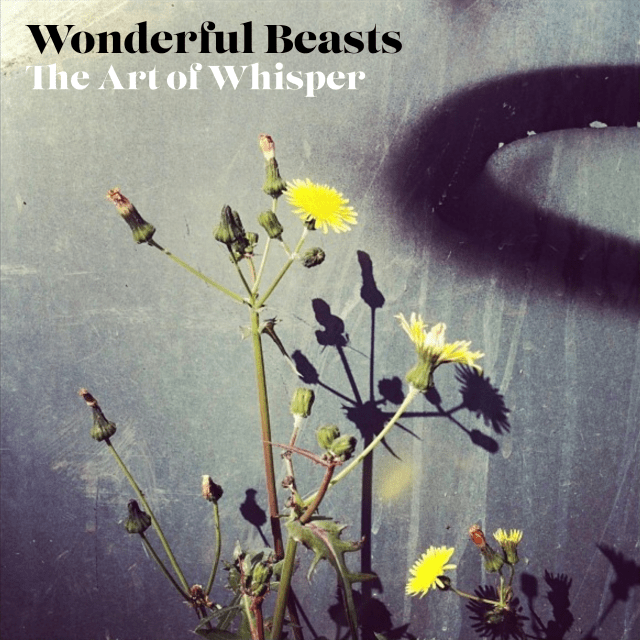
Wonderful Beasts – The Art Of Whisper

Front cover

More than ever before, ambient music feels somehow necessary right now. It represents a vehicle through which to still one’s restless mind amid a tickertape feed of dystopian signals, harrowing statistics and only the briefest flourishes of hope. Whether as a tool for absorption or distraction, ambient music can centre you elsewhere, allowing you to regain focus and perspective.

Unfortunately, a lot of ambient music is also terminally boring, the equivalent of sonic wallpaper or a naff pastiche of inconsequential New Age reference points. That accusation thankfully cannot be levied at Wonderful Beasts, a pairing of electronic artists boycalledcrow and Xqui, whose first collaboration together is anything but music to drift off to sleep to.

For the most part, The Art Of Whisper is built from blocks of gauzy texture, etiolated clouds of sound that float past you and hover, mirage-like and just out to reach, before vanishing into nothingness. Sprinkles of delicate synth melodies are cast over pieces like ‘I Fell Into A Dream’, a languid pace and frosty atmosphere evoking crystalline structures and ghostly shimmer. ‘Love Her’ and ‘Quiet’ include what could be the heavily-processed sound of pealing church bells submerged under layers and layers of dense reverb so as to leave the merest trace outline of joyfulness.

Elsewhere, there are pieces that break free of these beatific soundworlds. ‘My Old Guitar’ has a firmness and drama, its delicate melodic gestures nudged forward with a murky bass undertow and a distant beat. The track opens with a distorted, over-amped synth passage, creating the sense of memory and nostalgia enshrined in the title. A similar effect can be found on ‘She Is The Melody Man’, wherein a pounded, tribal rhythm supports a framework of high-velocity sequences and plucked guitar-like sounds, simultaneously carrying a sense of threat but also a youthful vigour, like looking back on the adventure games you played as a child. ‘Into The Emerald Eye’ is perhaps the noisiest piece here, with squalling layers of angry noise that finally ebb away into the same stylistic terrain as the likes of ‘Love Her’.

What boycalledcrow and Xqui offer is a sense of narrative without once revealing the story, offering little more than glimpses of moments freighted with emotional, yet ephemeral significance. To do that within the context of ambient music is nothing short of remarkable.

The Art Of Whisper by Wonderful Beasts was released March 20 2020 by Wormhole World.

(c) 2020 Further.

Christian Wallumrød Ensemble – Many

As innovative as it is, modern classical music has settled into something of a comfortable pattern, with a relatively predictable interplay between acoustic instruments and electronics. What once felt like progressive, modernistic flourishes now feel familiar; there’s nothing wrong with this, per se, but with a few notable exceptions, it’s often easy to form an impression of what a modern classical album will sound like before you’ve even put it on.

One of those exceptions is Norwegian composer and ensemble leader Christian Wallumrød. After a series of celebrated albums for the venerable ECM label, alternative musical paths in his sibling electronic duo Brutter, and parallel time spent in the Dans Le Arbre quartet, Wallumrød released the brilliant Kurzsam And Fulger through Hubro in 2016. His is a modern classical that nudges into jazz territory without ever fully giving in to that movement’s improvisatory pedigree, creating music with an inherent fluidity that nods to traditions in its foundations, but which aggressively looks to more experimental territory for its final appearance.

Wallumrød’s new ensemble recording, Many, finds inspiration in the musique concrète innovations made by Pierre Schaeffer at the Groupe de Recherche Musicales in 1950s Paris or the early deployment of tape technology by John Cage and Karlheinz Stockhausen. What you won’t find here, however, are moments of forcibly-processed sound or intrusive technological gestures. This is an album which – at times – is heavily electronic without using heavy electronics, its reverential concession to musique concrète being some of its confounding, nonconformist rhythmic basis. A piece like ‘Danszaal’ with its chiming trumpet and saxophone passages from Eivind Lønning and Espen Reinertsen respectively progresses with a dizzying, stop-start judderiness that nevertheless carries subtle, microtonally shifting beauty. A similar effect is achieved on ‘Staccotta’, led by Wallumrød’s unswerving piano stabs and plucked cello, blasts of brass and a breakdown into pure electronics giving this a playful, elusive, ever-changing quality.

Elsewhere, that use of electronics is more prominent, and each of Wallumrød’s ensemble – himself, Lønning, Reinertsen, cellist Tove Törngren Brun and drummer / percussionist Per Oddvar Johansen – is credited with the use of electronics alongside their usual instrument. Opening track ‘Oh Gorge’ weaves sprinkles of bleeping, synths around Brun’s mesmeric cello cycles, the whole thing pushed through a heavy echo that gives any of the additional elements – Johansen’s vibraphone, Wallumrød’s upper register piano playing – a sense of spinning out from a turbulent vortex. ‘Abysm’ is perhaps the moment where the electronics take over, the whole piece dominated in the foreground by droning synth textures, effects, loops and a general feeling of wild experimentation, its discordant tendencies operating at odds with a prevailing sense of calm.

The key piece here, perhaps, is the fourteen-minute ‘El Johnton’, a series of three movements that begins with a strident piano, saxophone and brushed snare passage that sounds like the coda to a Billy Joel song, before evolving into something firmer and yet more free. The following section develops as a thrilling minimalist, electroacoustic sound field of electronic pulses, bursts of synthetic tones and arrays of metallic non-rhythms, offset with unpredictable acoustic interventions, almost as the extremest counterpoint to the opening passage; brief passages of that starting point’s piano section drift in and out like melodic memories, suggesting and forcing a connection between the two with the most unlikely sonic construction. By the time the original section is reprised, it feels altered somehow, less straight, its traditional structure sounding suddenly alien after being mauled, manipulated and brutally erased in the ten intervening minutes.

Many by the Christian Wallumrød Ensemble was released February 28 2020 by Hubro.

Words: Mat Smith

(c) 2020 Further.

Erlend Apneseth – Fragmentarium

Fragmentarium follows on from last year’s brilliant Salika, Molika album for the wonderful Hubro imprint. This new collection of seven delicately-assembled pieces finds Hardanger fiddle maestro Erlend Apneseth joined by Stein Urheim (guitar / bouzouki / electronics), Anja Lauvdal (piano / synth / electronics), Hans Hulbækmo (drums / percussion / flute), Fredrik Luhr Dietricshson (double bass) and Ida Løvli Hidle (accordion).

Opening with the mesmeric shapes of ‘Gangar’, Apneseth offers a rich tapestry of sounds straddling traditional Nordic folk forms with more modernistic flourishes – delicate synth sprinkles, arrangements that nod toward jazz and a sense of casual discordance. The album’s title track buzzes with an angry, claustrophobic noisiness punctured with layers of Jew’s harp and Apneseth’s evocative fiddle playing. Throughout that piece, and indeed across the whole album, we hear processed, floating voices drifting in and out, each one borrowed from the Norwegian folk museum in Prestfoss, creating an odd sensation of being adrift from time and place: who do these voices belong to? When were they recorded? What are they saying?

Apneseth’s skill is to ensure that his fiddle playing never stays too long in the mournful, stirring channel that it all-too-readily lends itself too. Here we find him offering playful, unexpected gestures and more aggressively-wrought passages, interspersed with sections that nod firmly in the direction of Nordic folk tradition. As a bandleader, he allows a sense of freedom and experimentation to develop among his accomplished group, resulting in incredibly tight playing but a flexible, evolving approach to composition.

The signature track on the album arrives in ‘Der mørknar’, a densely-packed sequence of heavy drones, fluctuating synths, spacey guitar riffs and expressive fiddle, all glued together with percussive restraint and plaintive piano clusters. The effect is one of constant, unresolved momentum, a feeling of pointing toward something that never quite arrives; in place of the wild pay-off, the track collapses into gentle fiddle shapes, a rare moment of introspection in an album that studiously avoids self-absorption.

Fragmentarium by Erlend Apneseth was released February 28 by Hubro.

Words: Mat Smith

(c) 2020 Further.